Great Sphinx of Giza
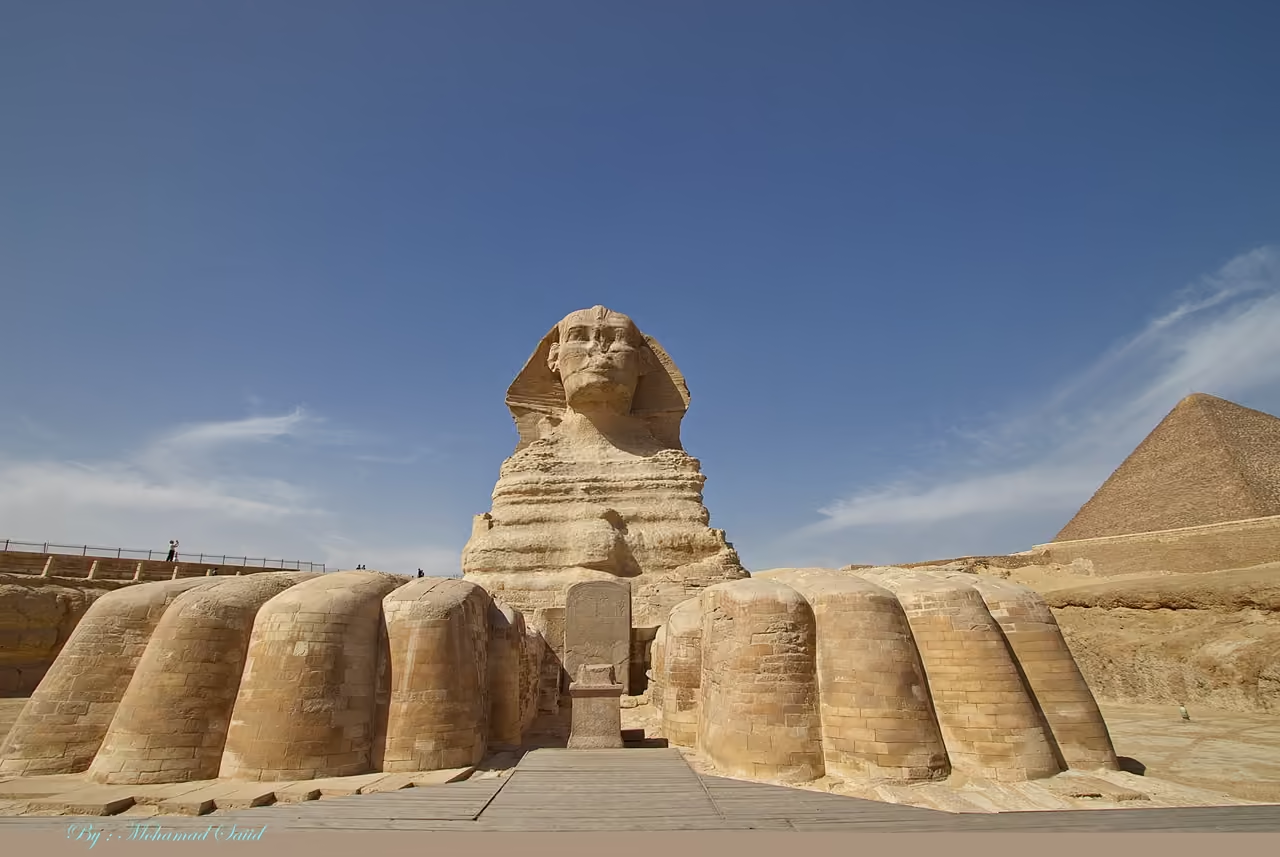
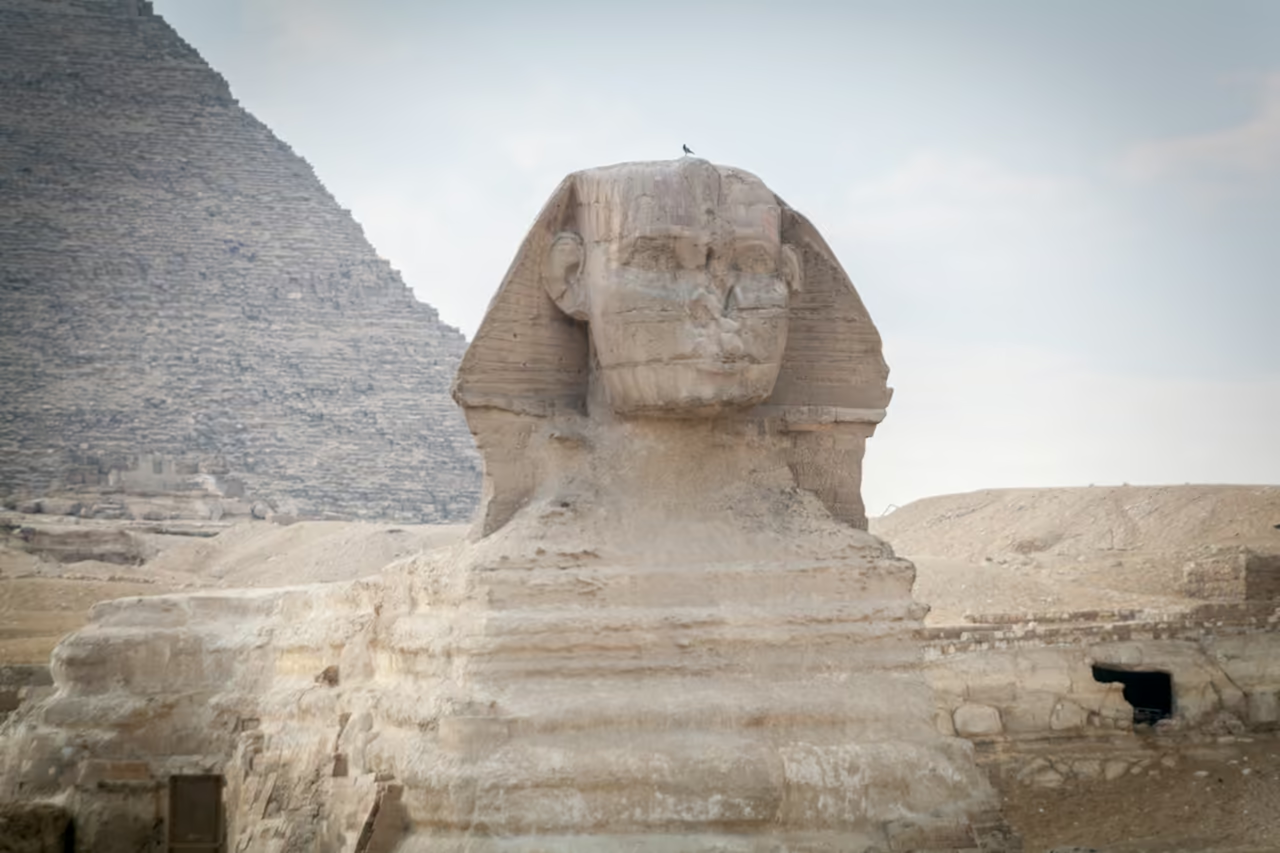
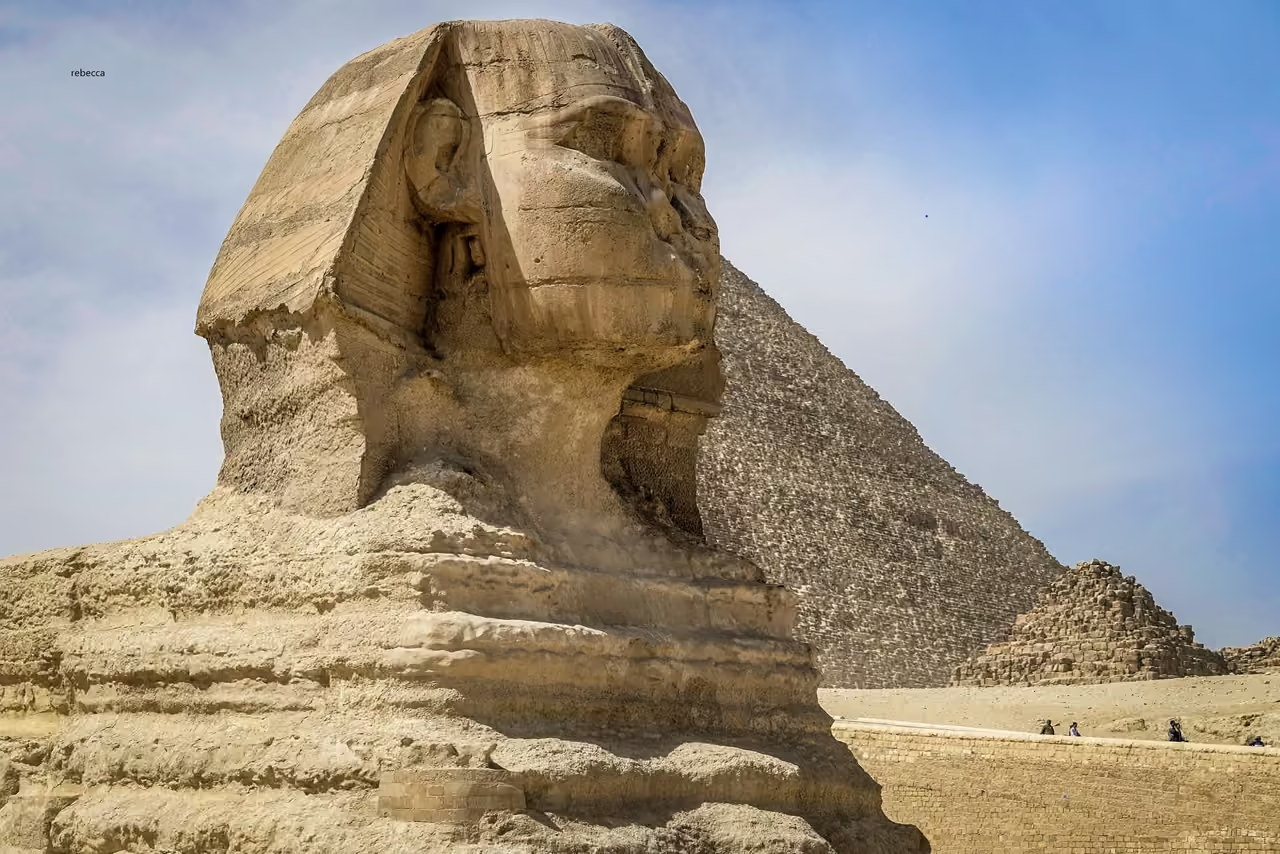
Stepping out of the shadowy pink granite hall of Khafre's Valley Temple puts you face to face with a limestone lion stretching 73 metres from paw to tail. The scale hits at once. Carved by Old Kingdom masons around 4,500 years ago, the statue rises 20 metres straight out of the Mokattam quarry floor, its royal headdress intact above softer rock ribs worn hollow by desert wind. Rather than empty dunes, its gaze now falls past the boundary fence onto the brick rooftops, corner tea stalls, and horse stables of Nazlet El Semman. Follow the raised boardwalk along the eastern edge to examine the ancient granite shrine tucked between its forepaws, though late morning tour coaches frequently pack the main camera terrace. Arrive right as the plateau gates open, when slanted sunlight warms the limestone face amber beneath the sharp triangle of Khafre's pyramid.
Videos
History of Great Sphinx of Giza
Quarrying stone for Giza's pyramids left a stubborn ridge of limestone sitting at the edge of the royal building site. Around 2550 BC, Old Kingdom masons carved that bedrock hump directly inside the pit, turning a quarry wall into a colossal guardian facing the rising sun. Scholars still argue over whose portrait stares out from beneath the royal headdress. The ceremonial causeway leading to Pharaoh Khafre's tomb swerves noticeably around the enclosure, hinting that the monument belonged to his reign, his father Khufu, or his half brother Djedefre. Whoever ordered the sculpture never saw its precinct completed, for builders abandoned the stone temple directly before its chest unfinished. Once centralised pharaonic power fractured centuries later, drifting Sahara sand swallowed the lion body clear up to its neck. For nearly a thousand years, only a weathered royal head poked above the dunes. Relief arrived around 1400 BC when a young prince named Thutmose paused from hunting at midday and dozed off in the narrow strip of shade beneath the stone chin. As inscribed on the granite Dream Stele later wedged between the paws, the buried solar god spoke to him in sleep, promising Egypt's crown in return for clearing the choking dunes. Once enthroned as Pharaoh Thutmose IV, he fulfilled that bargain by marshalling crews to dig out the forepaws and launching a lively new wave of worship around the pit. Neighbouring kings raised mudbrick chapels to honour the statue as a solar deity, pilgrims filled the sand trench with votive offerings, and later monarchs like Ramesses II sent fresh teams to clear the enclosure whenever desert winds buried it anew. By the first century AD, Giza had turned from an active cult site into a famous antiquity stop for curious Roman visitors. Local officials excavated the pit to honour Emperor Nero and Egyptian Governor Tiberius Claudius Balbilus, building a grand ceremonial staircase over twelve metres wide down to a paved sanctuary before the chest. After Roman authority faded and sand filled the trench yet again, medieval Cairo writers noted that neighbouring residents still treated the partially buried relic as a protective talisman. Historian Maqrizi reported that local farmers believed Egypt's vital Nile flood depended on the monument, while geographer Idrisi recorded hopeful clerks burning incense at its base to win government posts. Early modern Europeans had far less luck making sense of the figure. Arriving from the 1500s onward, travellers saw only an enigmatic stone head jutting from golden drifts and published wildly fanciful book engravings depicting a woman with flowing curls, a classical Roman bust, or a creature wearing a bulky collar. Proper excavation waited until 1817, when Italian explorer Giovanni Battista Caviglia uncovered the chest and ancient paving. Over the following century, French directors Auguste Mariette and Émile Baraize finally cleared the entire sanctuary down to the floor, dismantled the decaying Roman steps, and sealed a deep geological fissure splitting the statue's waist with iron bars and cement. Exposing the raw rock revealed fresh fragility. In 1926, part of the stone headdress sheared away from the weakened neck, prompting government engineers five years later to pour a thick concrete collar beneath the jaw that noticeably altered its side profile. Major conservation programmes in the 1980s and 1990s stripped back failing cement repairs and laid fresh limestone casing blocks along the crumbling lower flanks and paws. Today, fenced off from Giza's urban apartment blocks just metres to the east, the excavated limestone lion sits open from claw to crown inside its stone trench.
11 events spanning 4548 years
Fun Facts
12- 01
A deep vertical shaft drops into the top of the Sphinx's skull, likely carved to anchor a stone crown that has vanished over the millennia. During his travels in the 1560s, German visitor Johann Helffrich wrote that a priest could climb inside the hollow crown and project his voice outward, tricking onlookers into believing the statue itself was speaking until archaeologist Émile Baraize sealed the hole under a metal hatch in 1926.
- 02
Desperate to locate hidden treasure vaults in 1837, British colonel Howard Vyse ordered engineer John Shae Perring to drill straight into the stone back behind the statue's neck. Their iron boring rods wedged fast 27 feet deep in the limestone, prompting the team to blast them loose with explosives and leave behind a rugged cavity known today as Perring's Hole.
- 03
Egyptian geologist Farouk El-Baz suggested that ancient sculptors did not carve the monument from a blank hillside, but spotted a ridge sculpted by desert winds into a shape resembling a crouching beast and carved the head first. That geological origin also explains its uneven decay: the face sits in dense, durable limestone while the long body cuts through softer middle strata that windblown sand has chewed inward.
- 04
Egyptians call the landmark Abu al-Hawl, an Arabic nickname that translates as 'Father of Terror'. Rather than describing a frightening appearance, linguists suspect the phrase emerged through medieval folk wordplay reshaping Pehor, an older Coptic and Canaanite title linking the guardian statue to the desert god Hauron.
- 05
Far from looking weathered monochrome beige, the ancient monument originally blazed with bright paint. Patches of red pigment still cling to parts of the face, while microscopic specks of yellow and blue found elsewhere on the body led archaeologist Mark Lehner to remark that the statue once looked decked out in gaudy comic book colours.
- 06
Fragments of the monument's plaited stone pharaonic beard sit thousands of kilometres away inside the British Museum in London rather than in Egypt. Uncovered buried in the sand between the forepaws by explorer Giovanni Battista Caviglia in 1817, the carved limestone chunks appear to have snapped free centuries earlier after an ancient repair under Pharaoh Thutmose IV mortared them back onto the chin.
- 07
French artillery never shot off the Sphinx's nose during Napoleon Bonaparte's 1798 Egyptian campaign, despite one of travel history's most stubborn legends. Sketches made by Danish naval captain Frederic Louis Norden in 1737 show the nose already missing more than sixty years before French troops arrived, and forensic marks on the stone reveal metal rods or chisels hammered deliberately beneath the nostril and across the bridge, matching medieval reports of a 1378 iconoclastic attack by Sufi zealot Muhammad Sa'im al-Dahr.
- 08
In 1857, French Egyptologist Auguste Mariette unearthed a stone slab called the Inventory Stela claiming Pharaoh Khufu merely tidied up a Sphinx that was already ancient in his day. Careful study later exposed the inscription as a clever propaganda forgery carved during the seventh century BC by local priests trying to invent deeper antiquity for their nearby Temple of Isis and win bigger donations.
- 09
In the 1930s, American psychic Edgar Cayce prophesied that a hidden Hall of Records preserving the lost wisdom of Atlantis would be unlocked underneath the Sphinx in 1998. When the target year came and went without a single Atlantean chamber surfacing, fringe speculation collapsed, leaving geologists to study genuine unfinished tombs like the square Keyhole Shaft cut near the northern hind paw.
- 10
Nobody knows what name the statue's original Old Kingdom creators gave it because no contemporary inscription survives. The familiar English word Sphinx arrived roughly two millennia late from ancient Greek visitors, who named the wingless male lion after their own winged monster from a verb meaning 'to squeeze', notorious in myth for strangling travellers who could not answer her riddle.
- 11
Throughout the nineteenth and twentieth centuries, the partly buried monument doubled as a stage for unexpected international encounters. Samurai members of Japan's Second Embassy to Europe posed before the sand drifts in 1864, Brazilian Emperor Pedro II sat beside excavator Auguste Mariette for a group portrait in 1871, and Scottish soldiers gathered beneath the paws late in 1942 soon after the Battle of El Alamein.
- 12
Workmen clearing sand in 1926 spotted a strange passageway tucked at floor level beneath the rear flank, only for restorers to cover it with stone masonry and let it slip from memory. More than fifty years later, three elderly Egyptians who had carried dirt baskets as boys on that dig remembered the secret opening, guiding archaeologists in 1980 down a crooked shaft stuffed with sand, tin foil, modern cement, a broken water jar, and a discarded pair of shoes.
FULL PLACE DETAILS
Updated
FULL PLACE DETAILS
UpdatedOVERVIEW & STATS
- Established
- In -2559, making it 4585 years old
- Elevation
- 23 m
ARCHITECTURE & HERITAGE
- Architectural Styles
- Ancient Egyptian
Great Sphinx of Giza Map & Neighborhood Explorer
This interactive map is centered on Great Sphinx of Giza. Zoom in and move the map around to automatically discover Wikipedia photos and summaries of other nearby sights, monuments, and historical points of interest and stories in real-time!
Great Sphinx of Giza FAQ
Visitors cannot touch the stone or enter the monument's interior shafts and tunnels, as access inside the quarry pit is restricted to protect the fragile limestone. However, a raised boardwalk and viewing terrace run alongside the eastern edge and right past Khafre's Valley Temple, giving clear close views of the forepaws, face, and Dream Stele between the legs.
Entering the Giza Plateau right when the gates open in the early morning brings the softest natural light, because the Sphinx faces directly east toward the rising sun. Late morning brings heavy tour coach crowds along the viewing walkway, while late afternoon casts warm golden tones across the limestone before the evening Sound and Light show starts.
Despite the popular rumour blaming Napoleon Bonaparte's cannons in 1798, drawings made by Danish explorer Frederic Louis Norden in 1737 prove the nose was already missing sixty years earlier. Forensics on the face reveal chisel marks driven straight into the bridge and beneath the nostril, matching accounts from the 1400s that a Sufi iconoclast named Muhammad Sa'im al-Dahr smashed the nose in 1378.
General entry to the Giza Plateau covers walking past Khafre's Valley Temple and viewing the Great Sphinx from the main boardwalk and eastern terrace. Entering the interiors of the neighbouring pyramids requires separate supplementary passes, and the evening Sound and Light show operates as a separate ticketed event after daytime closing.
Scholars still debate the identity of the royal portrait, since no surviving Old Kingdom inscription explicitly names the patron. Most Egyptologists attribute the face to Pharaoh Khafre, whose nearby causeway bends around the quarry pit, though other experts argue the facial features and headdress style belong to his father Khufu or his half brother Djedefre.
Sculptors carved the statue out of natural Mokattam limestone bedrock composed of distinct geological strata with very different hardness levels. The head sits within a dense, durable upper rock layer that resists desert gales well, whereas the torso and flanks cut through softer middle layers that erode much faster under wind and blown sand.
Unlike the pyramids built upward from stacked blocks, the Sphinx was carved straight downward into the limestone bedrock of an ancient quarry pit on the southeastern slope of the plateau. Its head rises level with the surrounding terrace, which explains why drifting Sahara sand repeatedly buried the lion body up to its neck whenever ancient maintenance stopped.
A typical visit takes about 1 hour. We recommend planning your schedule accordingly to make the most of your time there.
The closest place to visit near Great Sphinx of Giza is Valley Temple of Khafre, around 97 m away. Other things to do near Great Sphinx of Giza include Pyramids Sound and Light Show (200 m), Tomb of Queen Meresankh III (281 m) and Abou Al Hool Al Seiahi Street Pyramid Frame (395 m). All of these are within roughly 395 m of Great Sphinx of Giza, close enough to walk.
It dates back to -2559, making it 4585 years old.
Great Sphinx of Giza was built in the ancient Egyptian style.
While we strive to keep this information accurate and up to date, we recommend verifying any details independently before making decisions based on them.
Places near Great Sphinx of Giza
Make the most of your trip. Check out these top-rated spots located nearby.
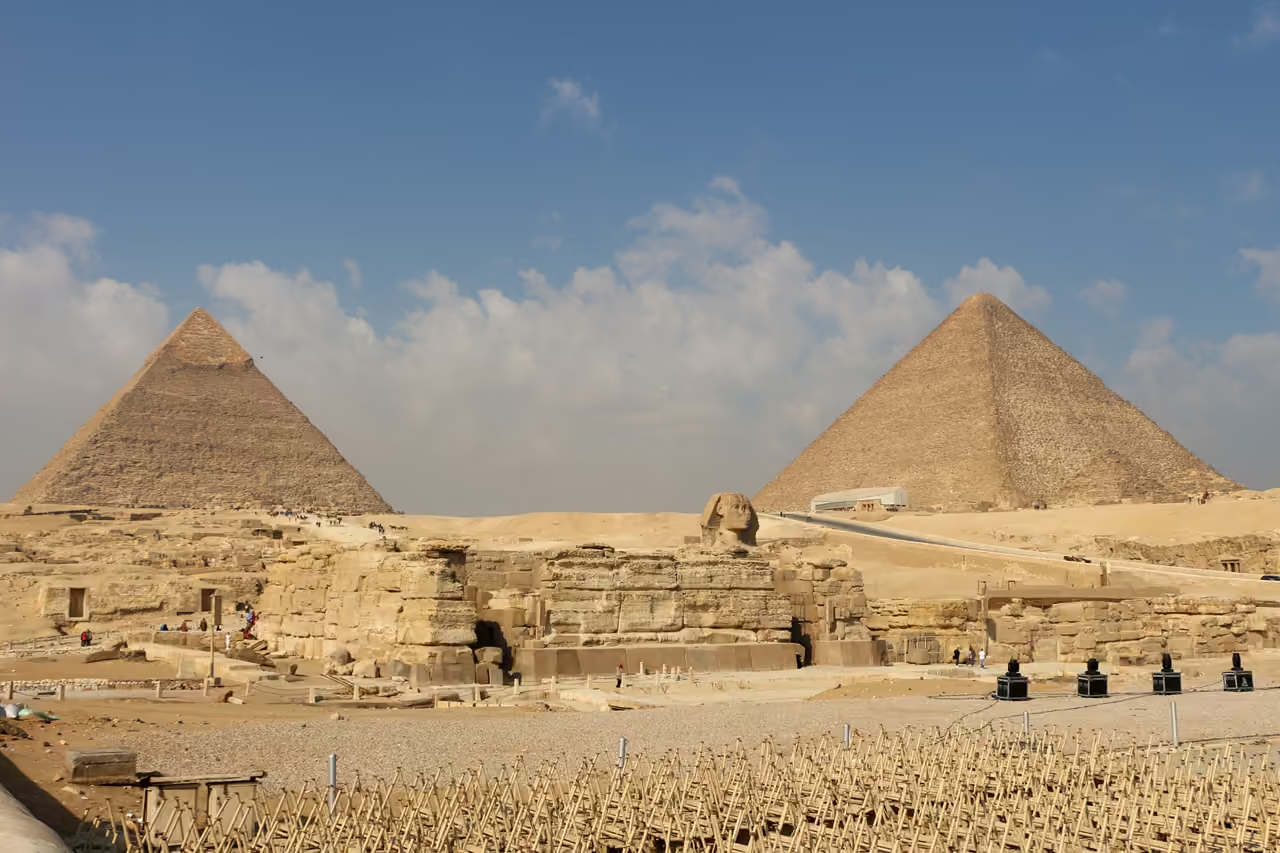 97m
Valley Temple of Khafre
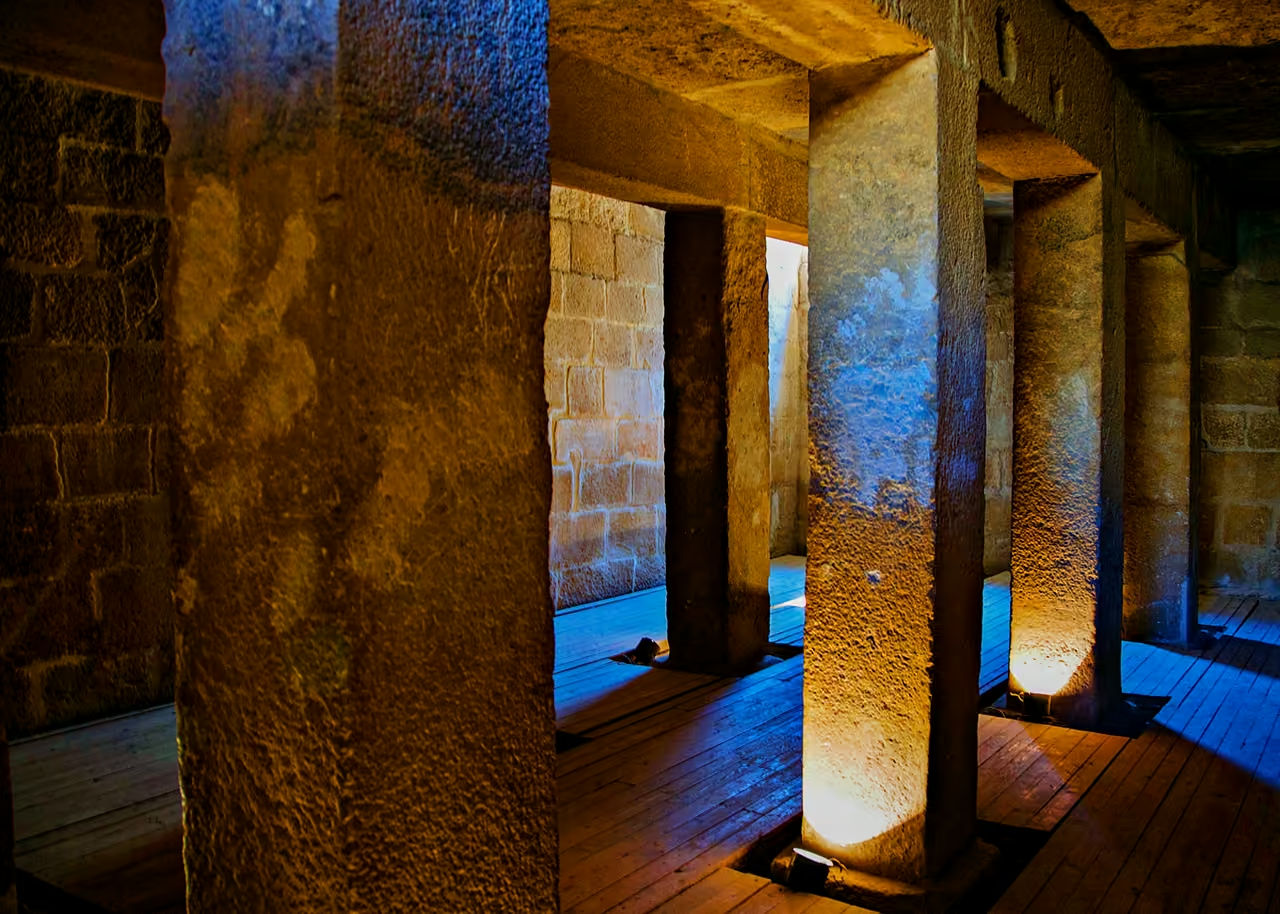
Standing right beside the Great Sphinx, this remarkably intact Fourth Dynasty mortuary hall displays Old Kingdom megalithic engineering at full power. Monolithic pillars and towering wall blocks of polished pink Aswan granite lock together with mirror-tight precision without a drop of mortar above glowing white alabaster floors. Natural ceiling slits cast dramatic shafts of daylight into quiet shadowy corners.
architecture view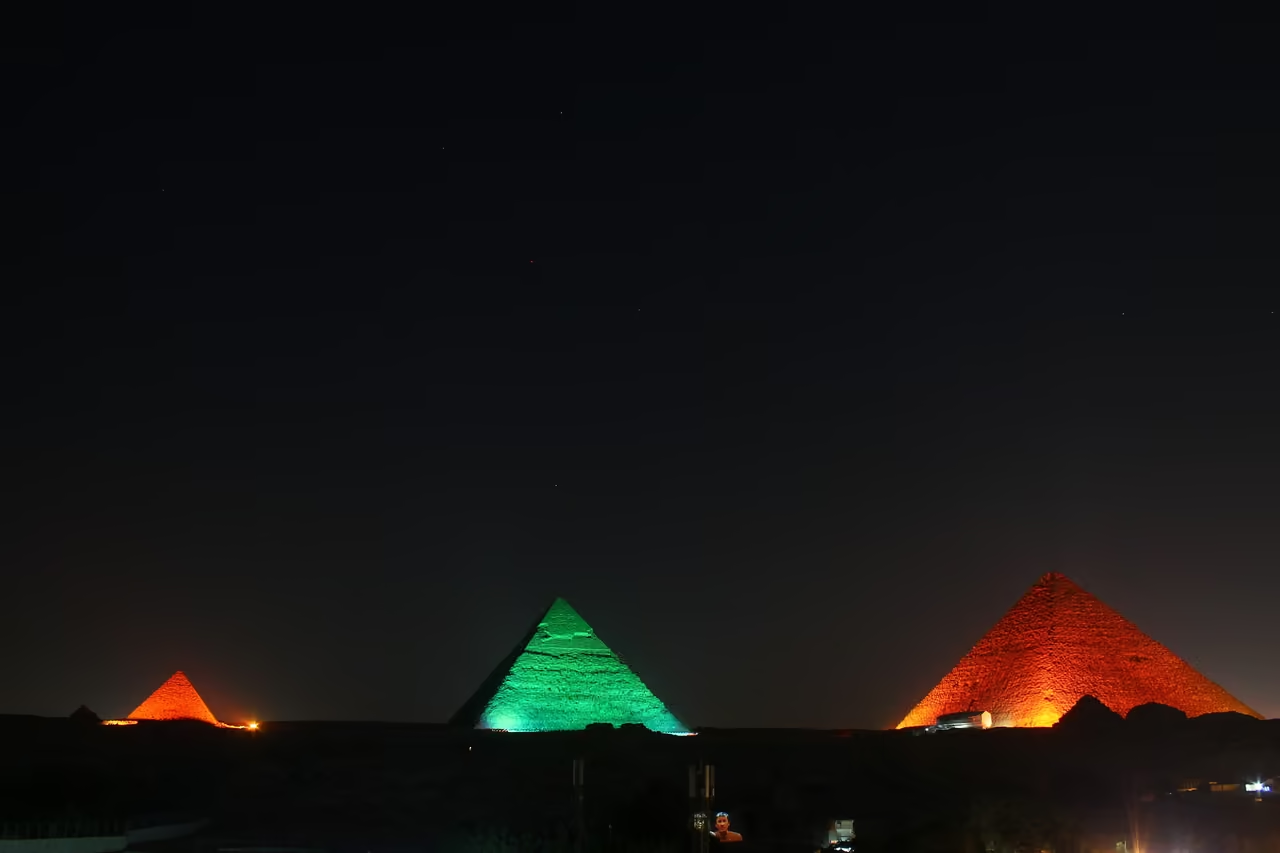 200m
Pyramids Sound and Light Show
Once desert dusk cools the limestone sand, booming dramatic narration from the Great Sphinx pairs with sweeping laser projections lighting all three royal pyramids. Although unabashedly theatrical, watching golden beams outline Khufu's masonry under deep Sahara skies makes a classic Giza evening ritual. Seating faces the Sphinx enclosure, with free headphone translations provided during secondary-language nightly shows.
highlight view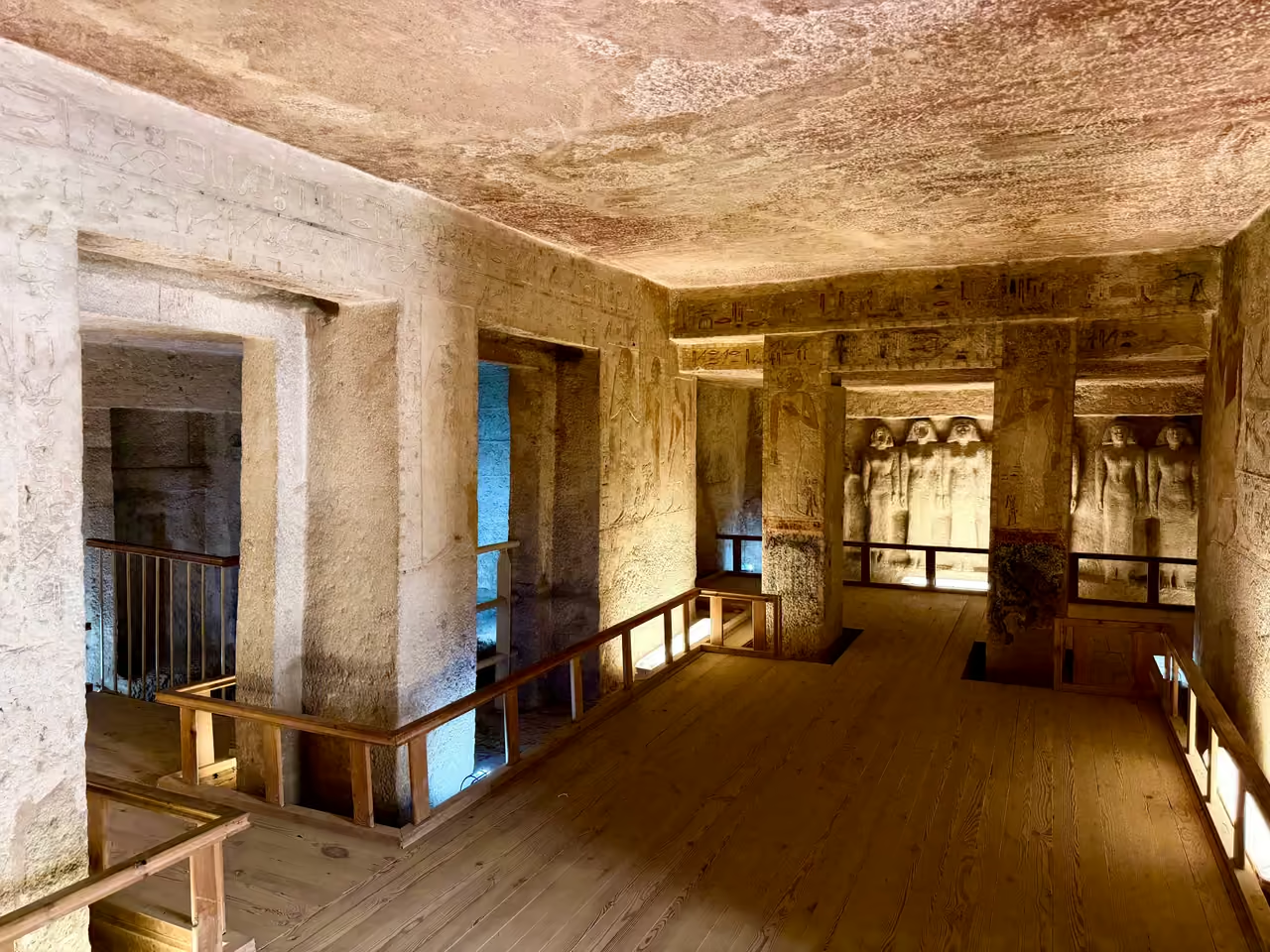 281m
Tomb of Queen Meresankh III
Hidden underground on the eastern cemetery field of the Giza Plateau while tour buses roll straight past, this rock-cut tomb shelters some of the best-preserved painted reliefs in all of Giza. Descending stone steps reveals vivid 4,500-year-old pigments showing Meresankh picking lotus flowers from papyrus skiffs, bakers kneading loaves, and sculptors chiselling statues. Few visitors step inside, keeping the cool painted chambers hauntingly quiet.
hidden gem view 395m
Abou Al Hool Al Seiahi Street Pyramid Frame
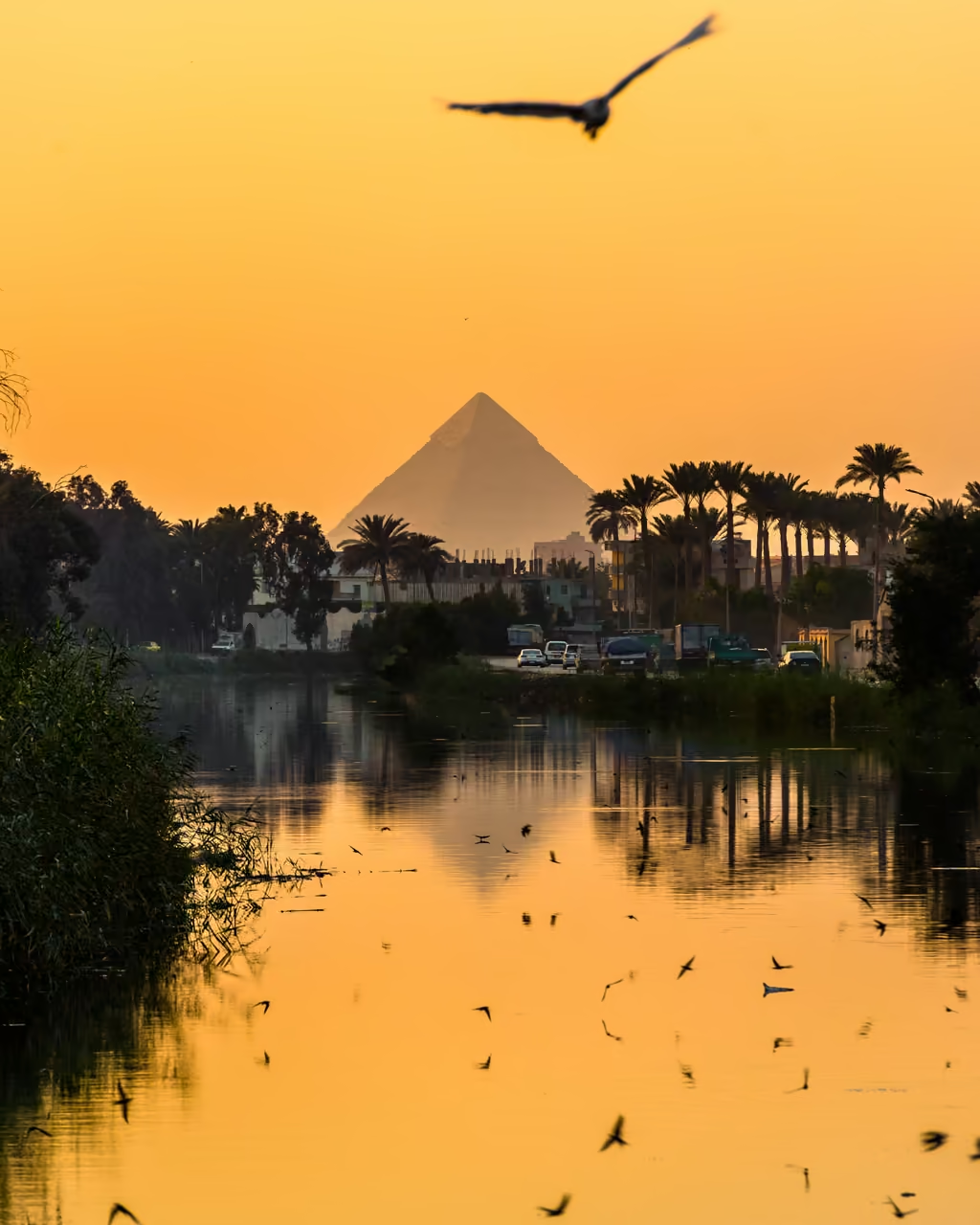
Standing midway down Abou Al Hool Al Seiahi Street in Nazlet El-Semman with a short telephoto lens creates Giza's ultimate urban-meets-ancient compression shot. Fruit carts, dusty pickup trucks, and tiled apartment balconies crowd the foreground right beneath the colossal sunlit limestone face of Khafre's pyramid at golden hour.
photo spot view
Explore Similar Places in This Collection
Featured on These Itineraries and Routes
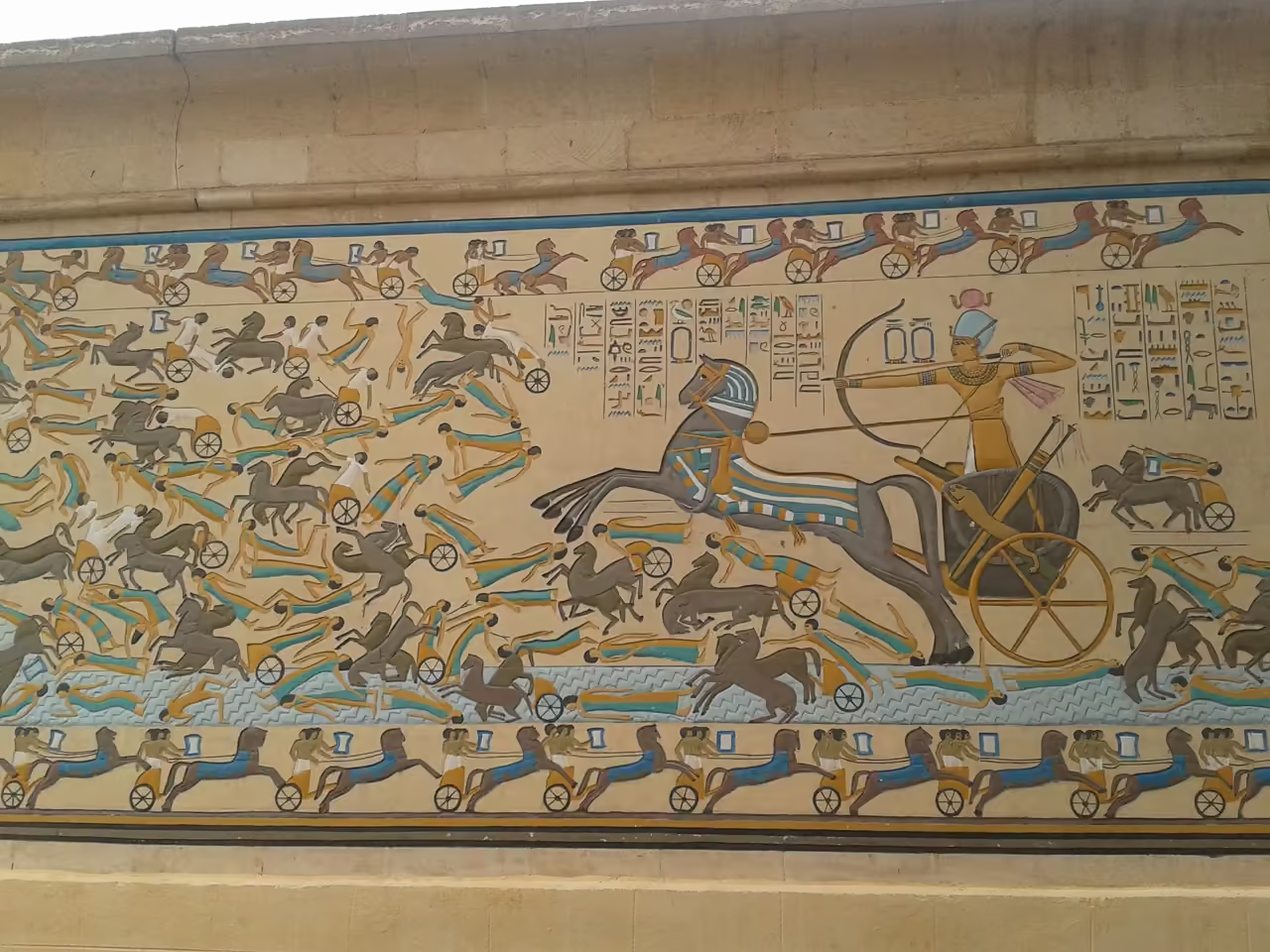
3 Days in Giza: Royal Stone, Artisans, and Nile Nights
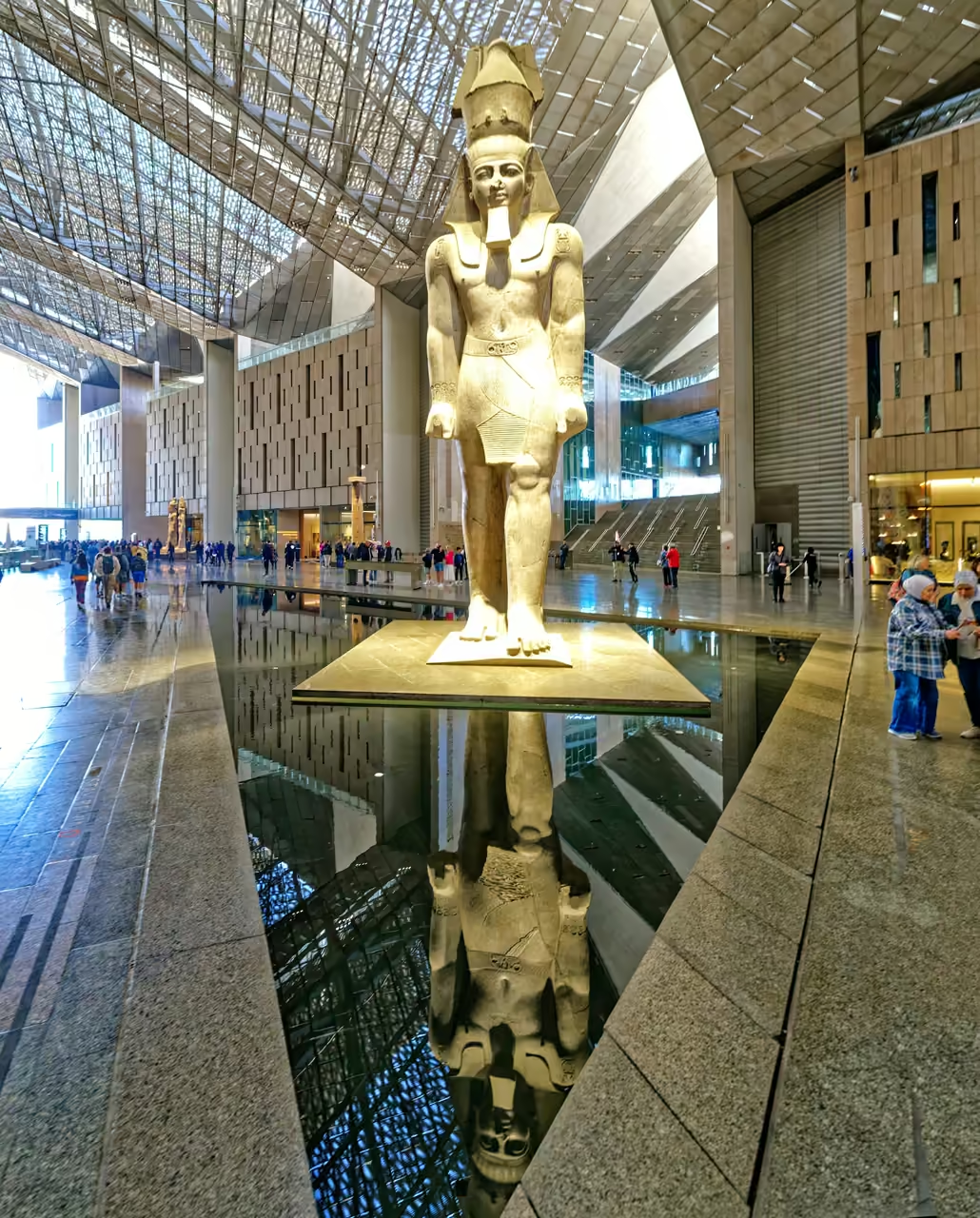
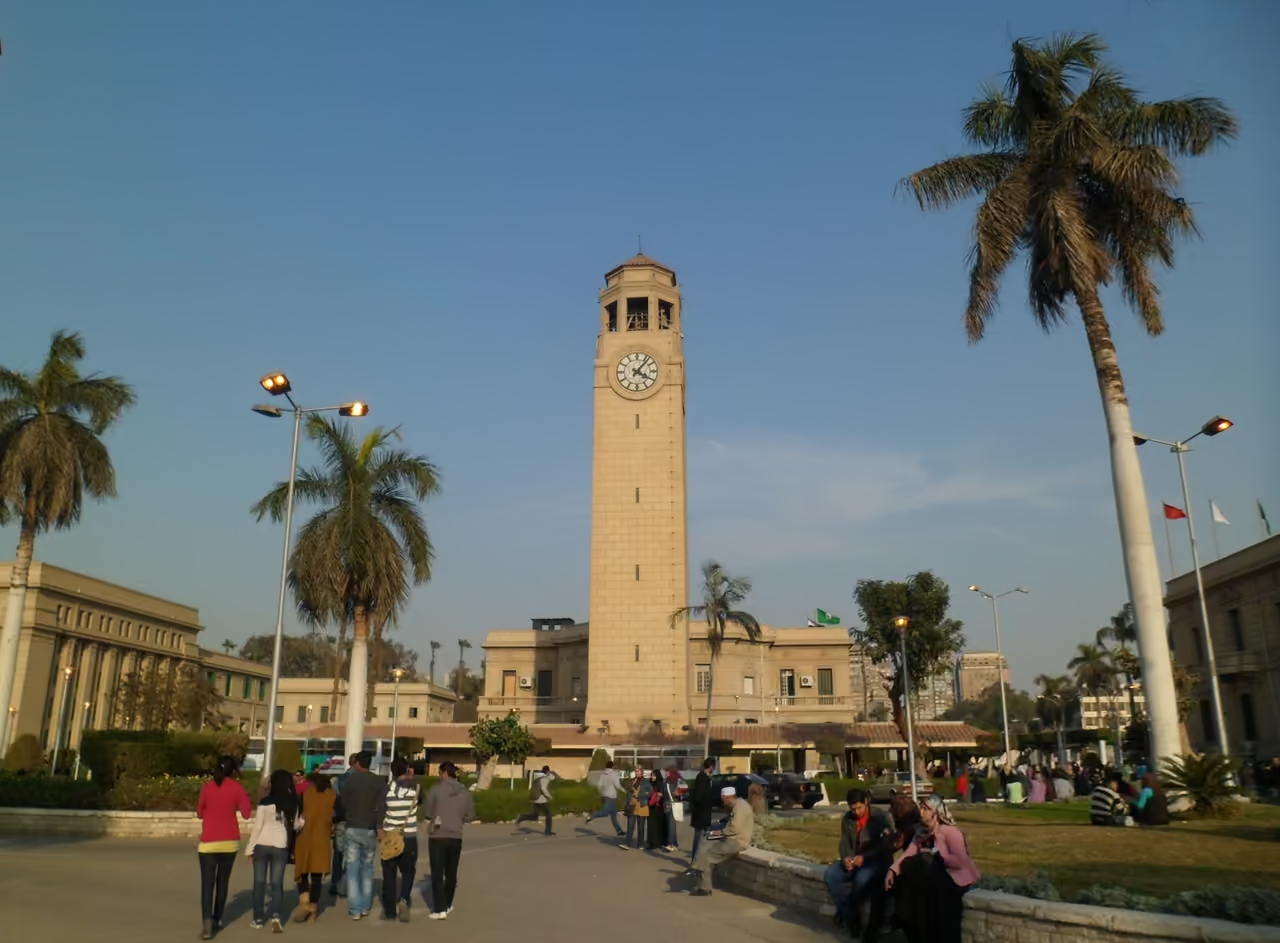
Three balanced days let you uncover Giza well past its headline postcard. Dedicate your first morning to deep pyramid exploration and sunset frames, devote day two to the Grand Egyptian Museum, Sahara horseback trails, and Harrania tapestry studios, and spend day three savouring Dokki gardens, Impressionist art palaces, car-free Dahab Island farms, and Agouza riverfront nights.
view itinerary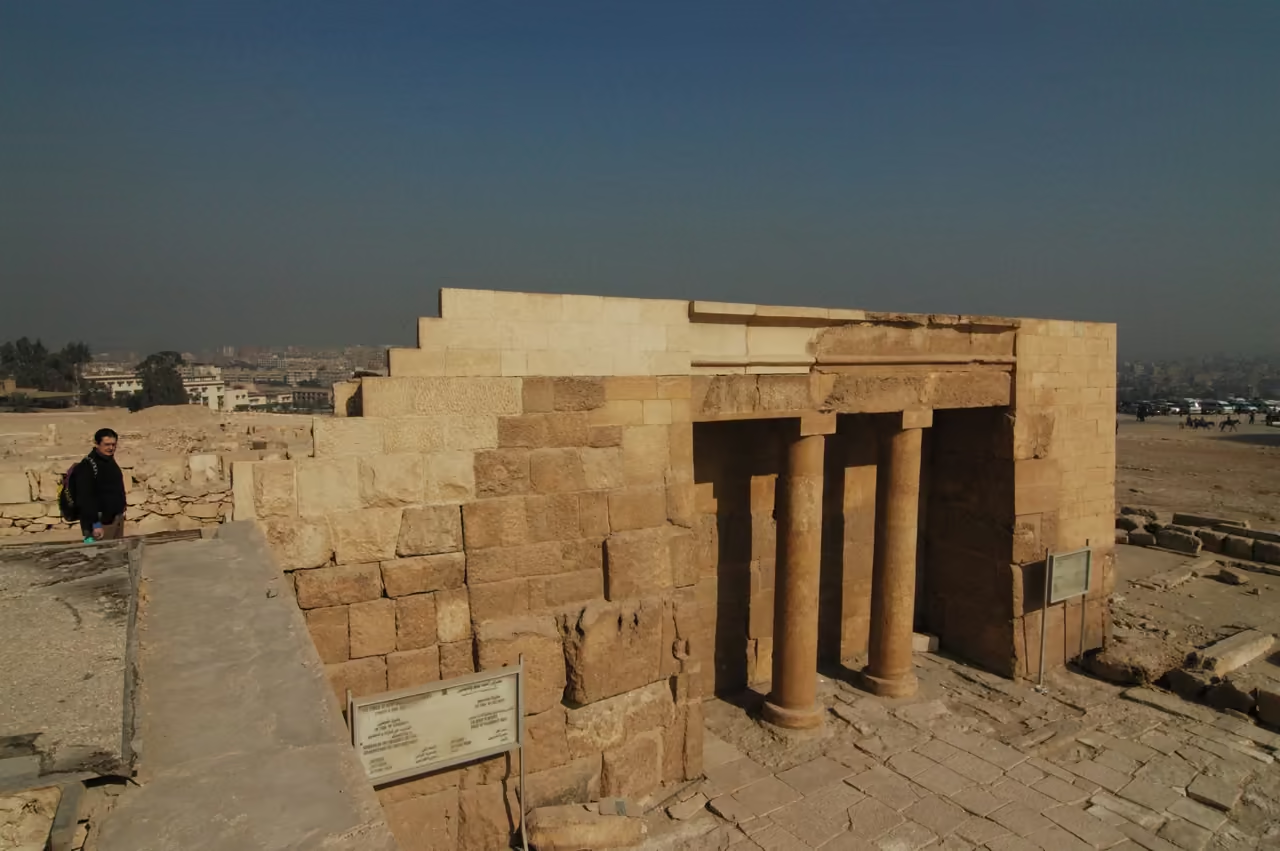
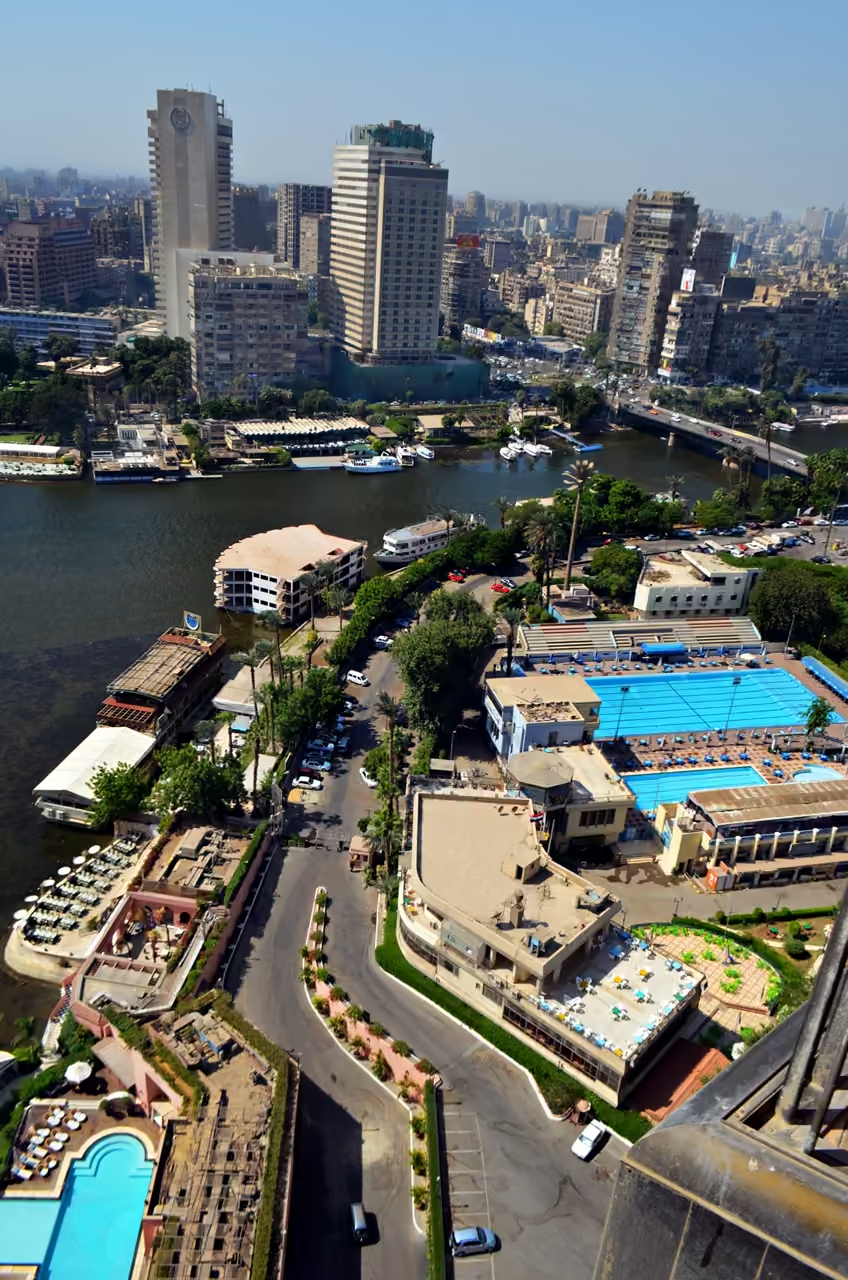
5 Days in Giza: Tombs, Cinema, Modern Art, and Local Life
Designed for unhurried travellers who want every chapter of Giza's 4,500-year story, this five-day plan blends painted plateau rock tombs and Tutankhamun galleries with literary villa museums, golden-age cinema studios, morning produce markets, and late-night football neighbourhood cafés. Spacing desert excursions across mornings leaves afternoons cool inside gardens and galleries.
view itinerary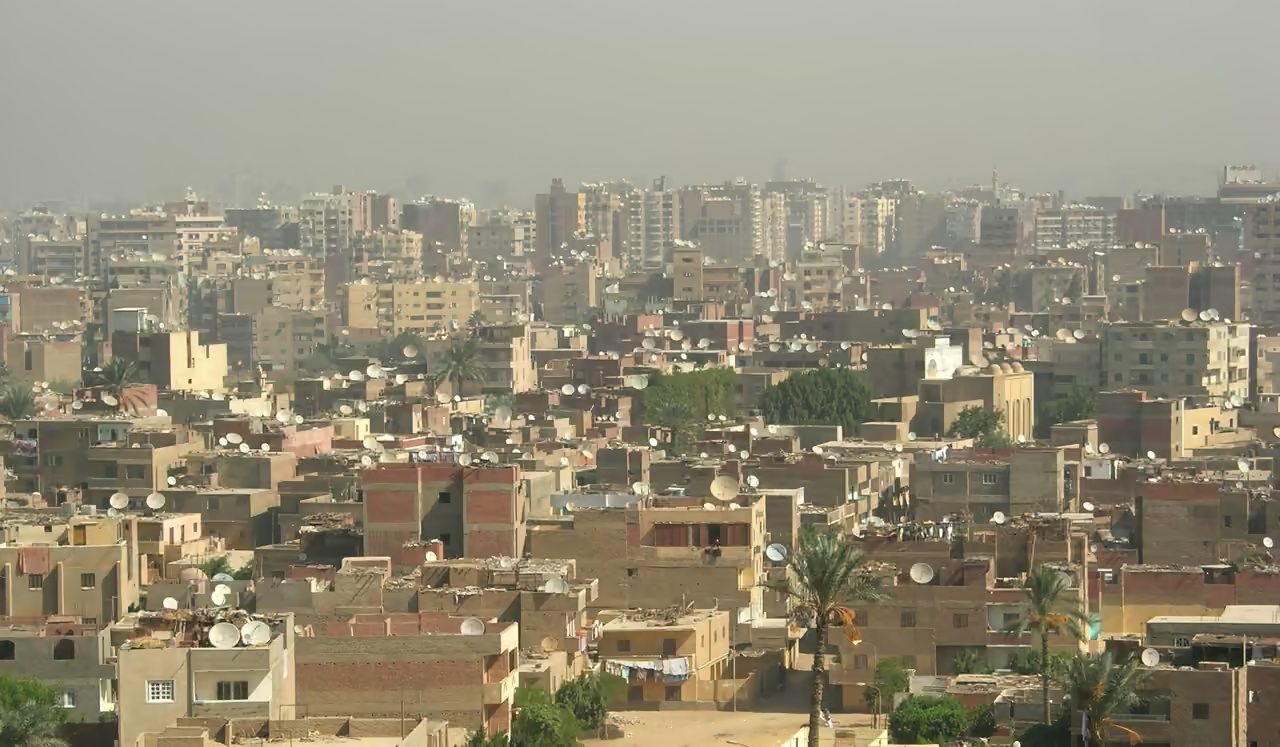
Golden-Hour Village and Sphinx Edge Walk
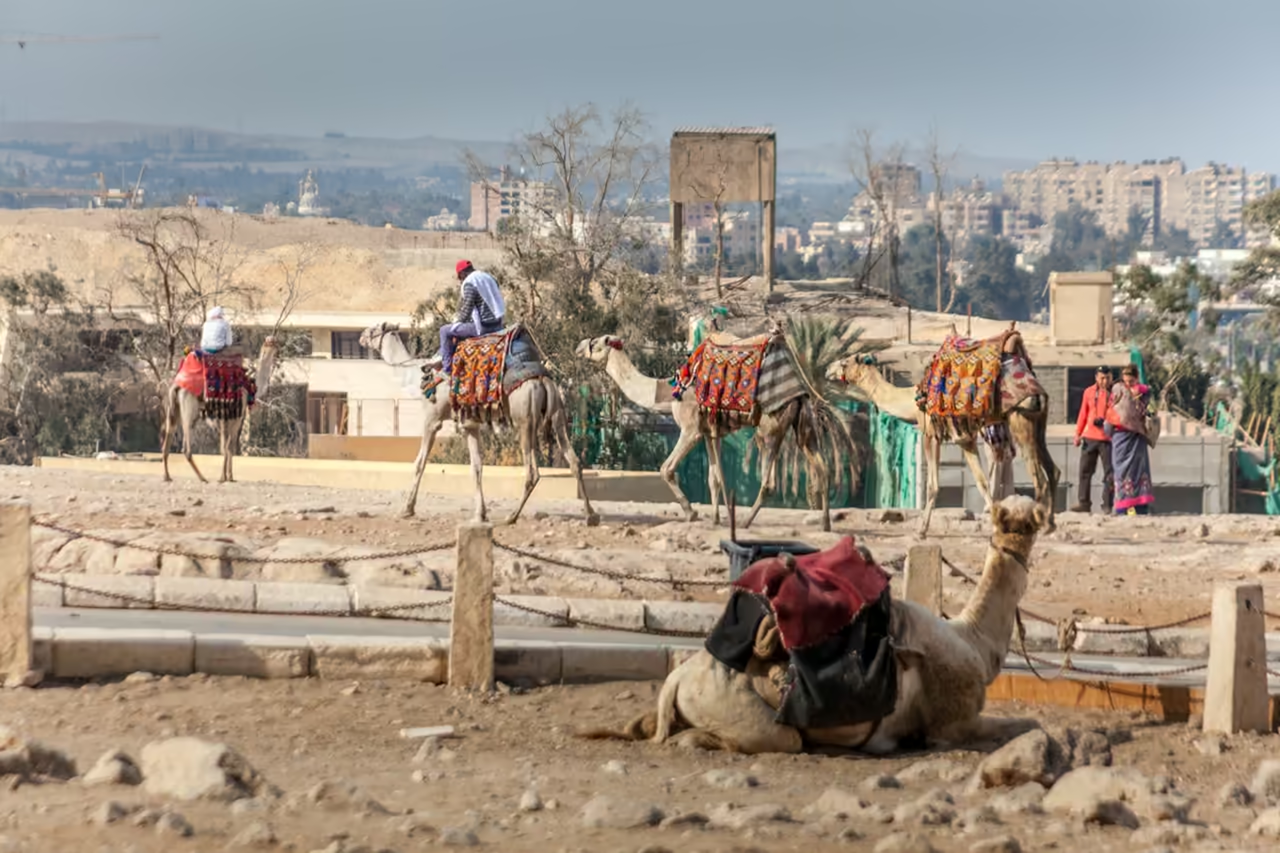
Once afternoon tour groups roll back toward Cairo, the sandy lanes bordering Nazlet El-Semman's western edge cool rapidly into a theatrical dusk promenade. Carriage horses trot peacefully home into courtyard stables, spice sacks open outside tiny groceries, and Khafre's peak blushes amber above red-brick rooftops. Strolling these compact blocks turns a famous border zone into an engrossing slice of living village Giza.
view walking route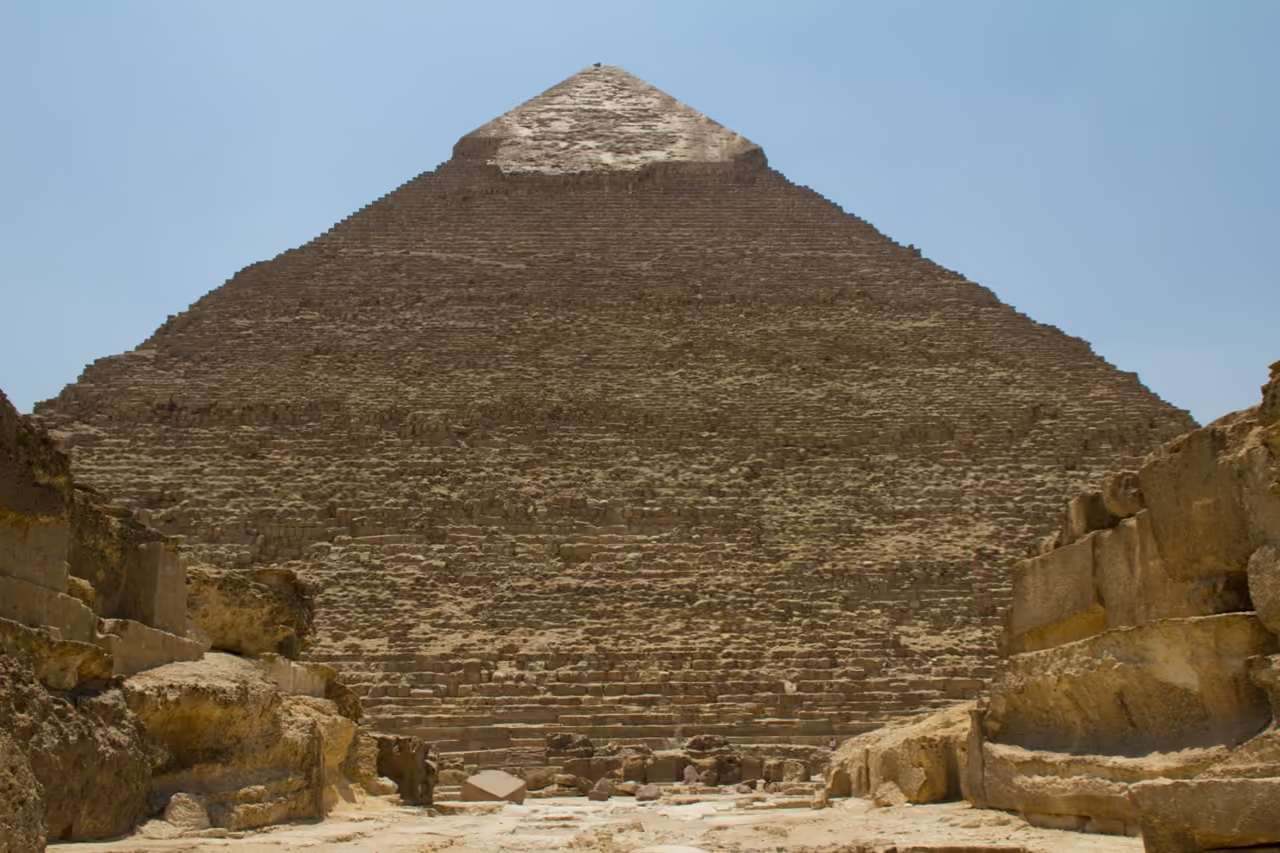
Fourth Dynasty Royal Necropolis Self-Guided Tour
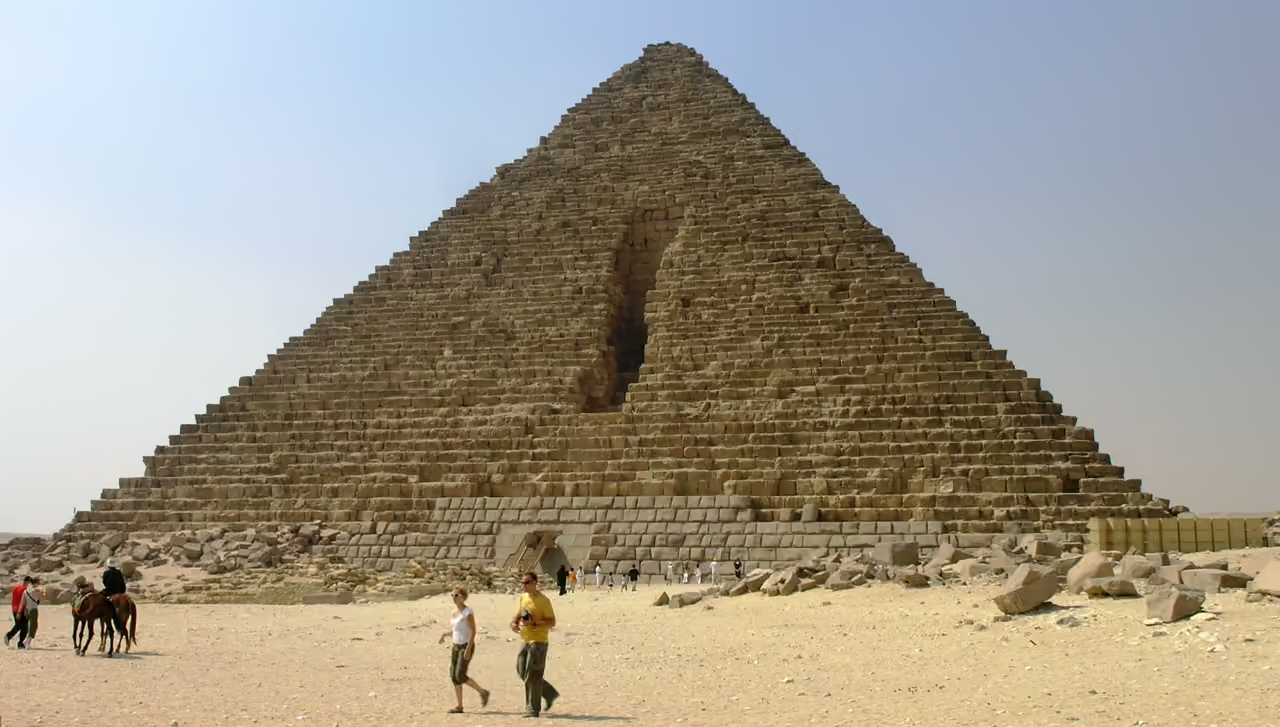
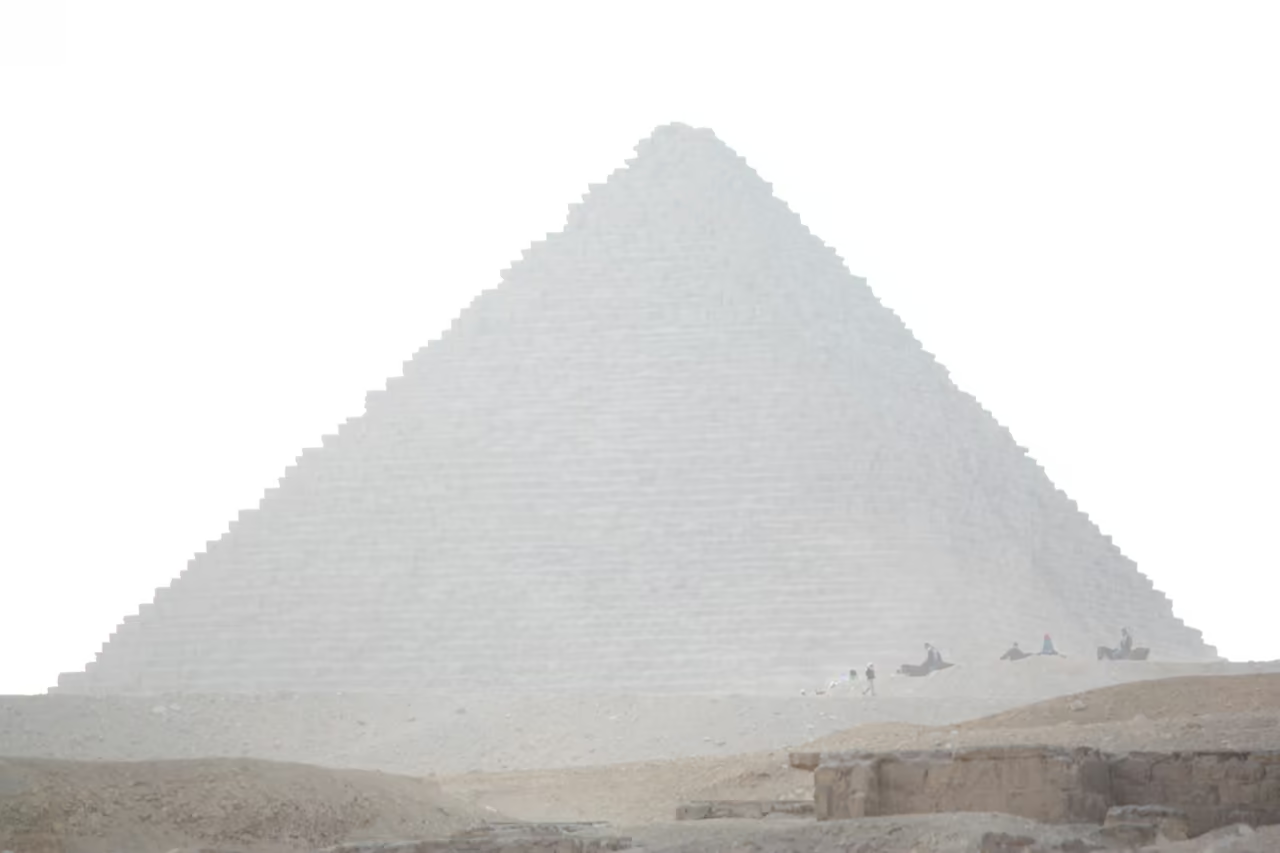
Walk in the footsteps of Old Kingdom pharaohs across the wind-carved Giza Plateau on an unhurried route linking three royal pyramid precincts and the Great Sphinx. Tracing ancient quarry steps, polished granite valley temples, and limestone ceremonial causeways shows how Giza operated as one cohesive sacred complex rather than disconnected monuments. Allow three hours with sturdy shoes and extra drinking water.
view self-guided tour
See all attractions in Giza
Including Grand Egyptian Museum, Great Pyramid of Giza, Agricultural Museum, and more