Hidden Gems & Local Secrets in Honiara

Step off the tourist trail and experience the authentic side of the city. We've bypassed the crowded landmarks to uncover the best-kept local secrets—from quiet neighborhood courtyards to underground art scenes. Dive into the forgotten histories and unique stories that make these spots truly special.

  • Mataniko River Shipwreck

    MATANIKO WRECK
    30 M

    While thousands of tourists dive to see the deep water wrecks, this incredible piece of history sits quietly in the shallow waters right off the city beach. Just east of the river mouth, the rusting, skeletal remains of a Japanese transport ship protrude starkly above the gentle waves. It was destroyed by American artillery in late 1942 and has simply been left to the elements ever since. Local children frequently use it as a diving platform, completely normalising this massive historical artefact. It offers an incredibly raw, accessible, and highly photogenic connection to the brutal battles of the past.

    HISTORY & HIGHLIGHTS

    During the height of the Guadalcanal Campaign, the Japanese forces desperately tried to reinforce their starving troops on the island using fast transport ships. These dangerous resupply runs, famously dubbed the Tokyo Express by Allied forces, often ended in absolute disaster under the cover of darkness. In October 1942, this particular transport ship failed to escape the relentless bombardment of American coastal artillery and small arms fire. Stranded and completely destroyed in the shallows just metres from the shore, the wreck was abandoned as the Japanese eventually retreated from the island. For over eighty years, the salt water and tropical storms have slowly eaten away at its iron hull. Today, it serves as a highly poignant, silently rusting monument to the devastating violence that once engulfed these peaceful shores, seamlessly integrated into the daily lives of the local beachgoers.
    Events spanning 1 year

    YEAR 1942

    Tokyo Express Run

    A Japanese transport ship attempts a daring nighttime resupply mission to support troops fighting on Guadalcanal.

    YEAR 1942

    Destruction in the Shallows

    American coastal artillery and small arms fire successfully destroy the ship just east of the Mataniko River mouth.

    YEAR 1943

    Abandoned to the Elements

    The ruined hull is left in the shallow waters as Japanese forces finally evacuate the island, becoming a permanent coastal fixture.

    LOCATION

    Loading map...
  • Lord Howe Settlement

    45 M

    Tucked away behind the beach just east of the Mataniko River lies a fascinating and tightly knit residential community. This settlement is home to a large group of Polynesians who migrated from the remote Ontong Java Atoll. Walking through the area feels like stepping onto a completely different, much smaller island, with distinct architectural styles and cultural practices visible everywhere. The residents are incredibly welcoming and maintain a lifestyle deeply connected to the sea. It is a brilliant, entirely uncommercialized pocket of unique Polynesian culture thriving right inside the Melanesian capital.

    HISTORY & HIGHLIGHTS

    The Solomon Islands are predominantly Melanesian, but they also contain several remote Polynesian outliers like the Ontong Java Atoll. Seeking better economic opportunities and access to modern healthcare, many families from these distant atolls migrated to the capital over the decades. They established the Lord Howe Settlement, carving out a distinct cultural enclave on the sandy shores of the city. Despite the pressures of urbanisation, the community has fiercely protected its unique Polynesian heritage, language, and traditional fishing techniques. The settlement stands as a living testament to the incredible diversity of the nation, operating almost like a village within a city. It provides a fascinating glimpse into the complex internal migrations that continue to shape the modern Pacific.

    Events spanning 45 years

    YEAR 1960

    Migration Begins

    Families from the remote Ontong Java Atoll begin migrating to the capital in search of employment and establish the coastal settlement.

    YEAR 1975

    Community Establishment

    The settlement officially becomes recognised as a distinct Polynesian cultural enclave within the predominantly Melanesian city.

    YEAR 2005

    Cultural Preservation Initiatives

    Local leaders within the settlement launch initiatives to ensure the survival of their unique Polynesian dialect among the urban youth.

    LOCATION

    Loading map...
  • White River Suburban Market

    WHITE RIVER MARKET
    1 H

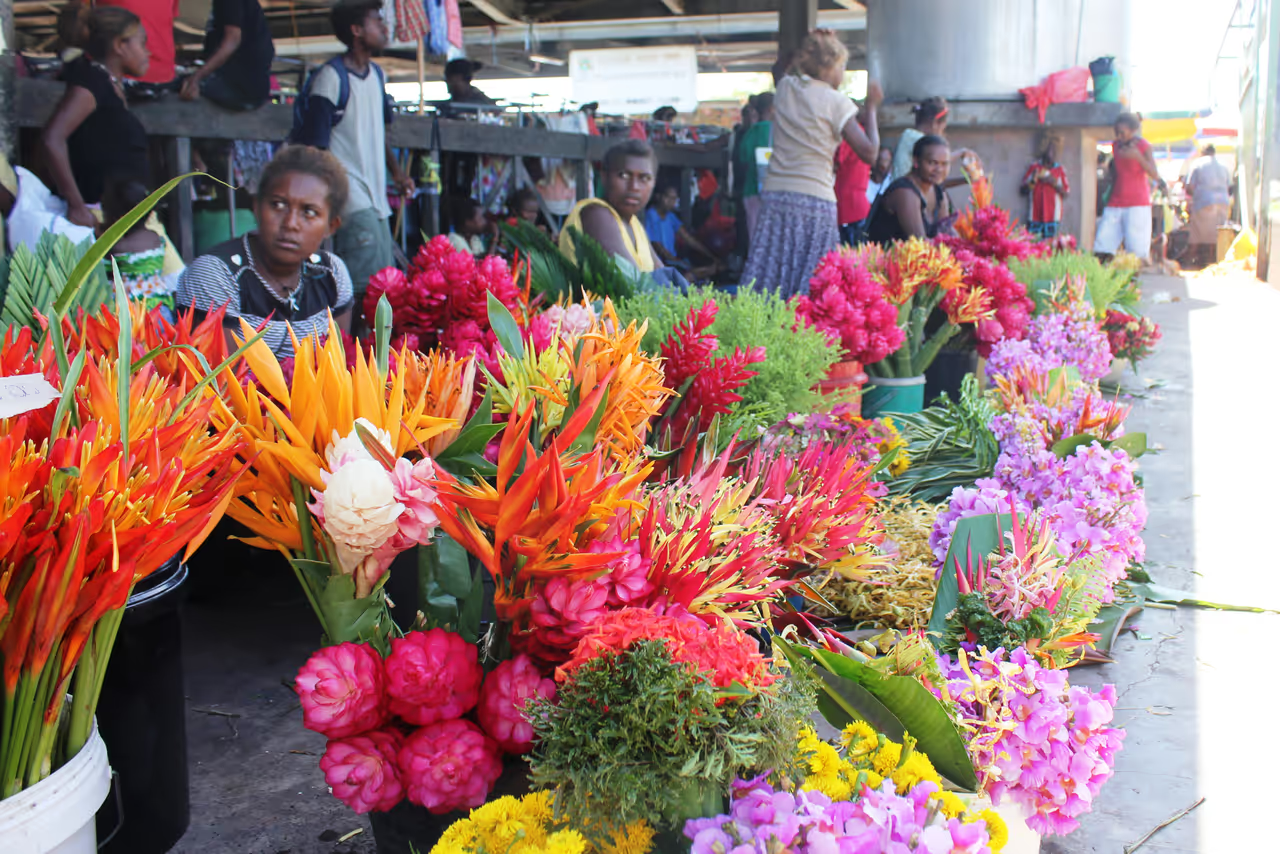
    Far removed from the bustling central hub, this small suburban market on the western edge of the city offers a highly intimate local experience. The suburb of White River is famously home to a large Bellonese population who have settled along the riverbanks. The market here is much quieter, cheaper, and friendlier than its downtown counterpart. You will find incredible fresh produce and unique snacks specific to the Polynesian outliers. It is a fantastic place to strike up a genuine conversation with the locals away from the tourist trail.

    HISTORY & HIGHLIGHTS

    Following the establishment of Honiara as the capital, people from all over the Solomon Islands began migrating to the city seeking work and education. Among them was a significant population from the Polynesian island of Bellona. Finding the city centre overcrowded, they established permanent and semi permanent communities along the peaceful banks of the White River on the western outskirts of town. Over the decades, this settlement grew into a vibrant, distinct neighbourhood with its own micro economy and local market. The White River market became a crucial social hub where the Bellonese community could trade traditional goods and maintain their cultural ties. Today, it remains a bustling yet highly authentic suburban centre, completely untouched by mainstream tourism and fiercely proud of its unique cultural identity.

    Events spanning 30 years

    YEAR 1965

    Bellonese Migration

    Significant numbers of people from Bellona Island begin settling along the banks of the White River.

    YEAR 1980

    Suburban Expansion

    The settlement rapidly expands, leading to the establishment of an informal but highly active local trading market.

    YEAR 1995

    Community Consolidation

    The White River area firmly establishes itself as the primary cultural and economic hub for the urban Bellonese population.

    LOCATION

    Loading map...
  • Honiara Children's Park

    CHILDREN'S PARK
    45 M

    Tucked away along the eastern coast of the city, this is one of the very few public recreation areas accessible to local families, as much of the surrounding coastline is privately owned. Maintained by a dedicated local beautification committee, the park provides a rare, safe green space where island children gather to play. The park is currently fighting an ongoing battle against coastal erosion, making it a poignant symbol of the community's dedication to preserving their environment. It is a fantastic, completely unpretentious spot to sit back and observe authentic family life in the capital. The ocean breezes here are incredibly refreshing.

    HISTORY & HIGHLIGHTS

    As Honiara expanded rapidly along the coastline, the majority of the prime beachfront property was either commercialised or snapped up for private residential use. Recognising the severe lack of safe, open recreational areas for the city's youth, the Honiara Beautification Committee fought to secure and develop this small parcel of land on the eastern coast. Today, the Children's Park stands as a vital community asset, though it faces a constant and literal battle against the encroaching Pacific Ocean. Studies have recorded significant coastal erosion eating away at the park's boundaries, prompting grassroots efforts to construct retaining walls. Despite these environmental challenges, it remains a beloved local sanctuary, serving as a powerful testament to the community's resilience and their commitment to providing a safe haven for the next generation.

    Events spanning 17 years

    YEAR 1995

    Park Established

    The Honiara Beautification Committee successfully secures a rare parcel of public coastal land to create a safe recreation area for local children.

    YEAR 2010

    Erosion Threat Identified

    Environmental studies highlight severe coastal erosion threatening to wash away the park's boundaries into the sea.

    YEAR 2012

    Community Protection Efforts

    Local grassroots efforts begin campaigning and raising funds to build retaining walls to save the beloved public space.

    LOCATION

    Loading map...
  • House of Chiefs Pub

    HOUSE OF CHIEFS
    1 H 30 M

    This is the ultimate dive bar of the Pacific, looking slightly intimidating from the outside but offering incredible warmth inside. Located near the St Agnes Mothers Union Guesthouse, it is a brilliantly unpretentious watering hole favoured by the local working men. It features free pool tables, heavily used dart boards, and remarkably cheap local beer. Visitors who venture inside are almost always greeted with massive smiles and immediate invitations to join a game. It is the absolute best place to experience the raw, authentic, and highly friendly social life of the capital.

    HISTORY & HIGHLIGHTS

    In a rapidly modernising city where upscale hotel bars increasingly cater to foreign workers and tourists, the House of Chiefs has steadfastly refused to change. For years, it has served as an essential social anchor for the local male workforce, providing a highly affordable and relaxed environment to unwind after gruelling days in the tropical heat. The pub has survived periods of intense civil unrest and economic hardship, always keeping its doors open to the community. It operates on a foundation of mutual respect and easy camaraderie, where social hierarchies are left at the door in favour of a shared game of pool. It is a brilliant, slightly rugged survivor of the old island days, representing the true, unfiltered social spirit of the everyday islander.

    Events spanning 30 years

    YEAR 1985

    A Local Institution Opens

    The pub opens its doors near the town council boundary, quickly becoming a favoured spot for local labourers.

    YEAR 2001

    Surviving the Tensions

    Despite intense ethnic conflict raging through the city, the pub remains a neutral ground for patrons to gather safely.

    YEAR 2015

    Enduring Authenticity

    As glossy new hotel bars open along the coast, the House of Chiefs famously refuses to modernise, keeping its rugged charm intact.

    LOCATION

    Loading map...
  • Watapamu Village Replica

    WATAPAMU VILLAGE
    45 M

    Hidden quietly behind the National Art Gallery inside the botanical gardens, this charming exhibit is easily missed by standard tour groups. It features a brilliant full scale representation of a typical traditional island village. The meticulously constructed huts showcase the brilliant indigenous architectural techniques using woven palm fronds and bamboo. It is named after a nearby water pump and provides a highly peaceful, shaded area to explore. Wandering through it feels like stepping far out into the remote provinces without ever leaving the capital.

    HISTORY & HIGHLIGHTS

    As Honiara rapidly developed into a modern concrete capital during the late twentieth century, there was a growing fear that the traditional architectural skills of the provinces were being lost to urbanisation. To combat this, cultural preservationists initiated the construction of the Watapamu village replica in the early 1980s. Master builders from various provinces were brought to the capital to construct authentic dwellings using purely traditional materials and ancient techniques. The resulting village serves as a vital educational tool for young islanders born in the city who have never experienced life in a rural setting. It stands as a proud celebration of indigenous engineering, demonstrating how local designs are perfectly adapted to survive the fierce tropical climate. The replica remains a quiet, beautifully maintained sanctuary of heritage right in the middle of the urban sprawl.

    Events spanning 4 years

    YEAR 1981

    Preservation Project Initiated

    Cultural leaders decide to build a traditional village replica in the capital to preserve ancient architectural knowledge.

    YEAR 1981

    Master Builders Arrive

    Skilled craftsmen from across the nine provinces gather in Honiara to construct authentic traditional huts without modern tools.

    YEAR 1985

    Educational Integration

    The completed Watapamu village officially becomes a key educational site for urban school children learning about their heritage.

    LOCATION

    Loading map...
KEEP EXPLORING

More to see in Honiara