Nakanoshima Park
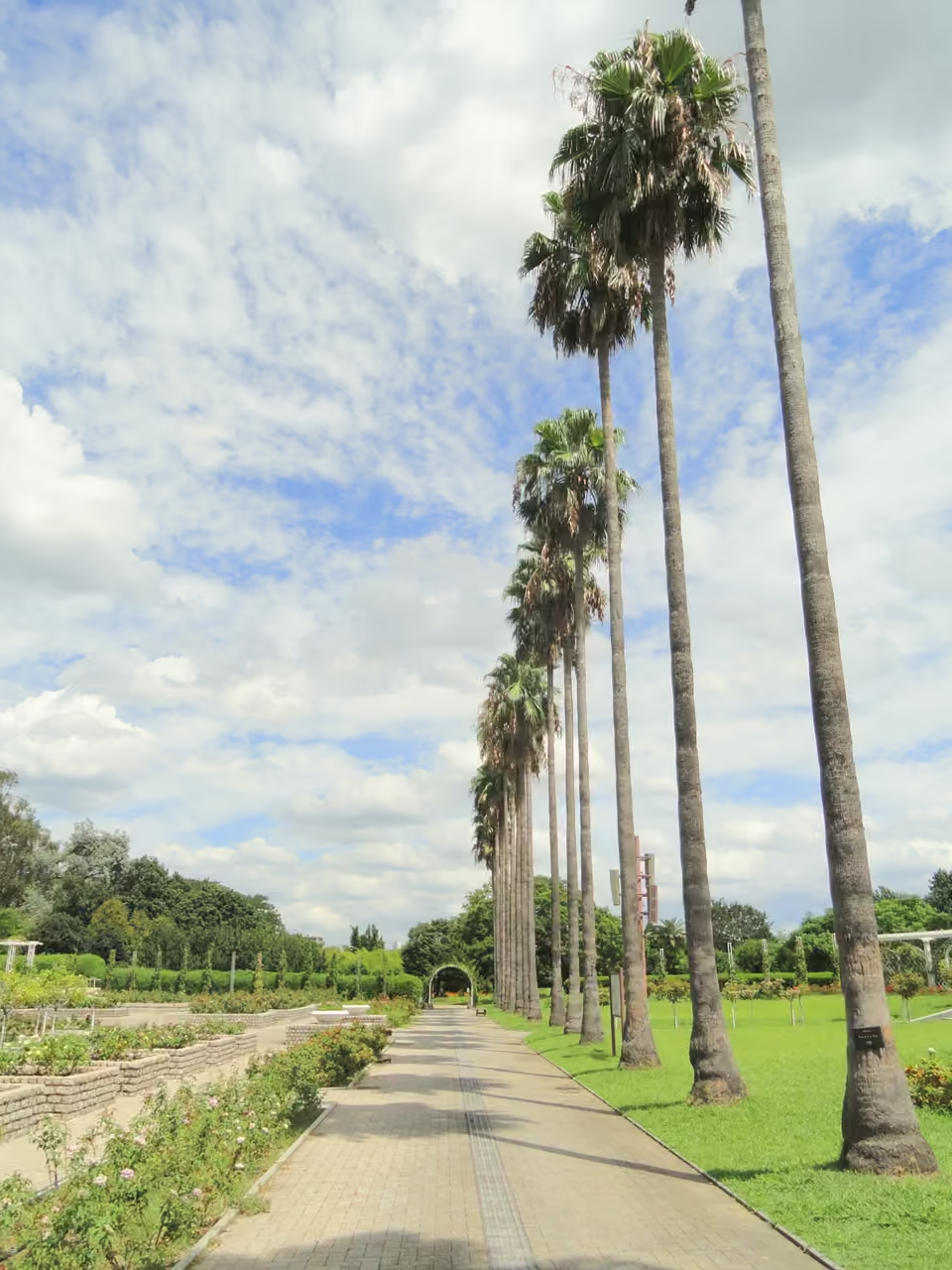
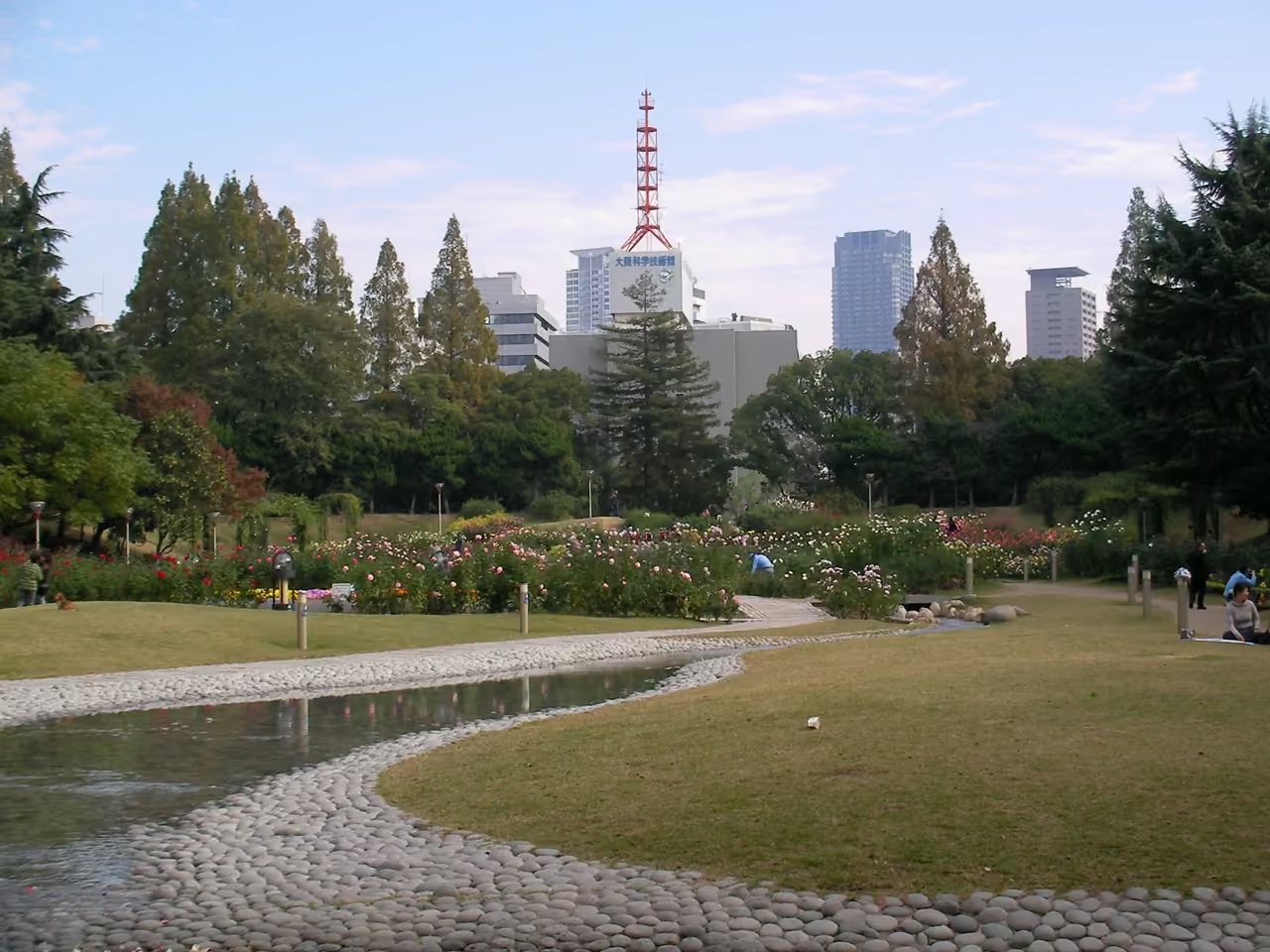
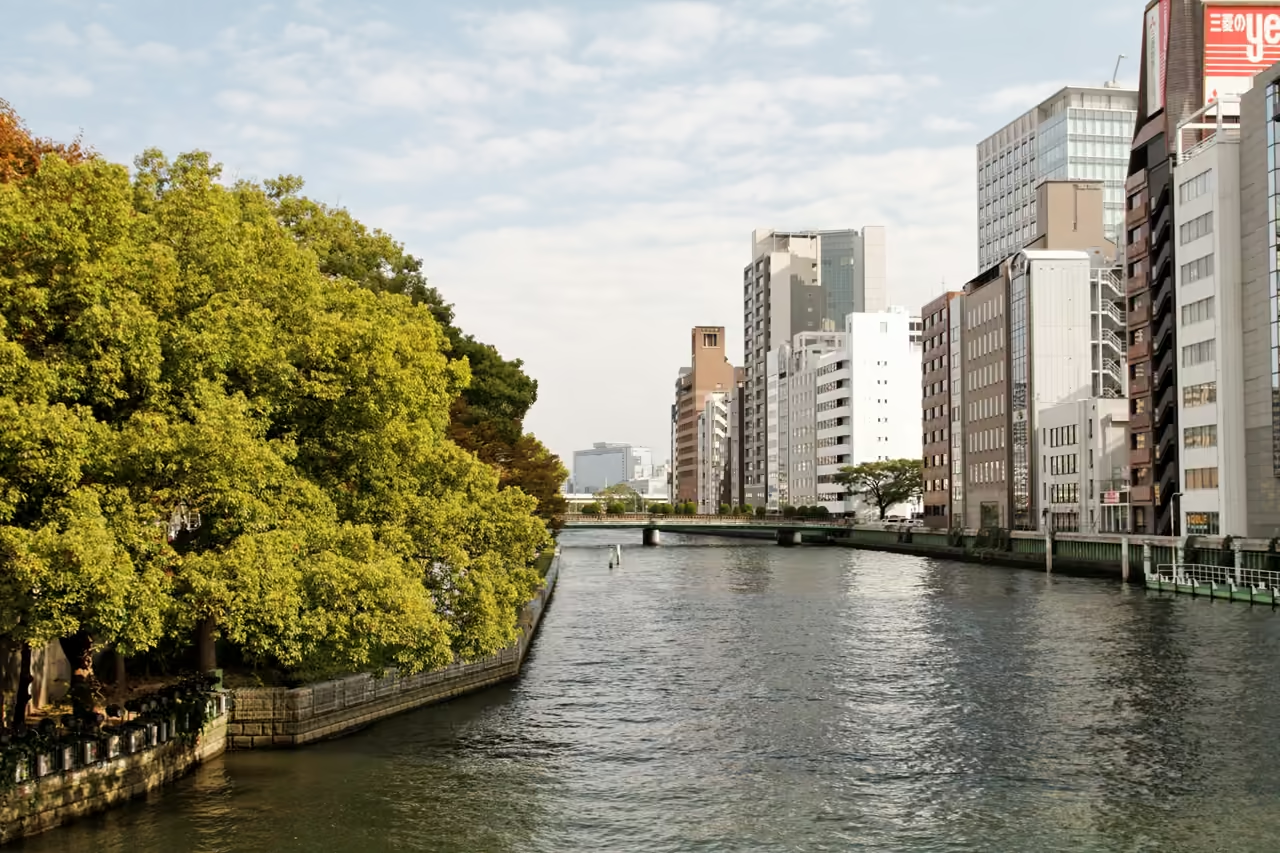
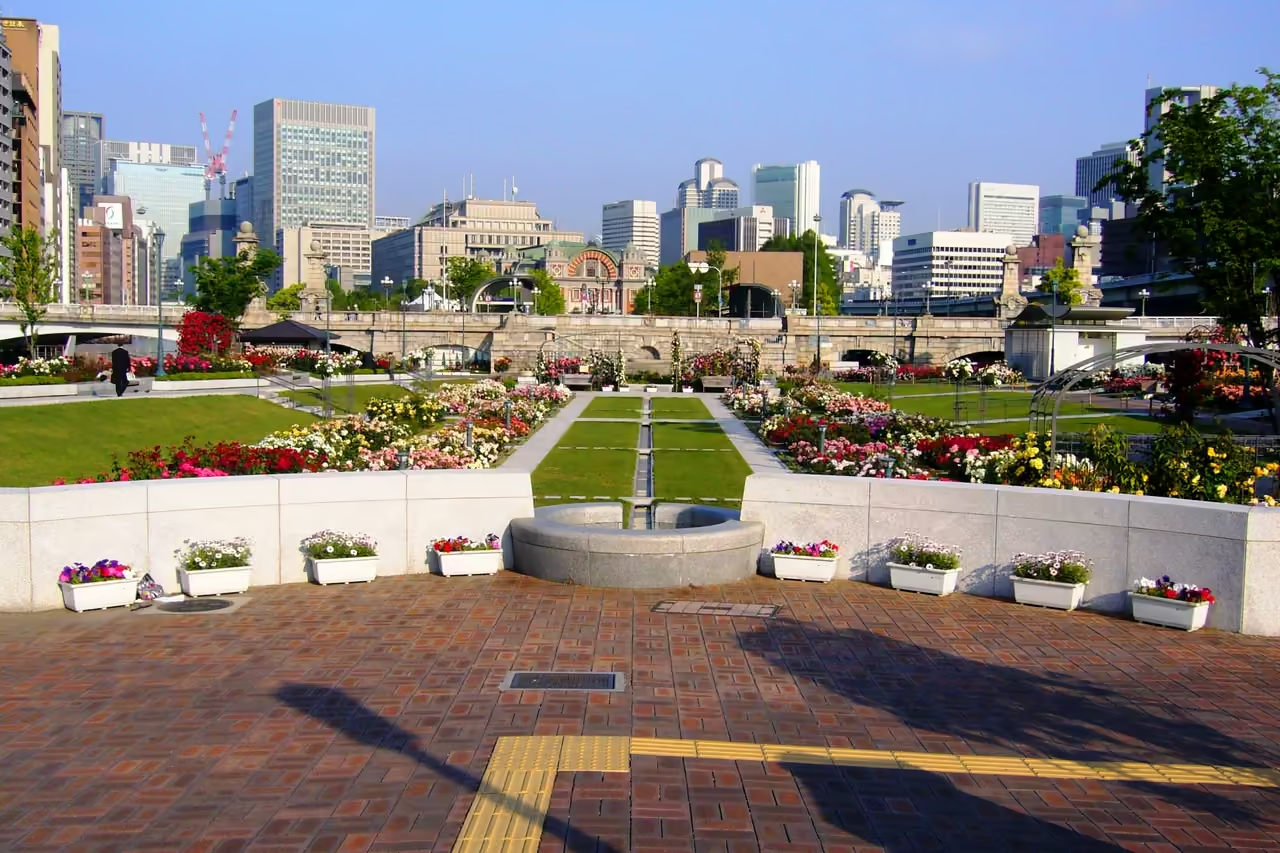
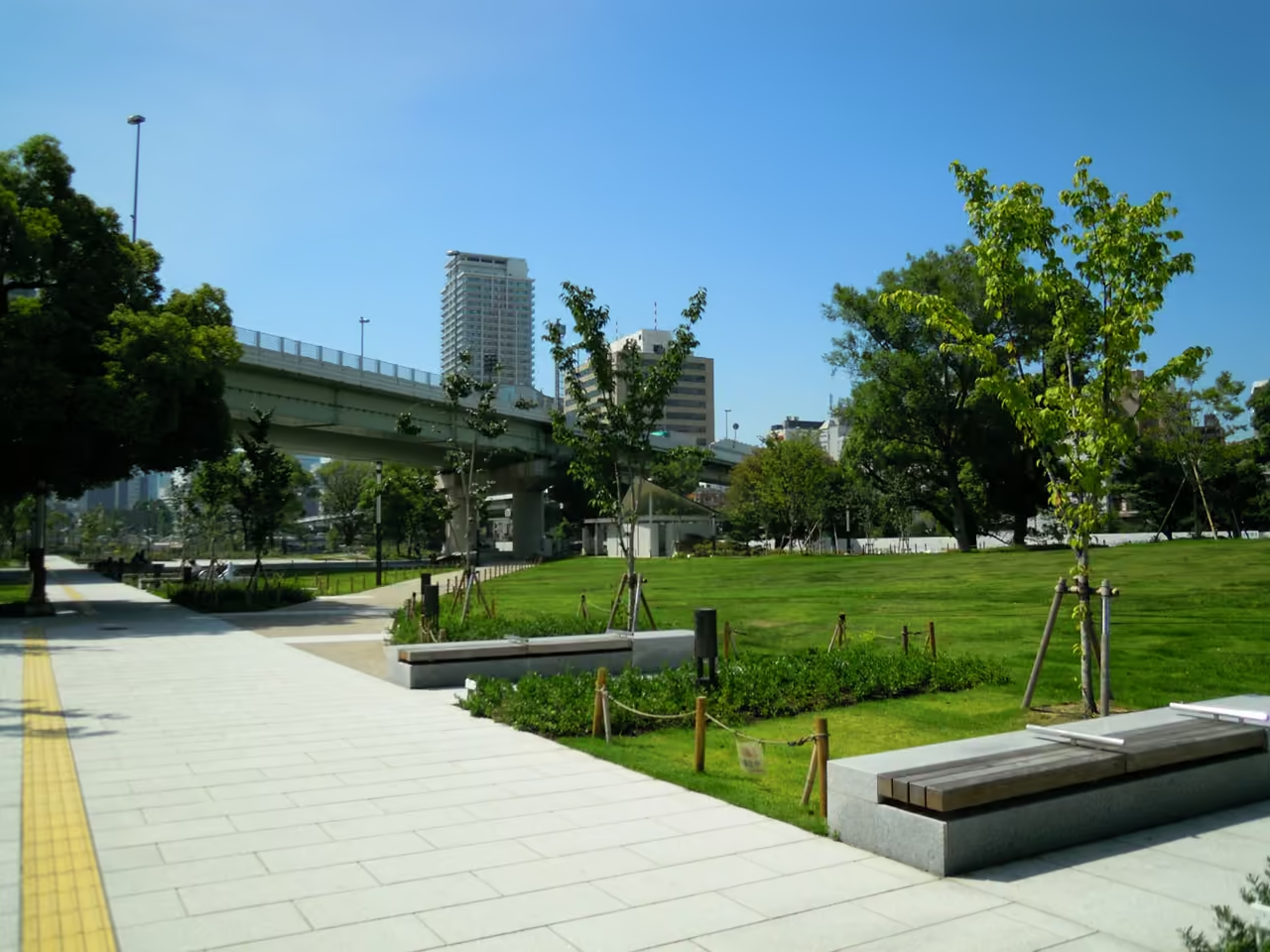
Wedged onto a slender sandbank between the Dojima and Tosabori rivers, Nakanoshima Park is the green relief valve of central Osaka. Glass office towers crowd the opposite banks, yet down by the water you hear lapping currents instead of busy streets, save for the occasional rumble of traffic on the elevated Hanshin Expressway slicing above the flowerbeds. Every May and October, roughly 4,000 rose bushes across 89 varieties erupt into colour on either side of Barazono Bridge. At midday, suited workers from nearby Kitahama and Yodoyabashi claim almost every sunny bench with convenience store bento boxes, sharing the lawns with cyclists cruising along the riverbank. Stone lions perched atop Naniwabashi Bridge keep watch over the western approach, while grand red brick facades rise behind the trees. Walk all the way to the pointed eastern prow, and you will find the Kensaki Fountain throwing cool mist where the Okawa River splits neatly in two.
Videos
History of Nakanoshima Park
In 1766, river silt piled at the eastern end of Nakanoshima became the improbable base for Yamazaki no Hana, an Edo period reclamation project that turned sandbars into a scenic pleasure quarter. Teahouses and seasonal strollers filled the spit of land where the river split, and by 1879 the newly built Toyokuni Shrine anchored the eastern tip in honour of Osaka's sixteenth century unifier, Toyotomi Hideyoshi. Twelve years later, on 1 December 1891, municipal leaders took the bold step of designating the grounds east of Yodoyabashi as Osaka's very first city park, planting a green flag in the middle of an industrialising metropolis. The turn of the twentieth century swept away almost every trace of that Edo waterfront. Elegant Western style buildings replaced the old wooden pavilions as the Osaka Hotel, the stone Osaka Prefectural Nakanoshima Library, and later the third Osaka City Hall rose along the island's spine. When the grand Osaka City Central Public Hall opened in 1918, Toyokuni Shrine was shifted west of the library to make room, while river engineering works begun in 1915 pushed the island eastward past Tenjinbashi Bridge. Around the same time, the new Naniwabashi Bridge arched across both rivers with pairs of carved stone lions guarding its approaches, completing the park's transformation into a showcase of modern Japanese civic ambition. Over the decades that followed, the park absorbed the shifting tides of the twentieth century, from hosting the 28 metre mast of the retired dispatch ship Mogami in 1929 to enduring post war requisitioning by Allied Occupation forces before returning fully to Osaka's citizens. A major turning point arrived in March 2009, when a complete waterfront overhaul swept away aging barriers, replaced the old circular flowerbed with dual rose gardens bridged across an old canal line, and opened the dramatic Kensaki tip to the water. Recent additions, including Tadao Ando's concrete Children's Book Forest in 2020 and an official boundary expansion to 10.6 hectares in January 2024, ensure that Osaka's oldest municipal park remains one of its liveliest civic rooms.
12 events spanning 258 years
Fun Facts
10- 01
After the Second World War, portions of the park precinct and its surrounding civic buildings were requisitioned for use by Allied Occupation forces before gradually returning to public hands.
- 02
Along the Nakanoshima Promenade stretch of the grounds, ten outdoor sculptures turn an everyday walk beneath the canopy into a free open air gallery.
- 03
Before the comprehensive 2009 renewal rearranged the flowerbeds into East and West sections, the eastern garden was famous for a circular rose plot that drew local photographers for generations.
- 04
Famed Osaka architect Tadao Ando left a double mark on the park by conceptualising the Kensaki Fountain at the island's tip and personally funding and designing the Nakanoshima Children's Book Forest right on the grounds.
- 05
For eighty years, a 28 metre steel mast and aft bridge from the decommissioned Imperial Japanese Navy dispatch vessel Mogami towered over the park grounds until structural corrosion forced its dismantling in 2009 and relocation to the Yamato Museum in Kure.
- 06
Inside the Museum of Oriental Ceramics, located within the park boundaries, sits one of the finest collections of Korean Goryeo celadon and Chinese ceramics on earth, anchored by the renowned Ataka Collection.
- 07
Osaka Prefectural Route 801, known as the Kita Osaka Cycle Line, runs straight through the park, making it an unusual urban sanctuary shared with an official prefectural bicycle route.
- 08
The 1915 expansion of the park was designed by pioneering Japanese landscape architect Shiihara Hyoichi, who shaped dredged soil from Yodogawa River engineering works into new waterfront promenade space.
- 09
The 2009 redesign of the waterfront and gardens earned both a Good Design Award and the Japan Society of Civil Engineers Design Award for transforming an aging riverbank into a cohesive public promenade.
- 10
The north to south water channel dividing the rose garden aligns directly with the former Tenma Horikawa canal, a historic waterway that was later filled in and paved beneath the Hanshin Expressway Moriguchi Route.
FULL PLACE DETAILS
Updated
FULL PLACE DETAILS
UpdatedOVERVIEW & STATS
- Established
- In 1891, making it 135 years old
WEB & AMENITIES
Nakanoshima Park Map & Neighborhood Explorer
This interactive map is centered on Nakanoshima Park. Zoom in and move the map around to automatically discover Wikipedia photos and summaries of other nearby sights, monuments, and historical points of interest and stories in real-time!
Nakanoshima Park FAQ
The rose garden typically reaches peak bloom twice a year, from mid May to early June and again from mid October to early November, when around 4,000 bushes across 89 varieties are in flower.
Entry to the park grounds and rose gardens is completely free and open at all hours, though museums and cultural venues inside the precinct such as the Museum of Oriental Ceramics have their own opening hours and admission rules.
Naniwabashi Station on the Keihan Nakanoshima Line sits directly beside the park, while Kitahama, Yodoyabashi, and Oebashi stations are all just a short walk away across the surrounding bridges.
Kensaki means sword point and refers to the sharp eastern tip of the island where the Okawa River divides into the Dojima and Tosabori rivers. It features a waterfront plaza and a fountain conceptualised by architect Tadao Ando.
Yes, the Kita Osaka Cycle Line passes straight through the park along the riverbank, making it popular with local riders, though cyclists should slow down near pedestrian areas and the rose beds.
Major Meiji and Taisho era landmarks stand right within the park precinct, including the Osaka City Central Public Hall, the stone columned Osaka Prefectural Nakanoshima Library, and the adjacent Osaka City Hall.
The closest place to visit near Nakanoshima Park is Museum of Oriental Ceramics, around 88 m away. Other things to do near Nakanoshima Park include Osaka City Central Public Hall (214 m), Osaka Prefectural Nakanoshima Library (293 m) and Kitahama Riverside Terraces (367 m). All of these are within roughly 367 m of Nakanoshima Park, close enough to walk.
It dates back to 1891, making it 135 years old.
While we strive to keep this information accurate and up to date, we recommend verifying any details independently before making decisions based on them.
Places near Nakanoshima Park
Make the most of your trip. Check out these top-rated spots located nearby.
 88m
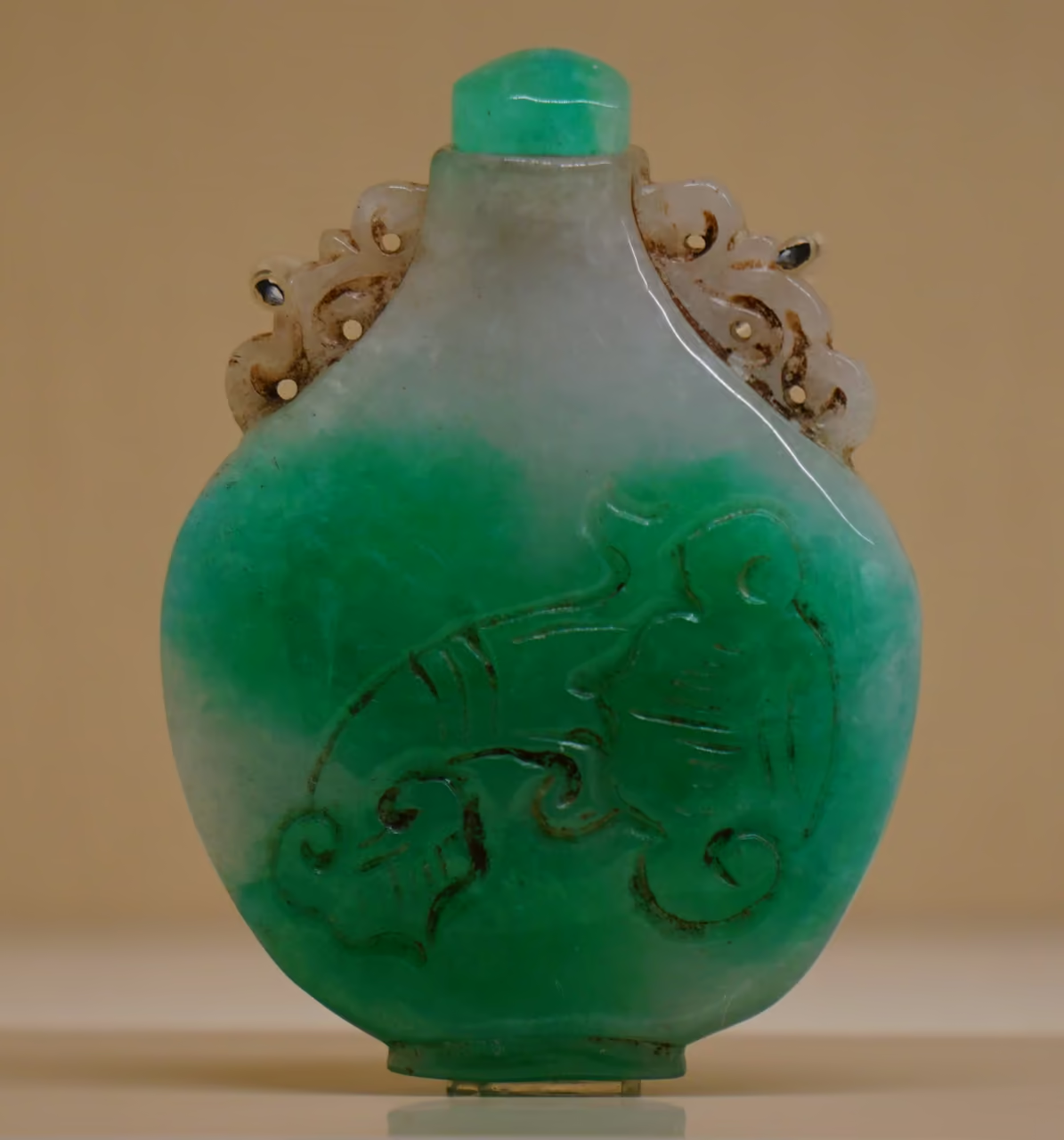
Museum of Oriental Ceramics
Set quietly among greenery on Nakanoshima Island, this serene gallery holds two National Treasures and thirteen Important Cultural Properties spanning Chinese Song celadons and luminous Korean Joseon porcelains. Clever rotating turntables allow natural daylight to wash across delicately glazed bowls so visitors spot subtle glaze cracks and brush details invisible under artificial bulbs. Even after major 2024 renovations added a sunlit glass riverside lobby, its calm galleries stay wonderfully uncrowded.
hidden gem view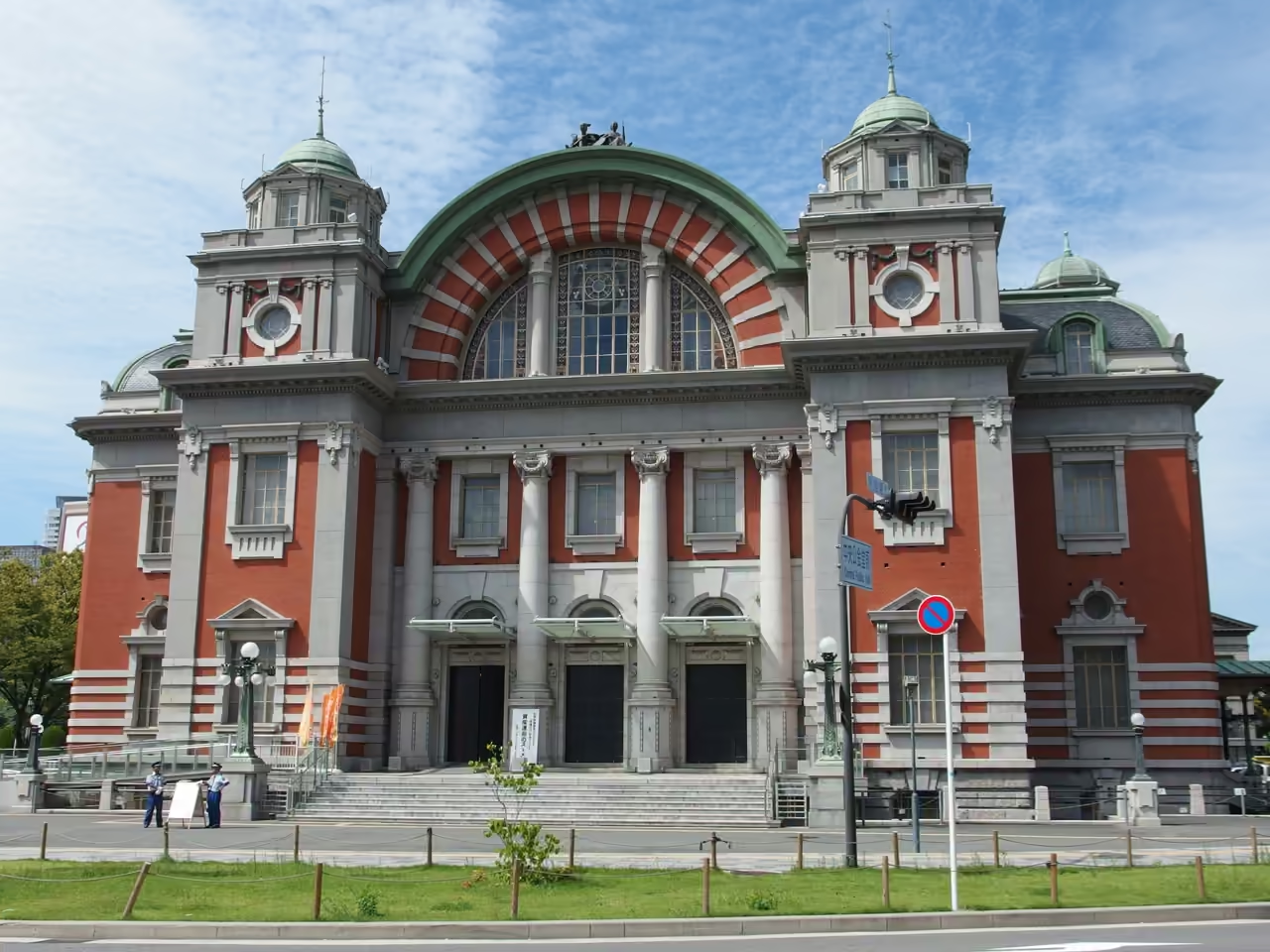 214m
Osaka City Central Public Hall
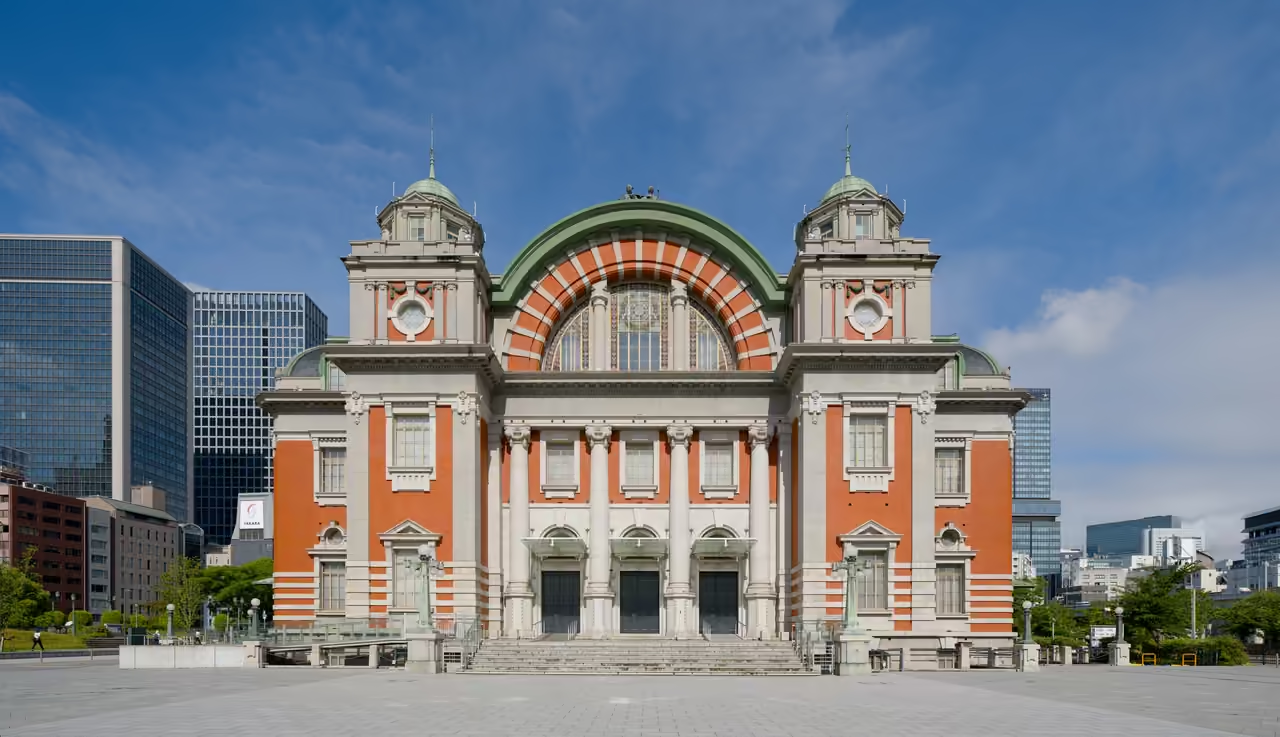
Completed in 1918 through a generous civic gift from stockbroker Einosuke Iwamoto, this red-brick landmark embodies Great Osaka's roaring cultural optimism. Architectural competition designs by Shinichiro Okada and Tatsuno Kingo fused bold Neo-Renaissance arches, white granite trim, and sweeping green copper domes overlooking the Tosabori River. Inside, soaring concert halls and stained-glass lunettes showcase rich Taisho-era craftsmanship. Designated an Important Cultural Property, it remains an active civic concert hall hosting public recitals.
architecture view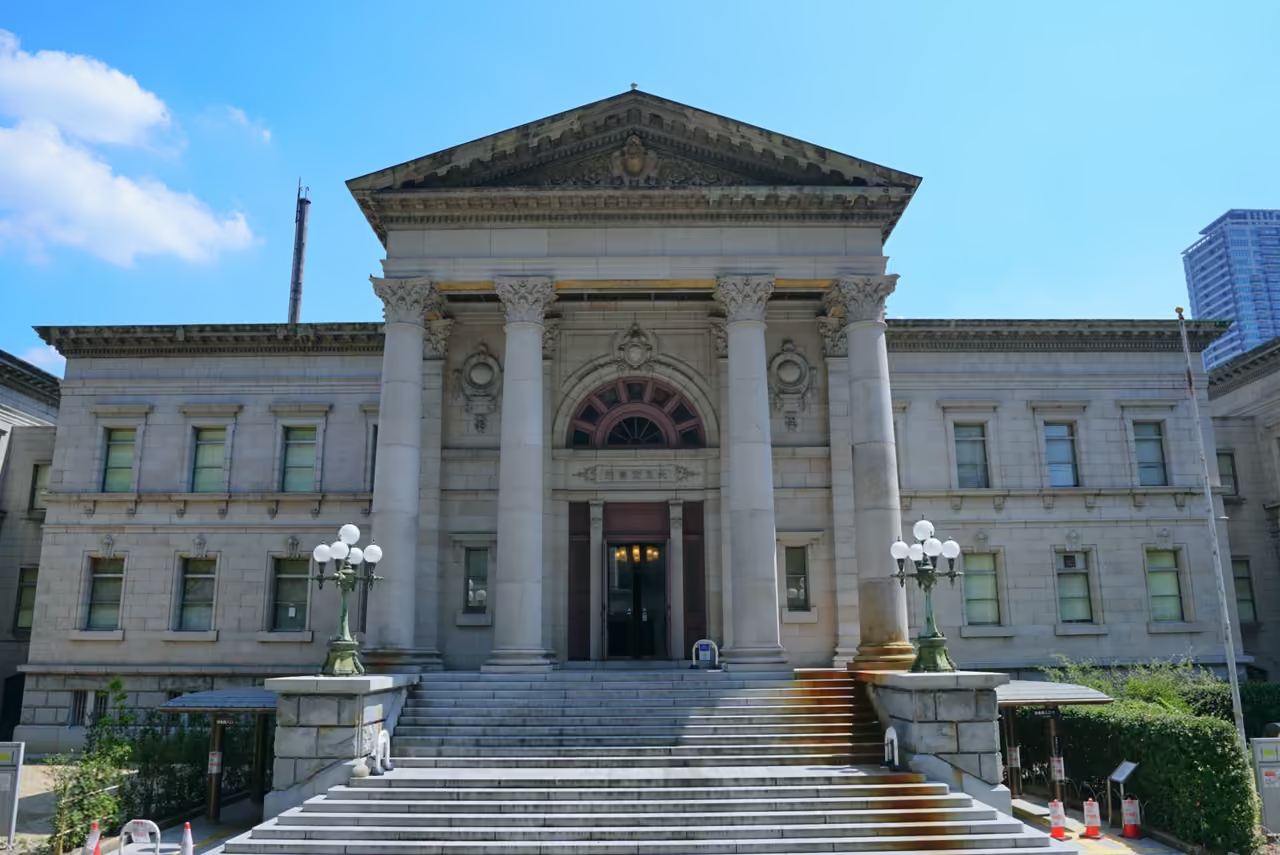 293m
Osaka Prefectural Nakanoshima Library
Financed by the Sumitomo family and opened in 1904 to designs by Magoichi Noguchi, this granite-clad sanctuary pairs classical Corinthian porticoes with a glowing copper central dome. Two symmetrical side wings added in 1922 framed an expansive public reading complex unmatched in Meiji-era Japan. Step inside the entrance foyer to admire marble staircases rising beneath warm stained glass in quiet civic grandeur. Designated an Important Cultural Property, the library still houses Osaka historical archives alongside a beloved smorrebrod cafe.
architecture view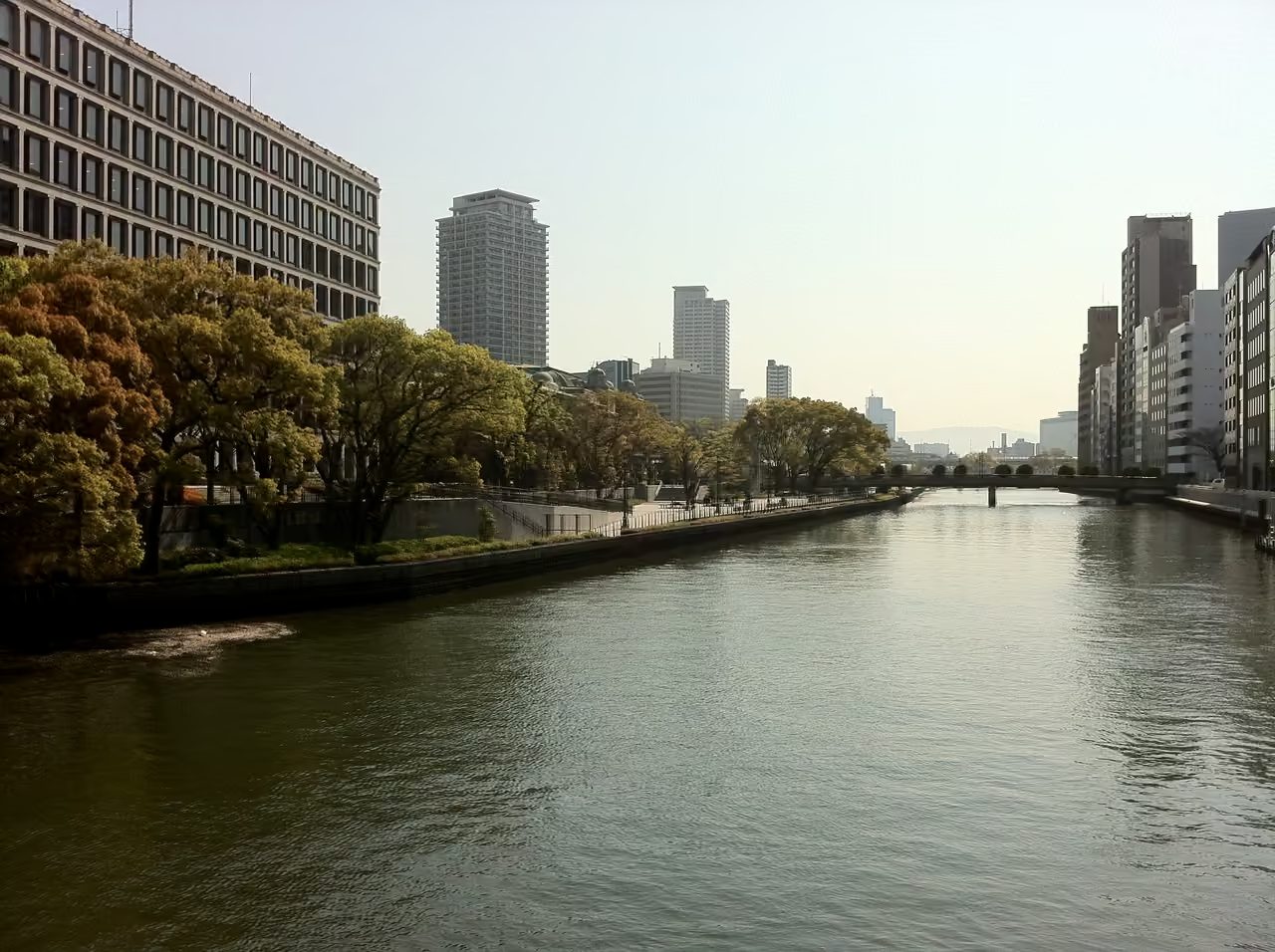 367m
Kitahama Riverside Terraces
Lining the southern bank of the Tosabori River near Kitahama Station, slim historic facades hide timber cafe balconies floating right above the water. Point your camera north across the calm river to capture Nakanoshima's rose beds, classic stone Naniwabashi Bridge, and glowing brick towers in one crisp frame. Golden hour casts pastel reflections across the water while morning coffee steam frames riverside tables.
photo spot view
Featured on These Itineraries and Routes
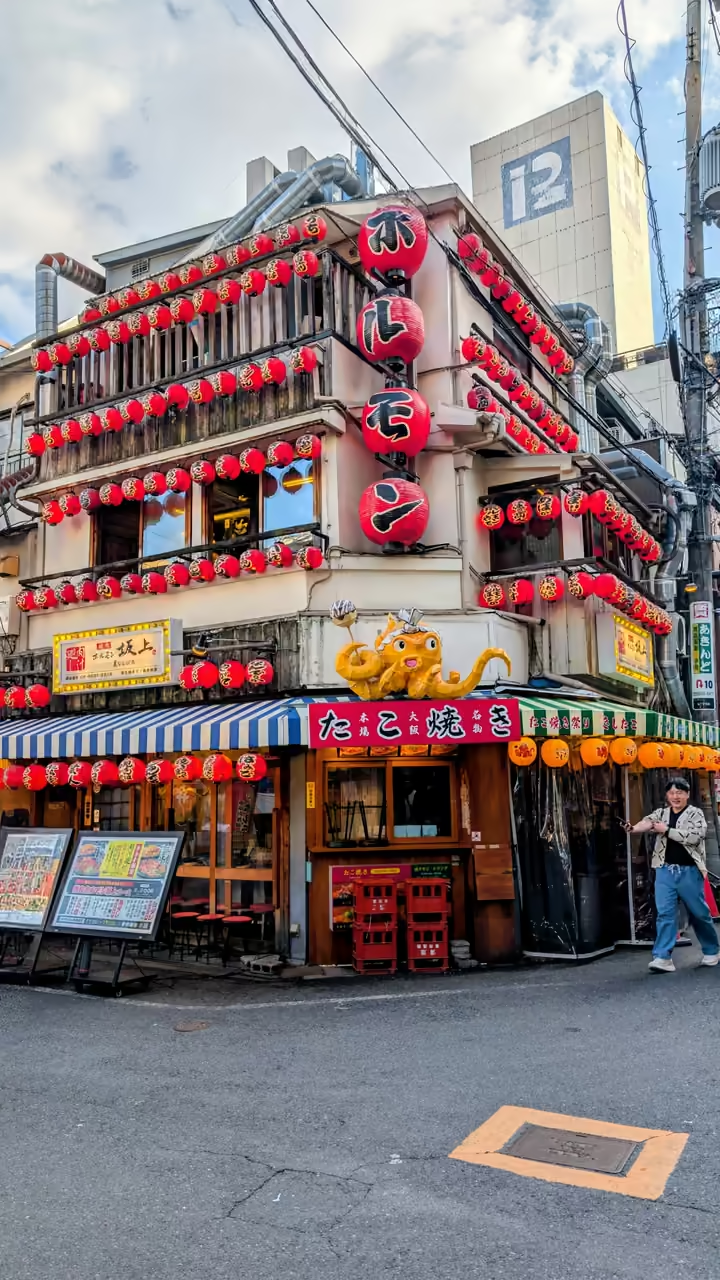
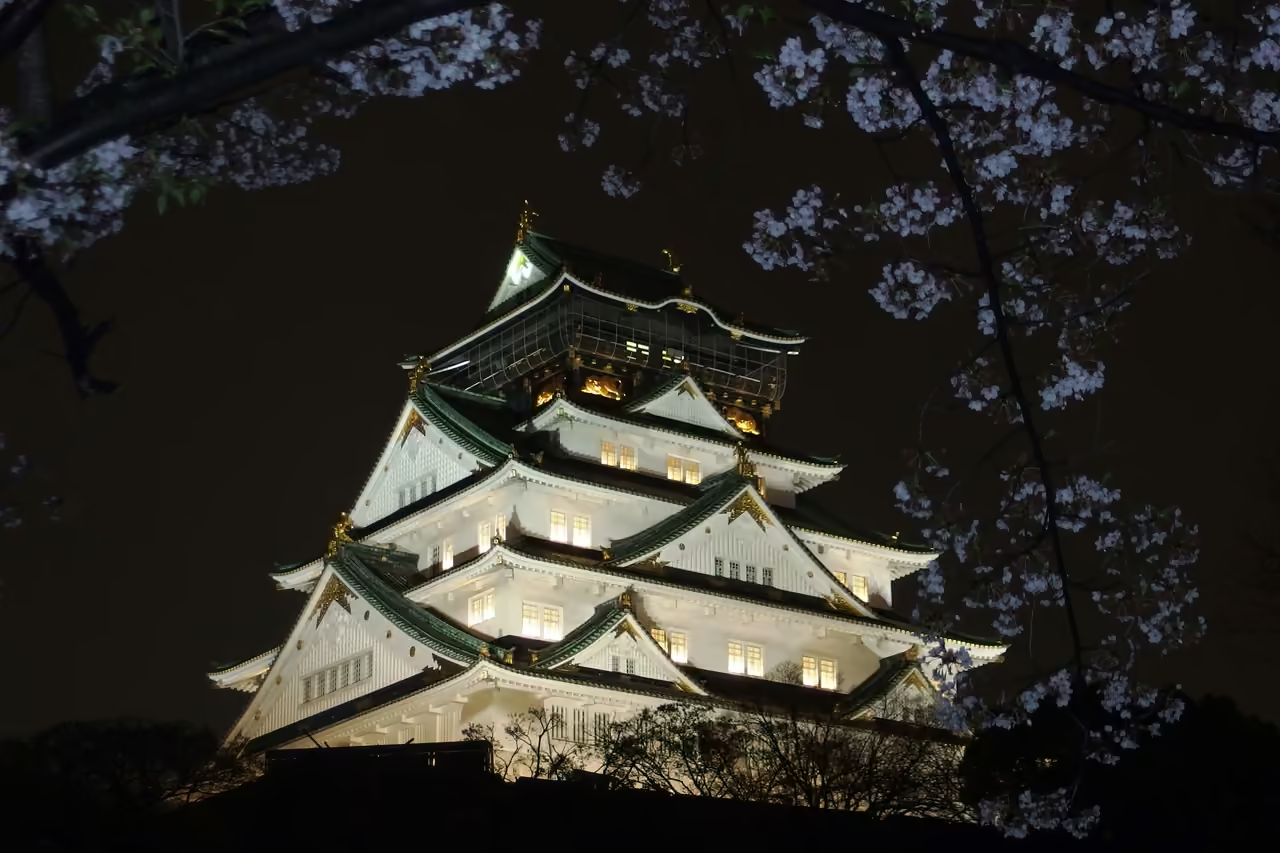
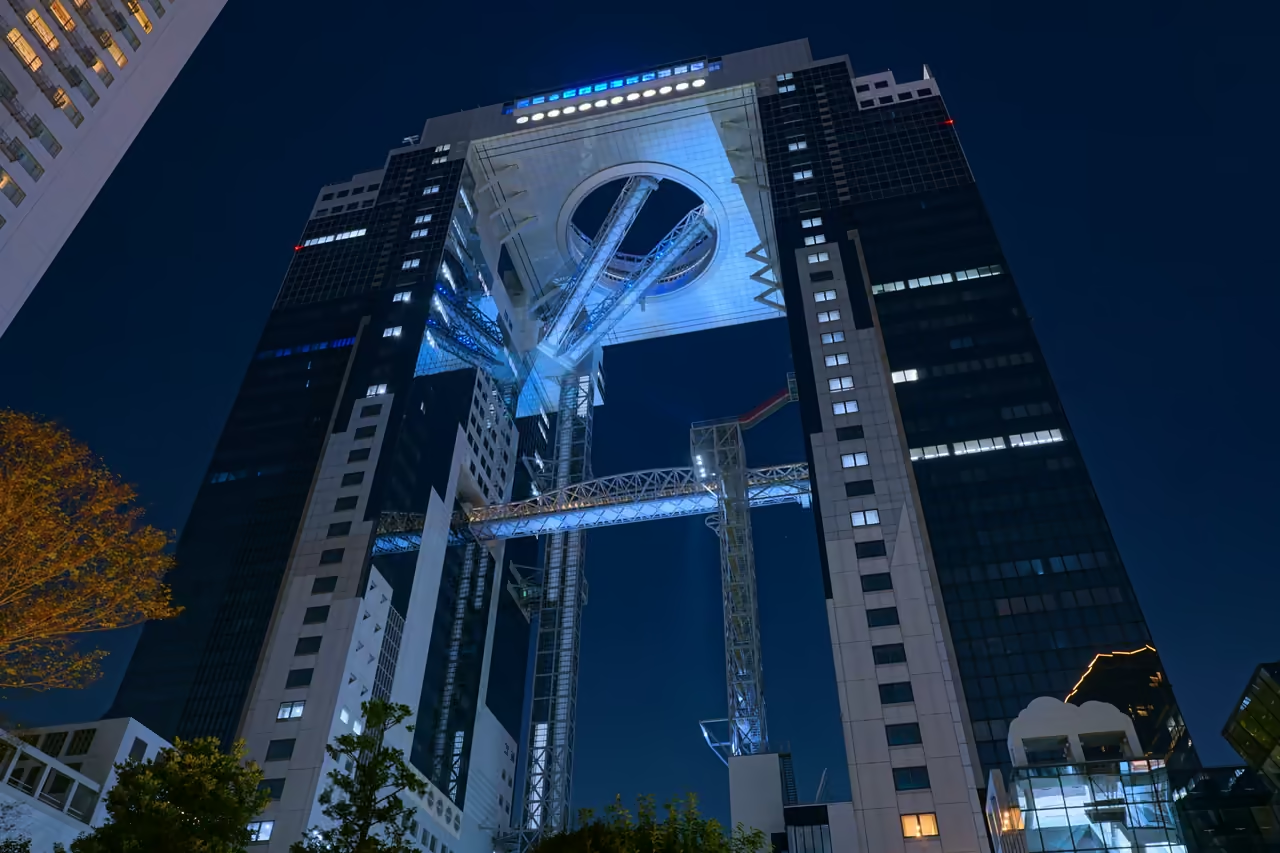
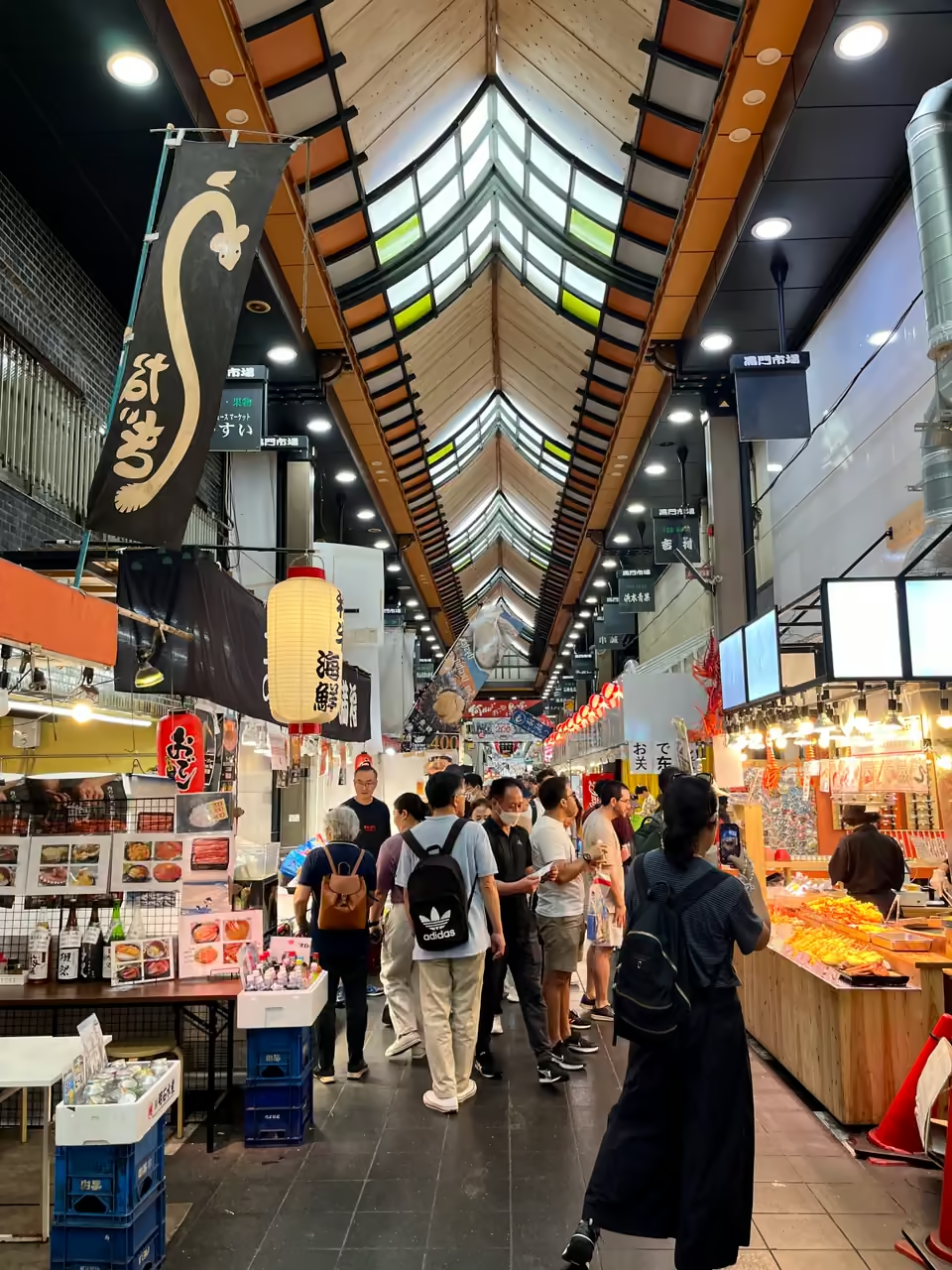
3 Days in Osaka: The Classic City Deep Dive
Paced cleanly across Osaka's three signature zones, this three-day plan pairs headline landmarks with local backstreets and plenty of sit-down feasts. Day one balances fortress history with Minami's lantern lanes, day two links markets to Tennoji and towering skyscrapers, and day three spans Osaka Bay's ocean giants and Nakanoshima's island museums.
view itinerary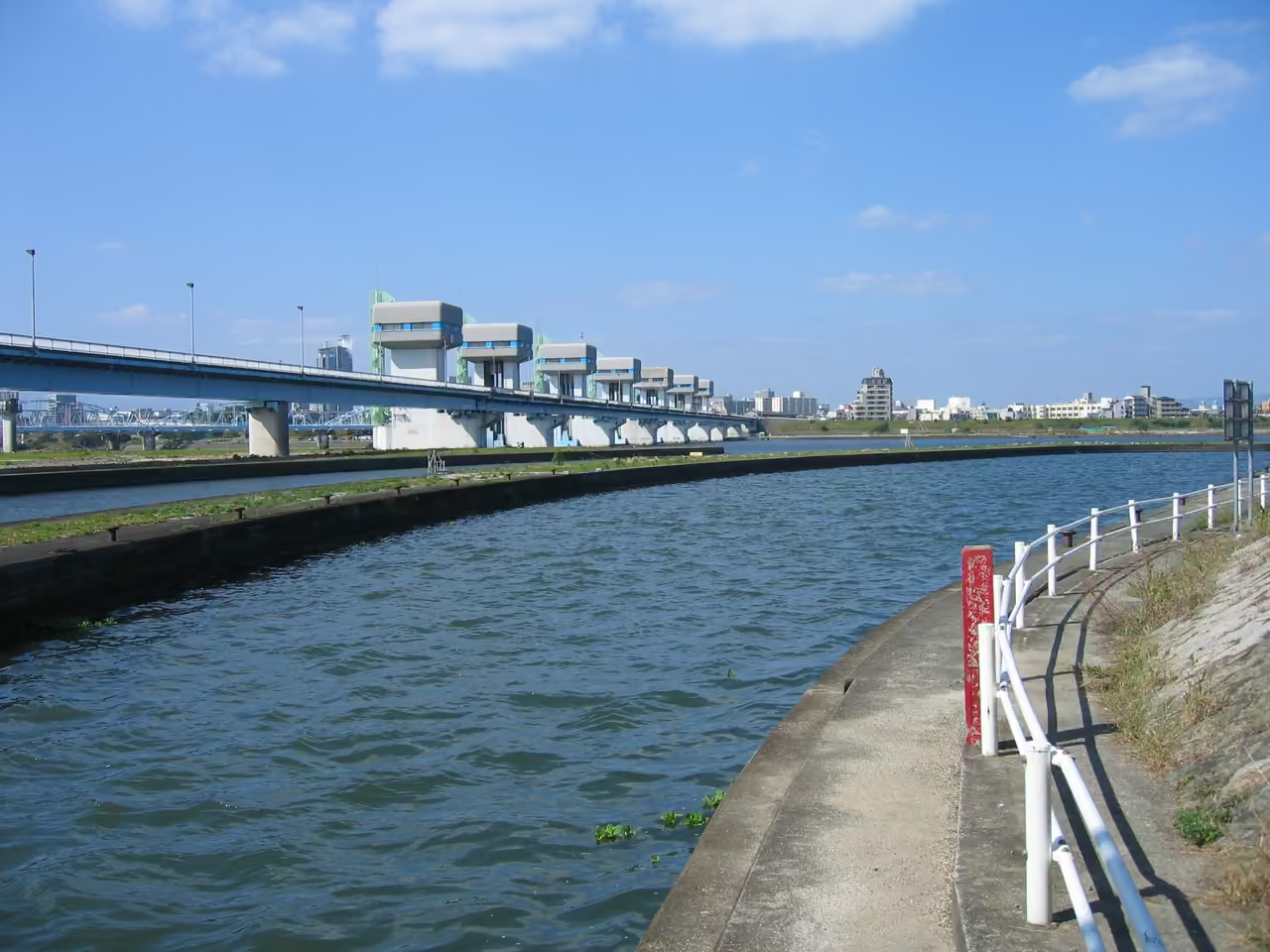
Okawa & Yodogawa Riverside Heritage Loop
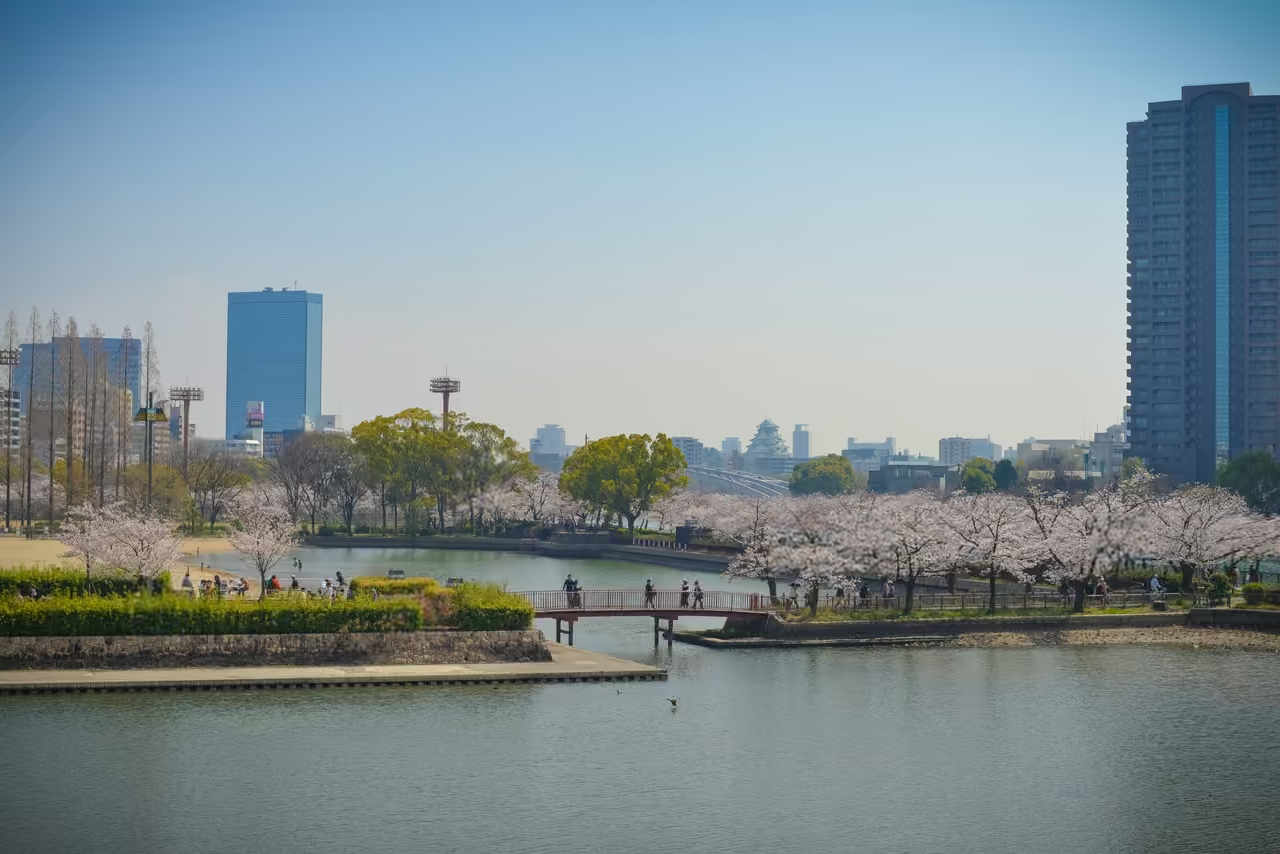
Tracing broad water corridors north of downtown glass towers, this flat, mostly car-free ride captures Osaka's soul as a City of Water. Smooth paved embankments link Meiji-era brick landmarks on Nakanoshima Island with thousands of cherry trees stretching toward historic waterworks on the broad Yodogawa River.
view cycling routeNakanoshima Island Bridges & Rose Stroll
Anchored like a slender riverboat in central Osaka, Nakanoshima Island packs more architectural grace per metre than any other neighbourhood. This relaxed waterside walk passes beneath classic stone bridges, past Meiji-era civic halls and fragrant rose gardens flanked by tall office towers.
view walking route
See all parks & nature in Osaka
Including Namba Parks, Sakuranomiya Park, Tennoji Park, and more