Greek Theatre of Syracuse
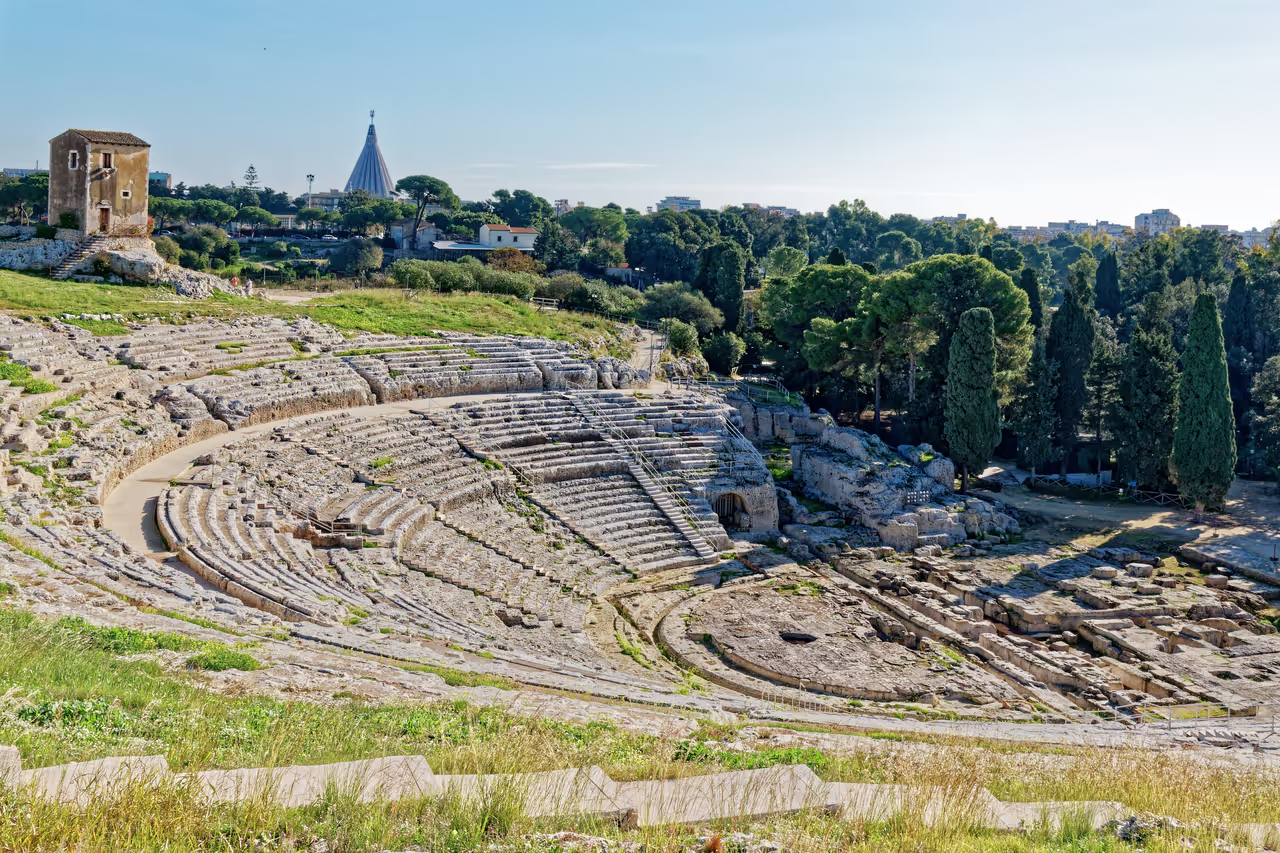
Carved directly into the limestone slopes of Temenite Hill, the Greek Theatre of Syracuse stands as a monumental testament to classical ingenuity and artistic ambition. This ancient masterpiece remains the largest of its kind in Sicily, offering breathtaking views that stretch across the harbour to the island of Ortygia. Visitors can walk the very stone steps where citizens once gathered for democratic assemblies and where great tragedies were first unveiled centuries ago. Beyond its architectural grandeur, the site continues to breathe with life by hosting annual classical dramas that maintain a connection to its storied past. Exploring this landmark offers a chance to stand within a living historical record, feeling the weight and scale of a world that helped shape modern performance. It is an unforgettable highlight of any journey to Syracuse.
Videos
History of Greek Theatre of Syracuse
The origins of the Greek Theatre of Syracuse are rooted in the ambition of a city that saw itself as a rival to Athens. Built directly into the limestone of the Temenite Hill, the structure was more than a place of entertainment. It was the heart of civic life where democratic assemblies were held and where the populace gathered to witness the great works of the era. The architect Damocopos is credited with the initial vision, but it was the patronage of Syracusan leaders that allowed it to become a centre of intellectual exchange. Famous playwrights like Aeschylus brought their works to this stage, bridging the distance between the Greek mainland and the vibrant Sicilian colony. During the Hellenistic period, the theatre underwent a grand transformation under Hiero II. The structure was refined to perfection, with the seating area carved to maximise the acoustics and provide a panoramic view of the harbour and the island of Ortygia. It featured innovative technical elements, such as the Carontean stairs that allowed actors to make dramatic entrances, suggesting that the Syracusans were as obsessed with theatrical spectacle as they were with politics. Even the water supply was masterfully integrated, with the Galermi aqueduct feeding a nearby nymphaeum to cool the space and provide for the needs of the performers and the audience. The later centuries brought challenges. During the Spanish rule in the 16th century, the theatre was treated as a stone quarry, with precious materials stripped away to build fortifications. It lay in neglect for generations, eventually hosting water mills that scarred the ancient steps. However, the theatre never lost its magnetic pull. Since its 20th century revival by the National Institute of Ancient Drama, it has reclaimed its dignity. Today, when the annual classical dramas are performed, the atmosphere shifts, and for a few hours, the modern world fades away, leaving the audience to experience the same stories that echoed through these stones over two millennia ago.
Events spanning 2518 years
Fun Facts
- • A hidden nymphaeum resides above the seating area, fed by the ancient Galermi aqueduct, which provided both ritual water and essential cooling for spectators.
- • Archaeologists identified Carontean stairs beneath the orchestra, which were hidden passages allowing actors to emerge or disappear during plays.
- • During the 18th century, famous travellers such as Vivant Denon were struck by the theatre's ruined yet magnificent state, which helped ignite modern interest in preserving it.
- • During the reign of Hiero II, the stone rows were inscribed with the names of gods like Zeus and royal family members, serving as a permanent record of their influence.
- • In a striking example of historical reuse, the theatre was repurposed in the 16th century as an industrial site housing water-powered mills, known as the mills of Galermi.
- • The ancient stage area once featured a sophisticated system for moving scenery, hinting at the high level of technical innovation possessed by the theatre builders.
- • The original seating capacity was immense, designed to accommodate thousands of citizens, reflecting the central role of theatre in the democratic life of the city.
- • The theatre design purposefully framed the view of the sea and the port of Syracuse, ensuring that the background of the stage was as spectacular as the dramas themselves.
- • The theatre is carved directly into the bedrock of the Temenite hill rather than being built upon it, which demonstrates a massive engineering feat of the ancient world.
- • When Aeschylus visited in the 5th century BC, he adapted his tragedies for this local audience, proving the theatre served as a vital cultural bridge between Syracuse and Athens.
RESOURCES
Official WebsiteGreek Theatre of Syracuse FAQ
While we strive to keep this information accurate and up to date, we recommend verifying any details independently before making decisions based on them.
Greek Theatre of Syracuse Map & Neighborhood Explorer
This interactive map is centered on Greek Theatre of Syracuse. Zoom in and move the map around to automatically discover Wikipedia photos and summaries of other nearby sights, monuments, and historical points of interest and stories in real-time!
Places near Greek Theatre of Syracuse
Make the most of your trip. Check out these top-rated spots located nearby.
 2m
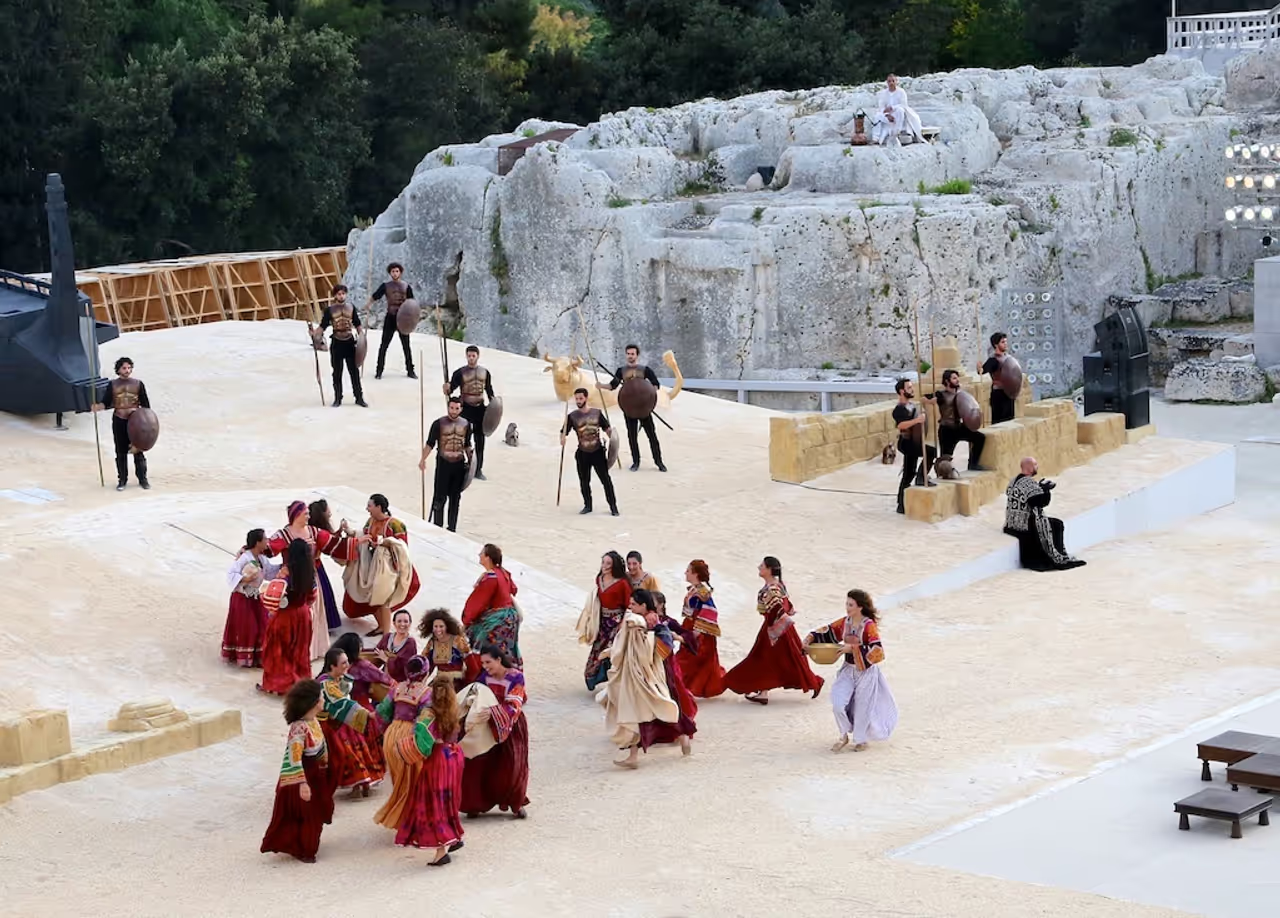
2mClassical Greek Theatre Festival
Organised by the National Institute of Ancient Drama, this prestigious festival brings ancient Greek tragedies and comedies back to life on the very stage where many were first performed millennia ago. World class actors and directors gather to create spellbinding performances under the open sky as the sun sets over the ruins. Sitting on the ancient stone steps to watch plays by Aeschylus or Euripides is a deeply profound cultural experience. The season usually runs from late spring into early summer.
festival view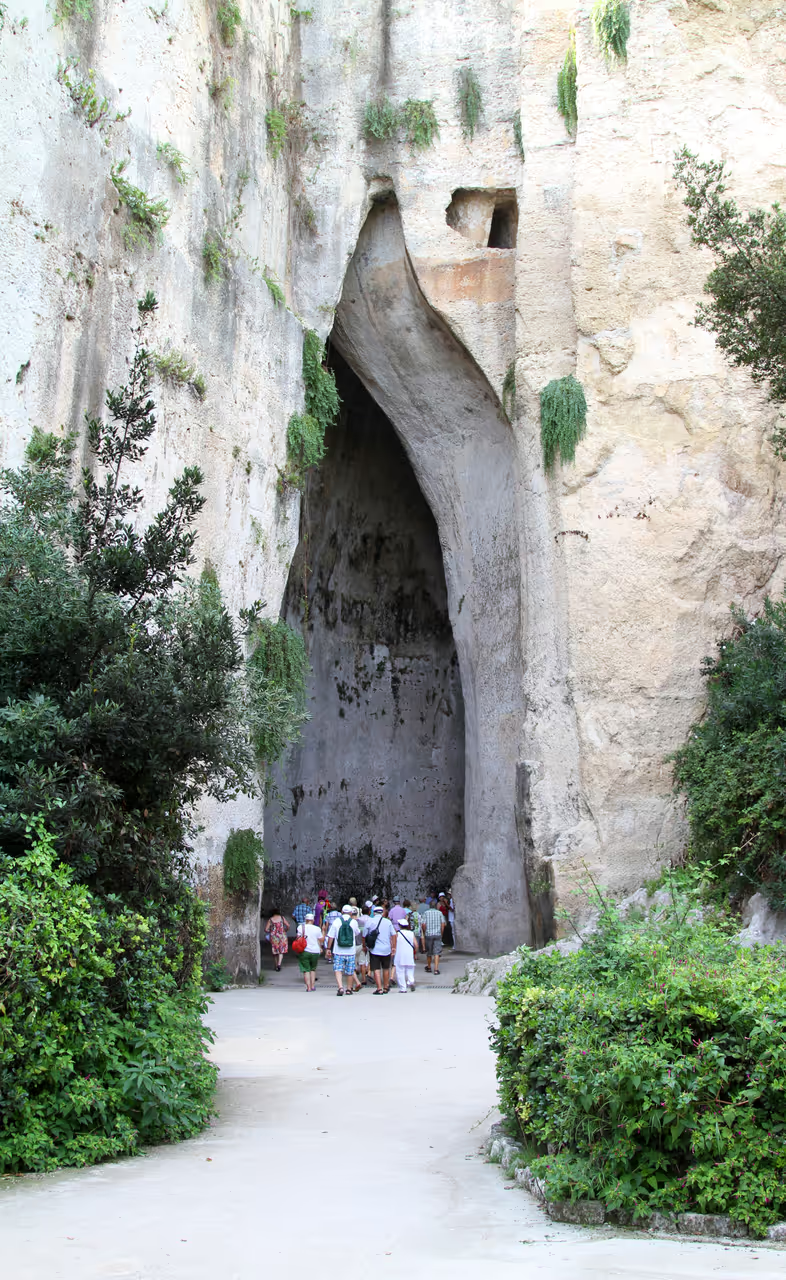 167m
167mEar of Dionysius
Step into the Ear of Dionysius, a remarkable artificial cave carved into the limestone of the Latomia del Paradiso in Syracuse. This cavern is celebrated for its extraordinary acoustic properties and a distinct S-shape that amplifies even the smallest whispers into resounding echoes. Legend has it that the tyrant Dionysius I used this space to eavesdrop on his prisoners, though others suggest it served as an acoustic chamber for the nearby Greek theatre. Today, visitors are left in awe by the towering height of the rock walls and the sheer scale of the engineering. It provides a hauntingly beautiful atmosphere that has inspired writers and artists for generations. Walking through this limestone corridor is a highlight for anyone exploring the archaeological park.
attraction view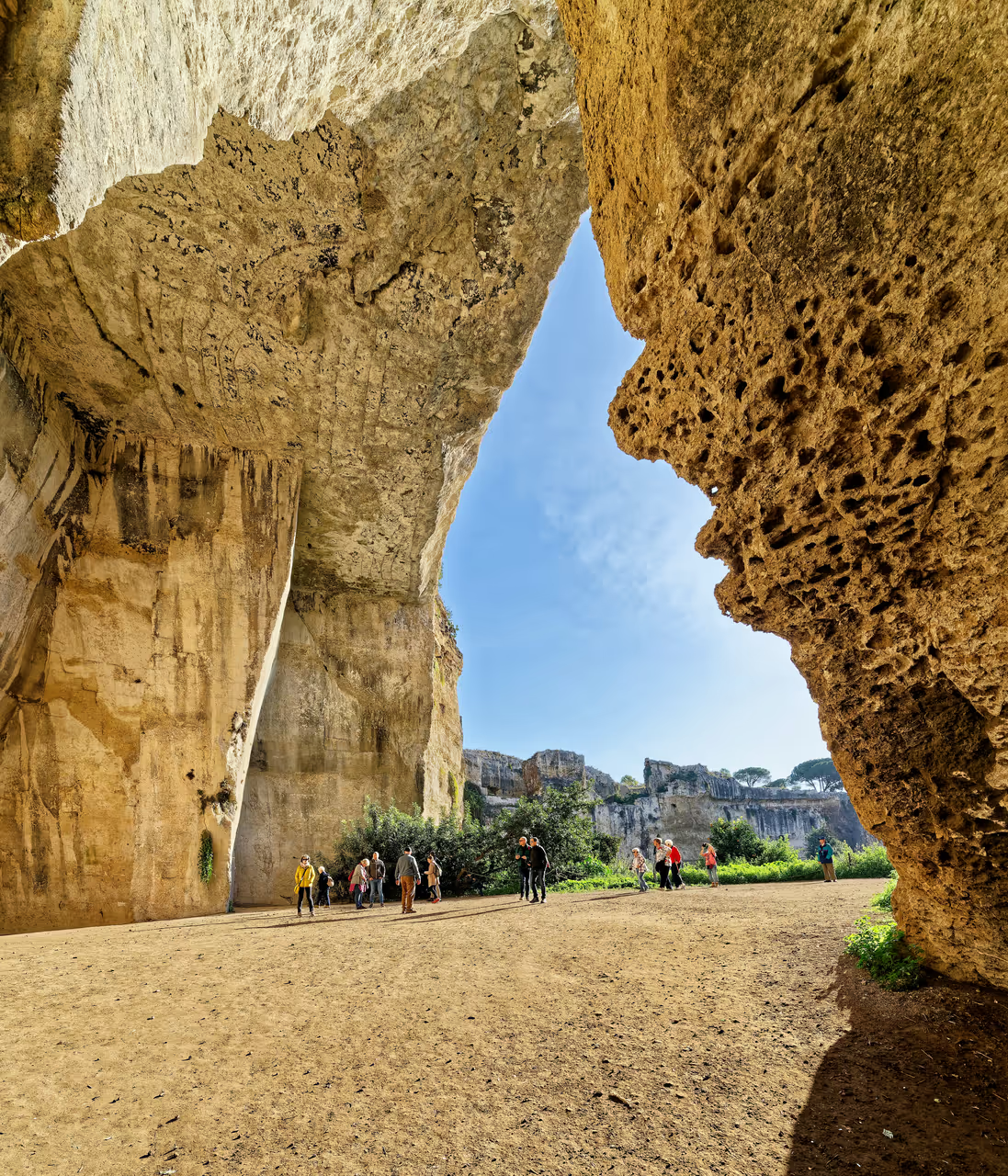 264m
264mNeapolis Archaeological Park
This sprawling complex contains the most staggering concentration of ancient ruins in the region. It acts as an incredible open air museum, showcasing the immense power and wealth of classical Syracuse. Here, you can wander among the colossal seats of the Greek Theatre and marvel at the sheer size of the Roman Amphitheatre. The park is also home to cavernous, vegetation filled quarries where ancient prisoners once toiled. It is an absolutely essential experience for understanding the sheer scale of the ancient metropolis.
highlight view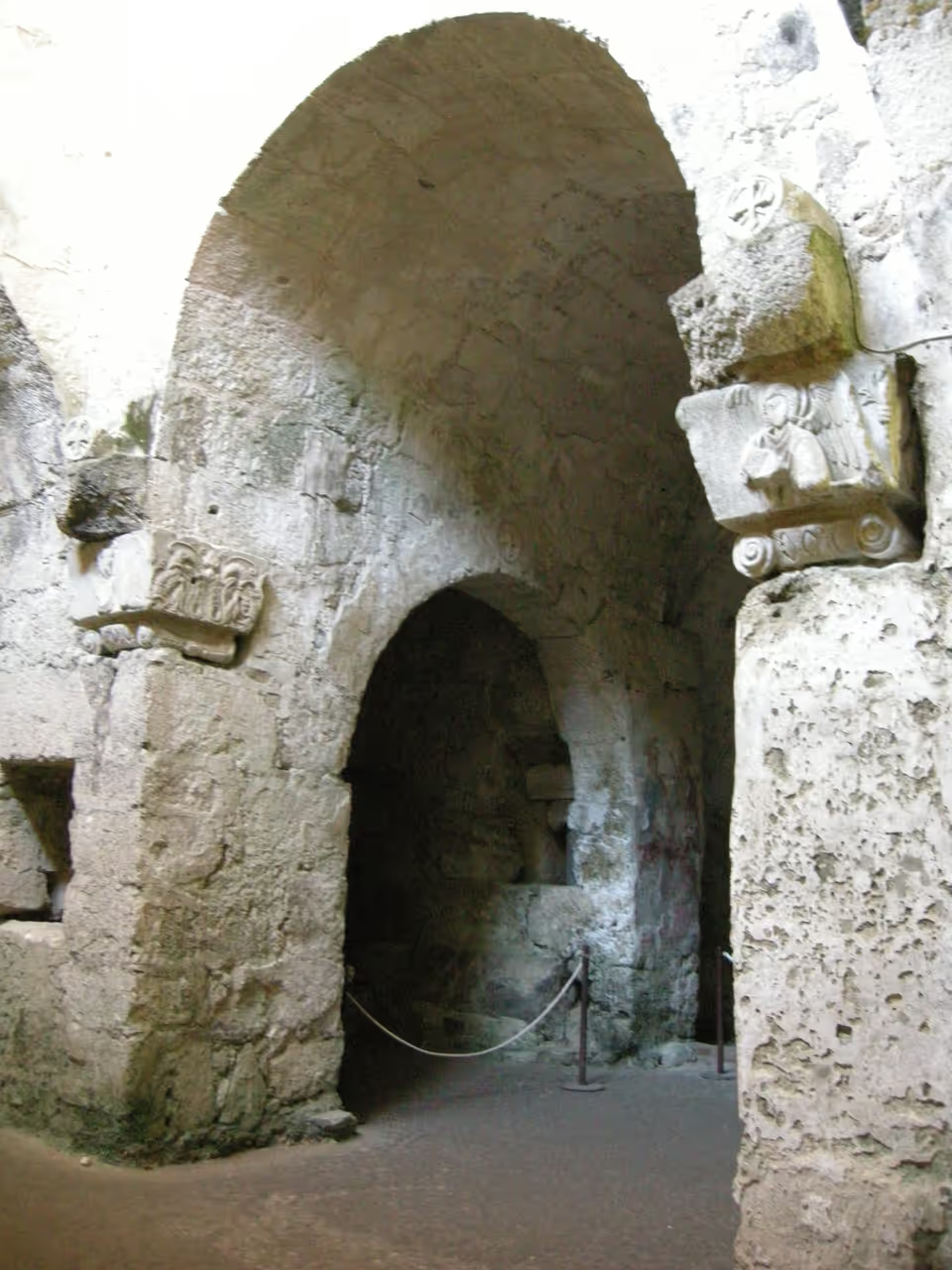 836m
836mCrypt of San Marciano
Located beneath the ruined, roofless church of San Giovanni, this ancient crypt is deeply significant to the early spread of Christianity. Tradition holds that the very first bishop of the city, sent by the Apostle Peter, preached and was ultimately martyred in this exact subterranean cavern. The walls are beautifully adorned with faded Byzantine frescoes and ancient Christian symbols carved into the rock. The atmosphere is incredibly solemn and spiritual, untouched by the noise of the modern world above. It provides a fascinating, deeply atmospheric glimpse into the clandestine beginnings of the local faith.
hidden gem view
Explore Similar Places in This Collection

Featured on This Route
See all attractions in Syracuse
Castello Maniace, Syracuse Cathedral, Ear of Dionysius, Temple of Apollo...