Monumental Cemetery
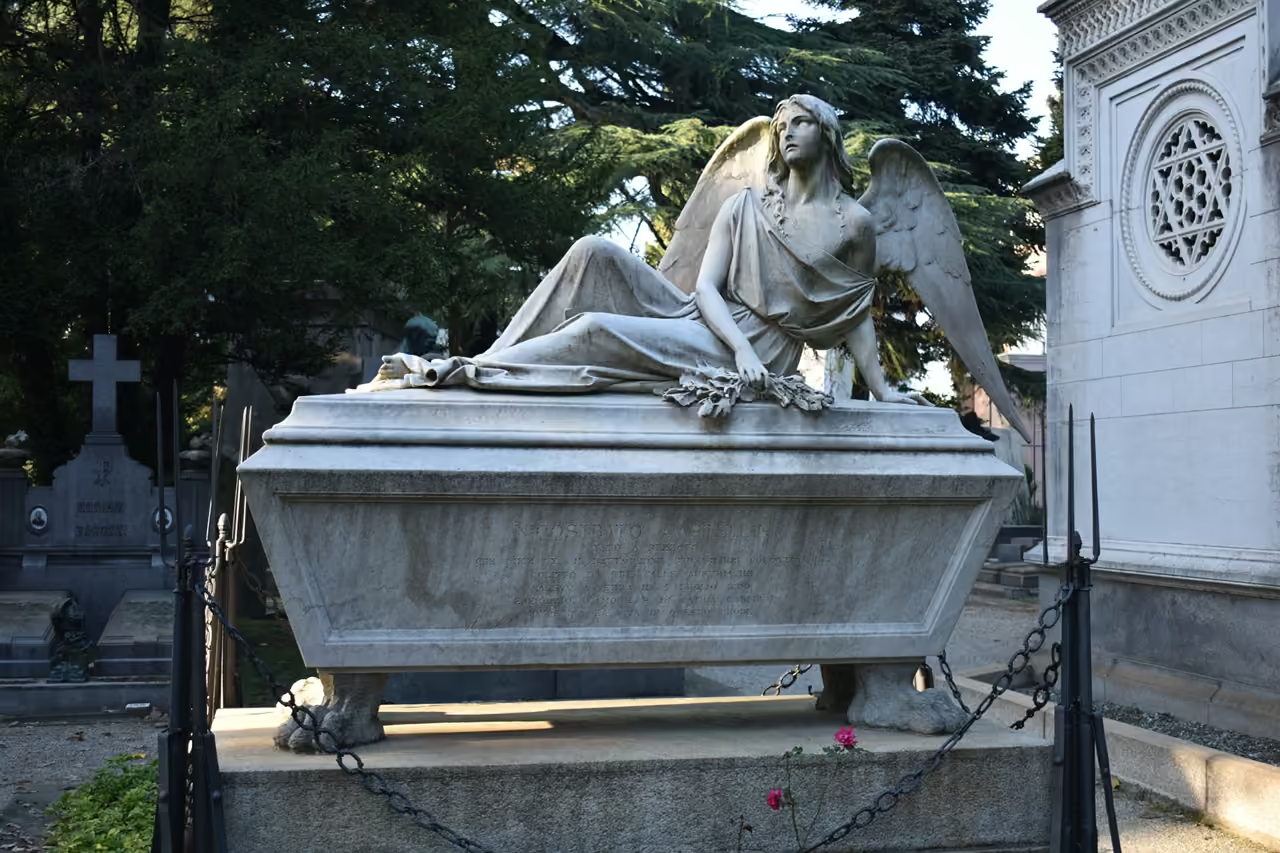
Death usually demands sombre uniformity. Milan chose to commission an extravagant open-air museum of marble and bronze. You walk through the gates of the Cimitero Monumentale and immediately face the Famedio, a massive Neo-Gothic hall of fame constructed from white Botticino marble and deep red Pietra Simona. Step inside to find the embalmed remains of the novelist Alessandro Manzoni resting beneath a soaring vaulted ceiling. Out in the vast grid of tree-lined avenues, wealthy industrialist families compete for eternity through monumental sculpture. The Campari family commissioned a massive bronze recreation of the Last Supper, while the Toscanini tomb features a heartbreaking marble ship mourning a child lost at sea.
Videos
History of Monumental Cemetery
The Austrian administrators governing Milan in 1837 decided the city needed a single, massive graveyard to replace six overflowing local plots. They bought land at the Abbadesse farmhouses, only to run into immediate, fierce opposition. A chemist named Antonio Kramer proved that burying thousands of bodies there would fatally pollute the city's drinking water. Plans stalled for a quarter of a century. Officials argued, architects drafted proposals, and the 1848 political uprisings pushed the cemetery project into a state of total paralysis. By the time Milan finally broke free from Austrian rule, the old Greco-Roman design proposals felt terribly outdated. The newly liberated city held a fresh competition in 1863, seeking something that captured Milan's new ambition. Carlo Maciachini, an architect with a flair for the dramatic, won with an eclectic blueprint that mashed up Byzantine, Gothic, and Romanesque styles. He designed a massive central church, sprawling porticos, and strict grids mapped out over a 25-hectare plot. Before the site even officially opened, tragedy forced its first burial. Gustavo Adolfo Noseda, a young composer, died of consumption just before his debut at La Scala in 1866. His remains were hastily moved into the unfinished grounds. Soon after, city officials changed their minds about Maciachini's central church. Instead of a standard place of worship, they repurposed the towering brick and marble structure into the Famedio, a secular temple dedicated solely to Milan's most illustrious citizens. Industrialists quickly realised the vast grid of avenues was the perfect place to project their earthly power. The textile magnate Alberto Keller funded Italy's first crematorium on the grounds in 1876, complete with rudimentary gas flames that eventually gave way to massive wood-fired ovens. Meanwhile, the founders of modern Italian capitalism hired the finest sculptors of the nineteenth and twentieth centuries to build Greek temples, towering obelisks, and a miniature Trajan's Column.
events spanning 46 years
Fun Facts
10- 01
A dedicated Jewish section, the Riparto Israeliti, opened in 1872 and contains deeply moving cenotaphs dedicated to Milanese citizens murdered in Nazi concentration camps.
- 02
Architect Carlo Maciachini deliberately contrasted bright white Botticino marble with dark red Pietra Simona to create the striking horizontal stripes on the entrance facade.
- 03
Every year on 2 November, the mayor of Milan presides over a public ceremony to add new names to the carved stone tablets lining the walls of the Famedio, honouring modern icons like Umberto Eco and Dario Fo.
- 04
Industrialist Ferdinando Bocconi built a majestic family shrine here after his eldest son vanished during the Battle of Adwa in 1896, a tragedy that also prompted him to found Bocconi University.
- 05
Italy's first crematorium opened on these grounds in 1876, funded by the textile magnate Alberto Keller, initially using a system of gas-illuminated flames.
- 06
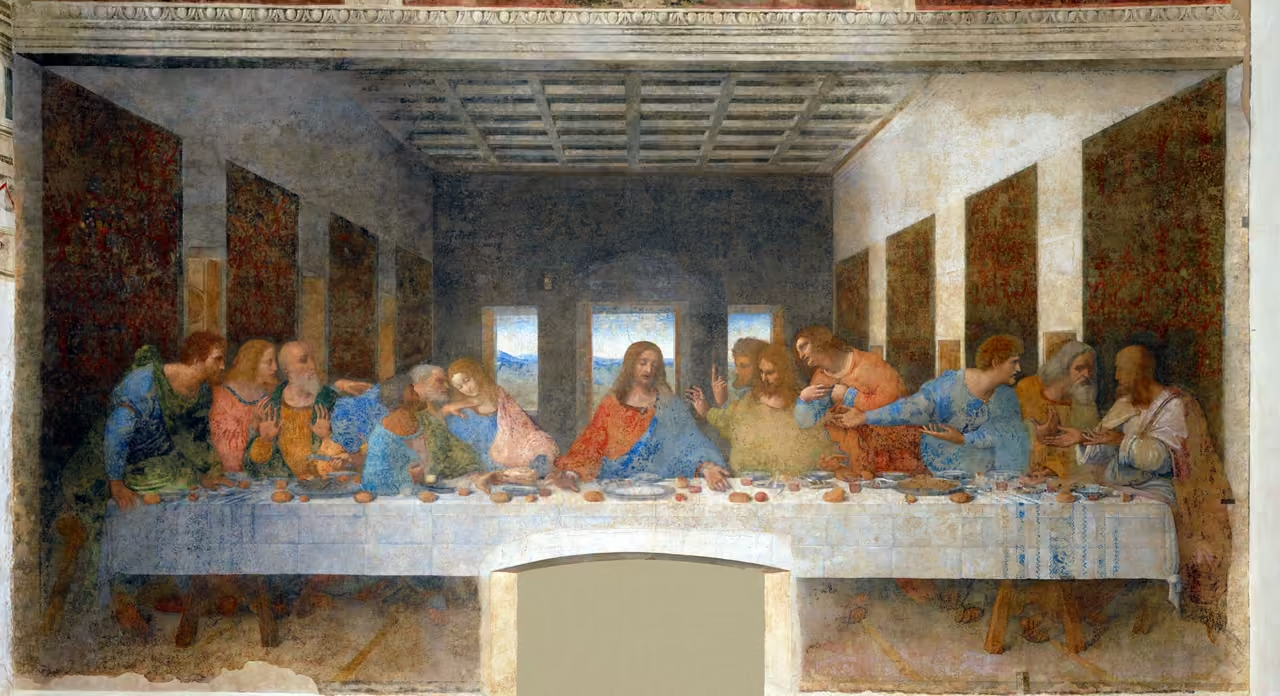
The Campari family, famous for their red bitter liqueur, commissioned an enormous, life-sized bronze recreation of the Last Supper for their family tomb.
- 07
The central Famedio was originally designed as a Catholic church before city officials pivoted, turning the towering marble structure into a secular hall of fame for Milan's most distinguished citizens.
- 08
The composer Gustavo Adolfo Noseda was the cemetery's first resident, buried on 2 November 1866 after dying of consumption before his opera could debut at La Scala.
- 09
The conductor Arturo Toscanini's tomb was built to mourn his young son Giorgio, who died of diphtheria in Buenos Aires, featuring a heartbreaking sculpture by Leonardo Bistolfi of a ship returning a small coffin across the sea.
- 10
The main Famedio hall houses the remains of only eight elite figures, including novelist Alessandro Manzoni and political philosopher Carlo Cattaneo resting in identical marble sarcophagi.
FULL PLACE DETAILS
Updated
FULL PLACE DETAILS
UpdatedOVERVIEW & STATS
- Established
- In 1867, making it 159 years old
ARCHITECTURE & HERITAGE
- Heritage Status
- Italian National Heritage
- Architectural Styles
- Eclectic
- Architects
- Carlo Maciachini
WEB & AMENITIES
Monumental Cemetery Map & Neighborhood Explorer
This interactive map is centered on Monumental Cemetery. Zoom in and move the map around to automatically discover Wikipedia photos and summaries of other nearby sights, monuments, and historical points of interest and stories in real-time!
Monumental Cemetery FAQ
Entry is completely free, though guided tours are available to book for those wanting deeper insight into the sculptures and history.
Yes, respectful photography of the monuments and architecture is permitted for personal use, but commercial filming requires prior authorisation from the municipality.
Free maps are available at the main entrance, highlighting the locations of the most notable monuments, including the Campari tomb and the Famedio.
As it is an active cemetery, visitors are asked to wear respectful, modest clothing and to maintain a quiet atmosphere while walking the grounds.
A typical visit takes about 2 hours. We recommend planning your schedule accordingly to make the most of your time there.
The closest place to visit near Monumental Cemetery is Isola Nights, around 797 m away. Other things to do near Monumental Cemetery include Piazza Gae Aulenti and UniCredit Tower (813 m), Bosco Verticale (868 m) and Ponte delle Gabelle (1 km). All of these are within roughly 1 km of Monumental Cemetery.
Monumental Cemetery holds the following heritage designation: Italian National Heritage.
It dates back to 1867, making it 159 years old.
Monumental Cemetery was designed by Carlo Maciachini in the eclectic style.
While we strive to keep this information accurate and up to date, we recommend verifying any details independently before making decisions based on them.
Places near Monumental Cemetery
Make the most of your trip. Check out these top-rated spots located nearby.
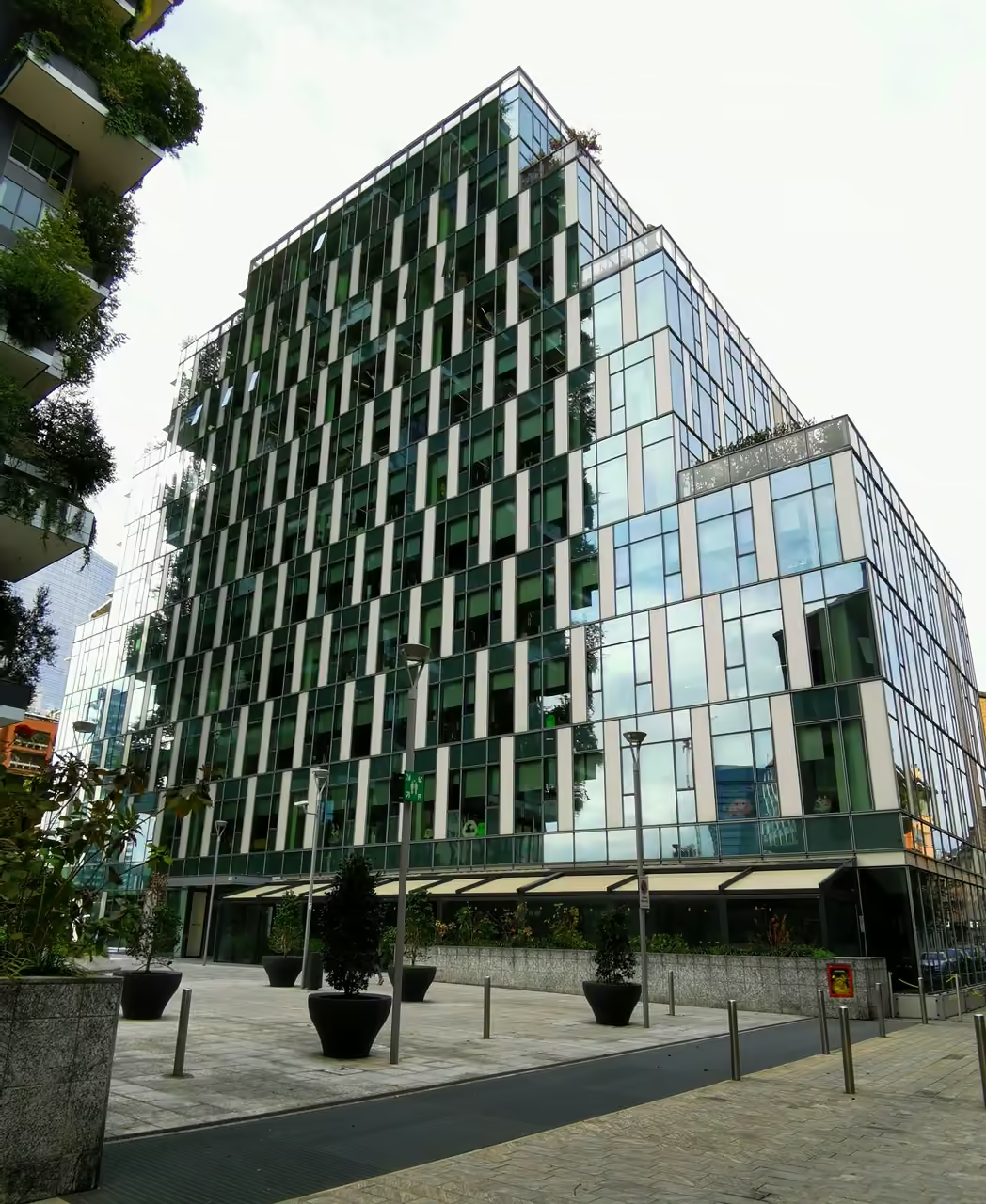 797m
Isola Nights
Once cut off from the centre by the railway, the Isola district beside Porta Garibaldi is now full of small bars, independent restaurants and live music spaces.
nightlife view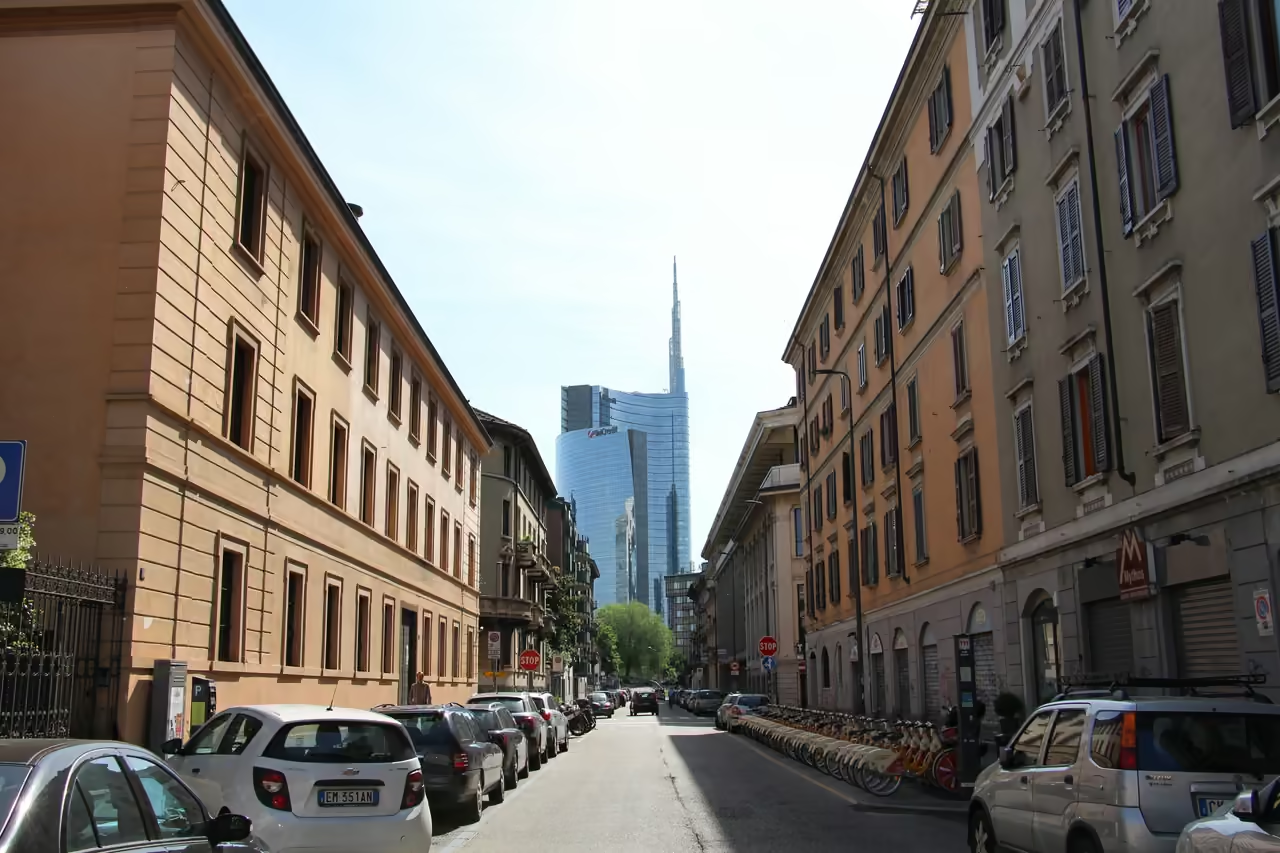 813m
Piazza Gae Aulenti and UniCredit Tower
A raised circular plaza in the Porta Nuova district, ringed by glass towers and shallow fountains. The UniCredit Tower, completed in 2012, reaches 231 metres at the tip of its spire and is the tallest skyscraper in Italy. Pedestrian walkways and cafes make it a social space as well as a business centre.
architecture view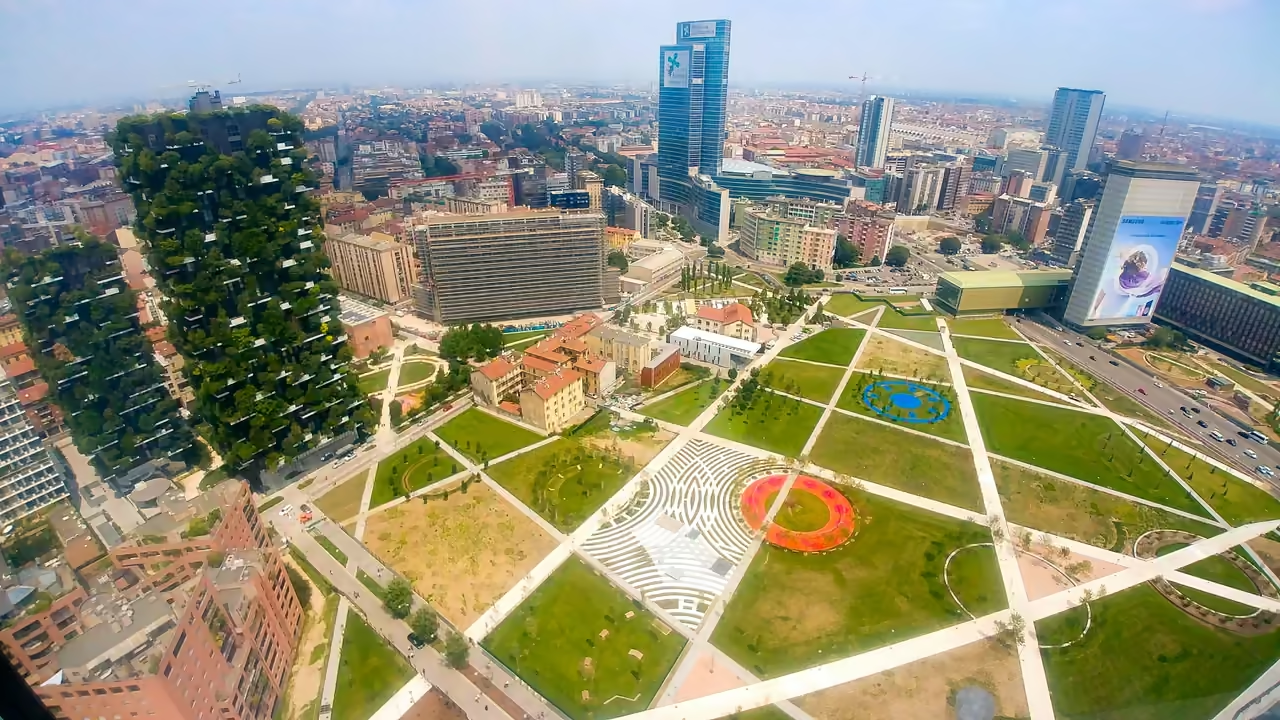 868m
Bosco Verticale
Two residential towers in Porta Nuova whose balconies carry hundreds of trees and thousands of shrubs and plants, designed by Stefano Boeri. In spring and summer the facades turn green, and in autumn they change colour. It has become one of the most recognisable images of contemporary Milan.
architecture view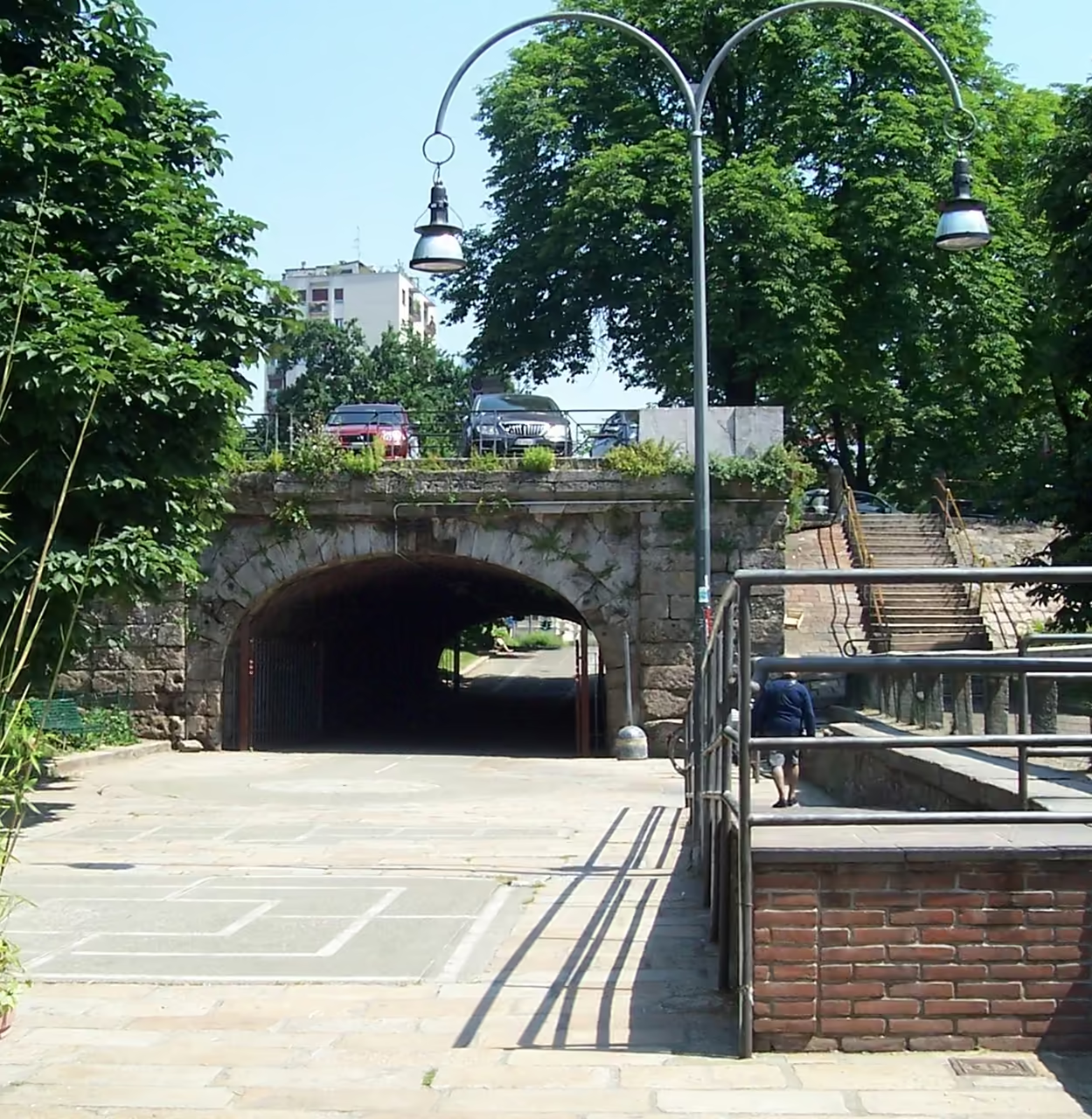 1015m
Ponte delle Gabelle
An old stone bridge beside the Darsena, with the canal basin spreading out below and the terraces of the Navigli in the distance. Golden hour paints the water, and the bridge makes a natural frame for reflections.
photo spot view
Explore Similar Places in This Collection
See all attractions in Milan
Including Galleria Vittorio Emanuele II, Milan Cathedral, Sforza Castle, and more