Galleria Vittorio Emanuele II
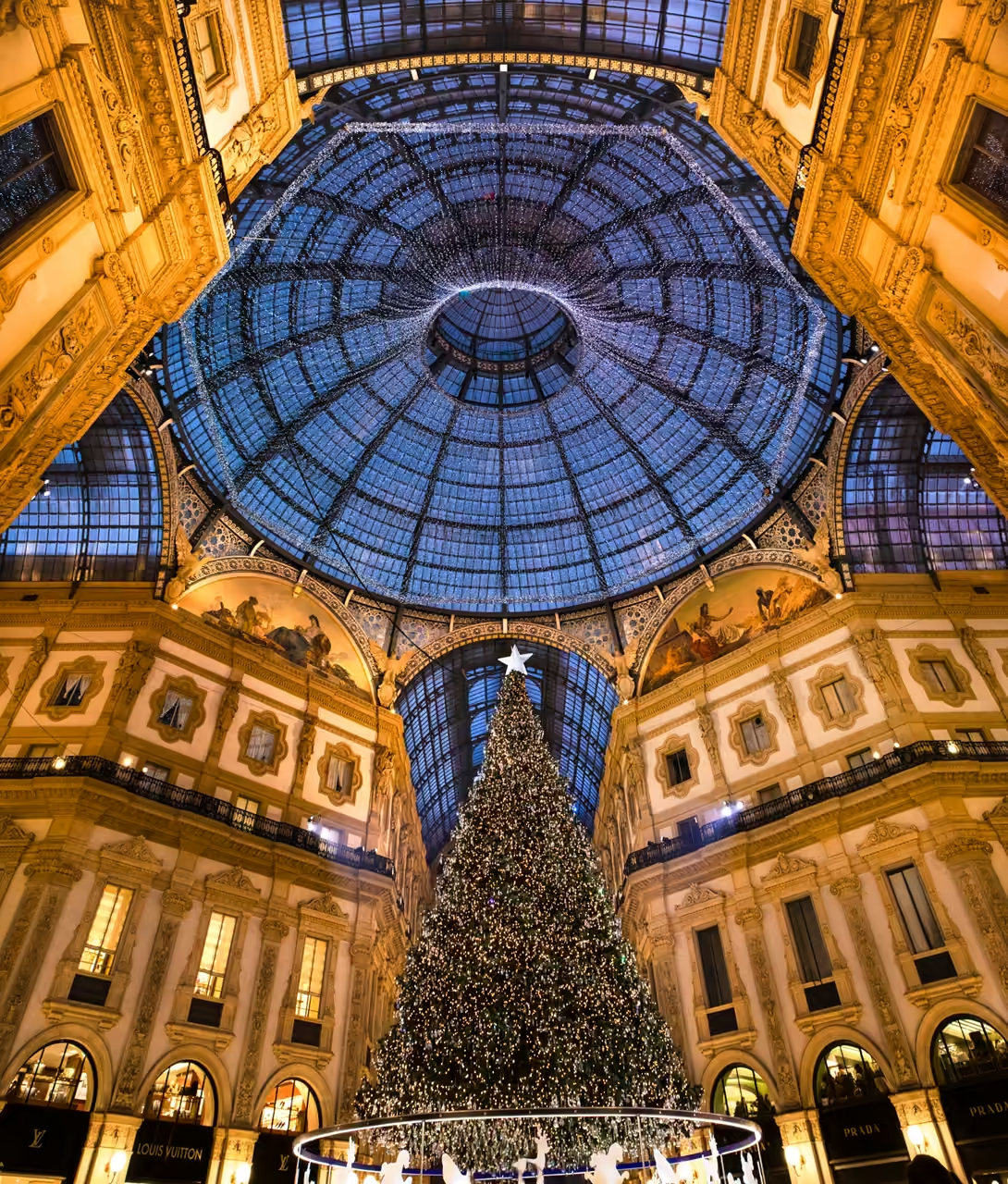
Locals call it simply la Galleria, and the shorthand suits a covered street that has served as Milan's drawing room since 1867. Two arcades cross at an octagon under a glass dome, and in the floor beneath it sits a mosaic bull that generations of visitors have worn down by spinning on one heel for luck, so a short wait for your turn is normal. Overhead, painted lunettes of four continents ring the crossing, while caryatids and stucco ornament climb the walls up to the glass roof. At street level, Borsalino hats, Rizzoli books and Prada share the arcade with Caffè Camparino and Biffi, both pouring since 1867, all under gold lettering on black signs, a municipal rule that even McDonald's once had to obey. The long arm measures only 196 metres, short enough to cross in about three minutes, which is exactly why it rewards lingering: a standing espresso, a long look up at the lunettes, then a loop back to see what the windows are asking this season.
Videos
History of Galleria Vittorio Emanuele II
The cathedral of Milan once faced a square that embarrassed a good number of its citizens. By the 1830s the space was cramped and lopsided, crowded with medieval buildings and threaded by lanes far too narrow for the growing traffic. In 1839 the writer and thinker Carlo Cattaneo set off a public argument about remaking it, and the city spent the following two decades debating while the Austrian grip on Lombardy gave way to a new Italian state. When the council was finally free to act, it did something cunning with a name. Dedicating the new street between the cathedral square and La Scala to King Vittorio Emanuele II was partly an expression of patriotic joy, and partly a way of smoothing the royal decrees needed to buy up and demolish whole blocks of property. Those decrees arrived in 1859 and 1860, together with permission to run a lottery to pay for the project. Among the buildings condemned was the Coperto dei Figini, one of the last survivors of the covered arcades that had once numbered around sixty in medieval Milan. It was knocked down to make room for a new covered arcade. Choosing a design nearly took longer than building it. The first competition, announced in April 1860, drew so many entries that 176 were exhibited at the Pinacoteca di Brera, yet the jury named no winner. The original brief had asked only for a street lined with porticoes, and it was during this process that the idea of a covered passage took hold. A second contest in 1861 reached the judges with 18 projects and again produced no winner, though four architects received prizes, among them one praised for a Palladian scheme and another for mixing Lombard and Venetian styles, both judged wrong for a street beside the Duomo. The third and last contest, in 1863, was won by Giuseppe Mengoni, on condition that he rework parts of his plan. He had imagined a single straight gallery. It became a cross. The building contract went to a British firm, the City of Milan Improvements Company Limited, and on 7 March 1865 the king himself laid the first stone in front of the prime minister Alfonso La Marmora, Milan's mayor Antonio Beretta and diplomats from several countries. Domenico Induno painted the ceremony. The arcades were complete in under three years and the king opened them on 15 September 1867. The money was another matter. The contractor collapsed in 1869 and the city bought the unfinished project for 7.6 million lire, and the great triumphal arch facing the cathedral was not finished until 1878. Mengoni never saw it. He fell from the scaffolding while inspecting the arch, less than two months before its inauguration. What he left behind mixed two eras on purpose. An iron and glass roof in the shape of a cross, meeting at a glazed dome, covers facades dressed in the ornament of the Lombard Renaissance. Earlier European passages had glass domes or glass roofs, but none had combined a cross plan with a dome, and Mengoni drew on drawings of New York's Crystal Palace. Some commentators have read the cross plan facing the cathedral, and a dome sized to echo St Peter's, as a gentle swagger from a young secular state towards the Church. Not everyone was charmed. The Milanese poet Delio Tessa blamed the Galleria for starting the city's taste for the mastodontic, and the architect Giuseppe De Finetti thought the great arch a clumsy piece of dressing up. Within a few years the Galleria had become the salotto di Milano. Caffè Campari and Caffè Biffi filled with the new middle class, and Caffè Gnocchi, later reborn as Savini, installed electric light as early as 1880. At the octagon, gas lamps were lit by a clockwork contraption, a tiny locomotive called the rattìn, Milanese for little mouse, which ran around the ring and lit the flames one after another. Crowds gathered to watch it nightly until electric lighting took over in 1883. Singers and musicians hoping to be hired by theatres across Lombardy hung about in the arcade within earshot of La Scala. Politics wandered in as well. The first demonstration took place on 25 September 1867, barely ten days after the opening, when young protesters gathered over the arrest of Garibaldi. Shop windows were the usual casualties, though the worst damage before the Second World War came from a hailstorm in June 1874 that smashed part of the glass roof. In the early twentieth century the Futurists adopted the Galleria as their territory. Marinetti and his followers met here, Boccioni painted a brawl in front of Caffè Camparino, and a group including Boccioni, Carrà, Marinetti, Russolo and Piatti was arrested after a rally in favour of Italy's entry into the First World War, complete with flung leaflets and burning Austrian flags. The Second World War was less playful. On 15 and 16 August 1943, Allied bombing destroyed the glass roof, part of the iron frame and much of the interior decoration. Plans for rebuilding did not begin until 1948, and the arguments were fierce, with proposals to replace the glass with reinforced glass blocks and the coloured stucco with Vicenza stone. The scheme finally approved stayed faithful to Mengoni. Work ended in 1955 and the Galleria was inaugurated a second time on 7 December, the feast of Milan's patron saint Ambrose and the opening night of the La Scala season. Further work followed. For the centenary in 1967 the floor and its mosaics, hastily patched after the bombing, were redone. From March 2014 to April 2015, ahead of Expo 2015, the Galleria received its deepest restoration since the war, with researchers first tracing the materials and the layers of paint, and 35,000 hours of labour spent on 14,000 square metres of surface. To keep the shops trading, the team avoided fixed scaffolding and used a moving gantry inspired by the structure Brunelleschi had used to build the dome of Florence cathedral. The plaster now carries the colours first applied in 1867, and while the gantry glided along the walls, Borsalino and the cafés kept their doors open.
21 events spanning 175 years
Fun Facts
14- 01
Boccioni's Rissa in Galleria places its brawling women at the entrance in front of Caffè Camparino, which stood opposite its present position at the time. Carlo Carrà's Galleria di Milano also hides the dome and a Caffè Biffi sign among its fragmented shapes.
- 02
Four painted lunettes around the octagon, each 15 metres wide, personify America, Asia, Europe and Africa. They are the work of Raffaele Casnedi, Bartolomeo Giuliano, Angelo Pietrasanta and Eleuterio Pagliano, who also painted four smaller allegories of Science, Industry, Art and Agriculture in the side arm.
- 03
Giovanni Verga knew the Galleria well and set several stories here. In his collection Per le vie, one tells of a poor coffee seller who spends her nights beneath the entrance arch on Piazza della Scala.
- 04
Mark Twain spent most of his time in Milan under this roof, finding the Galleria so magnificent that he said he would gladly live in it for ever.
- 05
The Corriere delle Dame's description of the new arcade counted 96 shops along the ground floor and a balustrade carrying the coats of arms of a hundred Italian cities. It also admired the floor, a terrazzo with enamels made by Venetian artists, and four mosaics by Salviati at the octagon.
- 06
The Galleria became the model for arcades and malls around the world. Naples' Galleria Umberto I copies its four arms and octagonal dome, the Cleveland Arcade of 1890 took inspiration from it, and more than twenty American malls carry the name Galleria, including those in Houston and Dallas. The architects of Toronto's Eaton Centre and Düsseldorf's Kö Galerie have openly cited it.
- 07
The Galleria's axis does not line up with Piazza della Scala, a problem Mengoni solved by adding a Renaissance style exedra at the exit. A magazine of 1867, the Corriere delle Dame, praised how skilfully it disguised the awkward angle.
- 08
The glass roof covers around 7,800 square metres and is held up by 353 tonnes of steel. The whole project cost about 30 million lire, roughly 90 million euros in 2003 money.
- 09
The mosaic bull on the octagon floor is the emblem of Turin, and the luck ritual of spinning three times anticlockwise on the right heel is said to have started as mockery of the House of Savoy and of Turin itself. When the floor was remade in 1967 the bull came back without the anatomy visitors had been aiming for, and the habit continued undeterred. The image is worn away so quickly that it has to be restored again and again.
- 10
The novelist Luigi Capuana compared the Galleria to a heart, with the crowds pulsing in and out of its four mouths, and noticed that glass panes set into the floor let passers-by glimpse work still going on in the basements below when everything above seemed asleep.
- 11
The octagon once held 25 plaster statues of great Italians, including Dante, Leonardo, Cavour and Volta, made by leading Milanese sculptors such as Odoardo Tabacchi, Antonio Tantardini and Pietro Magni. They deteriorated badly and were taken down from 1891, never to return.
- 12
Thomas Hardy sends the narrator of his story A Changed Man to the Galleria, where he sits on a chair in the central octagon.
- 13
Turin eventually answered with a bull of its own: in 1930 a brass bull was set into the pavement of Piazza San Carlo, in front of Caffè Torino, complete with its own spinning ritual.
- 14
Twelve businesses in the Galleria were recognised as historic shops by the Lombardy Region in 2015, five of them present since it opened. Libreria Bocca was founded in 1775, nearly a century before the arcade existed, and Mejana has been selling knives and scissors since 1911.
FULL PLACE DETAILS
Updated
FULL PLACE DETAILS
UpdatedOVERVIEW & STATS
- Established
- In 1867, making it 159 years old
ARCHITECTURE & HERITAGE
- Heritage Status
- Italian National Heritage
- Architectural Styles
- Renaissance Revival
- Architects
- Giuseppe Mengoni
Galleria Vittorio Emanuele II Map & Neighborhood Explorer
This interactive map is centered on Galleria Vittorio Emanuele II. Zoom in and move the map around to automatically discover Wikipedia photos and summaries of other nearby sights, monuments, and historical points of interest and stories in real-time!
Galleria Vittorio Emanuele II FAQ
The bull is set into the floor at the centre of the octagon, where the two arcades cross. Tradition says that placing your right heel on the bull and spinning three times anticlockwise brings good luck. Expect a short wait for your turn, and expect to see it repaired often, since the mosaic is worn away by constant use.
No. The Galleria is a covered public street, so you can walk through freely. The shops, cafés and restaurants have their own opening hours and prices.
The nickname means Milan's drawing room. Within a few years of opening in 1867 it had become the favourite meeting place of the city's middle class, who came for the elegant shops and especially for the cafés and restaurants such as Caffè Campari, Biffi and Savini.
The long arm links Piazza del Duomo with Piazza della Scala, so the cathedral and the opera house sit at either end. The shorter cross arm runs between Via Foscolo and Via Pellico, and the Palazzo Reale is close by.
The historic cafés are a big part of the Galleria's character, and Caffè Camparino and Biffi have been operating here since 1867. In Italy, drinking at the counter is generally cheaper than sitting at a table, which makes a standing espresso a very reasonable way to enjoy the surroundings.
The architect was Giuseppe Mengoni, who won the third architectural competition held in 1863 after two earlier contests produced no winner. His plan evolved from a single gallery into the cross shape with a central dome that exists today.
Early morning is the quietest time to look up at the glass roof and the lunettes without crowds, while evenings are lively when the cafés and restaurants fill. The dome is decorated at Christmas, which many visitors find particularly atmospheric.
A typical visit takes about 2 hours. We recommend planning your schedule accordingly to make the most of your time there.
The closest place to visit near Galleria Vittorio Emanuele II is Raise a Campari at Camparino in Galleria, around 77 m away. Other things to do near Galleria Vittorio Emanuele II include Drink from a Green Dragon Fountain (143 m), Rinascente Rooftop Terrace (170 m) and Merchants Square (193 m). All of these are within roughly 193 m of Galleria Vittorio Emanuele II, close enough to walk.
Galleria Vittorio Emanuele II holds the following heritage designation: Italian National Heritage.
It dates back to 1867, making it 159 years old.
Galleria Vittorio Emanuele II was designed by Giuseppe Mengoni in the Renaissance Revival style.
While we strive to keep this information accurate and up to date, we recommend verifying any details independently before making decisions based on them.
Places near Galleria Vittorio Emanuele II
Make the most of your trip. Check out these top-rated spots located nearby.
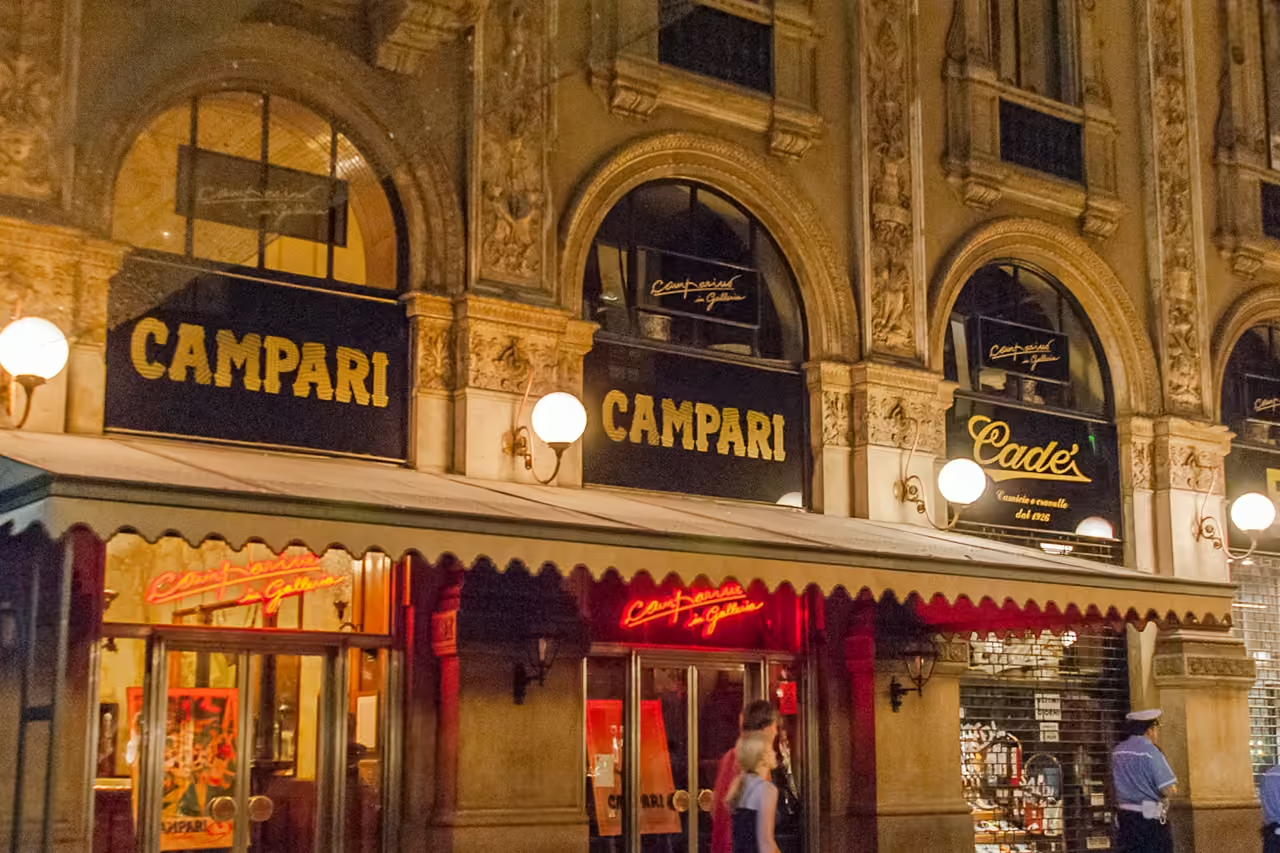 77m
Raise a Campari at Camparino in Galleria
Campari was born in Milan's bar culture, and this historic cocktail bar at the corner of the Galleria is where the ritual still feels theatrical. Bartenders in white jackets pour spritzes and Negronis under a ceiling of Liberty decoration while the cathedral glows through the glass. The drinks cost more than at the Navigli, and the view of the Duomo is part of the price.
highlight view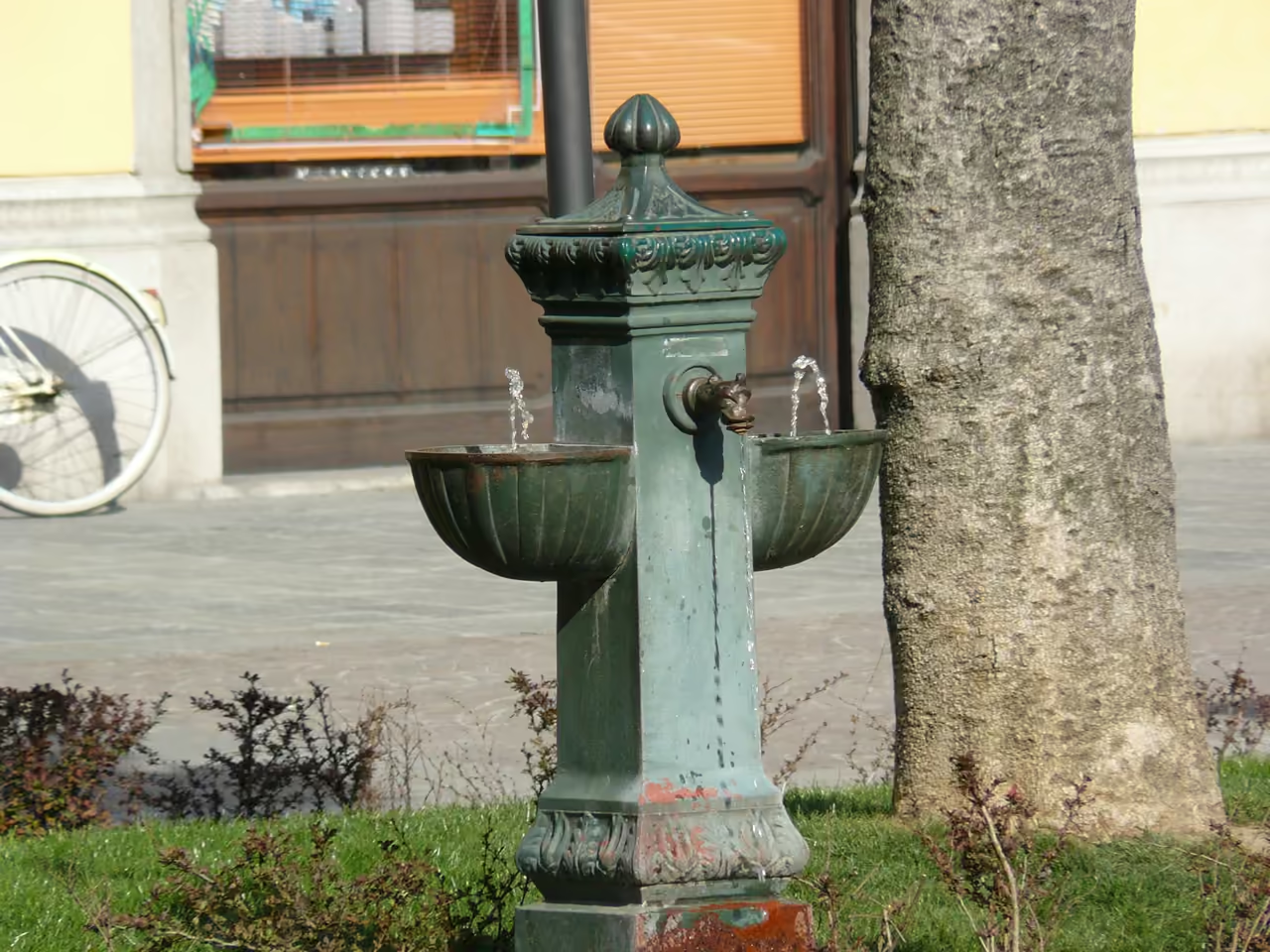 143m
Drink from a Green Dragon Fountain
Milan's green iron drinking fountains, known as vedovelle, run with free fresh water all year. Put a finger over the spout shaped like a dragon's head and a jet leaps from a small hole at the top for drinking. Many stand in the main squares, including Piazza della Scala.
free thing to do view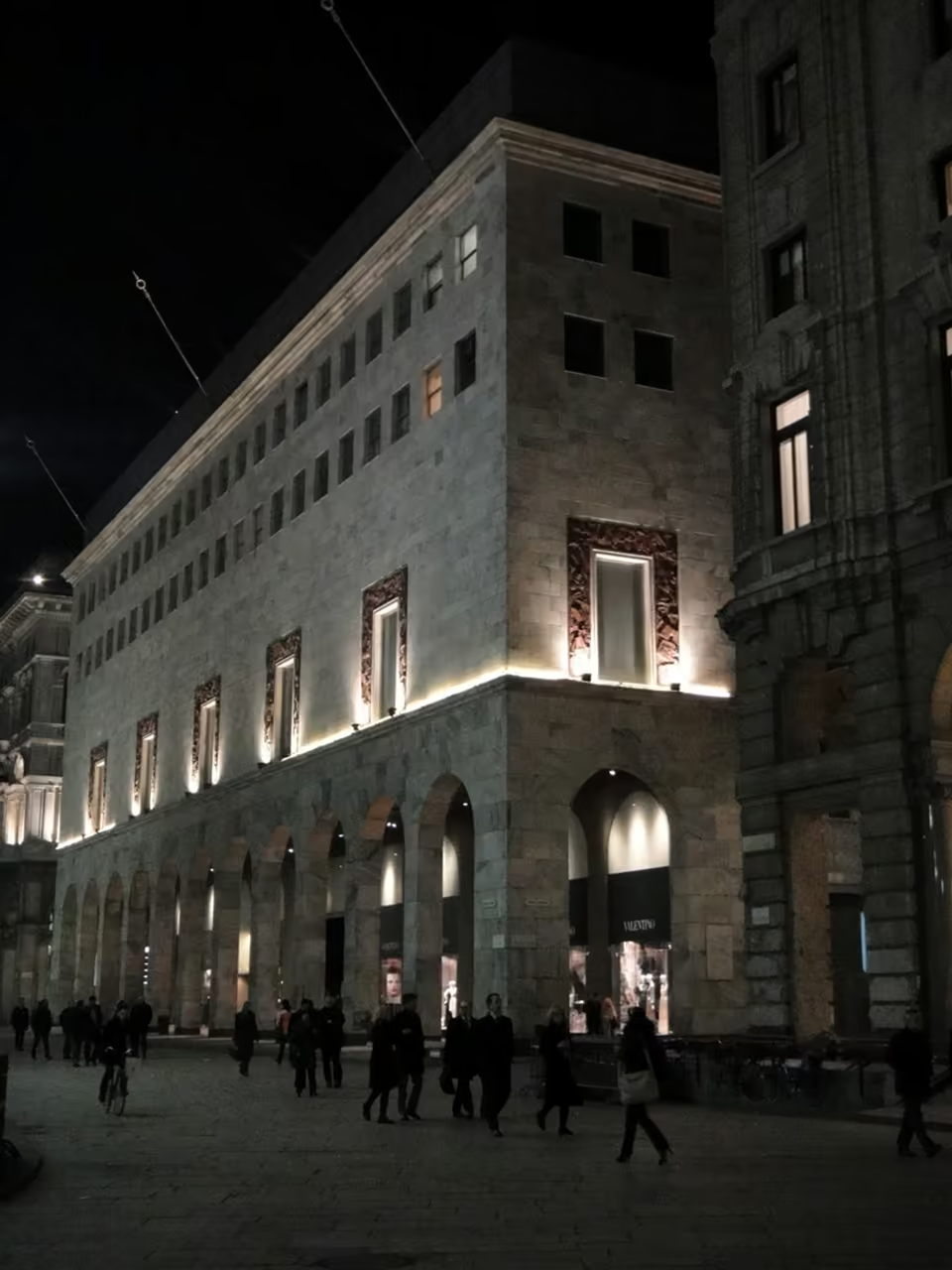 170m
Rinascente Rooftop Terrace
The top floor of the Rinascente department store looks straight across Piazza del Duomo, with the spires at eye level. Cafes and restaurants set tables on the terrace, so a drink buys the view.
viewpoint view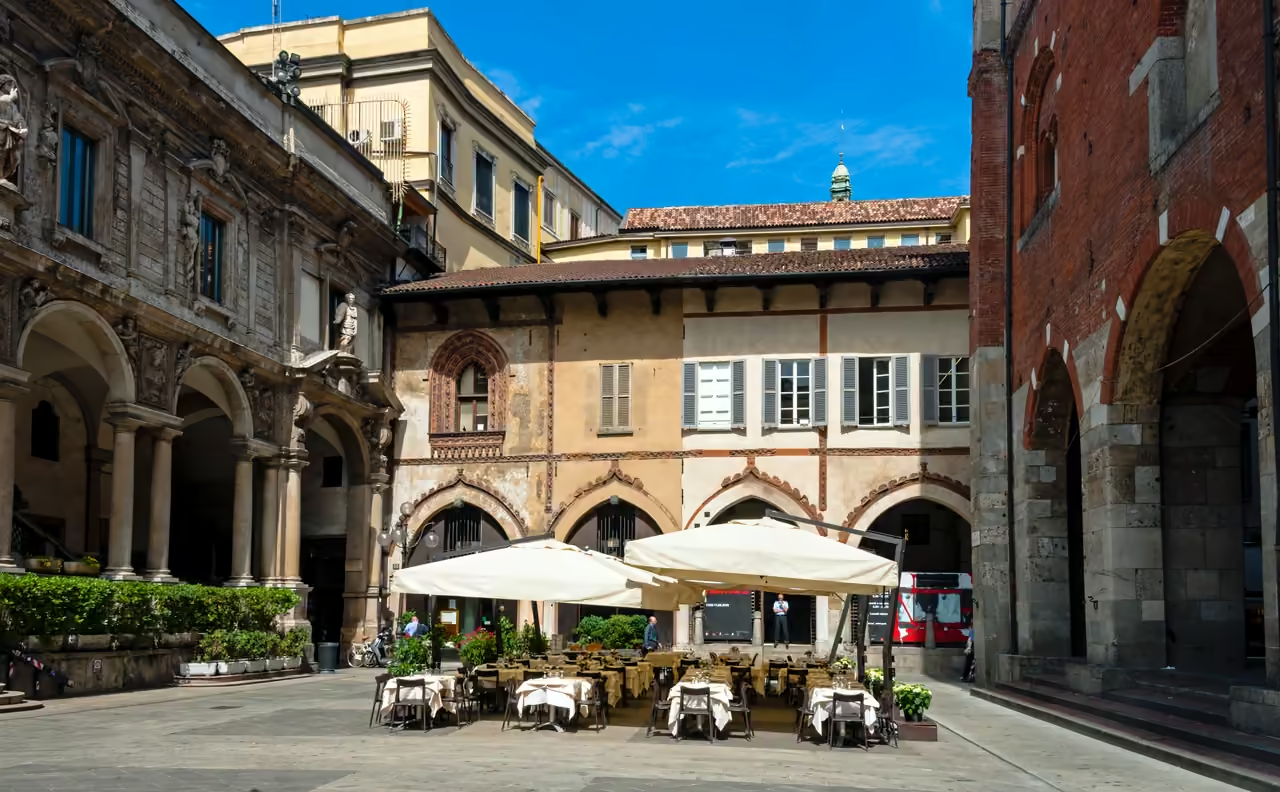 193m
Merchants Square
A small medieval square tucked behind the Duomo, once the centre of civic life. The old Palazzo della Ragione stands on one side, with a loggia, an old well and the sculpted horseman Oldrado da Tresseno on the facade. Tour groups tend to walk straight past on the way to the Galleria.
hidden gem view
Explore Similar Places in This Collection
Featured on These Itineraries
1 Day in Milan
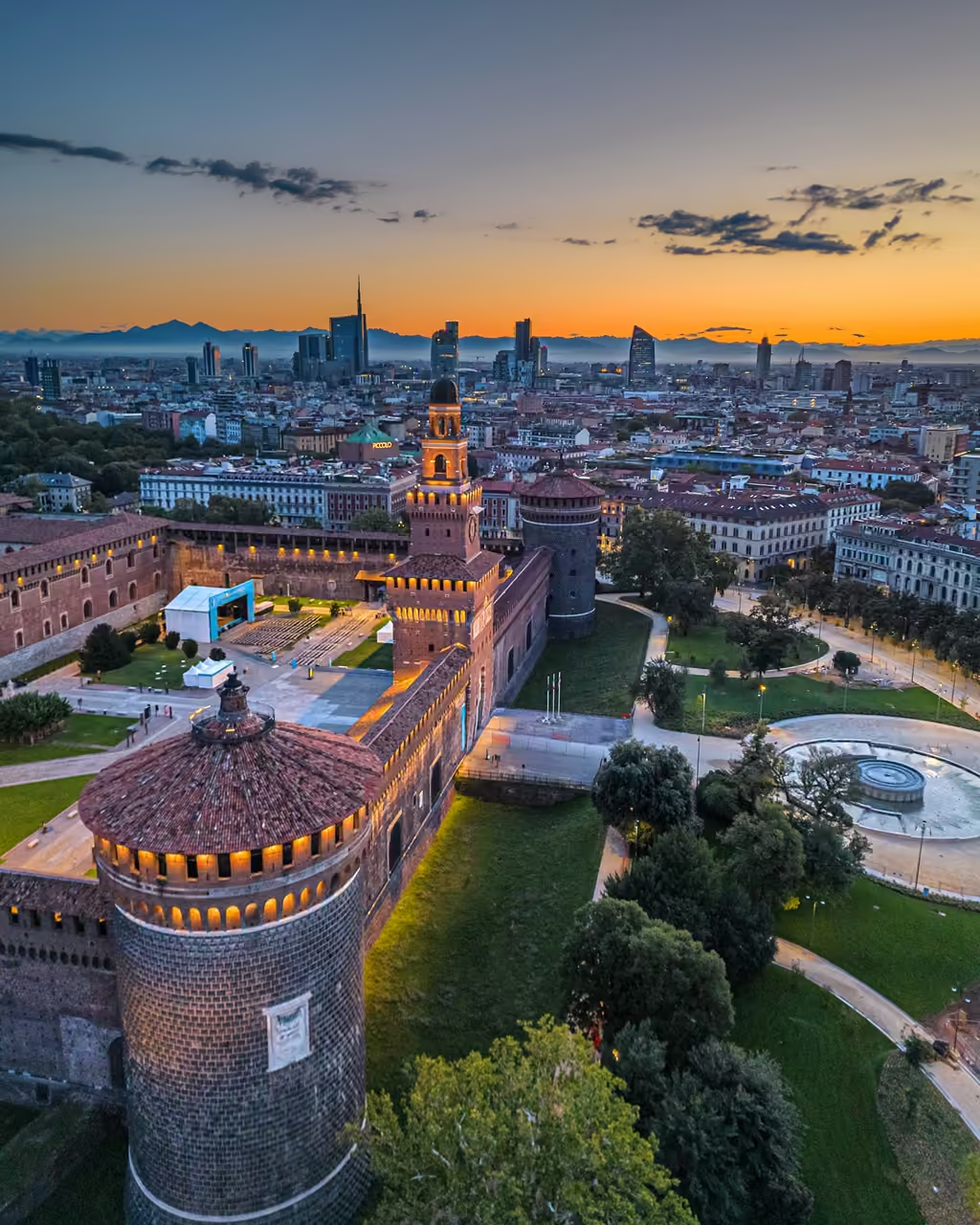
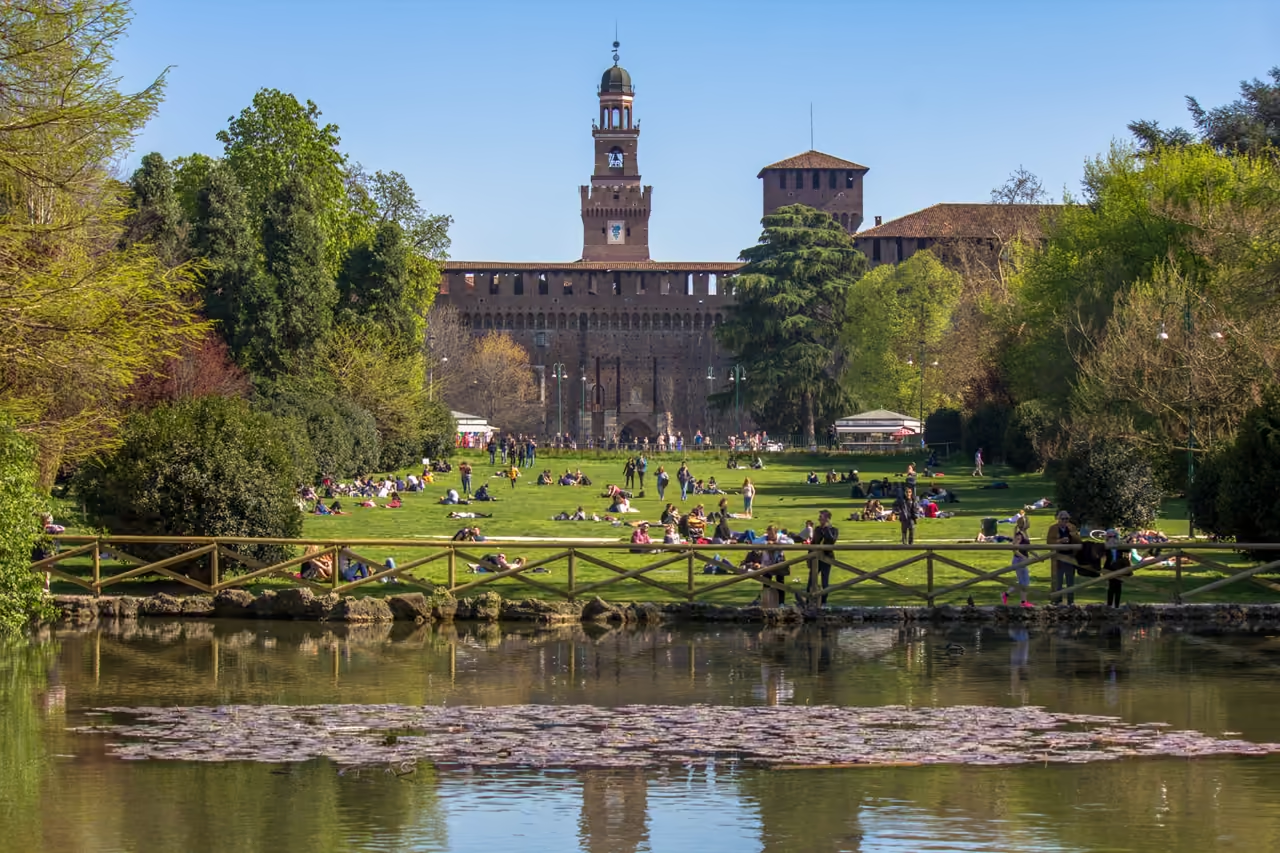
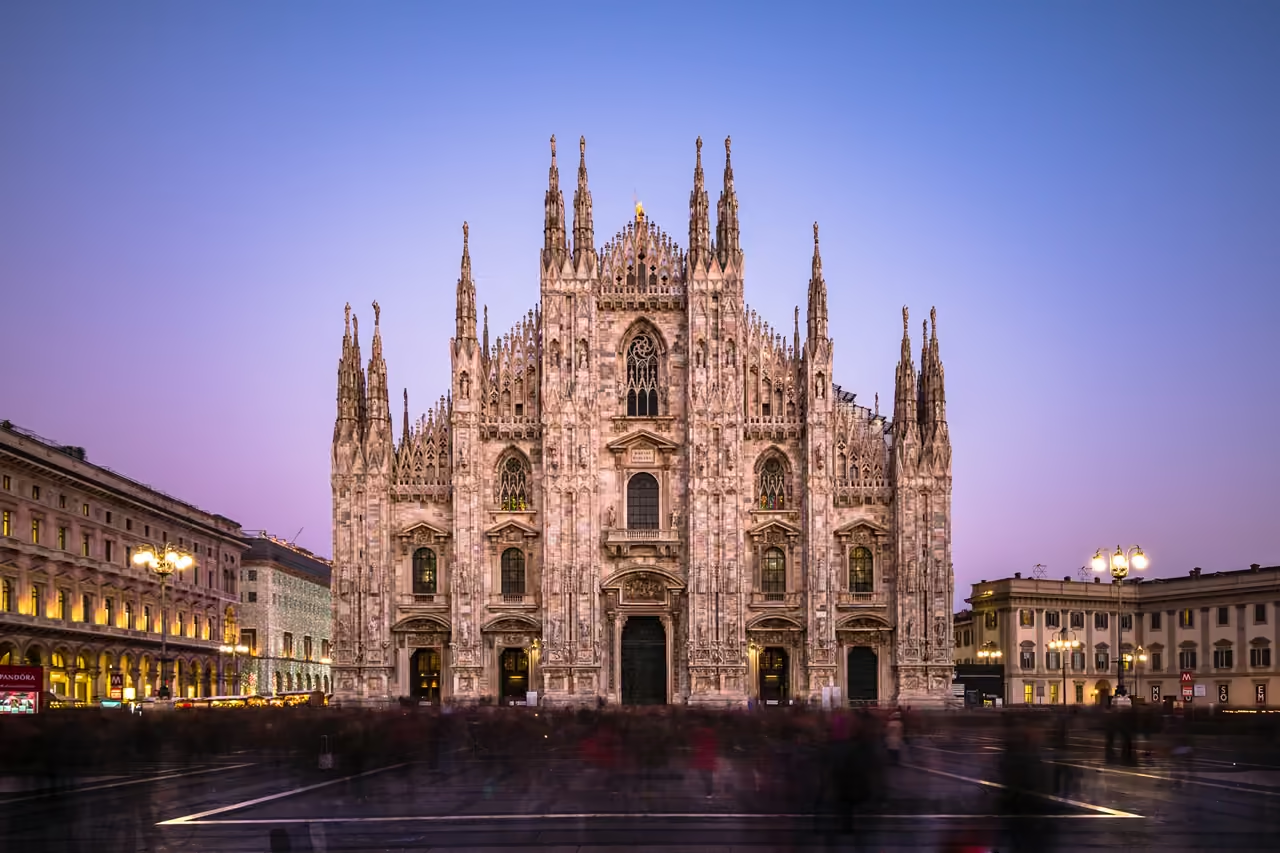
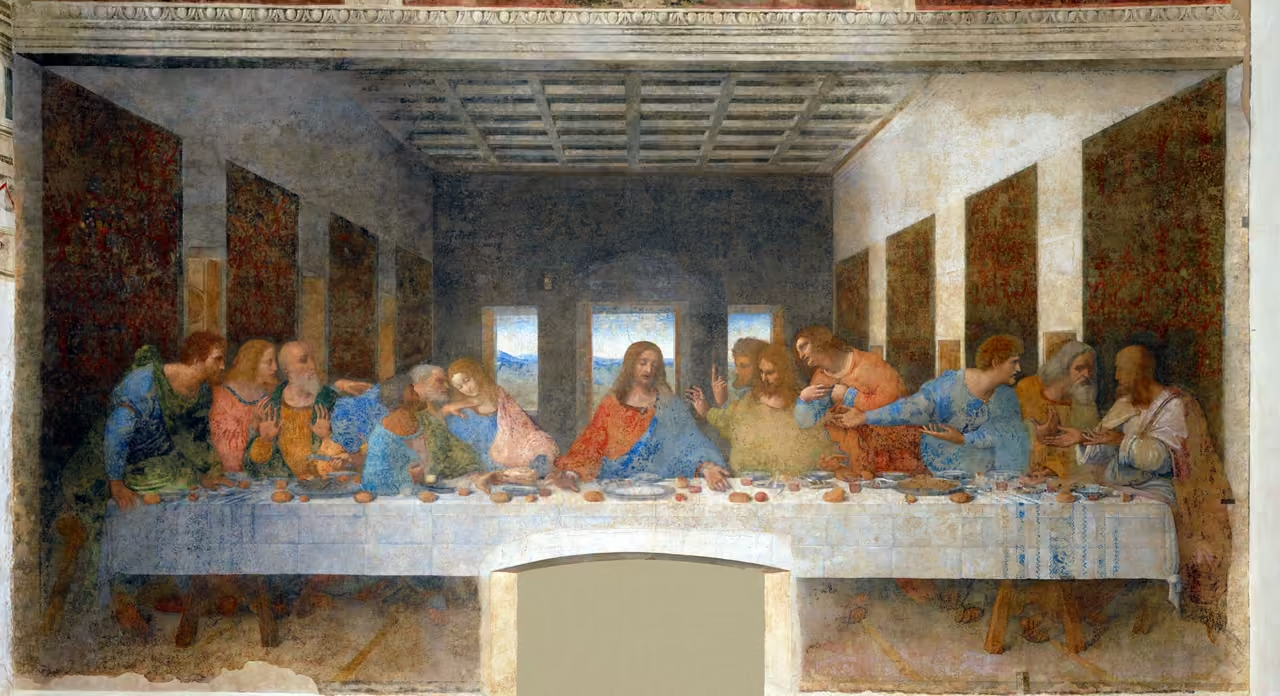
A single day that links Leonardo's masterpiece, a castle, a park, the cathedral and an evening on the canals. Book The Last Supper for the morning and the rest falls into place.
view itinerary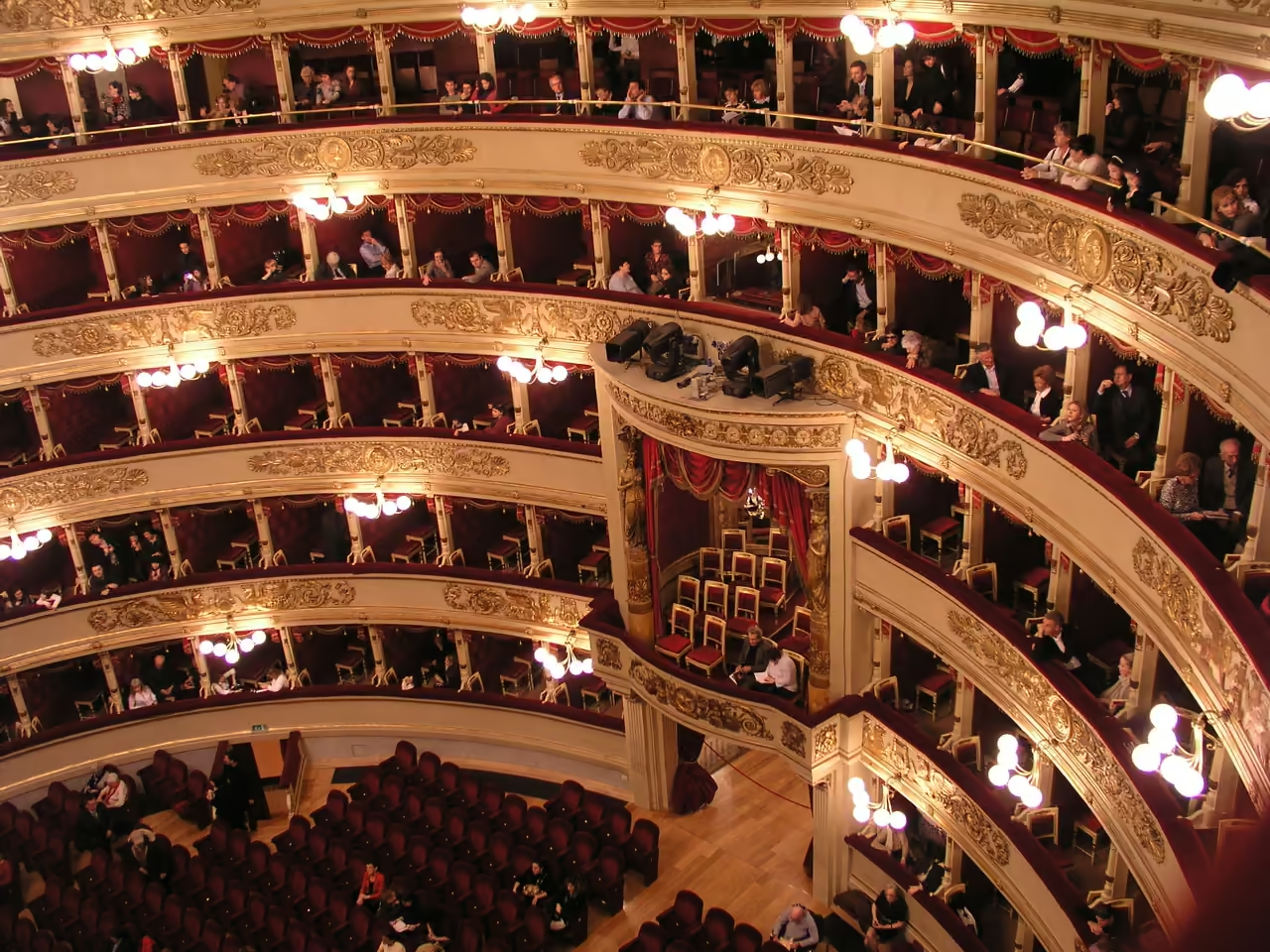
3 Days in Milan
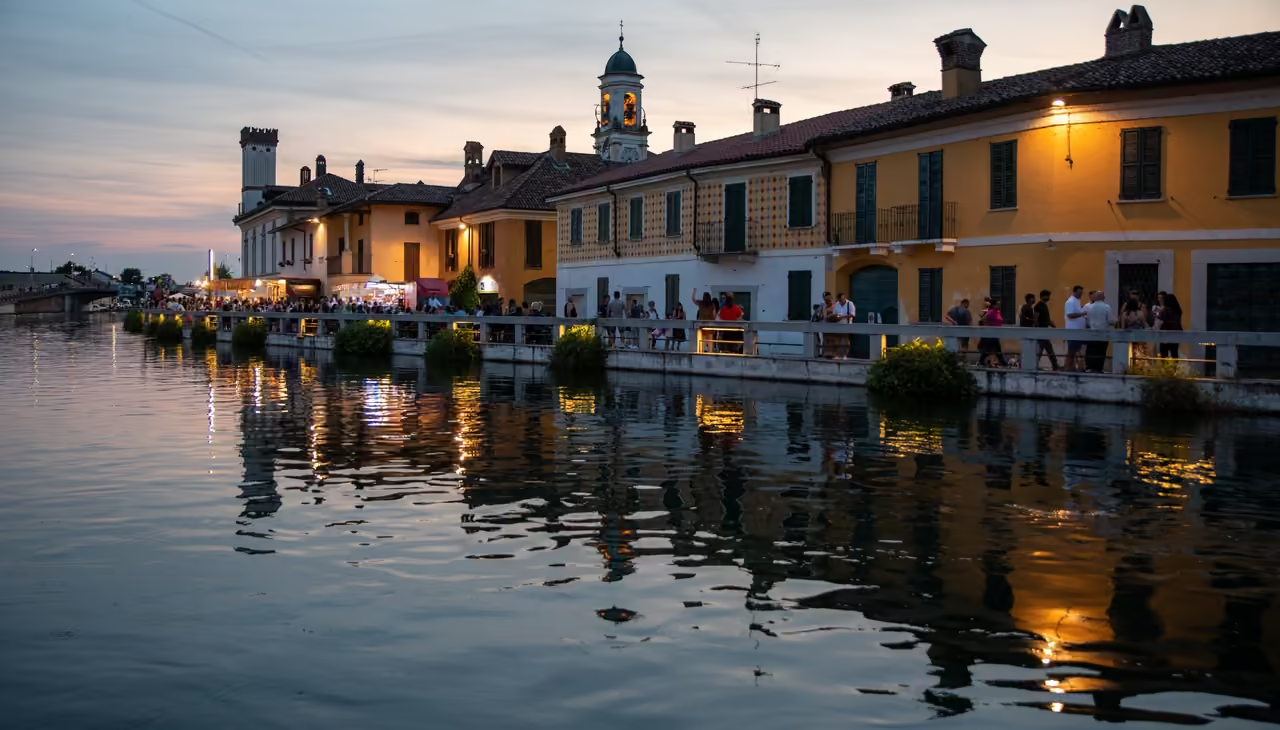
Three days that take in the cathedral district, Leonardo and the castle, and the churches and canals of the south. The pace allows for long lunches and an aperitivo each evening.
view itinerary
5 Days in Milan
Five days that cover the classic sights, Leonardo and the Ambrosian churches, fashion and parks, the canals, and a day among the abbeys and towers outside the centre.
view itinerary
See all attractions in Milan
Including Milan Cathedral, Sforza Castle, Basilica of Sant'Ambrogio, and more