Ambrosian Library
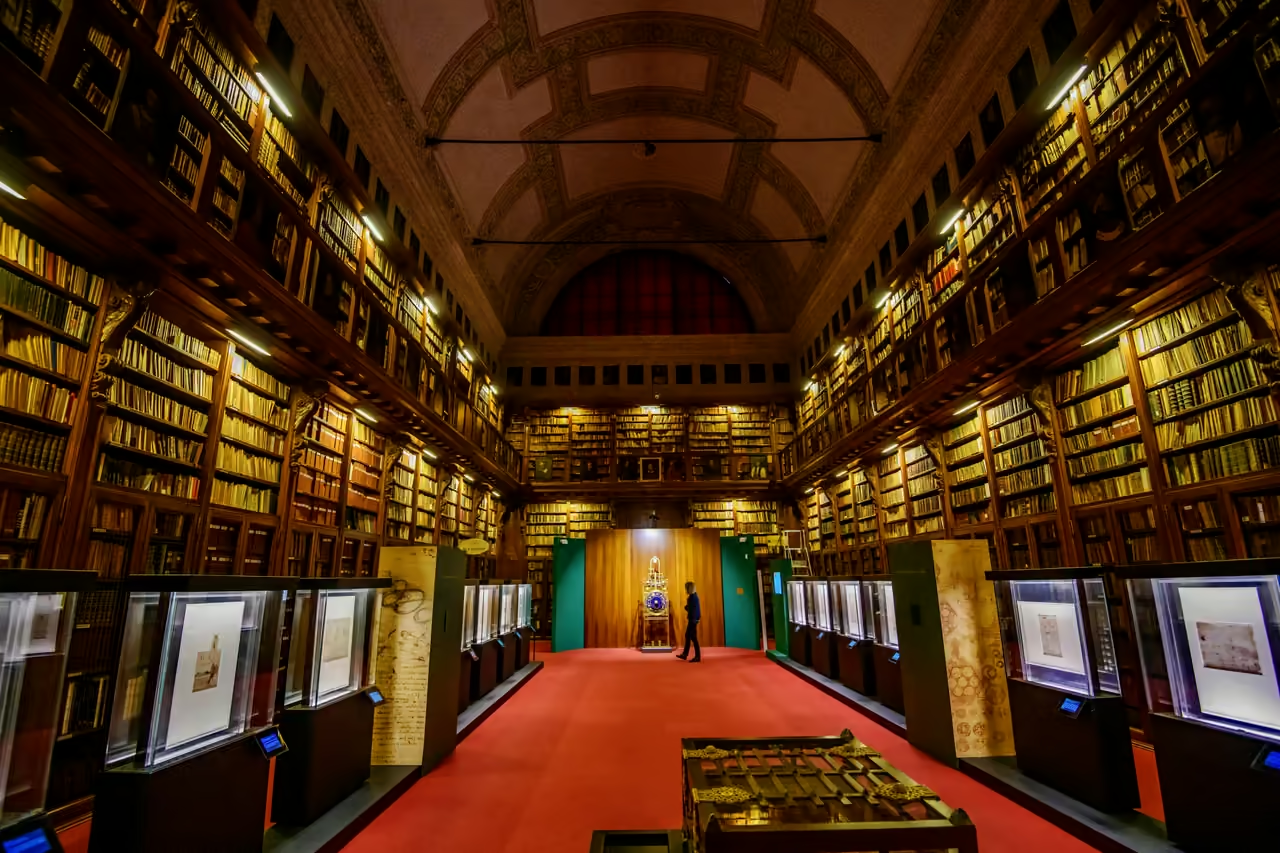
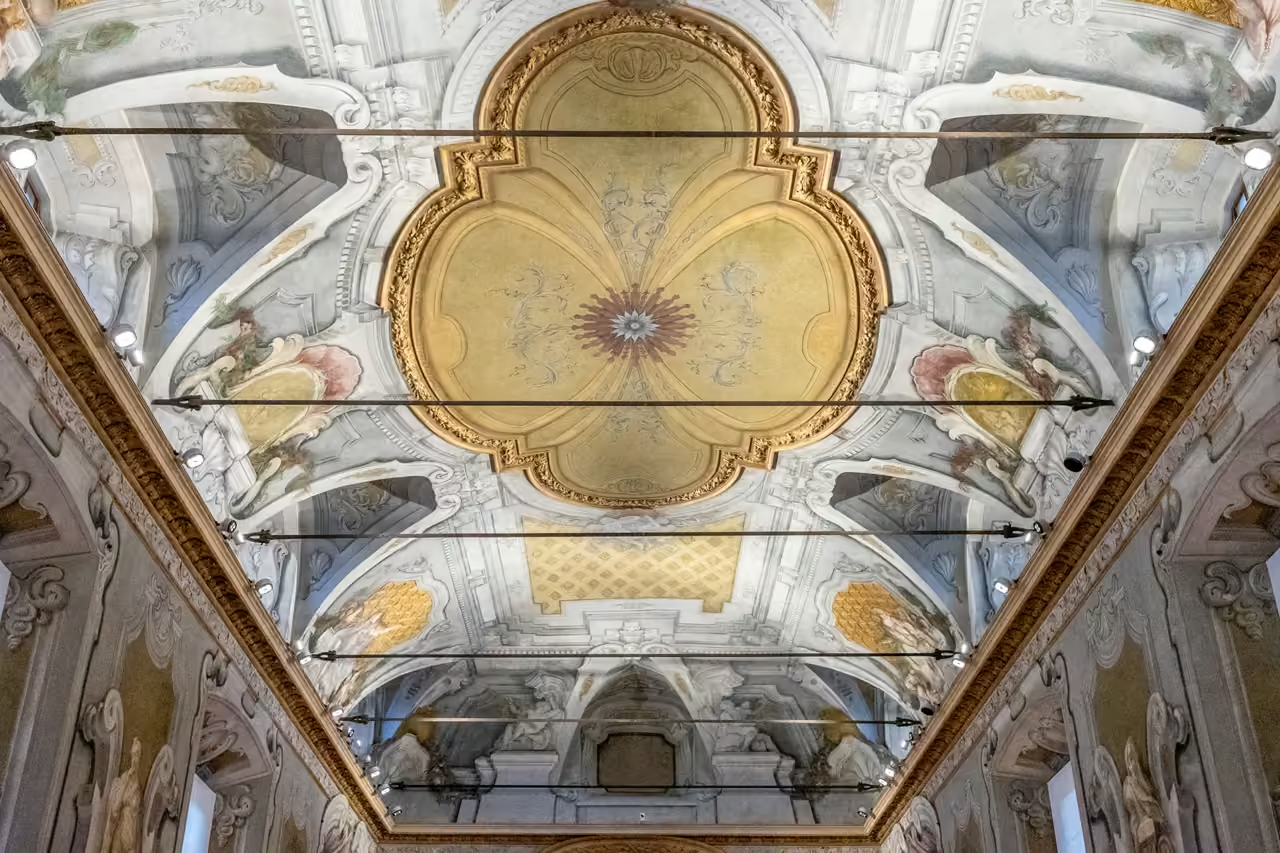
Pushing open the heavy doors of the Ambrosian Library on Piazza Pio XI instantly muffles the distant hum of Milanese traffic. Founded in 1607 by Cardinal Federico Borromeo, the space demands a quiet reverence, occasionally broken by the squeaking of a floorboard under a distracted visitor's heel. The grand Sala Federiciana surrounds its guests with towering wooden bookcases and a soaring barrel vault heavily laden with history's intellectual triumphs. Leonardo da Vinci's own sketches and engineering marvels wait on the pages of the Codex Atlanticus, carefully preserved in the subdued lighting. Deep below the reading rooms, the large, irregular Verona red marble paving stones of Milan's original Roman forum still rest in their ancient alignment. The faint scent of aged paper and beeswax polish lingers near the corner cabinets where illuminated manuscripts from the fifth century sit quietly in the dark.
Videos
History of Ambrosian Library
Cardinal Federico Borromeo harboured an obsessive desire to gather human knowledge into a single, accessible institution. By the late sixteenth century, he was sending emissaries across the globe to hunt down rare manuscripts and forgotten texts. These agents scoured monastic libraries and private estates, eventually securing massive hauls like the ancient texts of the Bobbio Abbey and the personal library of Paduan bibliophile Gian Vincenzo Pinelli. When the library finally opened to the public in 1609, it was one of the first in Europe to allow anyone who could read to consult its treasures, bypassing the restrictive access typical of private and royal collections of the era. The sheer volume of irreplaceable art and literature quickly drew unwanted attention from foreign powers. In 1796, Napoleon's troops marched into Milan and systematically looted the Ambrosiana's prized collections. French officials walked out with Flemish masterpieces by Jan Brueghel the Elder, which Borromeo had personally commissioned, alongside major paintings by Rubens and Titian. Several priceless works, including a sketch of the Virgin by Leonardo da Vinci and a canvas by Francesco Cairo, simply vanished during the bumpy carriage rides back to Paris and were never seen again. Disaster struck from the skies a century and a half later when the 1943 bombing raids over Milan set the palazzo ablaze. Incendiary devices shattered the elegant reading rooms and reduced sections of the complex to ash. Restorers worked tirelessly through the post-war years to rebuild the Sala Federiciana, meticulously recreating the barrel vaults and stucco frames. Today, the surviving institution stands atop the literal bedrock of the city, built directly over the ancient stone water channels and irregular red marble slabs of the Roman forum that once dictated the civic life of Mediolanum.
events spanning 400 years
Fun Facts
8- 01
A copy of Virgil's works once owned by the Italian poet Petrarch rests securely in the collection, featuring a frontispiece intricately illuminated by the early Renaissance master Simone Martini.
- 02
Cardinal Borromeo's agents successfully acquired the Ilias Picta, an illustrated manuscript of the Iliad that dates back to the fifth century and stands today as one of the oldest surviving illuminated manuscripts in the world.
- 03
In 1637, Galeazzo Arconati gifted the library twelve of Leonardo da Vinci's notebooks, including the famous Codex Atlanticus, saving these priceless scientific and artistic records from being permanently scattered among private collectors.
- 04
Napoleon's art heist in 1796 led to the permanent loss of Leonardo da Vinci's 'Head of the Virgin', which vanished somewhere on the chaotic roads between Milan and Paris and remains missing to this day.
- 05
The Ambrosiana was one of the first libraries in the world to open its doors to the general public in 1609, operating under a mandate to serve anyone seeking knowledge rather than exclusively catering to the clergy or aristocracy.
- 06
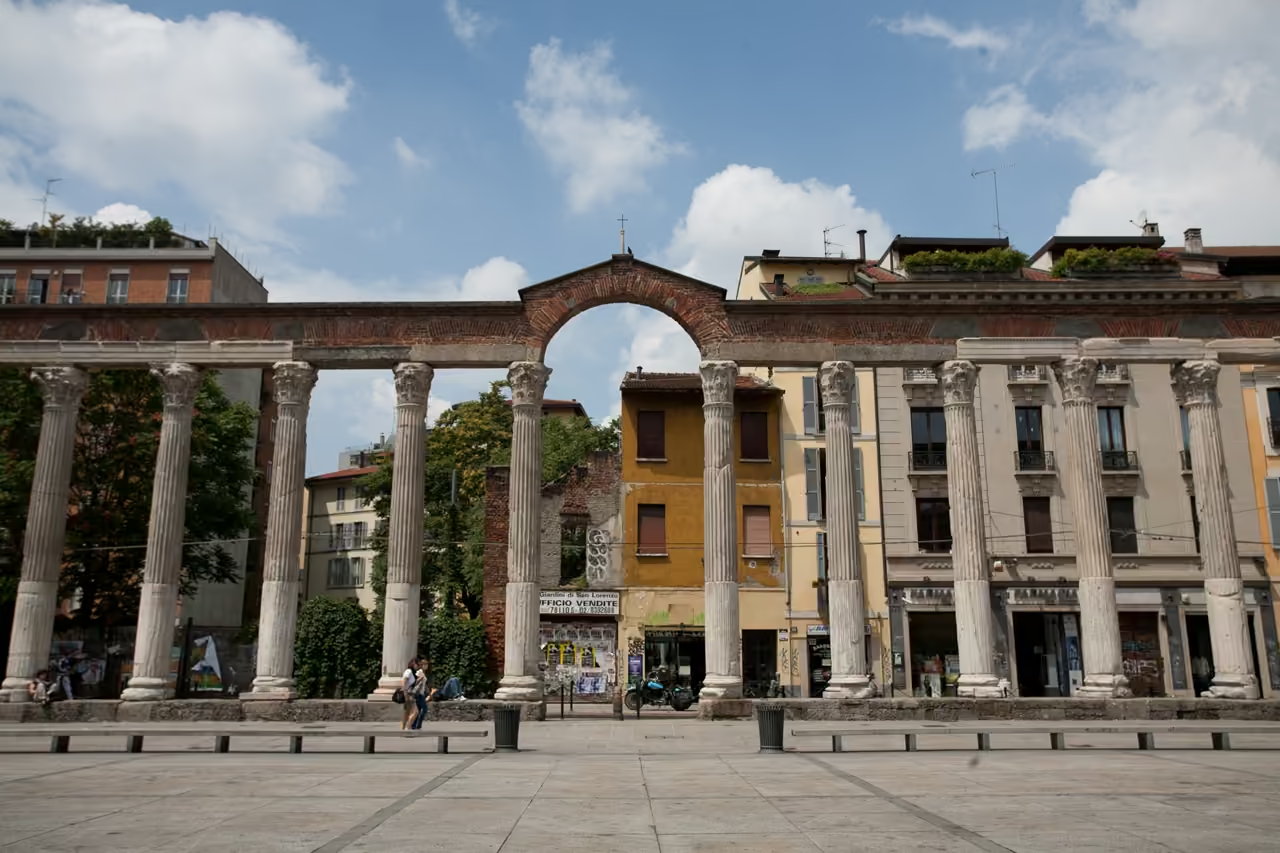
The entire library complex was built directly over the ruins of Milan's ancient Roman forum. Visitors can still walk past the original Verona red marble paving stones and stone rainwater channels preserved in the subterranean levels.
- 07
The institution holds a seventeenth-century Chinese map of the world created by the Jesuit missionary Giulio Aleni, known historically as the 'Map of the Ten Thousand Countries'.
- 08
When incendiary bombs struck the building in 1943, the destruction was so severe that architect Luigi Caccia Dominioni had to completely redesign and rebuild the grand Sala Federiciana reading room from the ground up.
FULL PLACE DETAILS
Updated
FULL PLACE DETAILS
UpdatedOVERVIEW & STATS
- Established
- In 1607, making it 419 years old
- Annual Visitors
- 1,577 (2022)
- Exhibition Items
- 1,600,000
- Wi-Fi
- Available
ARCHITECTURE & HERITAGE
- Architectural Styles
- Italian Baroque
- Architects
- Fabio MangoneFrancesco Maria RichiniGiacomo Moraglia
- Founders
- Federico Borromeo
WEB & AMENITIES
Ambrosian Library Map & Neighborhood Explorer
This interactive map is centered on Ambrosian Library. Zoom in and move the map around to automatically discover Wikipedia photos and summaries of other nearby sights, monuments, and historical points of interest and stories in real-time!
Ambrosian Library FAQ
Yes, original pages from the Codex Atlanticus are frequently on display inside the library's exhibition spaces. The curators rotate the pages regularly to protect the delicate centuries-old ink and paper from prolonged light exposure.
The remains of the Augustan-era Roman forum are located in the subterranean levels of the Ambrosiana. They are fully integrated into the standard visitor route through the museum complex, so you will pass right by them.
It functions as both. The Pinacoteca Ambrosiana occupies several rooms within the complex and displays Renaissance masterpieces by Caravaggio, Titian, and Raphael, many of which were originally donated by the founder, Cardinal Federico Borromeo.
A typical visit takes about 2 hours. We recommend planning your schedule accordingly to make the most of your time there.
The closest place to visit near Ambrosian Library is Merchants Square, around 179 m away. Other things to do near Ambrosian Library include Be Fooled by Bramante's Painted Apse (195 m), Ambrosian Carnival (254 m) and Museum of the 20th Century (330 m). All of these are within roughly 330 m of Ambrosian Library, close enough to walk.
It has approximately 1,600,000 exhibits, some of which may or may not be open to the public.
Wi-Fi is available on site.
It dates back to 1607, making it 419 years old.
Ambrosian Library was founded by Federico Borromeo. It was designed by Fabio Mangone, Francesco Maria Richini and Giacomo Moraglia in the Italian Baroque style.
According to the latest available data (2022), it received approximately 1,577 visitors that year.
While we strive to keep this information accurate and up to date, we recommend verifying any details independently before making decisions based on them.
Places near Ambrosian Library
Make the most of your trip. Check out these top-rated spots located nearby.
 179m
Merchants Square
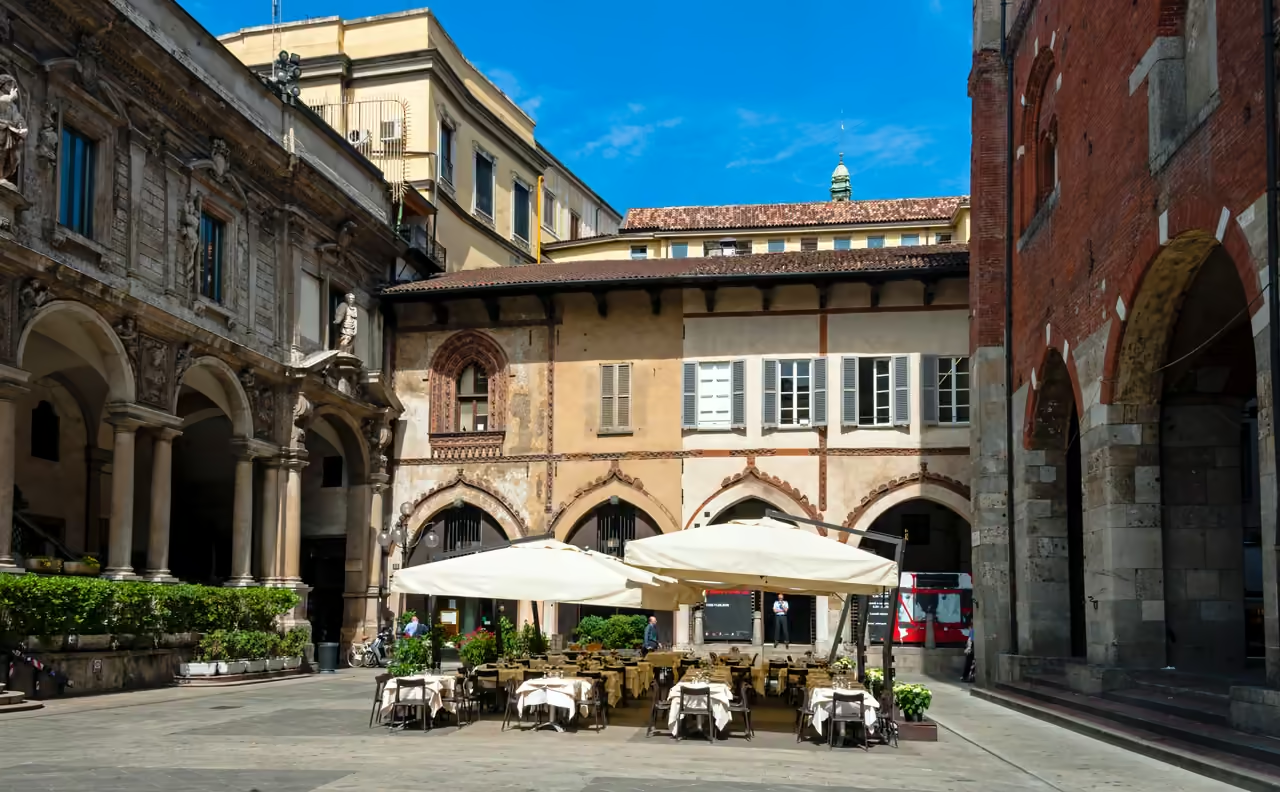
A small medieval square tucked behind the Duomo, once the centre of civic life. The old Palazzo della Ragione stands on one side, with a loggia, an old well and the sculpted horseman Oldrado da Tresseno on the facade. Tour groups tend to walk straight past on the way to the Galleria.
hidden gem view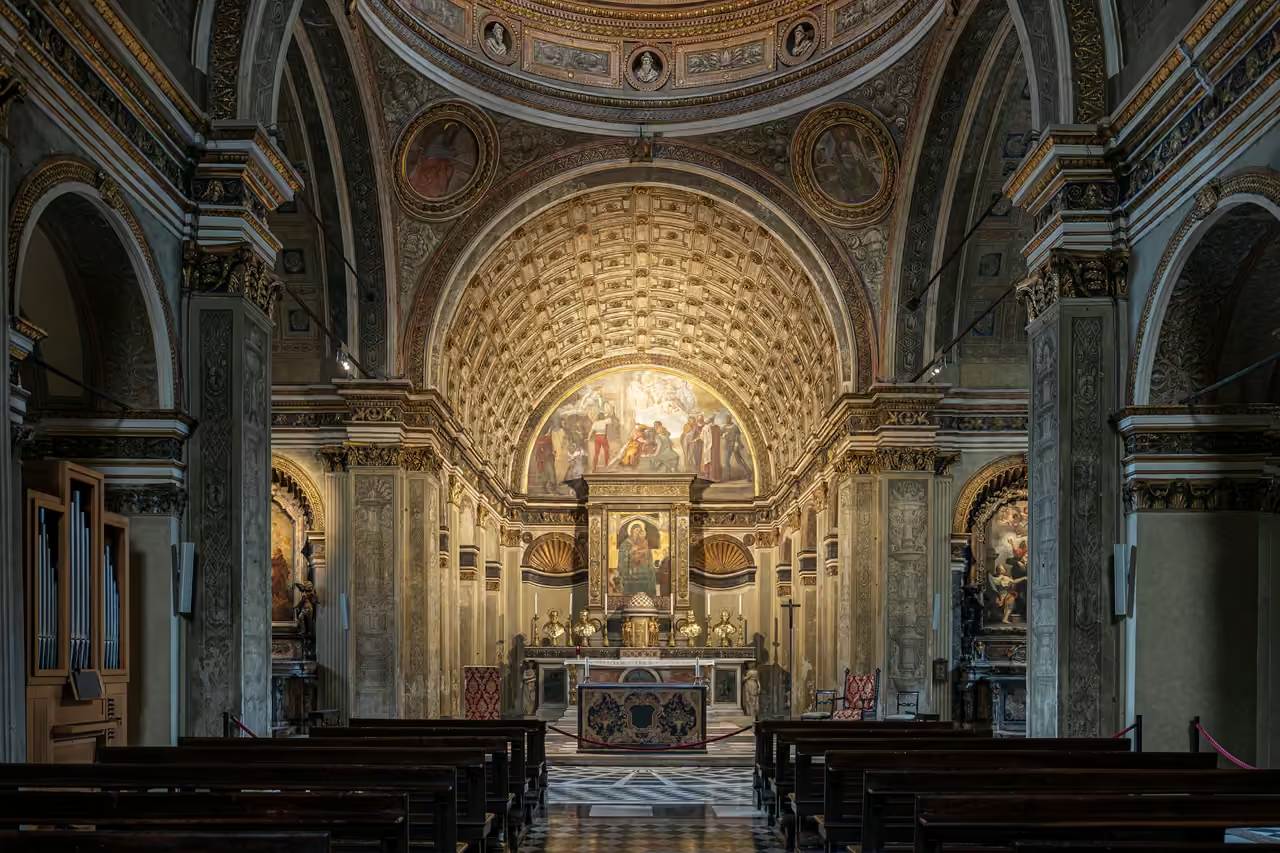 195m
Be Fooled by Bramante's Painted Apse
In the church of Santa Maria presso San Satiro, Bramante used trompe-l'oeil to make a shallow apse look deep. Entry to the church is free, and the illusion works best from the main aisle.
free thing to do view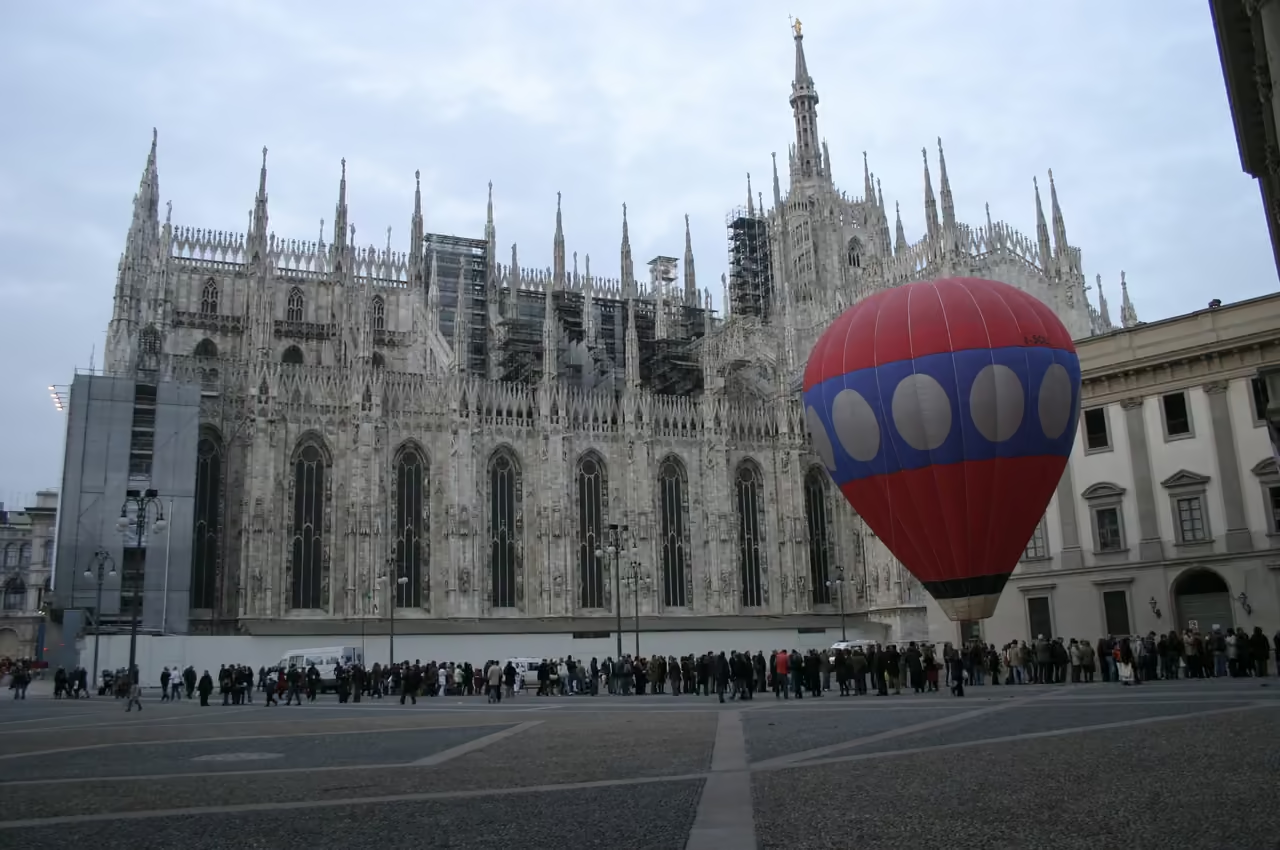 254m
Ambrosian Carnival
Milan's carnival runs on its own calendar, ending the Saturday after Ash Wednesday rather than on Shrove Tuesday, a quirk of the Ambrosian rite. Children dress up and the local masks Meneghino and Cecca lead processions. Frittelle and chiacchiere, fried pastry dusted with sugar, appear in every bakery.
festival view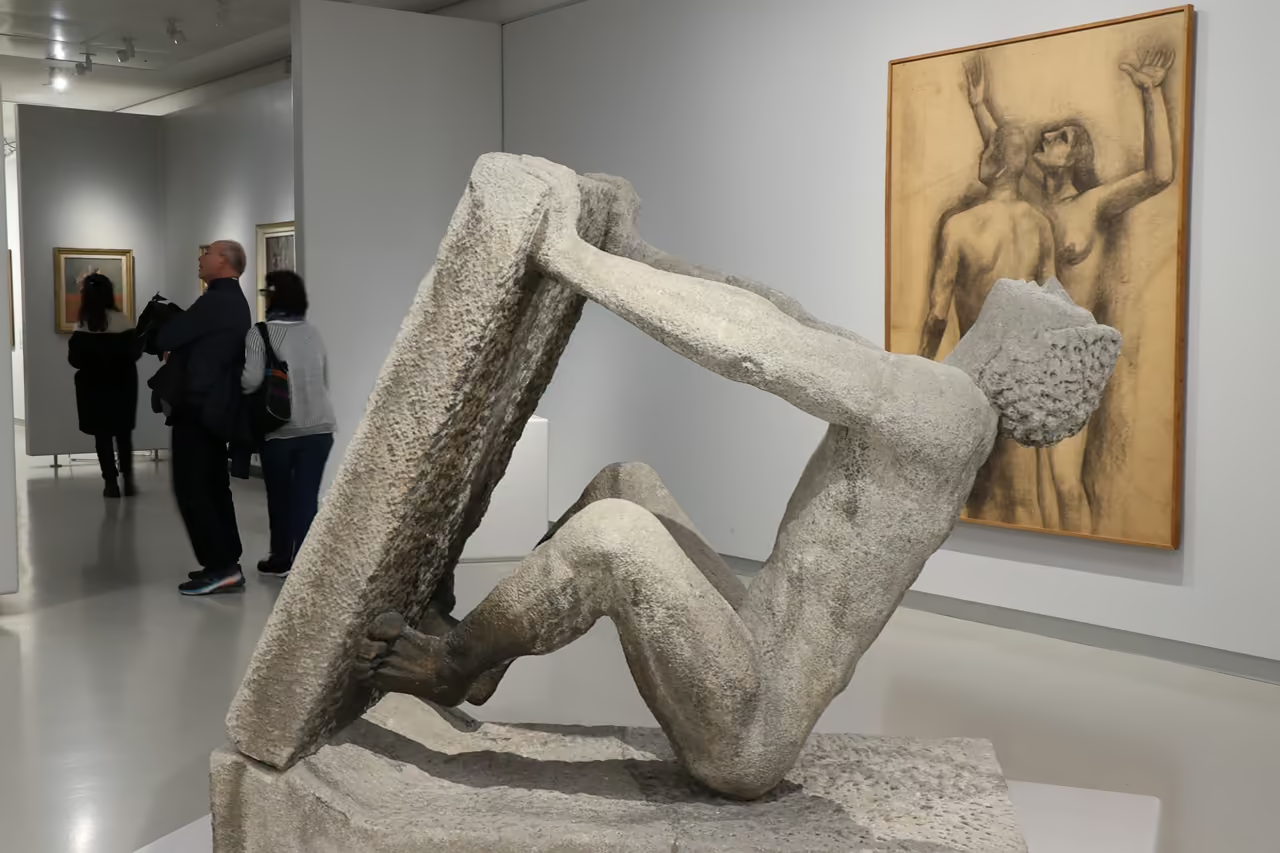 330m
Museum of the 20th Century
Occupying a heavy fascist-era building overlooking the main square, this collection focuses strictly on 20th-century art. A spiral ramp leads visitors through chronological displays of Futurism, Spatialism, and Arte Povera. The stark, minimalist interiors deliberately contrast with the elaborate Gothic spikes visible through the massive glass windows. Pellizza da Volpedo's colossal painting 'The Fourth Estate' commands the entrance hall.
highlight view
Explore Similar Places in These Collections
Featured on This Route
See all attractions in Milan
Including Galleria Vittorio Emanuele II, Milan Cathedral, Sforza Castle, and more