Centre Pompidou
Standing as one of Paris's most unmistakable architectural icons, the Centre Pompidou is a masterpiece of high-tech design that boldly wears its structural skeleton on the outside. With its brightly coloured, exposed pipes and the distinctive exterior glass tube escalator, the building challenges conventional museum aesthetics, offering a playful, industrial contrast to the historic streets of the Marais. Inside, it houses one of the world’s most significant collections of modern and contemporary art, making it an essential pilgrimage for art lovers and curious visitors. Beyond the galleries, this vibrant institution acts as a cultural living room for the city, hosting world-class exhibitions, a vast public library, and providing stunning panoramic views of the Parisian skyline from its upper levels. Whether you are marvelling at the avant-garde architecture or soaking in the lively atmosphere of the surrounding piazza, a visit here provides an unforgettable perspective on the intersection of art and urban life.
Videos
History of Centre Pompidou
The creation of the Centre Pompidou was a daring gamble to reclaim Paris's status as the epicentre of the art world. In the late 1960s, President Georges Pompidou envisioned a radical, interdisciplinary hub that would move beyond the traditional museum model, which he felt had become stagnant compared to the vibrant energy of New York's cultural scene. Choosing the neglected Beaubourg plateau—a site once known for its slum-like conditions—he sought to place high culture, literature, and music directly into the heart of the city, hoping to attract the general public rather than just the elite. It was a bold act of urban renewal that sought to bridge the gap between institutional history and the messy, creative reality of modern life. When the architectural competition was announced in 1971, the winning entry by Renzo Piano, Richard Rogers, and Gianfranco Franchini stunned the architectural establishment. Their design was a defiant rejection of Parisian architectural tradition. By placing the building's skeleton, plumbing, and circulation systems on the exterior, they created an 'inside-out' structure that was as controversial as it was innovative. Locals and critics alike were horrified, calling it an industrial eyesore, a factory, and even a crude refinery in the middle of historic Paris. Yet, the architects stuck to their vision, arguing that a building dedicated to the ever-evolving nature of contemporary art should not be a static, heavy monument, but a flexible, living machine that could change with the times. Since its inauguration in 1977, the Centre Pompidou has defied its early critics to become a beloved global icon. It successfully proved that an avant-garde building could become the heart of a city's social and intellectual life. Through its massive collections, legendary exhibitions, and its role as a pioneer of cultural decentralisation, it has fundamentally changed how the public interacts with art. Today, as it looks toward its next great renovation, the centre stands as a testament to the belief that architecture should be as daring as the art it contains, continuing to challenge, inspire, and invite the public to look at the world from a different angle.
Events spanning 56 years
Fun Facts
- • During its 1997 renovation, the centre famously hosted a massive 'millennium clock' called Le Génitron, which counted down the seconds to the year 2000.
- • It houses the largest collection of modern and contemporary art in Europe, boasting over 113,000 works.
- • Nearby, the Stravinsky Fountain features whimsical, kinetic sculptures by Jean Tinguely and Niki de Saint Phalle, which were specifically designed to complement the centre's playful spirit.
- • Renzo Piano, one of the architects, famously remarked that the building was a 'parody of technology' designed to break the intimidating image of traditional cultural institutions.
- • The building was designed to be an 'inside-out' machine, with all structural supports, air ducts, and plumbing moved to the exterior to liberate the internal space for total flexibility.
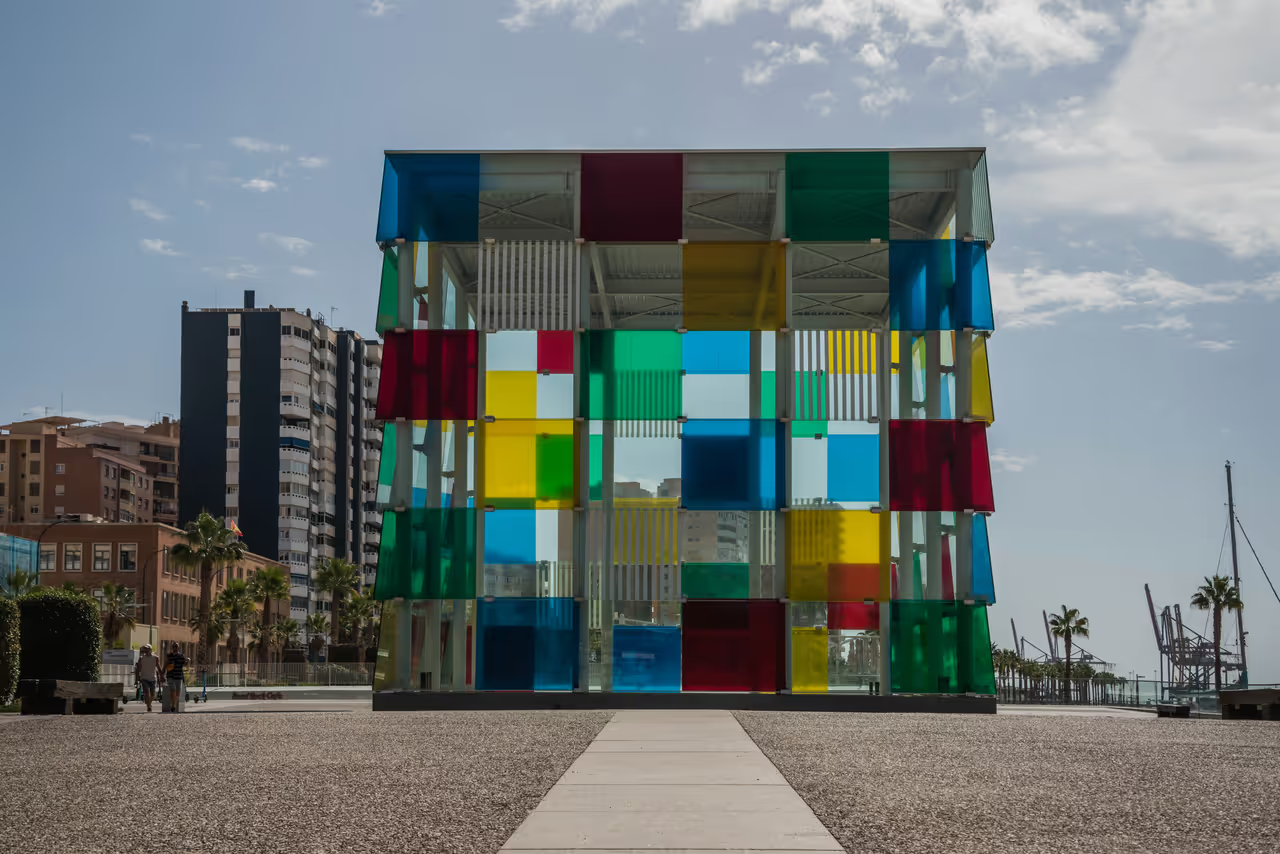
- • The centre has grown into a global cultural ambassador, launching sister institutions in cities as far afield as Malaga, Shanghai, and soon, Saudi Arabia.
- • The exterior pipes are colour-coded by function: blue for air, green for water, yellow for electricity, and red for elevators and safety features.
- • The famous transparent tubular escalator that zigzags across the facade is affectionately known as 'La Chenille', or 'the caterpillar'.
- • The piazza in front of the centre is a permanent stage for street performers, musicians, and artists, creating one of the most vibrant public spaces in Paris.
- • Unlike traditional museums, the centre was designed to be interdisciplinary, intentionally housing a library, research centre, and exhibition spaces under one roof to encourage cross-pollination of ideas.
- • Upon its completion, the controversial, industrial look led critics to dub it 'Notre-Dame de la Tuyauterie' (Our Lady of the Pipes) and a 'gas refinery'.
Centre Pompidou FAQ
While we strive to keep this information accurate and up to date, we recommend verifying any details independently before making decisions based on them.
Centre Pompidou Map & Neighborhood Explorer
This interactive map is centered on Centre Pompidou. Zoom in and move the map around to automatically discover Wikipedia photos and summaries of other nearby sights, monuments, and historical points of interest and stories in real-time!
Places near Centre Pompidou
Make the most of your trip. Check out these top-rated spots located nearby.
- 424m
Make Music Day
Celebrating the summer solstice, the entire city transforms into a massive, open-air concert venue. Amateur and professional musicians take over street corners, plazas, and parks to perform across every imaginable genre. Ranging from classical quartets to heavy rock bands, the music continues deep into the early hours of the morning. It provides a remarkably joyful and chaotic atmosphere where the usual noise regulations are temporarily suspended.
festival view 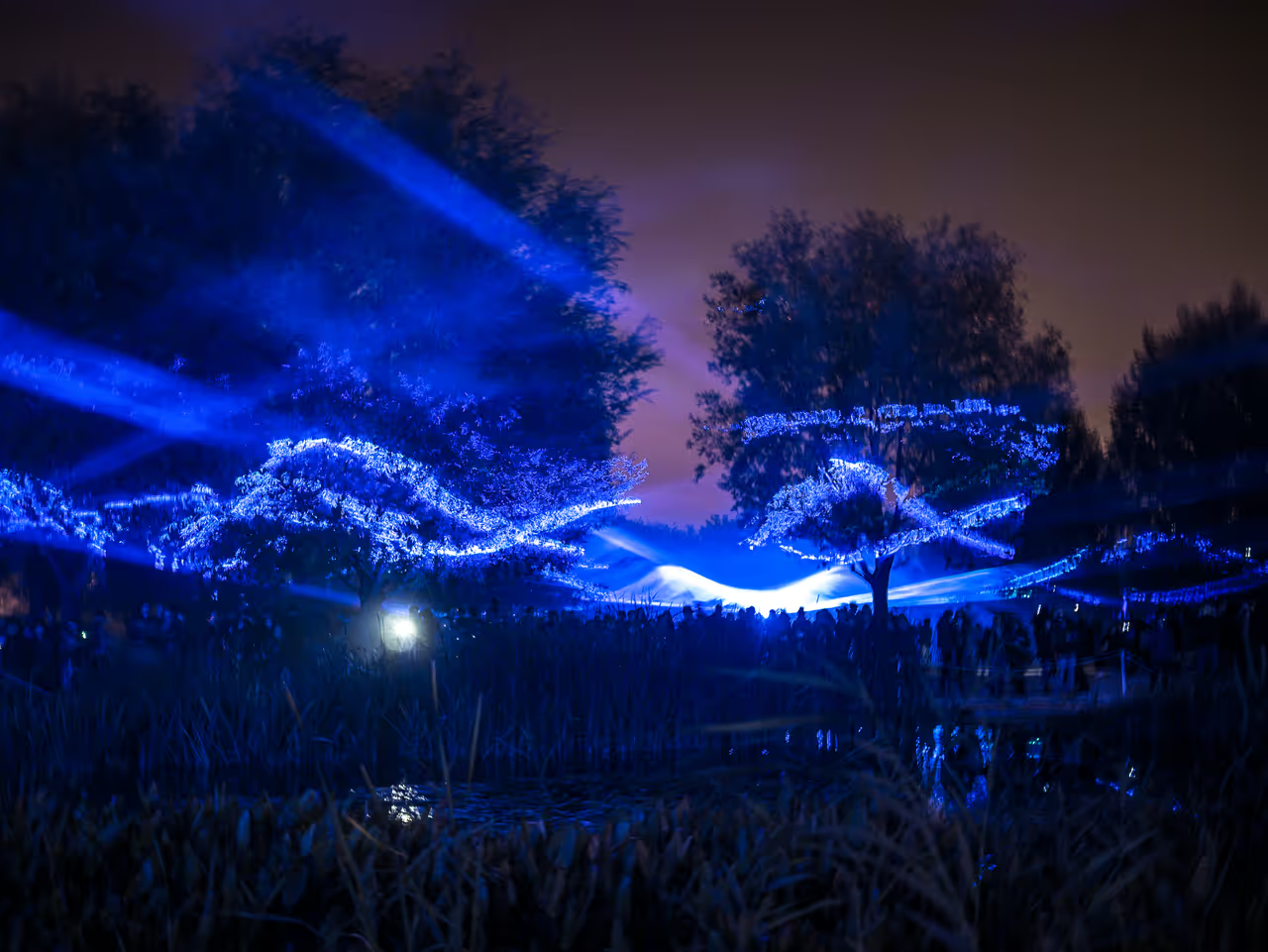 424m
424mSleepless Night Art Festival
For one night only, the city transforms into an illuminated theme park dedicated to contemporary art. Public spaces, historical monuments, and unexpected venues host avant-garde installations, light shows, and performance art. The public transport system runs special late services to accommodate the crowds wandering the streets until dawn. It offers a surreal and deeply immersive way to experience urban spaces through an artistic lens.
festival view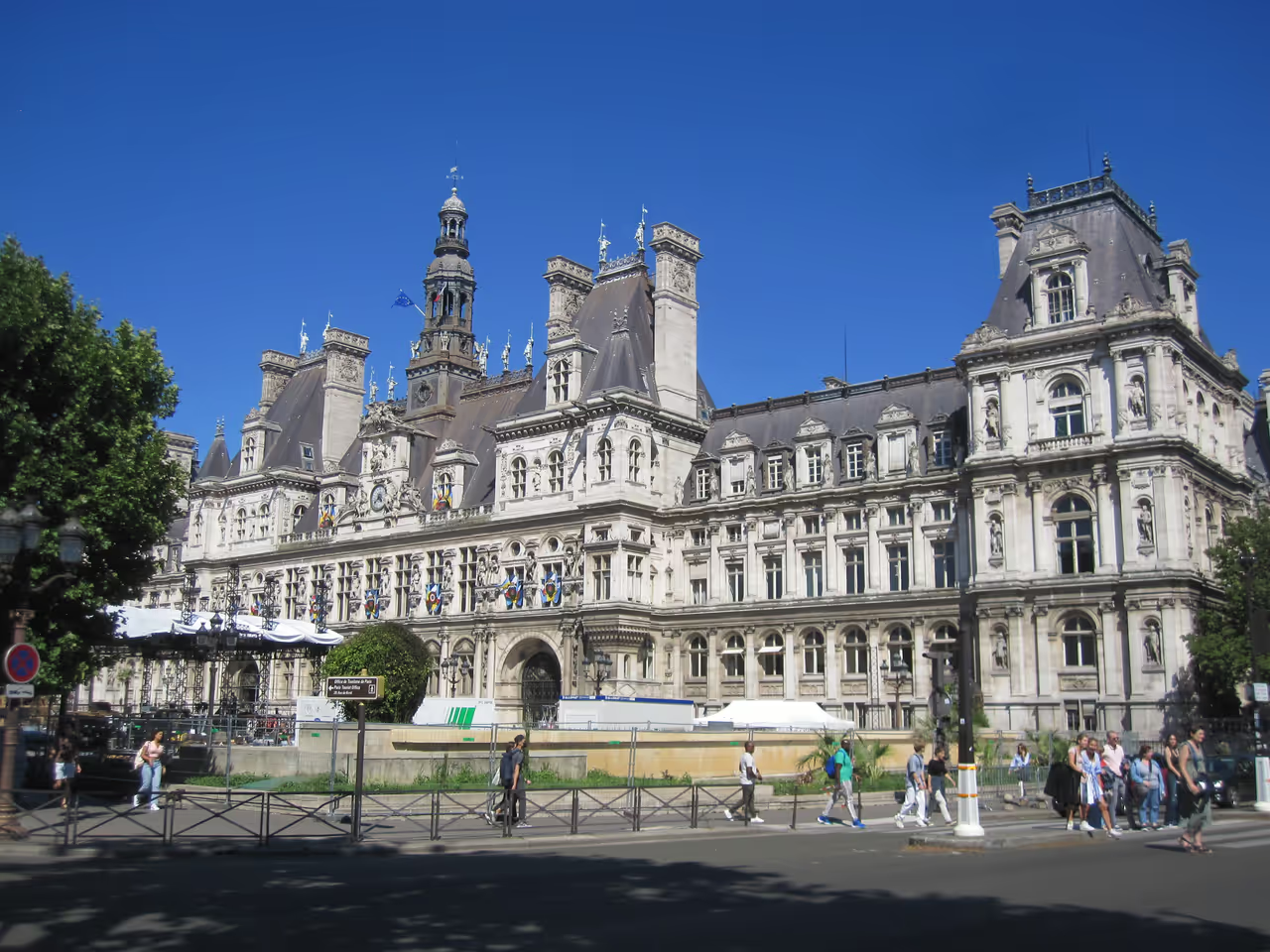 472m
472mCity Hall
Serving as the headquarters of the municipality, this vast building is a masterclass in highly decorated Neo-Renaissance design. Rebuilt in the late nineteenth century after the original was burned during the Commune, the sweeping facade features hundreds of intricate statues of notable local figures. The elaborate pavilions, steep slate roofs, and ornate clock tower project an image of supreme civic authority. The expansive plaza in front constantly hosts seasonal events, drawing crowds to its monumental doorstep.
architecture view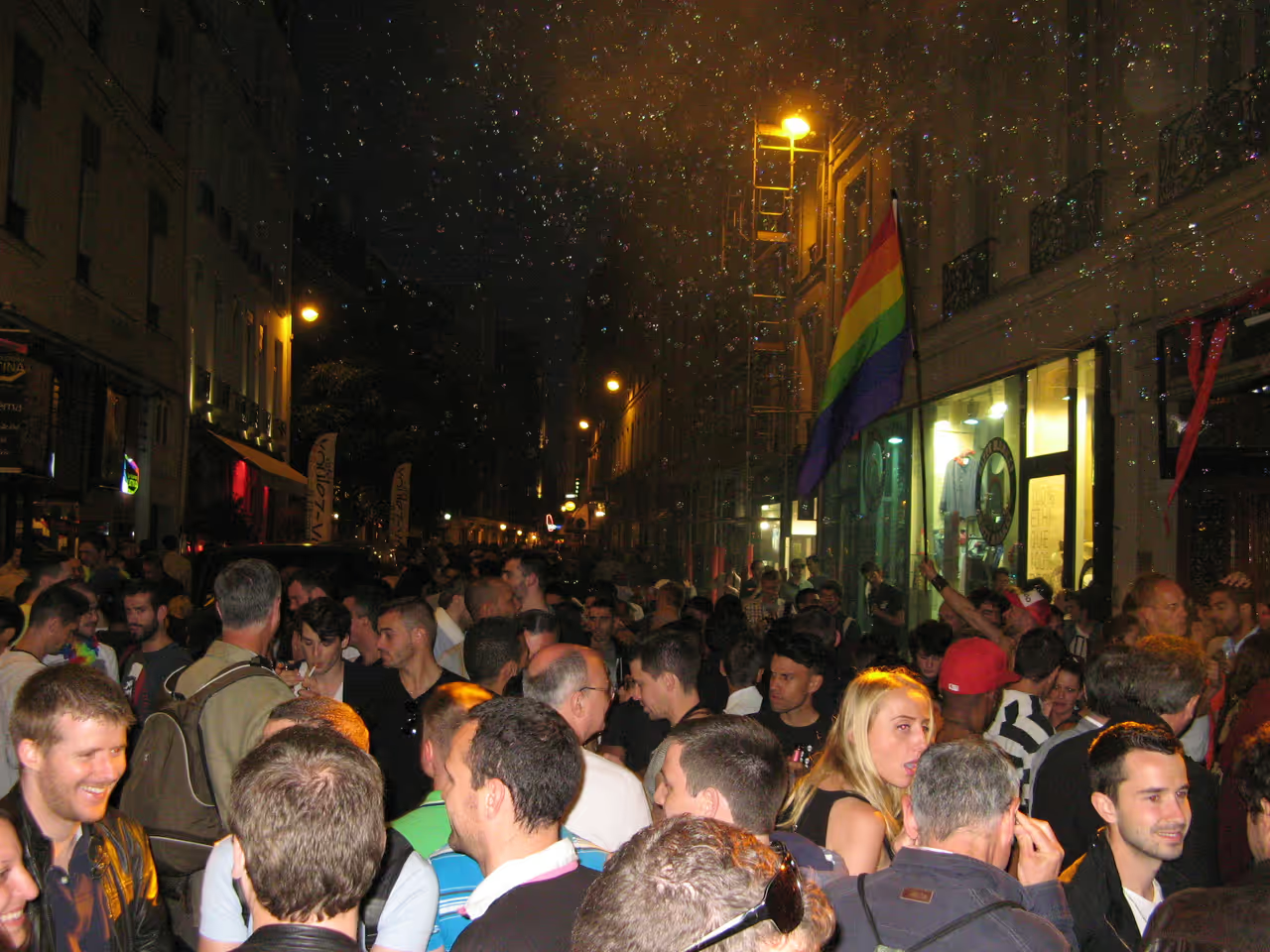 652m
652mLe Marais Nightlife
This historic district successfully blends its stunning medieval architecture with a famously vibrant and trendy nightlife scene. It serves as the traditional heart of the city's LGBT community, featuring numerous lively clubs and welcoming bars. Beyond the club scene, the area boasts sophisticated cocktail lounges and intimate speakeasies hidden behind unmarked doors. The stylish crowds and diverse venues make it an exciting location for bar-hopping.
nightlife view
Explore Similar Places in This Collection
Featured on This Itinerary
See all attractions in Paris
Arc de Triomphe, Eiffel Tower, Louvre Museum, Notre-Dame Cathedral, Panthéon, Sacré-Cœur Basilica, Musée d'Orsay...