Arc de Triomphe
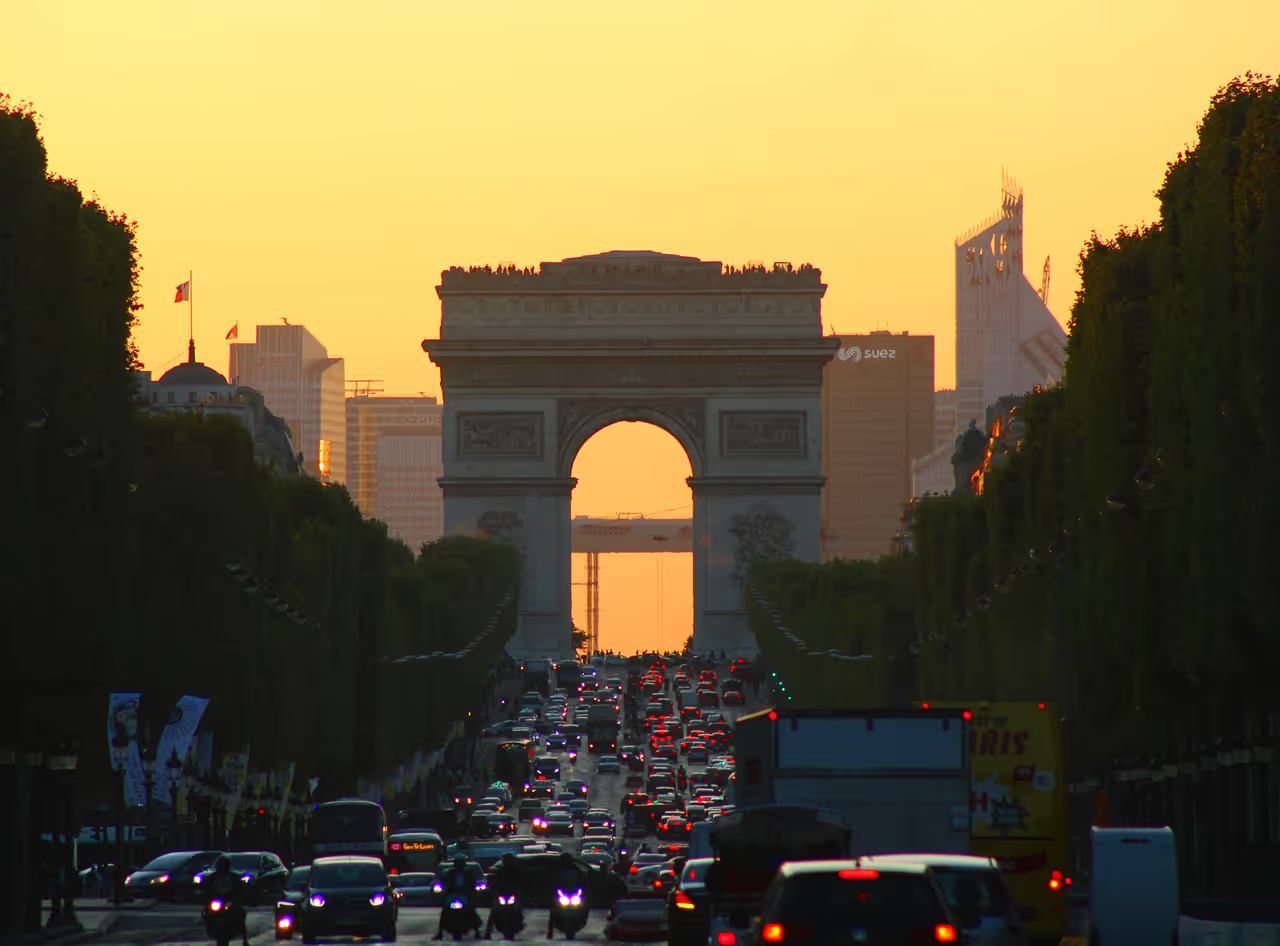
Standing proudly at the western end of the Champs-Élysées, this massive arch is much more than a photo opportunity. It serves as the heart of a twelve-pointed star of grand avenues, offering a panoramic view that captures the geometric perfection of Paris. Climbing to the top rewards you with a unique perspective on the city's symmetry, from the Louvre to the skyscrapers of La Défense. At its base, the flicker of the Eternal Flame pays a moving tribute to those who fought for France, creating an atmosphere of quiet reverence amidst the city energy. Whether you are marvelling at the intricate high-relief sculptures or watching the sunset perfectly align with the archway, the experience is deeply evocative. It is a place where military history and romantic cityscapes meet, making it an essential stop for every visitor to the French capital.
Videos
History of Arc de Triomphe
Napoleon Bonaparte had a flair for the dramatic, promising his soldiers after the 1805 victory at Austerlitz that they would return home walking beneath triumphal arches. He originally wanted this enormous monument dropped right on the former site of the Bastille in the east of Paris. His minister of the interior, Jean-Baptiste de Champagny, quietly pointed out the exorbitant cost of that location and steered the project toward the Place de l'Étoile in the west. This empty, star-shaped intersection offered much better lines of sight. Architect Jean-François Chalgrin won the commission, but only after a bitter feud with his collaborator Jean-Arnaud Raymond over whether the columns should be freestanding or attached to the walls. The argument became so heated that Raymond was forced to resign. Laying the first stone in August 1806 generated almost no public interest, and the building process dragged on for years. By 1810, the stone pillars barely cleared a few metres. Napoleon was about to marry Archduchess Marie-Louise of Austria and wanted her to enter the capital through his grand project, which posed a significant logistical problem. Chalgrin solved this by erecting a full-scale replica out of timber scaffolding, stucco, and painted canvas. The imperial procession passed beneath this convincing illusion, though the architect himself died the following year with the real stone structure nowhere near finished. Regimes rose and fell while the site sat incomplete. Construction stalled entirely after the disastrous Russian campaign and the fall of the Empire. The masonry only saw fresh mortar when King Louis XVIII decided to commandeer the project for his own military campaigns in Spain. It fell to King Louis-Philippe to finally finish the job in 1836, dedicating the stonework to all who fought for France between 1792 and 1815. A massive military review was planned for the unveiling on the 29th of July. After surviving an assassination attempt just weeks prior, the king decided to stay home. Two government ministers quietly slipped out at seven in the morning and unveiled the massive block of stone with zero fanfare. Despite that hushed opening, the arch soon became the default stage for the most theatrical moments in Paris. Napoleon's ashes passed beneath the vault in 1840 on their way to Les Invalides. When Victor Hugo died in 1885, his coffin lay in state right on the pavement, shrouded in black crepe, before moving to the Panthéon. The monument has even seen airborne traffic. In August 1919, pilot Charles Godefroy steered a Nieuport 17 biplane straight through the central gap, capturing the public imagination and securing a famous photograph by Jacques Mortane. Today, the eternal flame over the Tomb of the Unknown Soldier requires a daily relighting ceremony at half past six in the evening. To reach that ritual, modern crowds shuffle through a slightly cramped pedestrian tunnel to safely bypass the roaring traffic outside, emerging right beside the heavy carved masonry.
8 Events spanning 215 years
Fun Facts
- • Before the current design was chosen, one architect proposed building a giant, three-storey elephant in the same spot that visitors could enter for parties.
- • In 1919, the biplane that flew through the arch had a wingspan of nine metres, leaving very little room for error given the arch is only 14.6 metres wide.
- • On the inner walls of the arch, you can find the names of 660 people, mostly generals; notably, the names of those who died in battle are underlined.
- • One of the most famous sculptures on the pillars is 'Le Départ des Volontaires', often called 'La Marseillaise', which depicts the French people rising to defend their nation.
- • The Eternal Flame at the Tomb of the Unknown Soldier has been rekindled every single evening at 6:30 PM since 1923, including during the German occupation in WWII.
- • The foundations of the arch go over eight metres deep and the entire structure weighs a staggering 100,000 tonnes.
- • The monument is surrounded by exactly 100 granite bollards, which represent the Hundred Days of Napoleon's brief return to power between his exiles.
- • The names of 158 battles from the Revolutionary and Napoleonic eras are etched into the stone, serving as a massive historical record.
- • There is a small museum tucked inside the attic space of the arch that tells the story of its design and the many eccentric projects that never made the cut.
- • Twice a year, the sun sets perfectly within the opening of the arch when viewed from the Champs-Élysées, creating a spectacular solar alignment.
Arc de Triomphe FAQ
While we strive to keep this information accurate and up to date, we recommend verifying any details independently before making decisions based on them.
Arc de Triomphe Map & Neighborhood Explorer
This interactive map is centered on Arc de Triomphe. Zoom in and move the map around to automatically discover Wikipedia photos and summaries of other nearby sights, monuments, and historical points of interest and stories in real-time!
Places near Arc de Triomphe
Make the most of your trip. Check out these top-rated spots located nearby.
 699m
699mBastille Day Celebrations
This magnificent national holiday commemorates the storming of the infamous prison fortress during the French Revolution. The day begins with a grand military parade marching down the Champs-Élysées, showcasing impressive pageantry and aerial displays. As evening approaches, locals and visitors gather around the Champ de Mars for a spectacular classical music concert. The festivities culminate in a breathtaking fireworks display launched from the gardens of the Eiffel Tower, illuminating the night sky.
festival view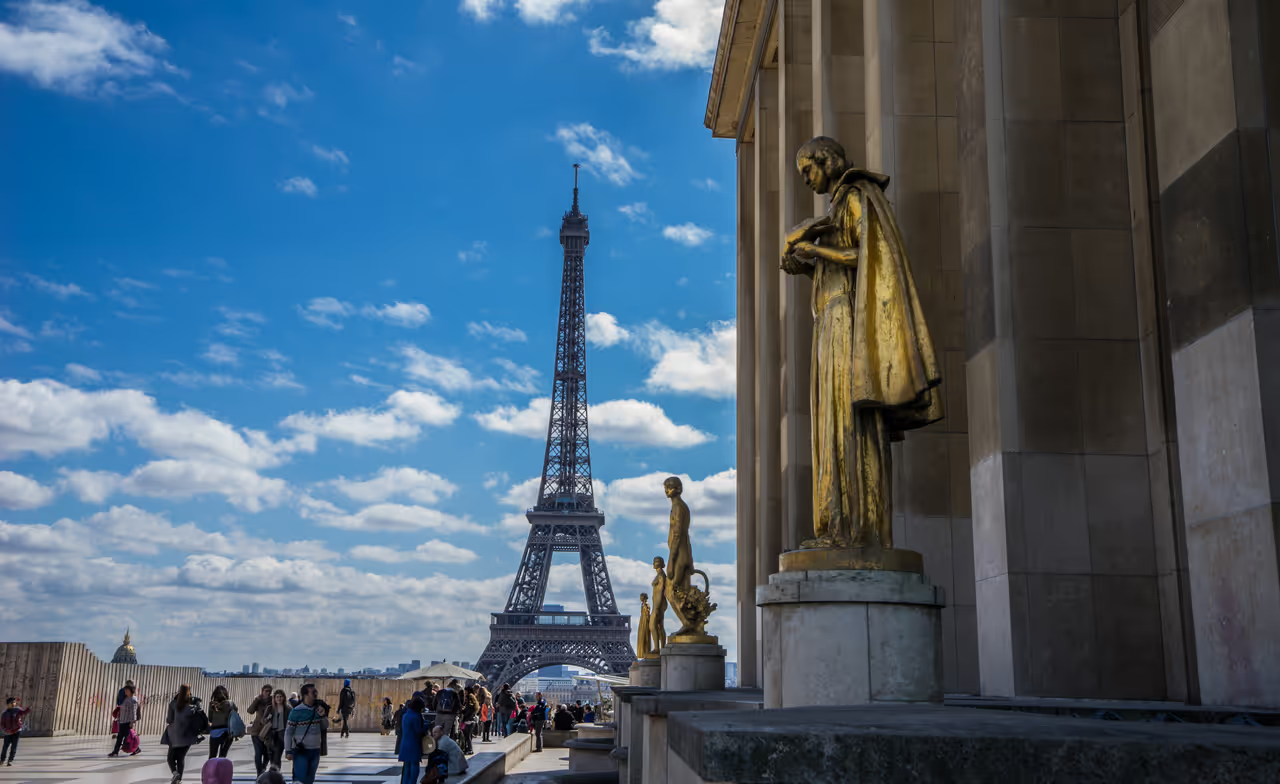 1324m
1324mTrocadéro Esplanade
This vast, elevated marble plaza offers what is undeniably the most famous and dramatic ground-level view in the capital. The esplanade aligns perfectly with the Eiffel Tower across the river, framing the immense iron structure between the curving wings of the Palais de Chaillot. The visual impact of seeing the tower rise majestically from the Champ de Mars is incredibly powerful and endlessly photogenic. It is the definitive location to watch the tower burst into sparkling lights at the top of the hour.
viewpoint view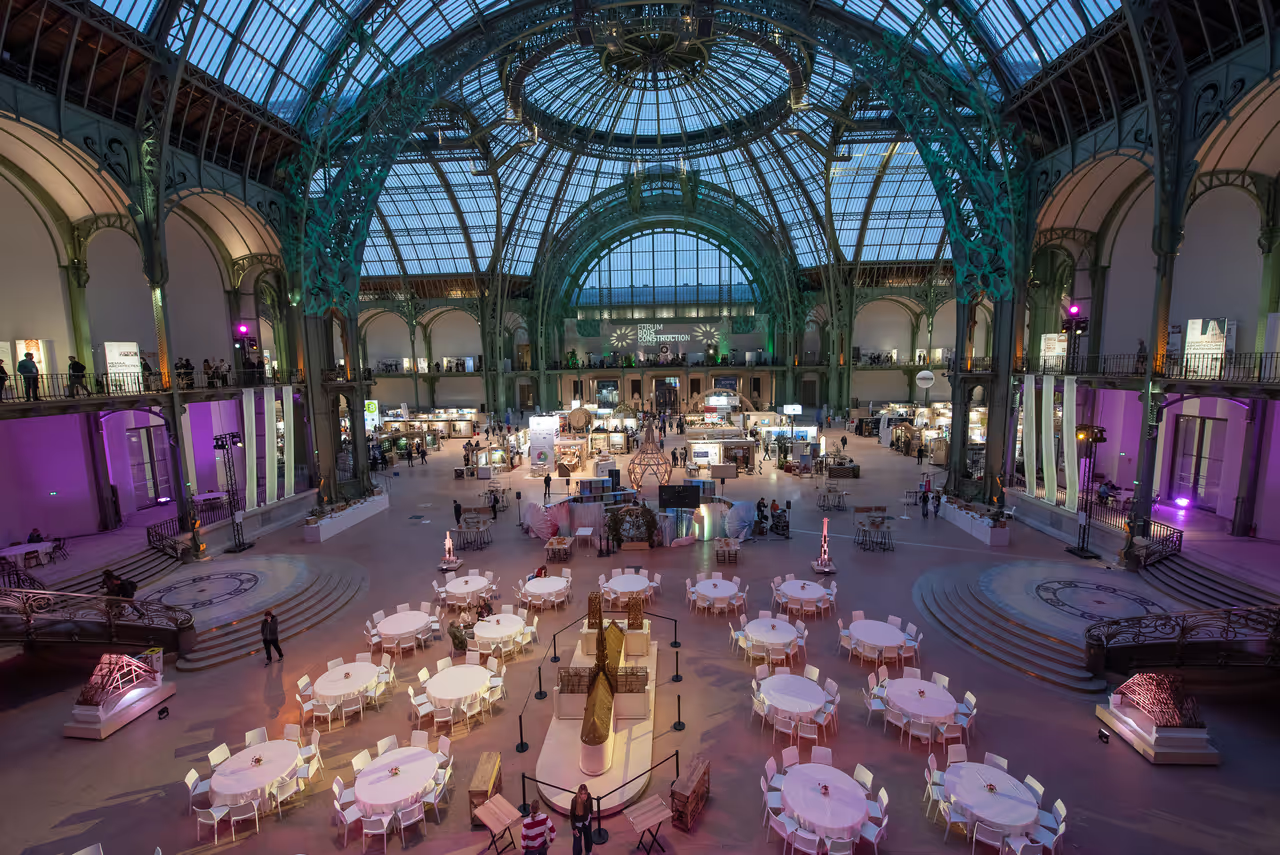 1580m
1580mGrand Palais
Constructed for the Universal Exhibition of 1900, this monumental structure is a spectacular showcase of Beaux-Arts architecture. Its massive, barrel-vaulted glass roof is supported by an intricate framework of light iron and steel, allowing sunlight to flood the immense exhibition space below. The classic stone facades are adorned with elaborate sculptural groups, creating a striking contrast with the transparent roof. It serves as a breathtaking venue for high-profile art exhibitions and fashion events.
architecture view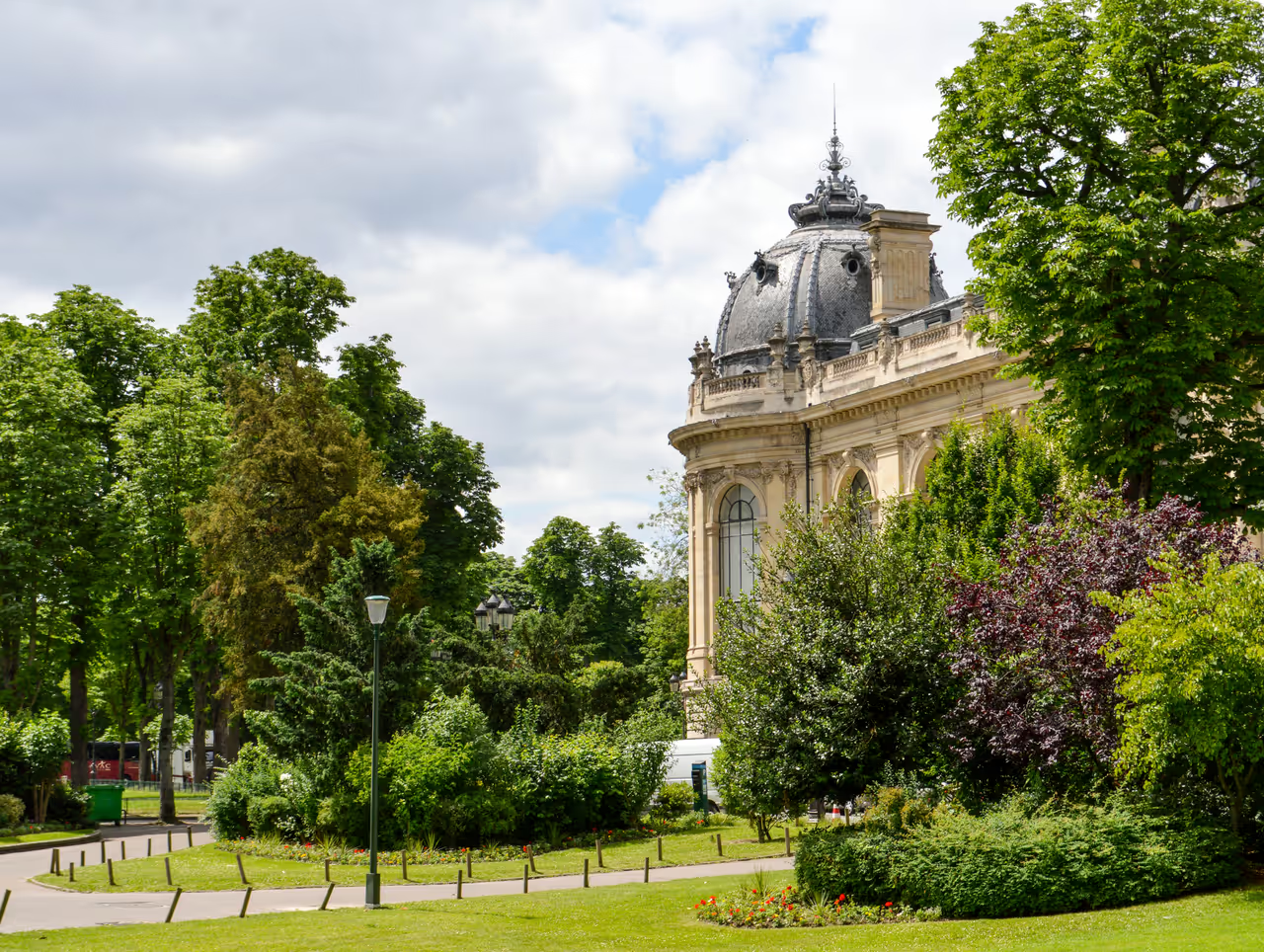 1666m
1666mVisit the Petit Palais
Often overshadowed by its larger neighbour, this magnificent Beaux-Arts building houses the City of Paris Museum of Fine Arts, offering free access to its permanent collections. The grand galleries display an impressive array of paintings, sculptures, and decorative arts ranging from antiquity to the early twentieth century. The highlight is the breathtaking interior courtyard garden, a tranquil oasis featuring mosaic pools and exotic plants. It provides a highly luxurious, uncrowded cultural experience completely free of charge.
free thing to do view
Explore Similar Places in These Collections
Featured on This Itinerary
See all attractions in Paris
Eiffel Tower, Louvre Museum, Notre-Dame Cathedral, Panthéon, Sacré-Cœur Basilica, Musée d'Orsay, Centre Pompidou...