Borely Park
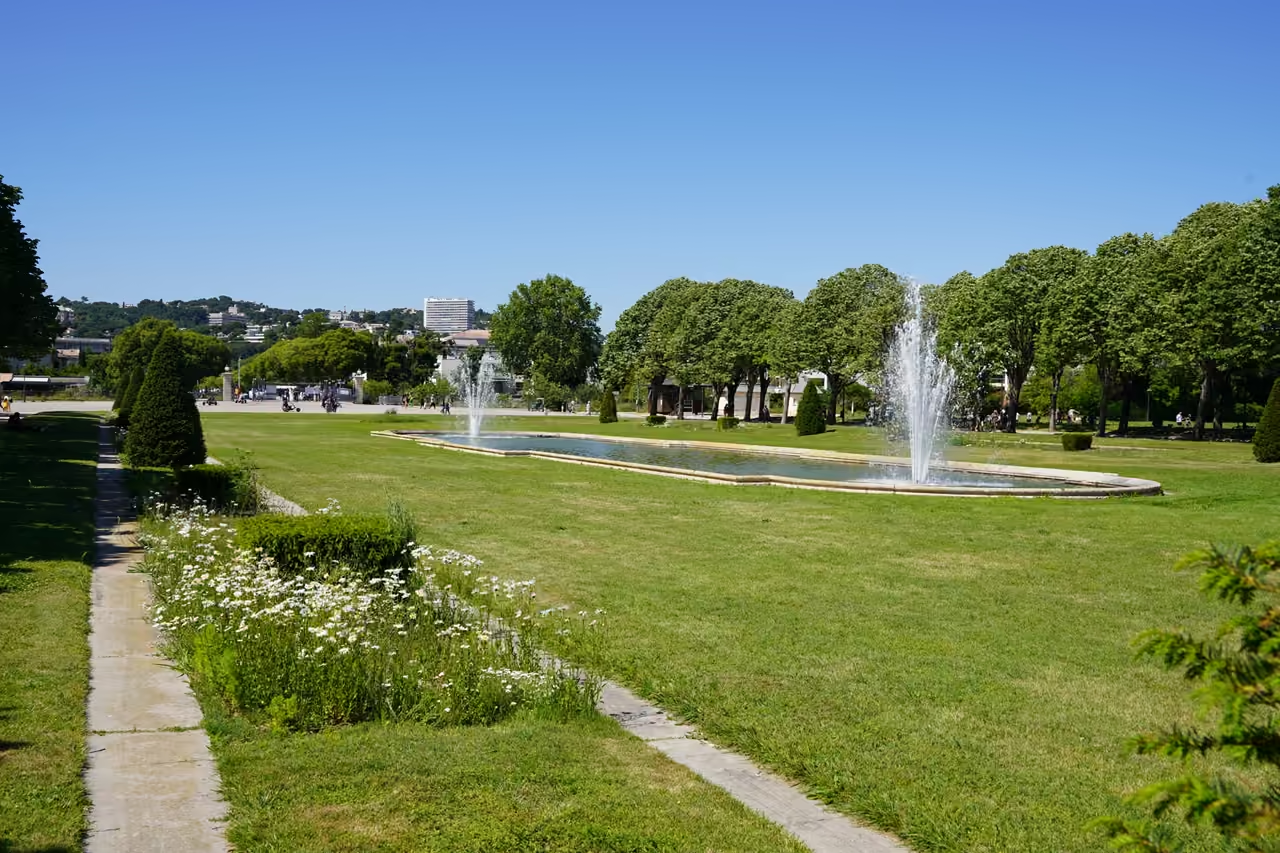
Walk a few hundred metres inland from the Prado beaches at the southern tip of the Corniche Kennedy, and the coastal glare drops into the cool shade of Bonneveine's Parc Borély. Seventeen hectares split into two distinct worlds. Before the pale stone Château Borély, clipped French parterres frame reflecting pools and a classical statue of the Diane de Versailles. Wander deeper along the gravel avenues, though, and strict symmetry softens into an English landscape garden wrapped around an island pond, a rockery waterfall, and a 1923 rose garden heavy with scent in late spring. Sunny Sundays bring out joggers, picnic blankets, and clattering family pedal karts, keeping slower walkers listening for a bicycle bell behind them. Wait out the afternoon heat at the waterside buvette beneath a spreading fig tree, where coastal gulls glide down to share the pond with local ducks.
Videos
History of Borely Park
Marseille's great commercial fortunes rarely stayed cramped inside the old harbour, and during the eighteenth century the prominent Borély merchant clan looked south toward the quiet coast of Bonneveine. On seaside pastures well outside the city gates, they built a grand country house surrounded by 54 hectares of private grounds. Maintaining that scale proved harder for later generations, so the municipality stepped in to purchase the estate in 1856. Private luxury gave way to civic ambition. To turn former estate land into a showcase for a growing port city, officials hired Adolphe Alphand, whose work under Baron Haussmann had transformed the parks of Second Empire Paris. Alphand carved the property with bold clarity between 1860 and 1880. Fifteen hectares along the eastern edge opened as a horse racing course on 4 November 1860, while 17 central hectares emerged as the public park inaugurated in 1864. In 1880 the grounds also gained a scientific lifeline when botanist Édouard Marie Heckel salvaged Marseille's municipal botanical collection, uprooted back in 1856 during construction of the railway line between Marseille and Toulon. Forty years later, in 1920, the expanding collection moved into its own western annex carrying Heckel's name. While urban expansion gradually transformed the surrounding coastal quarters, the park kept its open horizon intact and slipped into modern pop culture. From 2004 onward, camera crews for the longstanding Marseille television drama Plus belle la vie repeatedly filmed along its avenues, making the grounds familiar to households across France. In 2013, as Marseille celebrated its year as European Capital of Culture, the restored Château Borély opened its doors as the Museum of Decorative Arts, Earthenware and Fashion. State recognition followed in 2024, when the wider grounds earned Monument Historique inscription alongside the Jardin Remarquable label. Today, morning light falls across the broad avenues as neighbourhood runners stride past the stone steps of the château and elderly locals claim the sunny benches.
10 events spanning 168 years
Fun Facts
10- 01
Although the surrounding parkland earned national inscription nearly ninety years later, Château Borély itself gained top Monument Historique classification back in 1936. That early legal shield preserved genuine decorative interiors from the eighteenth century, allowing modern visitors to admire historic aristocratic salons alongside displays of Provençal faïence earthenware and fashion.
- 02
Between the 1930s and the 1950s, quiet strolls gave way to the roar of racing engines when the park hosted editions of the Marseille Grand Prix motor race. Drivers hurtled past the flowerbeds on avenues usually reserved for Sunday promenaders.
- 03
Every summer since 1962, Parc Borély becomes the world capital of boules during the Mondial la Marseillaise à pétanque, the largest tournament of its kind on earth. Nearly 13,000 players travel from across France and dozens of foreign countries to compete on temporary courts laid out beneath the trees.
- 04
For sixteen days in July 1910, the lawns served as a makeshift airfield for Marseille's first Aviation Fortnight, inspired by the famous 1909 airshow in Reims. Global flying pioneers including Channel pioneer Louis Blériot, Brazilian inventor Alberto Santos-Dumont, American aviator Glenn Curtiss, and Henri Farman took off from the turf, while pilot Léon Cheuret flew out over the sea during the first aeroplane flights ever seen above Marseille.
- 05
Inside the Jardin Botanique Édouard-Marie Heckel sits a traditional Chinese garden complete with curved pavilions and sculpted stonework, presented as a diplomatic gift to Marseille by the city of Shanghai. Nearby paths lead directly into a Japanese garden, a medicinal herb plot known as the jardin de simples, and glasshouses filled with tender species.
- 06
Just over the eastern boundary hedge lies the Hippodrome-golf Marseille Borély, an uncommon pairing spanning 15 hectares where an active horse racing track shares coastal turf with a golf course right beside the sea.
- 07
Long before modern stadium finales, the inaugural 1903 Tour de France placed its second stage finish line straight inside Parc Borély on 5 July 1903 after riders pedalled south from Lyon. Cycling history returned sixteen years later when competitors crossed the line here at the end of Stage 8 in the 1919 Tour de France.
- 08
Marseille's gardeners pay tribute to the city's hilltop guardian basilica at ground level through an intricate mosaïculture installation. Built entirely from living flowers and clipped foliage rather than stone, the planted sculpture recreates the silhouette of Notre-Dame-de-la-Garde inside the park.
- 09
Modern sculpture punctuates the landscape with quiet surprises, including Belgian artist Jean-Michel Folon's poetic piece L'Homme aux oiseaux standing beside the cascading rocks. Elsewhere on the grounds, artist duo Lucy and Jorge Orta installed Ophélie, la fée du lac, weaving surreal contemporary myth into the waterside scenery.
- 10
Provençal author Marcel Pagnol immortalised the lakeside benches in his 1957 memoir La Gloire de mon père, later adapted into a beloved 1990 film. Pagnol recalled visiting every Thursday and Sunday with his Aunt Rose, who met her future husband Jules right here after he mischievously convinced young Marcel that he was the fabulously wealthy private owner of the entire Parc Borély.
FULL PLACE DETAILS
Updated
FULL PLACE DETAILS
UpdatedARCHITECTURE & HERITAGE
- Heritage Status
- Remarkable Garden Of France
Borely Park Map & Neighborhood Explorer
This interactive map is centered on Borely Park. Zoom in and move the map around to automatically discover Wikipedia photos and summaries of other nearby sights, monuments, and historical points of interest and stories in real-time!
Borely Park FAQ
Marseille's RTM bus network serves the park via lines 19, 19B, 44, and 83. Bus 83 follows the scenic coastal Corniche Kennedy from the Old Port area down to the Prado seaside right beside the park, while lines 19, 19B, and 44 connect easily with Rond-Point du Prado station on Metro Line 2.
Yes, entry to the main 17 hectares of parkland, including the French formal gardens, English pond, and rose garden, is completely free every day. However, the Jardin Botanique Édouard-Marie Heckel and the museum inside Château Borély operate as distinct venues within the estate with their own opening schedules, closing days such as Mondays, and separate ticketing rules.
The park sits only steps inland from the Plages du Prado at the southern end of the Corniche Kennedy. You can stroll beneath the shade of its avenues and gardens before walking straight across the coastal road for a swim or sunset along the waterfront.
Visitors are welcome to spread picnic blankets on the lawns, and a waterside buvette café and restaurant operates beside the pond for cold drinks, ice creams, and seated meals. Broad, flat gravel paths make the grounds easy to navigate on foot, and seasonal hire stands near the main drives often rent out family pedal karts.
Yes, local families pack the lawns every weekend. Wide, smooth pathways handle pushchairs comfortably, generous grassy expanses give children space to run, and younger visitors enjoy spotting ducks around the pond, riding pedal karts, and using the shaded play areas.
Spring and early summer show the grounds at their finest, when the rose garden bursts into bloom and sea breezes keep the avenues pleasant before peak Mediterranean heat arrives. Early mornings work best in high summer, while autumn brings calmer lawns and crisp coastal light across the water.
The closest place to visit near Borely Park is Marsatac Music Festival, around 271 m away. Other things to do near Borely Park include Mondial la Marseillaise à Pétanque (271 m), Prado Beaches (732 m) and Unité d'habitation (1.4 km). All of these are within roughly 1.4 km of Borely Park.
Borely Park holds the following heritage designation: Remarkable Garden Of France.
While we strive to keep this information accurate and up to date, we recommend verifying any details independently before making decisions based on them.
Places near Borely Park
Make the most of your trip. Check out these top-rated spots located nearby.
 271m
Marsatac Music Festival
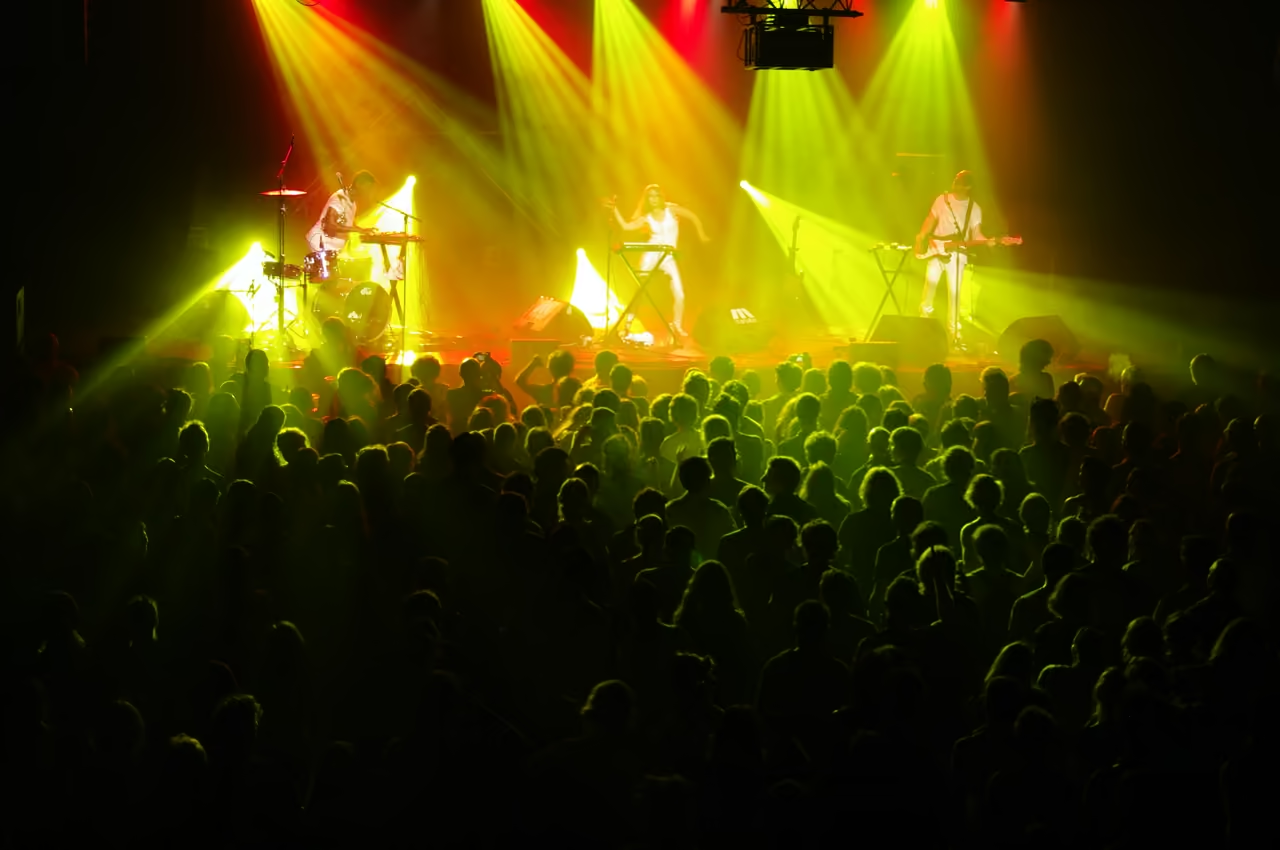
Born in Marseille in the late 1990s as a hip-hop showcase, Marsatac has evolved into southern France's heavyweight electronic, rap, and indie-rock weekender. International headliners share billing with hometown Marseille MCs who shaped French urban music for decades. Expect thunderous basslines and laser-lit outdoor stages.
festival view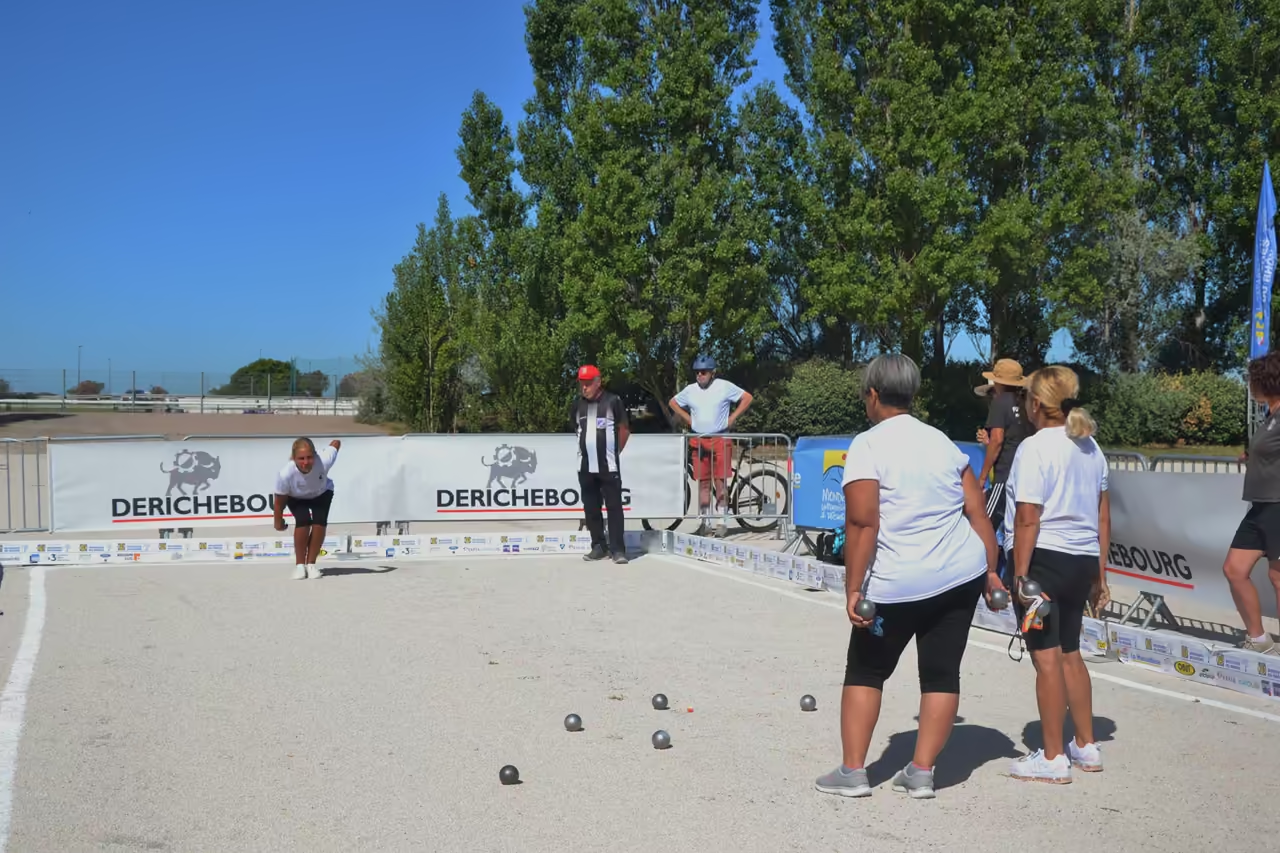 271m
Mondial la Marseillaise à Pétanque
Launched in 1962 by Paul Ricard, this July spectacle draws more than 10,000 amateur and champion boules players onto gravel courts under Parc Borély's plane trees and across neighbourhood squares. Watching seasoned elders and young competitors measure millimetres with string while spectators cheer from folding chairs feels unmistakably Provençal. Watching costs nothing and builds to lively open-air finals.
festival view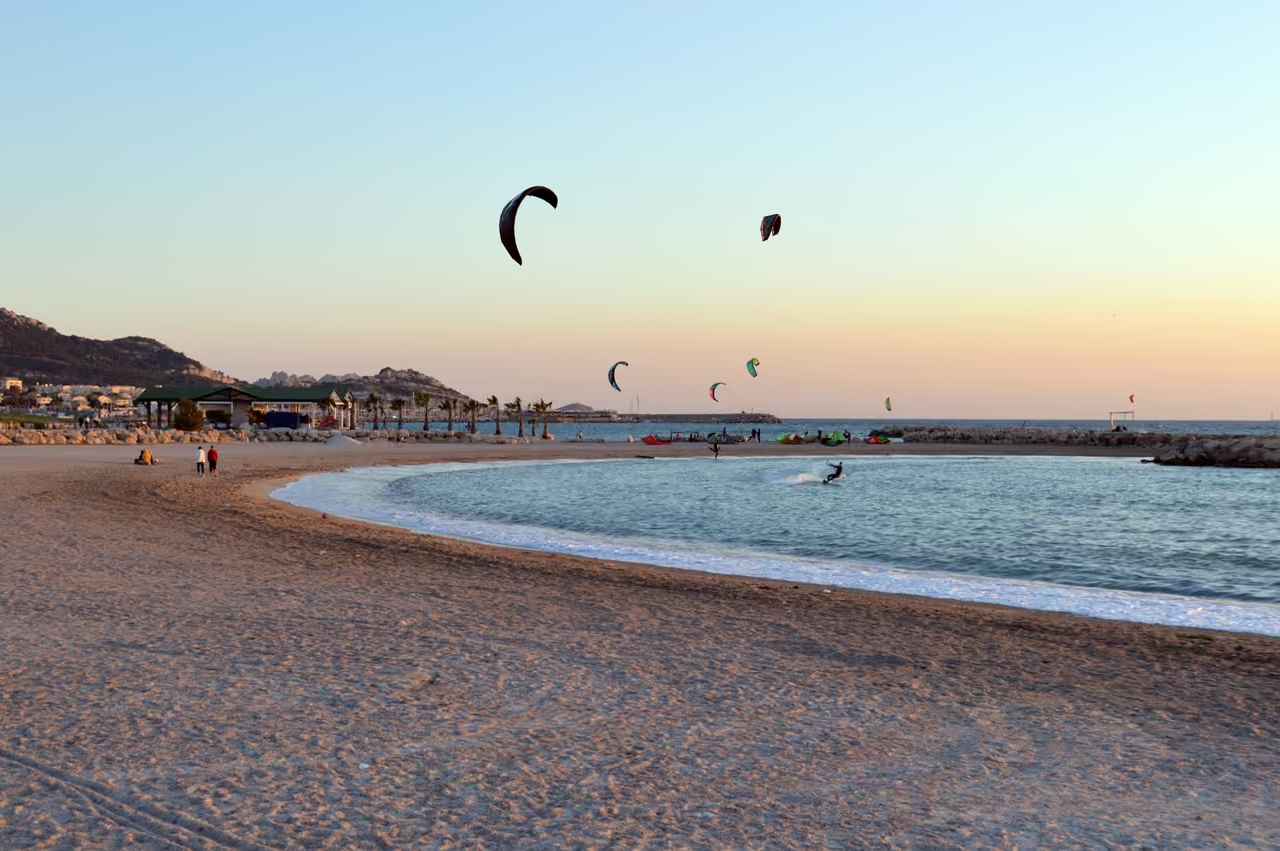 732m
Prado Beaches
Forget soft sandcastles. Stretching for 3.5 kilometres along Marseille's southern coast, this artificial shoreline replaces clingy sand with smooth, fine gravel that refuses to scatter when the Mistral sweeps across the bay. Behind the seawalls, five hectares of grassy parkland fill up with picnicking families, pétanque players, and skateboarders carving through the deep concrete pits of the Bowl de Marseille. You will want water shoes or sturdy sandals to walk across the pebbles down to the Mediterranean, though leaving the beach with zero sand stuck in your bag feels surprisingly civilised. Lifeguards watch the coves all summer while windsurfers skim offshore. As evening settles towards the Frioul islands, the daytime crowd drifts over to the waterfront terraces of Escale Borély for cold drinks, dinner, and sea air.
park & nature view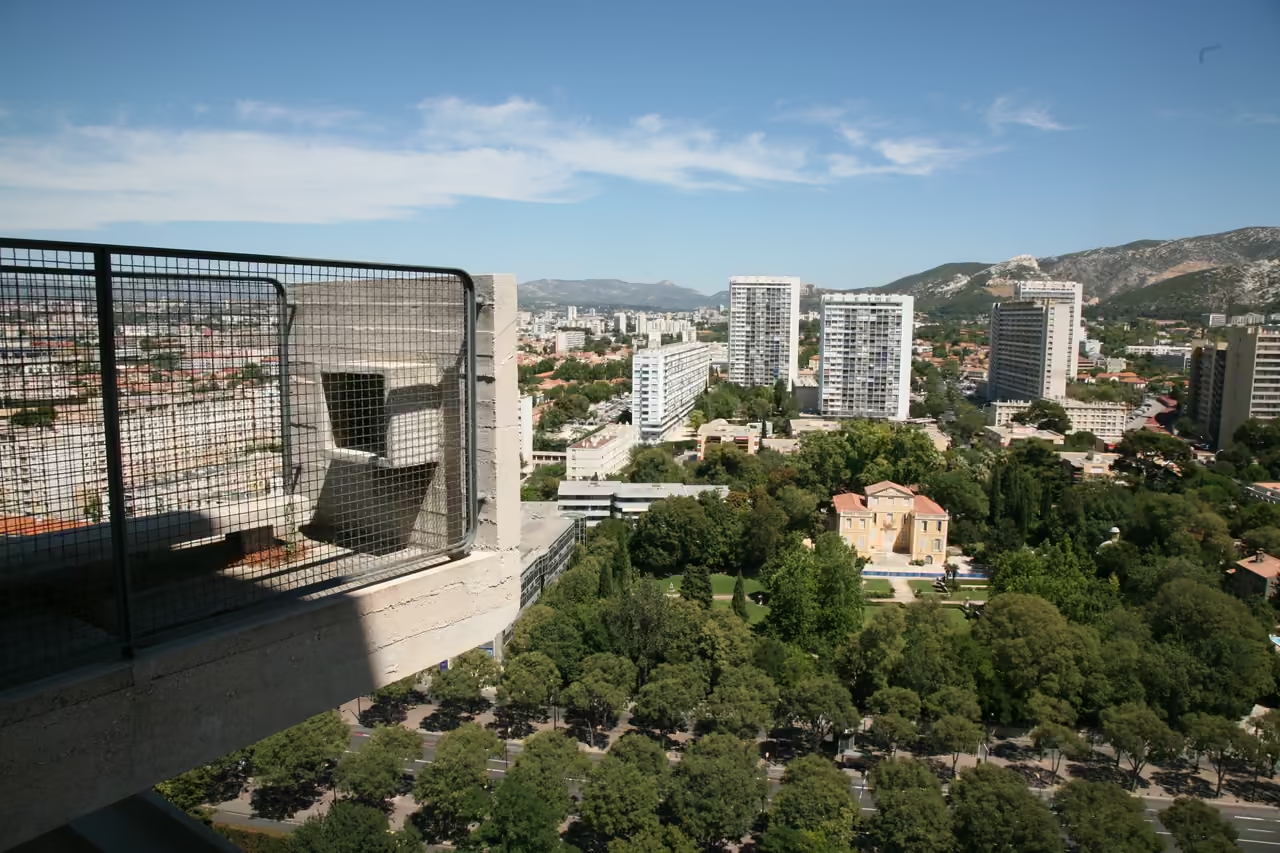 1364m
Unité d'habitation
Standing on Boulevard Michelet today, it is easy to see why baffled 1950s locals nicknamed this towering concrete slab La Maison du Fada, Provençal slang for the madman's house. Massive tapered stilts hoist eighteen storeys clean above a wooded park. Deep balcony recesses flash red, yellow, blue, and green against the Mediterranean glare. Ride the lift to the third floor and step onto the indoor street called la troisième rue, running the full length of the building past an architecture bookshop, creative studios, and the Hôtel Le Corbusier. Because around a thousand residents still call these flats home, visitors simply sign in at the ground floor desk and keep voices quiet along the residential halls. Up on the open rooftop terrace, sculptural ventilation chimneys rise beside a paddling pool, a running track, and the MAMO contemporary art centre inside the old gym, with the white limestone peaks of Marseilleveyre and the sea unfolding before you.
unesco heritage site view
Featured on These Itineraries and Routes
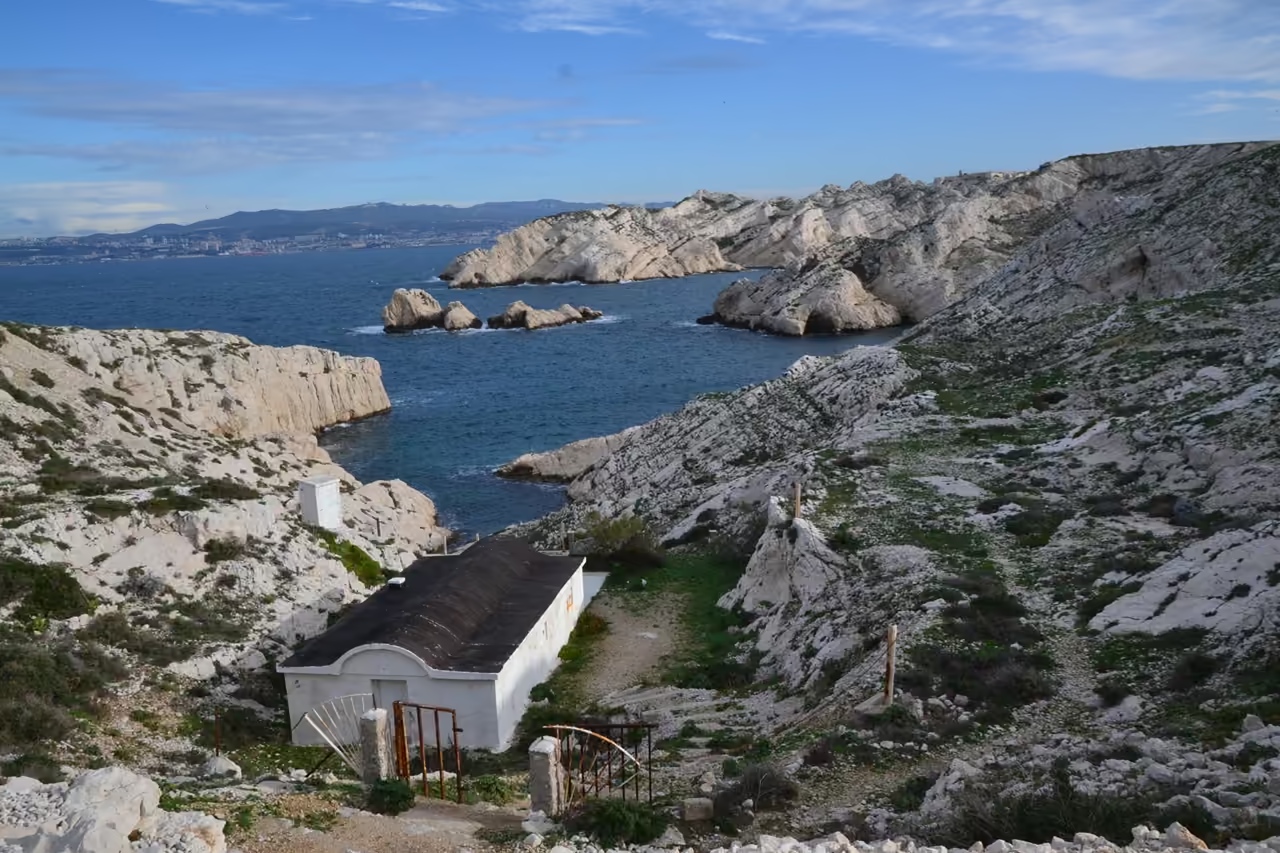
3 Days in Marseille: Sea, Culture & Calanques Break
Pair Marseille's harbour museums and island fortresses with a full coastal exploration of the Calanques National Park, Parc Borély, and bohemian street-art squares.
view itinerary
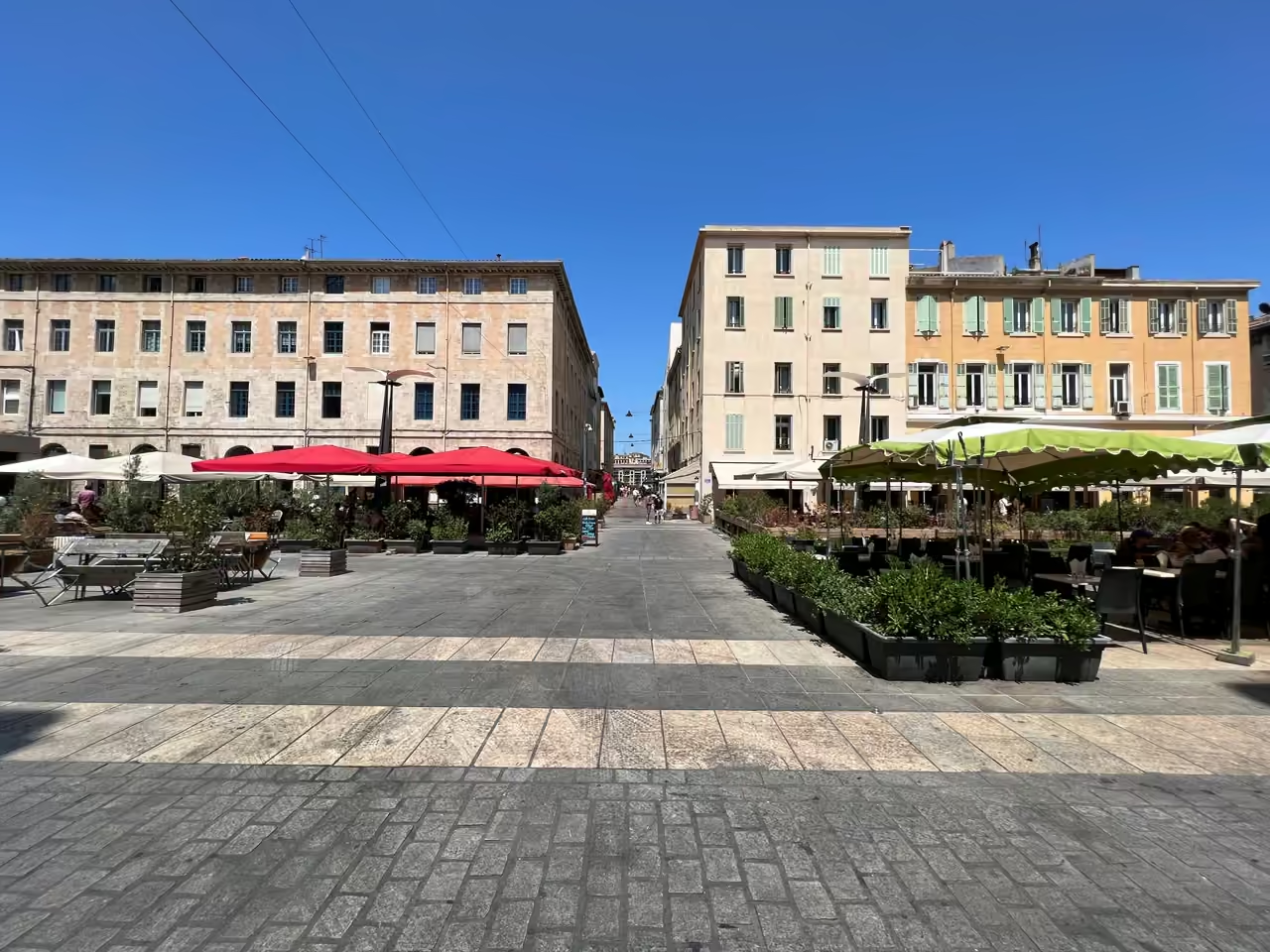
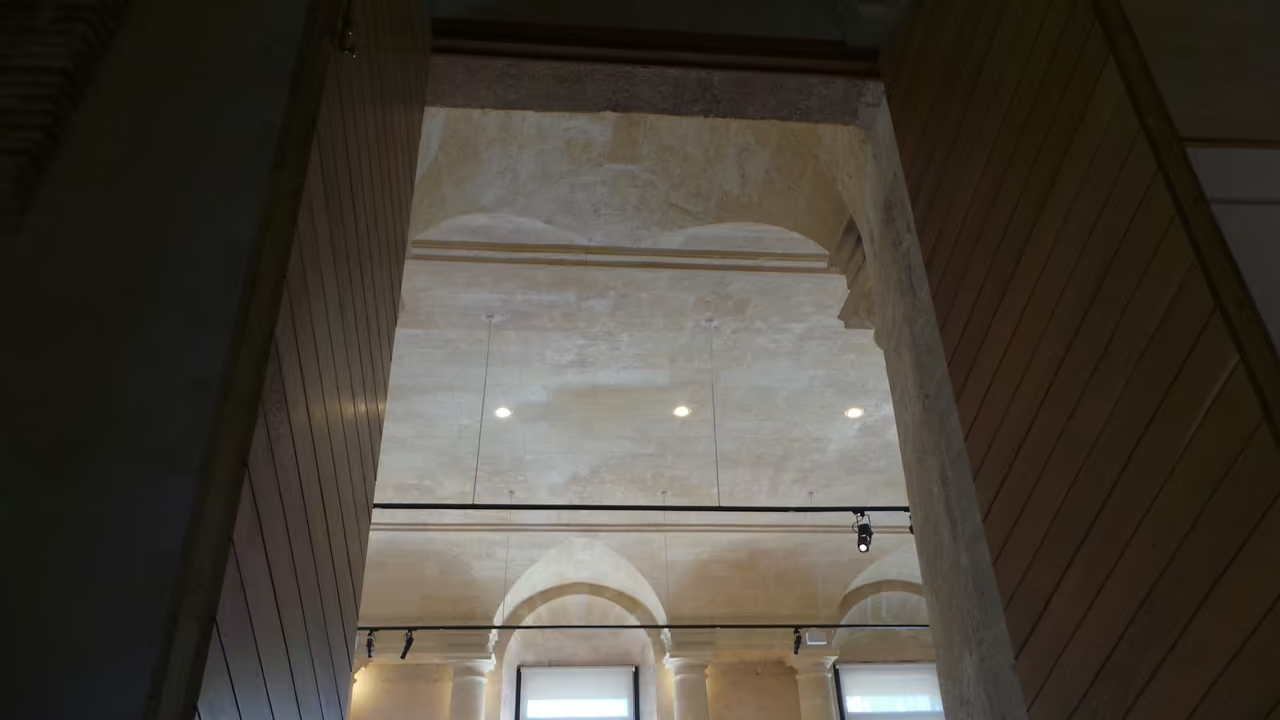
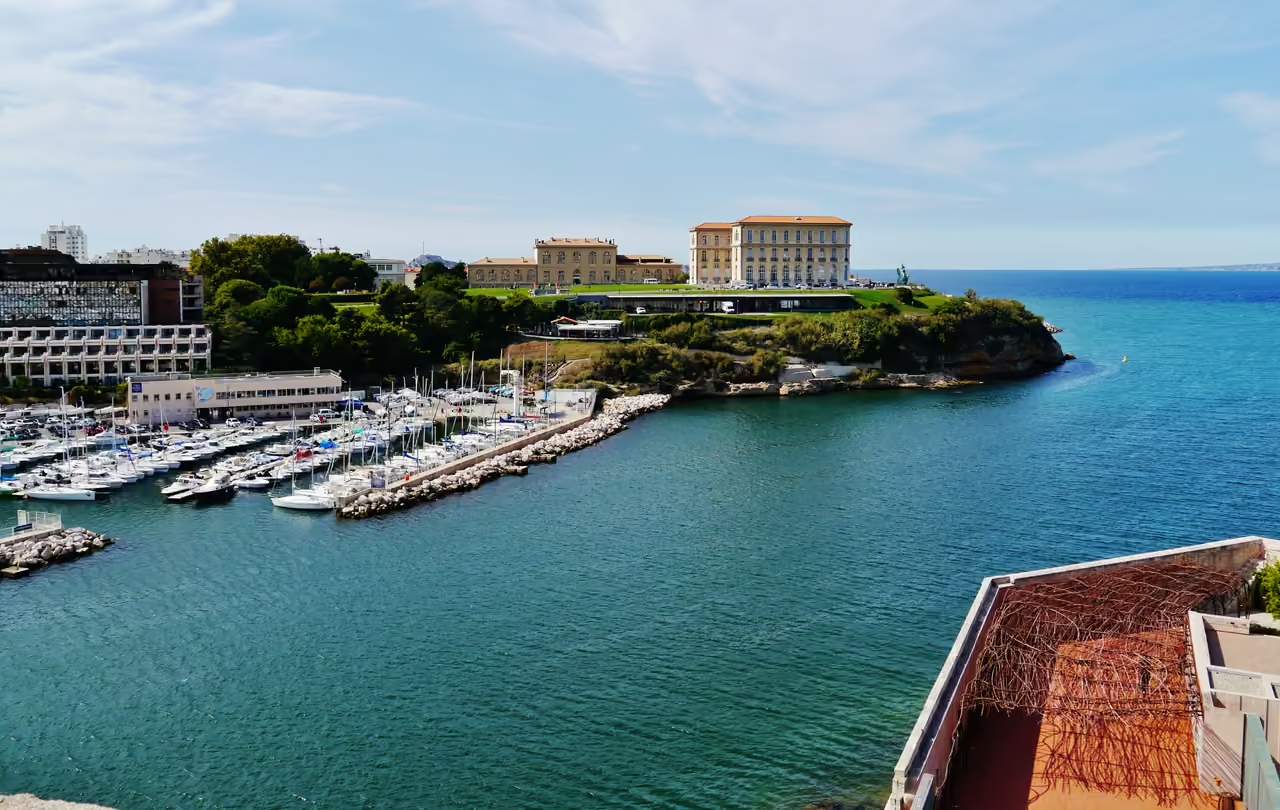
5 Days in Marseille: Villages, Architecture & Street Life Explorer
Dive deep across five full days covering Noailles spice bazaars, Palais Longchamp, Le Corbusier's UNESCO block, Calanques ridge trails, and Cézanne's L'Estaque harbour.
view itinerary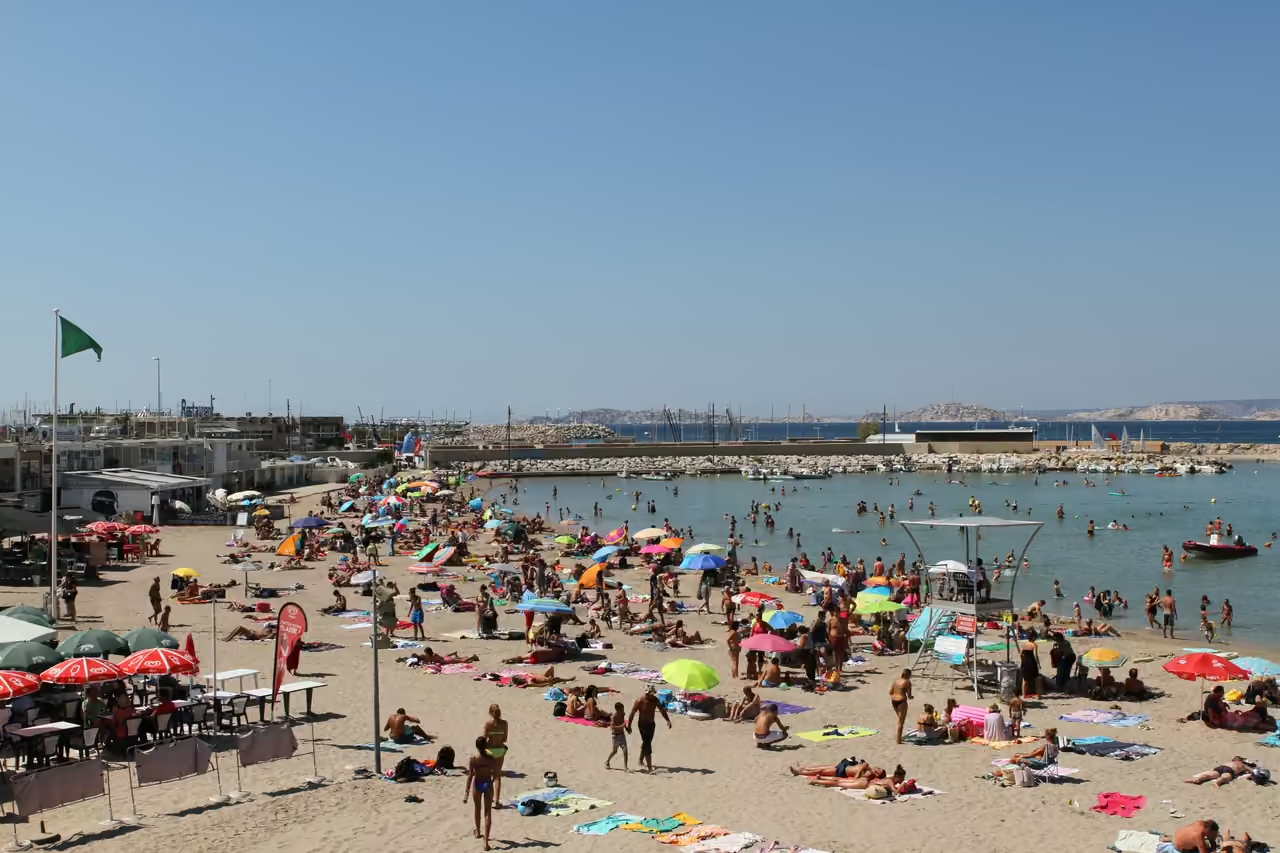
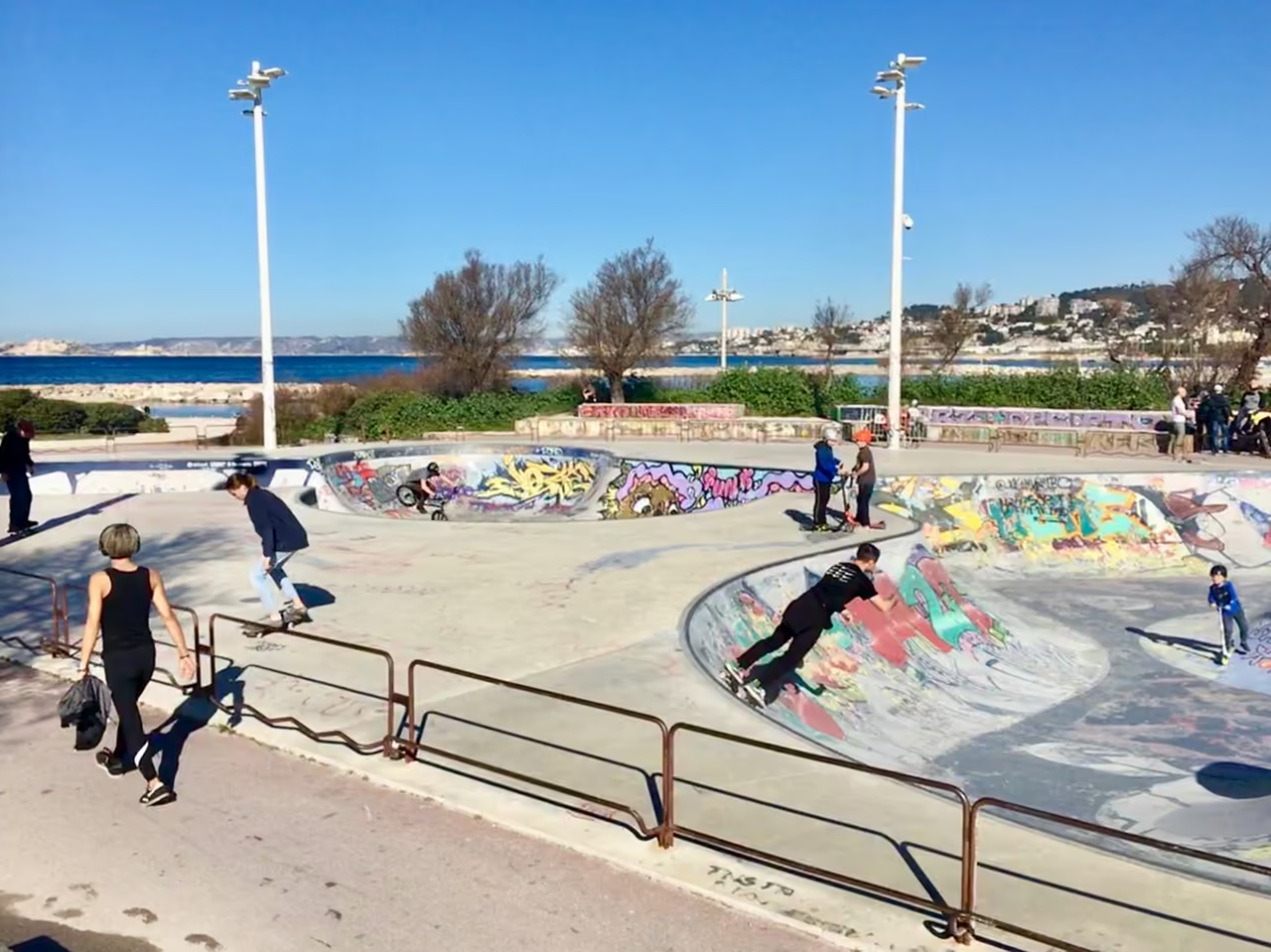
Southern Bay, Prado Beaches & Borély Park Cycle
Cruise Marseille's flattest, breeziest coastal cycle lanes linking broad seaside lawns, shaded botanical gardens, a world-famous skatepark bowl, and southern yacht marinas beneath the Marseilleveyre ridge.
view cycling route
See all parks & nature in Marseille
Including Calanques National Park, Prado Beaches