La Major Cathedral
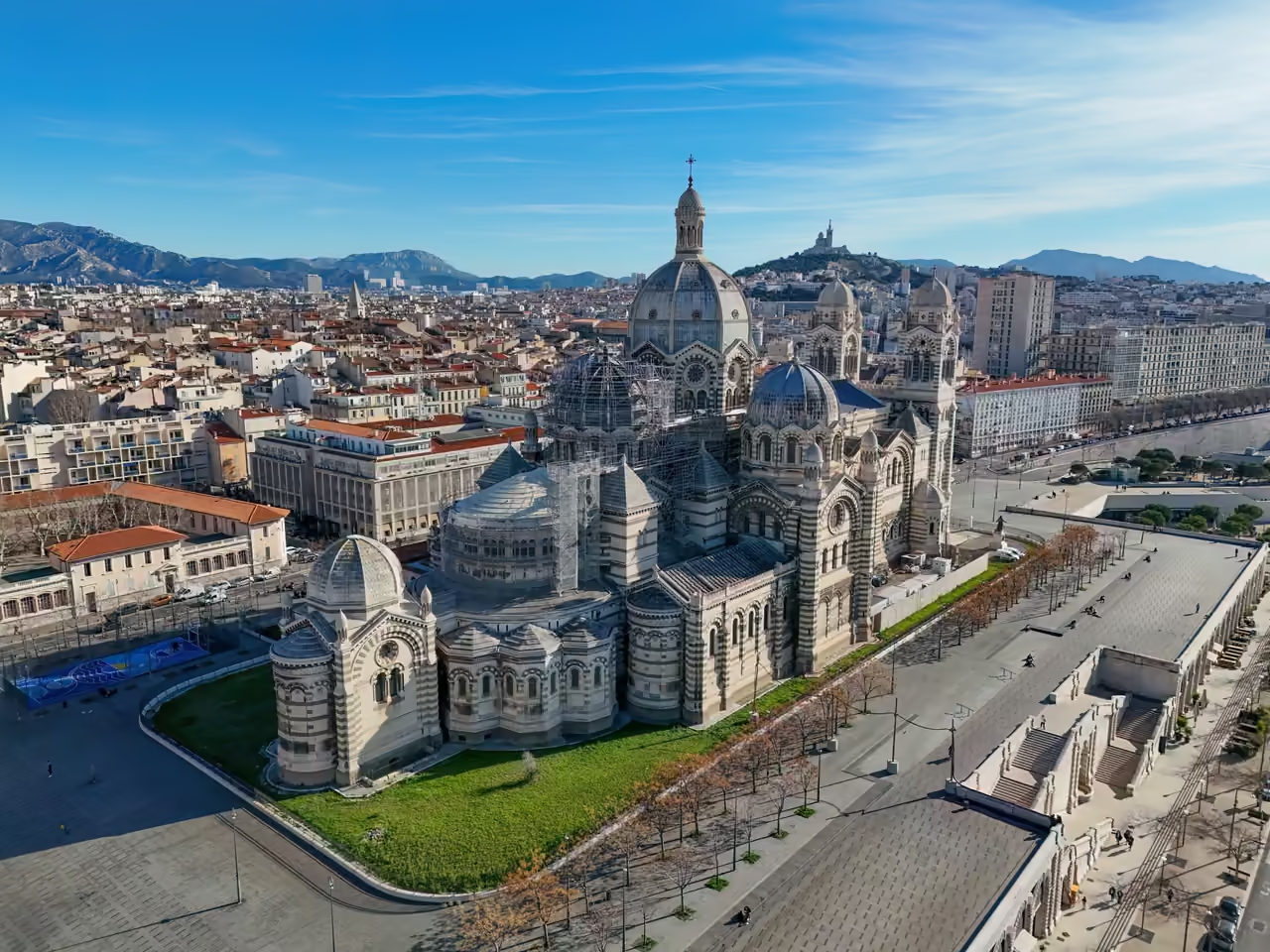
Marseille's seafront cathedral looks nothing like the grey Gothic churches up north. Rising off Esplanade Jean-Paul II between the Vieux-Port and the Joliette docks, La Major pairs creamy local limestone with dark green marble bands and five cupolas that feel closer to Istanbul or Venice than Provence. Inside, the sheer scale lands immediately. Out of the brisk harbour wind, three thousand people can gather beneath a 70-metre central dome along a nave stretching 142 metres, surrounded by monolithic porphyry columns, red and pale ochre piers, and Auguste Carli's marble sculpture of Saint Veronica wiping Christ's face. Right on its eastern flank huddles the squat, weathered limestone of the twelfth-century Old Major. Walk back onto the parvis toward dusk to watch warm floodlights gild the striped domes while ferries slip past the dark lattice of the Mucem.
Videos
History of La Major Cathedral
Christianity planted one of its largest early monuments on this stretch of Marseille shoreline fifteen centuries ago. Archaeological digs beneath the modern floors uncovered traces of a fifth century basilica paired with mosaic pavements and what scholars recognise as the grandest early Christian baptistery in all of Roman Gaul. Over the centuries that followed, Carolingian stonemasons carved interlaced reliefs into its walls and Bishop Pons commissioned a white limestone apse in the eleventh century, before twelfth century masons replaced it all with the Romanesque church remembered today as the Old Major. For the next seven hundred years, that sturdy medieval cathedral served as the city's primary seat of worship even as Marseille grew from a cramped harbour town into a busy Mediterranean port. By the 1850s, industrial shipping had outgrown the medieval waterfront, and Bishop Eugène de Mazenod convinced Paris that Marseille deserved a cathedral grand enough to greet steamships arriving from across the Mediterranean. On 26 September 1852, Prince President Louis Napoléon Bonaparte, only two months away from crowning himself Emperor Napoleon III, laid the foundation stone on the freshly cleared quay. Architect Léon Vaudoyer responded with an audacious blueprint that refused to choose between Europe and the East, mating a Latin cross floor plan with Romanesque arches, Gothic scale, and Byzantine domes nodding toward Constantinople. Construction then suffered a cruel double blow. Vaudoyer died in 1872 while the vast masonry shell was still climbing skyward, and his brilliant protégé Henri Jacques Espérandieu, who took over the ironwork and cupolas while simultaneously shaping Marseille's hilltop basilica of Notre Dame de la Garde, died just two years later at age 44. Leadership passed to Henri Révoil, who spent nearly two more decades overseeing stonework, bronze fittings, and elaborate interior mosaics before formally handing the finished cathedral to the diocese on 30 November 1893. Along the way, the ambitious project sparked a fierce preservation battle in the city. Vaudoyer's original site plans required razing the medieval Old Major completely, yet sustained public protests from heritage defenders and Marseille residents forced builders to spare its Romanesque choir and a single nave bay right beside the towering newcomer. Elevated to a minor basilica by Pope Leo XIII in January 1896 and consecrated in May 1897, the new building earned classification as a French historic monument in August 1906, an astonishingly rapid honour for a church barely out of its original scaffolding. For much of the twentieth century, however, postwar road engineering nearly severed the cathedral from the sea it was built to face, boxing the parvis behind roaring lanes of coastal highway traffic. Salvation arrived through the Euroméditerranée urban regeneration programme, which routed transit vehicles underground via the Prado Carénage and littoral tunnels and handed the surface back to pedestrians. Urban planner Bruno Fortier redesigned the sprawling stone terrace in front of the portico, and a major nocturnal lighting scheme backed by EDF illuminated the facade just as new cultural landmarks like the Mucem reshaped the surrounding waterfront. Freed from traffic noise and concrete ramps, the cathedral once again anchors Marseille's maritime skyline on foot and from the water.
12 events spanning 1574 years
Fun Facts
12- 01
Above the high altar in Carrara marble stands a bronze ciborium canopy supported by four luminous columns of onyx brought from Tunis and donated personally by Jules Cantini, a prominent nineteenth-century Marseille sculptor and marble merchant.
- 02
Alongside the much smaller cathedrals of Gap and Belley, Marseille broke a century-long hiatus in French cathedral construction during the nineteenth century, resulting in one of the largest new cathedrals erected anywhere in Europe since the Middle Ages.
- 03
Around the central crossing stand monumental statues of the four Evangelists carved by celebrated local Marseille sculptor Louis Botinelly, gazing down across geometric Venetian-style mosaic floors.
- 04
Before even stepping into the nave, visitors pass beneath a deep blue and gold mosaic porch vault deliberately modelled on the fifth-century Mausoleum of Galla Placidia in Ravenna, flanked by towering groupings of Marseille's earliest bishops.
- 05
Builders used the booming port right beside the site to unload stone from Calissane and the Gard, Italian onyx, and glass mosaics forged in Venetian workshops, turning maritime trade routes directly into sacred architecture.
- 06
Cheeky locals affectionately call the cathedral 'le pyjama' (the pyjamas) because of its bold horizontal stripes of pale Cassis limestone and dark green Florentine marble, a polychrome rhythm borrowed directly from Tuscan cathedrals in Siena and Lucca.
- 07
Despite taking over forty years to build, the interior decoration was never fully completed: original blueprints intended glittering mosaics to cover every vault and cupola overhead, yet budgets and time ran dry by 1893, leaving stretches of bare masonry exposed to this day.
- 08
Digging deep foundations in the 1850s uncovered ancient mosaic floors and the remains of Roman Gaul's largest known baptistery, which vanished beneath the new church and survived mainly in François Roustan's 1905 writings until modern digs by Françoise Paone turned up fresh mosaic pieces and pink limestone from La Couronne.
- 09
Every 15 August for the Feast of the Assumption, bearers hoist the gilded statue of the Virgin onto their shoulders and carry her through the tight lanes of neighbouring Le Panier, while crowds pin rosaries and messages to her arms and brush handkerchiefs against her golden cloak for protection until the following summer.
- 10
High across the gallery linking the twin facade towers stand seven monumental statues showing Christ flanked by Saints Peter, Paul, Lazarus, Martha, Maximinus, and Mary Magdalene; Provençal tradition holds that Lazarus sailed from the Holy Land to become Marseille's first bishop, and the cathedral safeguards a reliquary containing his skull.
- 11
Standing guard on the parvis outside is a bronze statue of Bishop Henri-François-Xavier de Belsunce, remembered across Marseille for staying in the streets to tend the sick and lead public prayers during the Great Plague of 1720 when other officials fled.
- 12
Tucked at the easternmost curve of the ambulatory sits an independent domed chapel housing the tomb of Saint Eugène de Mazenod, founder of the global Missionary Oblates of Mary Immaculate, who was canonised by Pope John Paul II in 1995.
FULL PLACE DETAILS
Updated
FULL PLACE DETAILS
UpdatedOVERVIEW & STATS
- Established
- In 1852, making it 174 years old
ARCHITECTURE & HERITAGE
- Heritage Status
- Classified Historical Monument
- Architectural Styles
- Byzantine RevivalIslamicRenaissance RevivalRomanesque Revival
- Architects
- Henri RévoilHenri-jacques EspérandieuLéon Vaudoyer
La Major Cathedral Map & Neighborhood Explorer
This interactive map is centered on La Major Cathedral. Zoom in and move the map around to automatically discover Wikipedia photos and summaries of other nearby sights, monuments, and historical points of interest and stories in real-time!
La Major Cathedral FAQ
Entry to the cathedral is completely free and no advance tickets are required. Because it remains an active Catholic parish and seat of the Archdiocese of Marseille, visitors are expected to dress modestly and keep voices low, especially when Mass or private prayer is underway.
Right beside the striped nineteenth-century giant sits a smaller, weathered pale limestone church known as the Vieille Major, or Old Major. Built in the twelfth century in Romanesque style, it served as Marseille's cathedral for hundreds of years and narrowly escaped demolition when public protests saved its choir and one bay; today the New Major is open daily to visitors, whereas the Old Major generally opens only for special heritage events.
It is an easy 15 to 20 minute flat walk from the Vieux-Port along the Quai du Port past the Town Hall and Fort Saint-Jean, or a direct stroll down from the hillside alleys of Le Panier. By public transport, take Metro Line 2 to Joliette, Tram lines T2 or T3 to Joliette or République Dames, or buses 82 and 82S right along the waterfront.
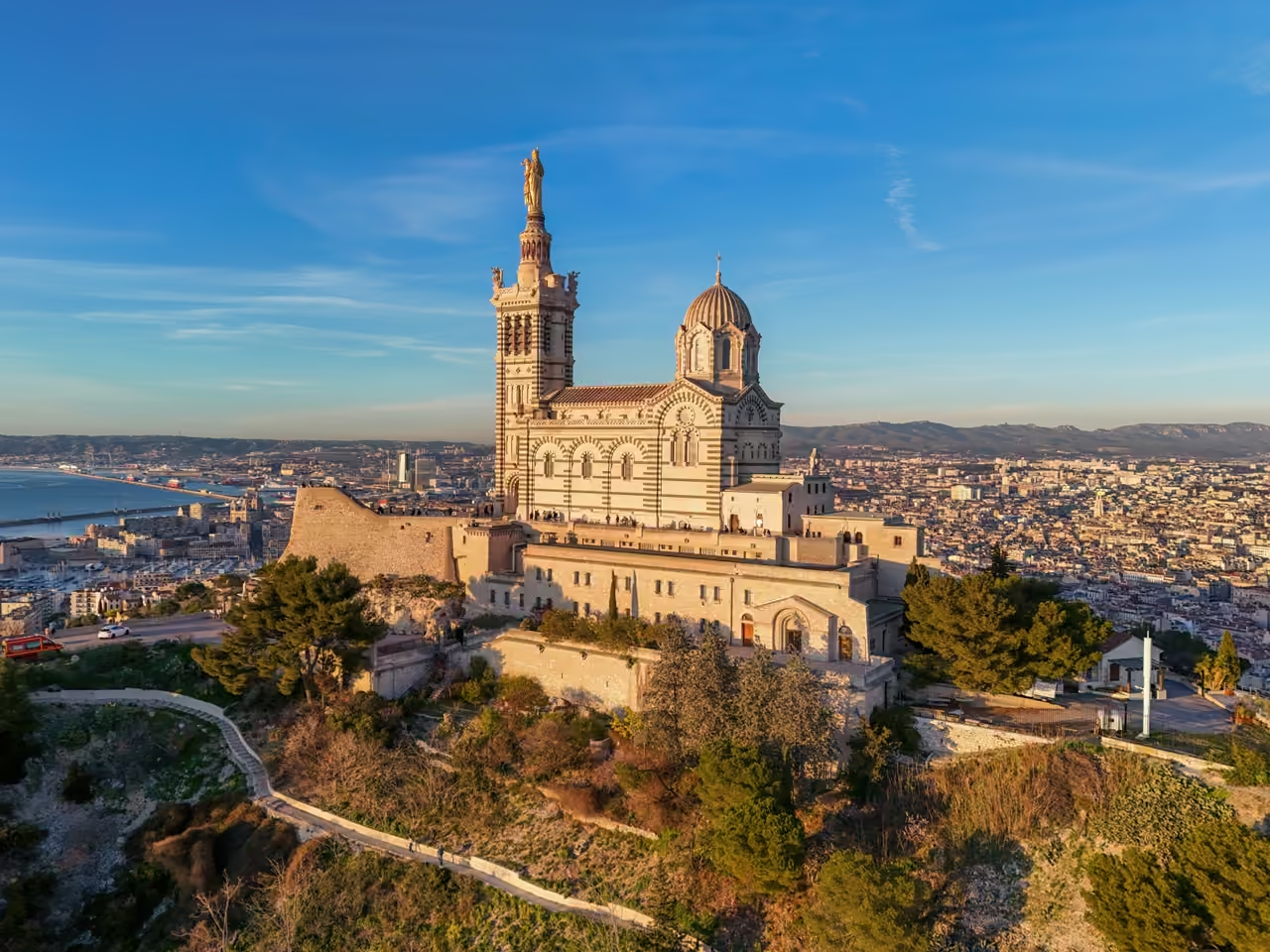
Rather than imitating French Gothic churches, architect Léon Vaudoyer designed a bold Romano-Byzantine hybrid to celebrate Marseille's maritime ties across the Mediterranean. Its striped marble and limestone walls echo Tuscan cathedrals like Siena and Lucca while its clustered domes recall Constantinople, sharing that unmistakable polychrome aesthetic with Notre-Dame de la Garde across the harbour, which was designed by Vaudoyer's pupil and La Major's second architect, Henri-Jacques Espérandieu.
Early morning brings quiet light across the mosaic floors before tour groups arrive, while late afternoon bathes the western facade in warm coastal sun right before the evening floodlights switch on. If you visit on 15 August, catch the annual Assumption procession when the gilded statue of the Virgin is carried out of the cathedral through the packed streets of Le Panier.
A typical visit takes about 1 hour. We recommend planning your schedule accordingly to make the most of your time there.
The closest place to visit near La Major Cathedral is La Vieille Charité, around 233 m away. Other things to do near La Major Cathedral include La Fête du Panier (254 m), Le Panier Old Town (304 m) and Fiesta des Suds (332 m). All of these are within roughly 332 m of La Major Cathedral, close enough to walk.
La Major Cathedral holds the following heritage designation: Classified Historical Monument.
It dates back to 1852, making it 174 years old.
La Major Cathedral was designed by Henri Révoil, Henri-Jacques Espérandieu and Léon Vaudoyer in the Byzantine Revival style.
While we strive to keep this information accurate and up to date, we recommend verifying any details independently before making decisions based on them.
Places near La Major Cathedral
Make the most of your trip. Check out these top-rated spots located nearby.
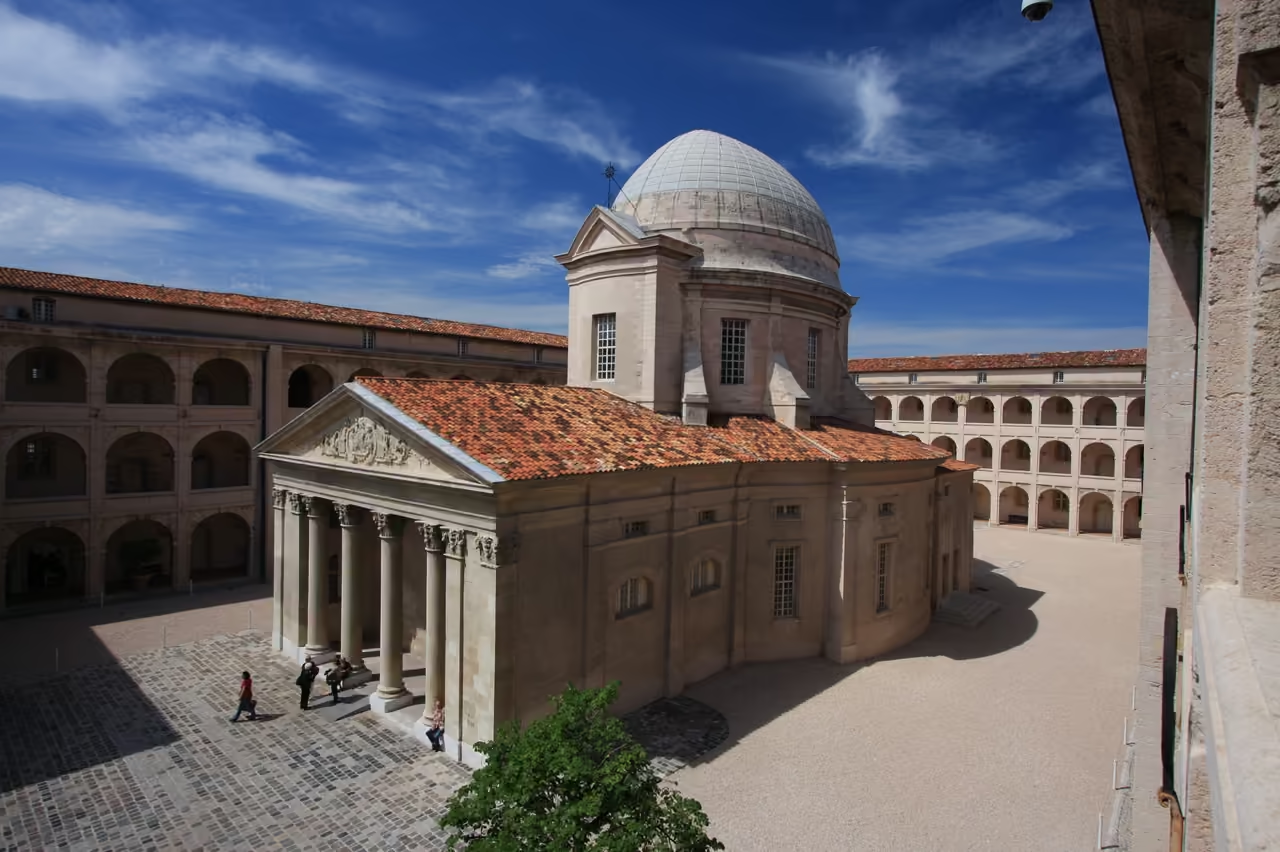 233m
La Vieille Charité
Stepping off Le Panier's tight lanes into this enclosed courtyard feels like entering a quiet stone cloister carved from rose-tinted Provençal limestone. Designed by Marseille master sculptor and architect Pierre Puget in the late seventeenth century to shelter the city's poor, three stacked tiers of loggia arcades wrap a central oval Baroque chapel crowned by an egg-shaped dome. Today its cool vaulted galleries host Mediterranean archaeology collections, African and Oceanic art exhibitions, and summer festival stages.
architecture view- 254m
La Fête du Panier
Each late June, residents of Marseille's oldest hillside quarter hang paper bunting overhead and stage a spirited two-day neighbourhood street party. Brass bands wind down steep stone stairways while neighbours lay out communal supper tables, craft stalls, and doorway concerts from Place de Lenche to Place des Moulins.
festival view 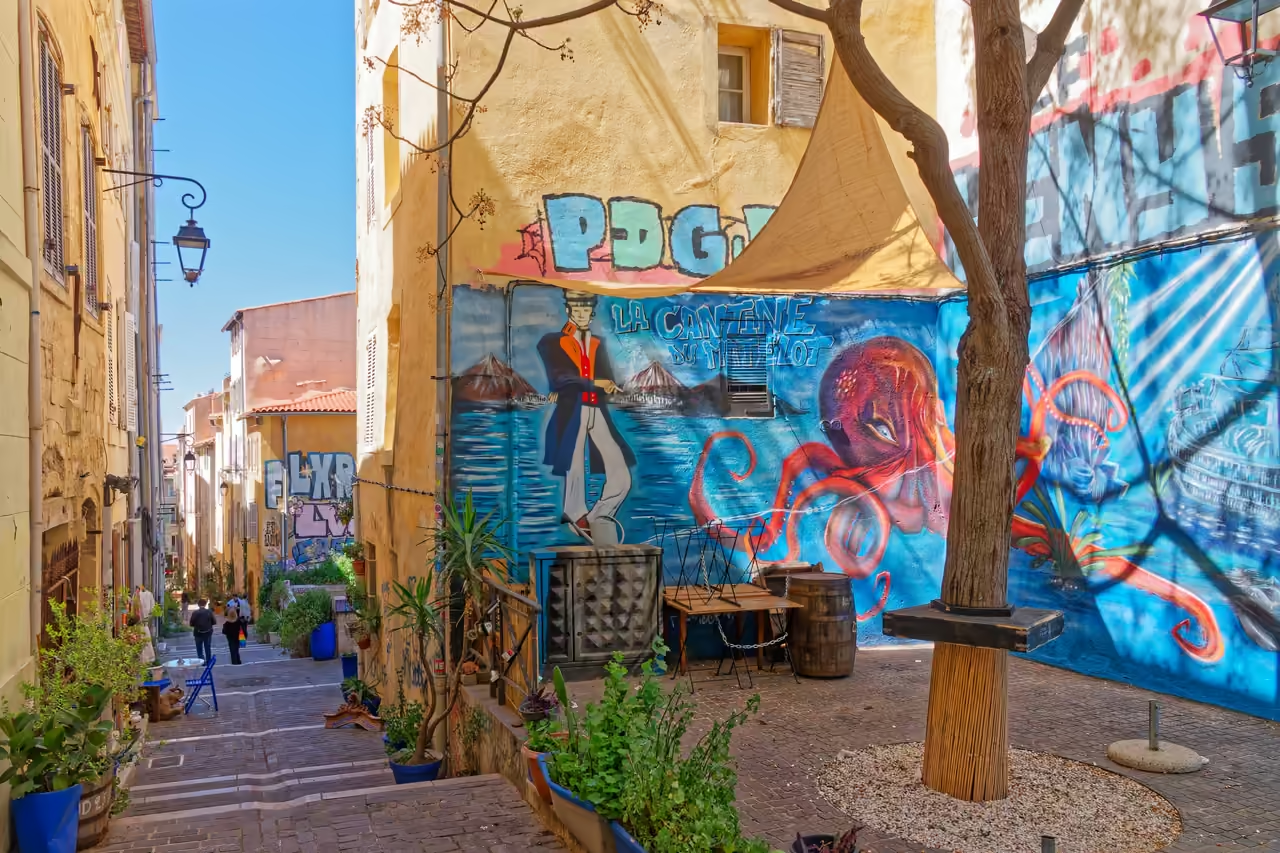 304m
Le Panier Old Town
Spreading up the hillside north of the Vieux-Port, Marseille's oldest quarter preserves the site first settled by Greek Phocaeans. Narrow stepped lanes strung with washing wind between ochre facades, ceramic studios, street murals, and breezy village squares like Place de Lenche. Pause under shaded awnings for an espresso or gelato while watching neighbours chat across balconies.
highlight view- 332m
Fiesta des Suds
Every October, Marseille turns up the global beat for a multiday music gathering born on its industrial docklands. World-music stars, brass bands, electro DJs, and Mediterranean folk groups share open-air stages beneath harbour cranes. Locals pack the waterfront into the mild autumn night with pastis in hand and zero pretension.
festival view
Explore Similar Places in This Collection
Featured on These Itineraries and Routes
3 Days in Marseille: Sea, Culture & Calanques Break
Pair Marseille's harbour museums and island fortresses with a full coastal exploration of the Calanques National Park, Parc Borély, and bohemian street-art squares.
view itinerary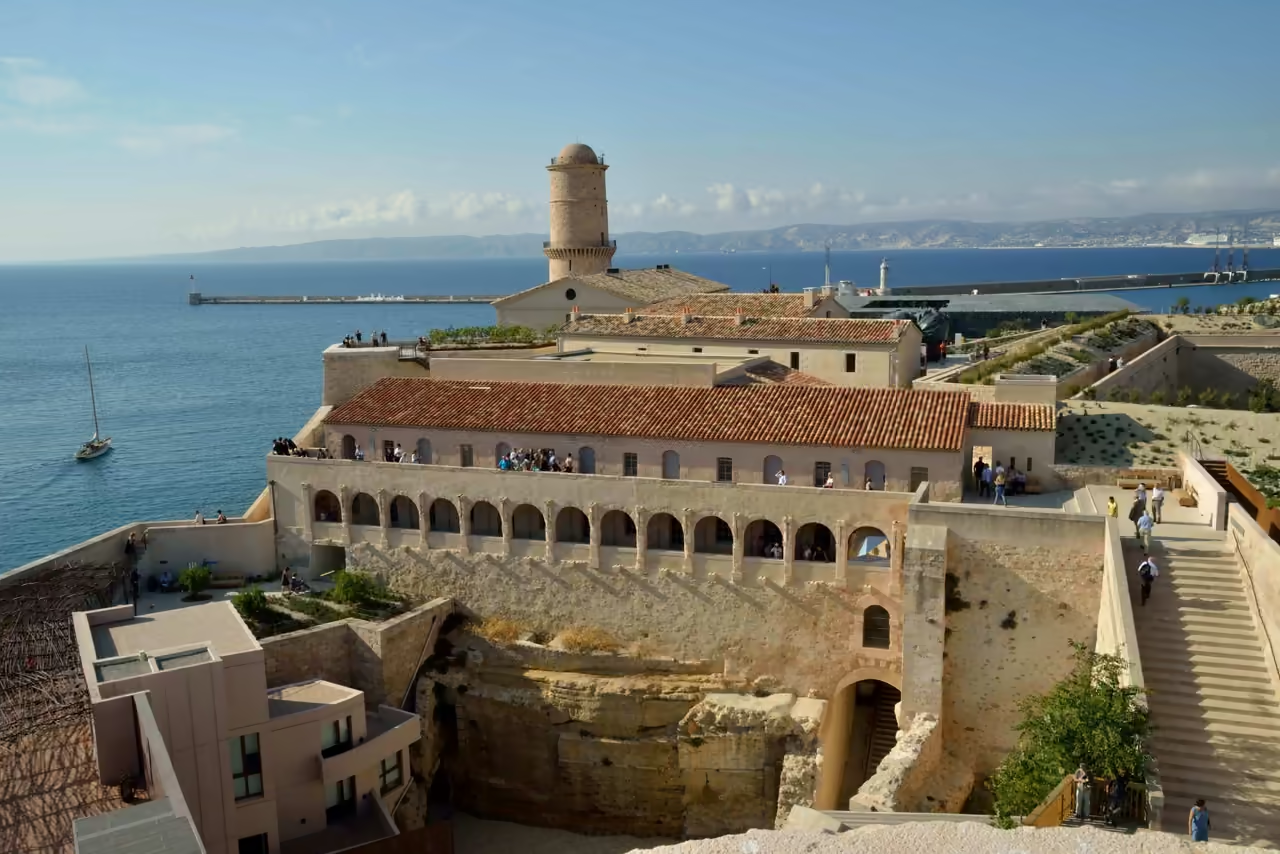
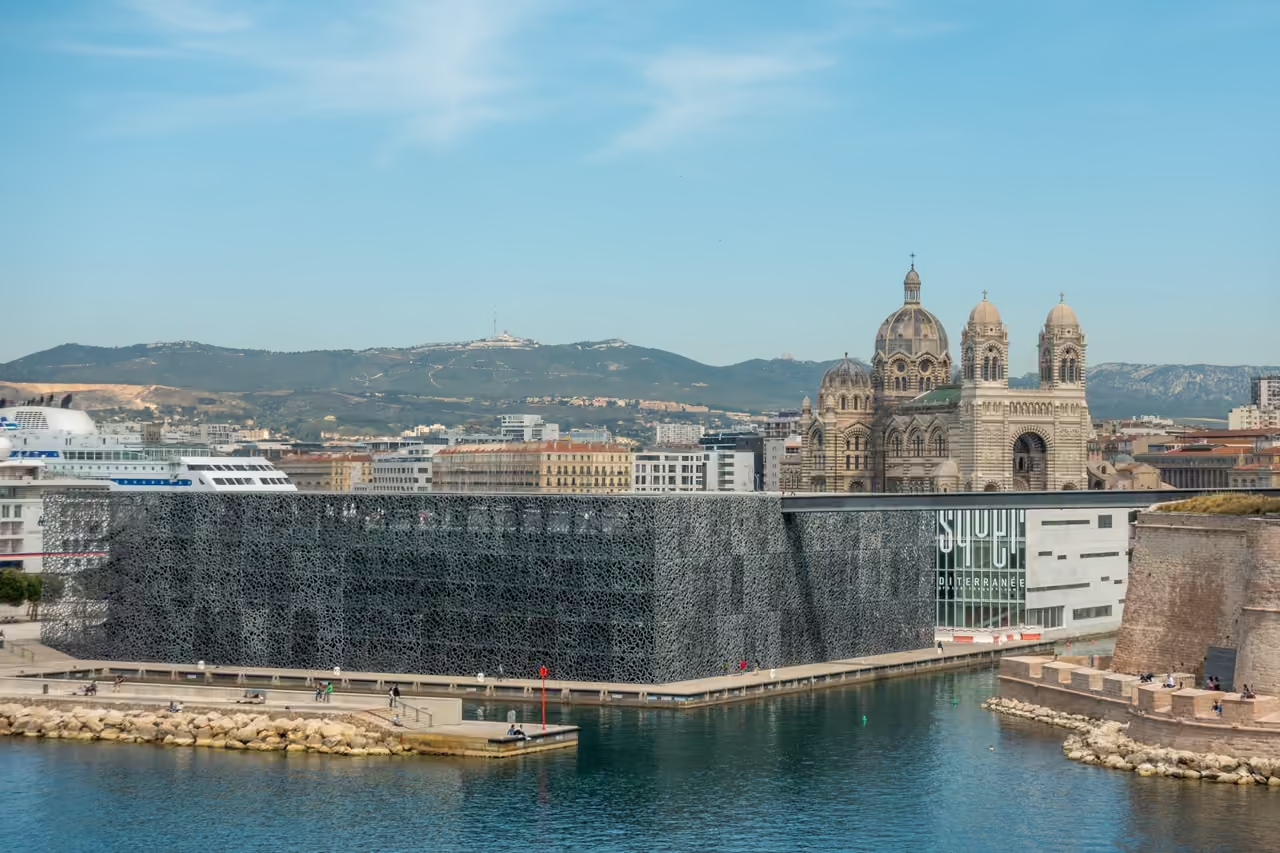
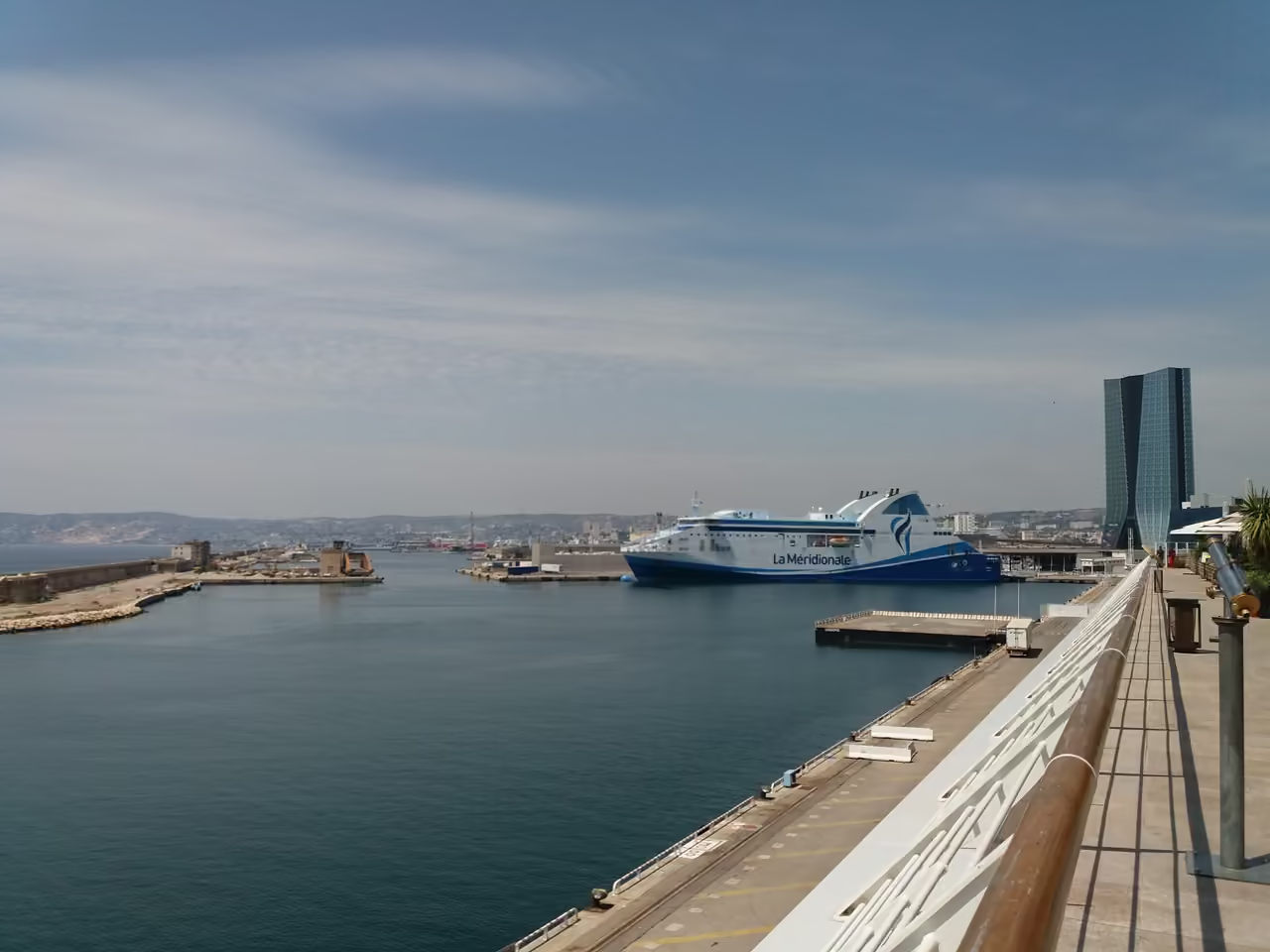
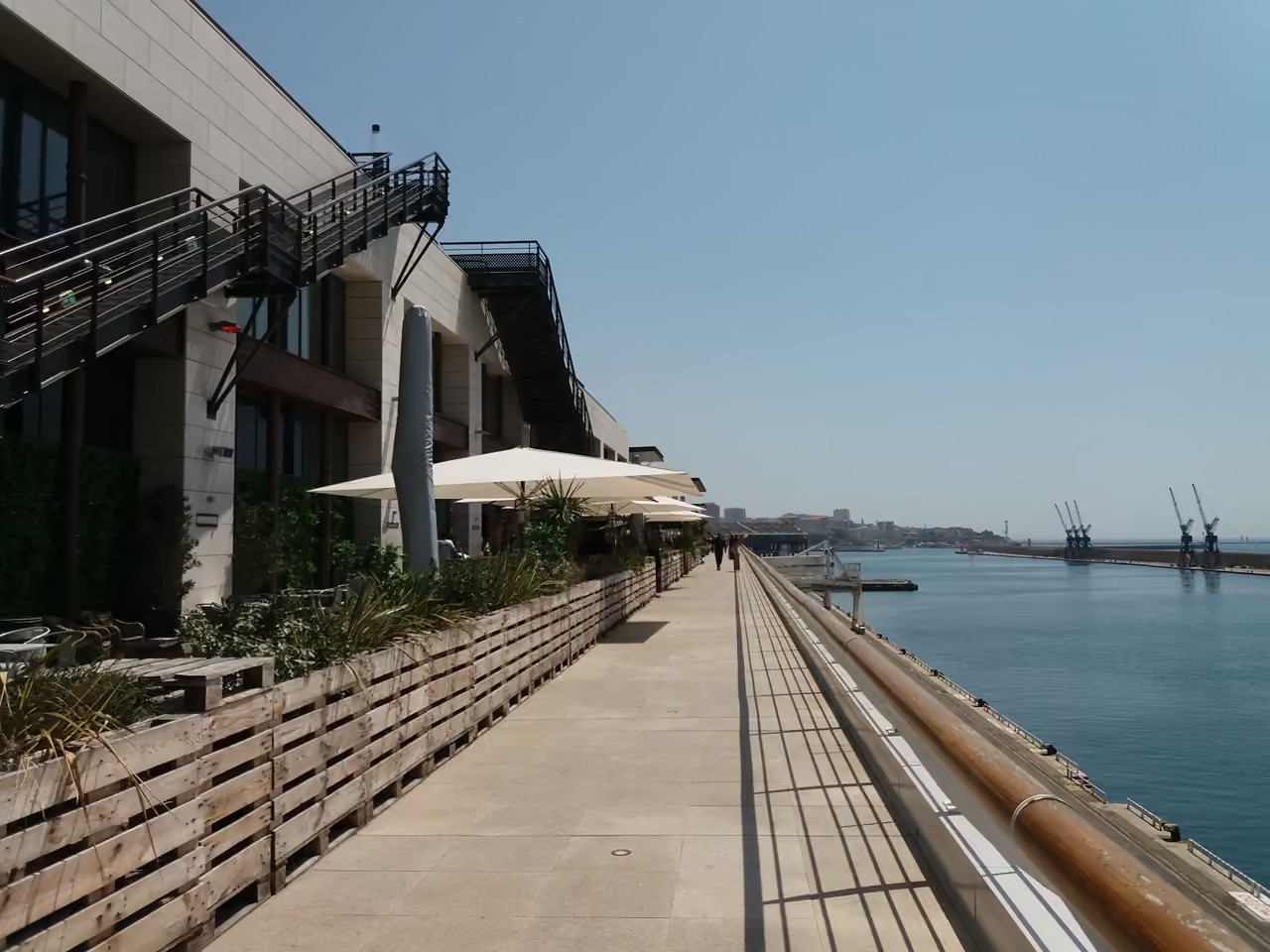
Vieux-Port, MuCEM & La Joliette Docklands Ride
Roll gently along flat pedestrianised harbour quays and broad modern esplanades connecting medieval fortifications, contemporary architecture, and breezy sunset decks.
view cycling route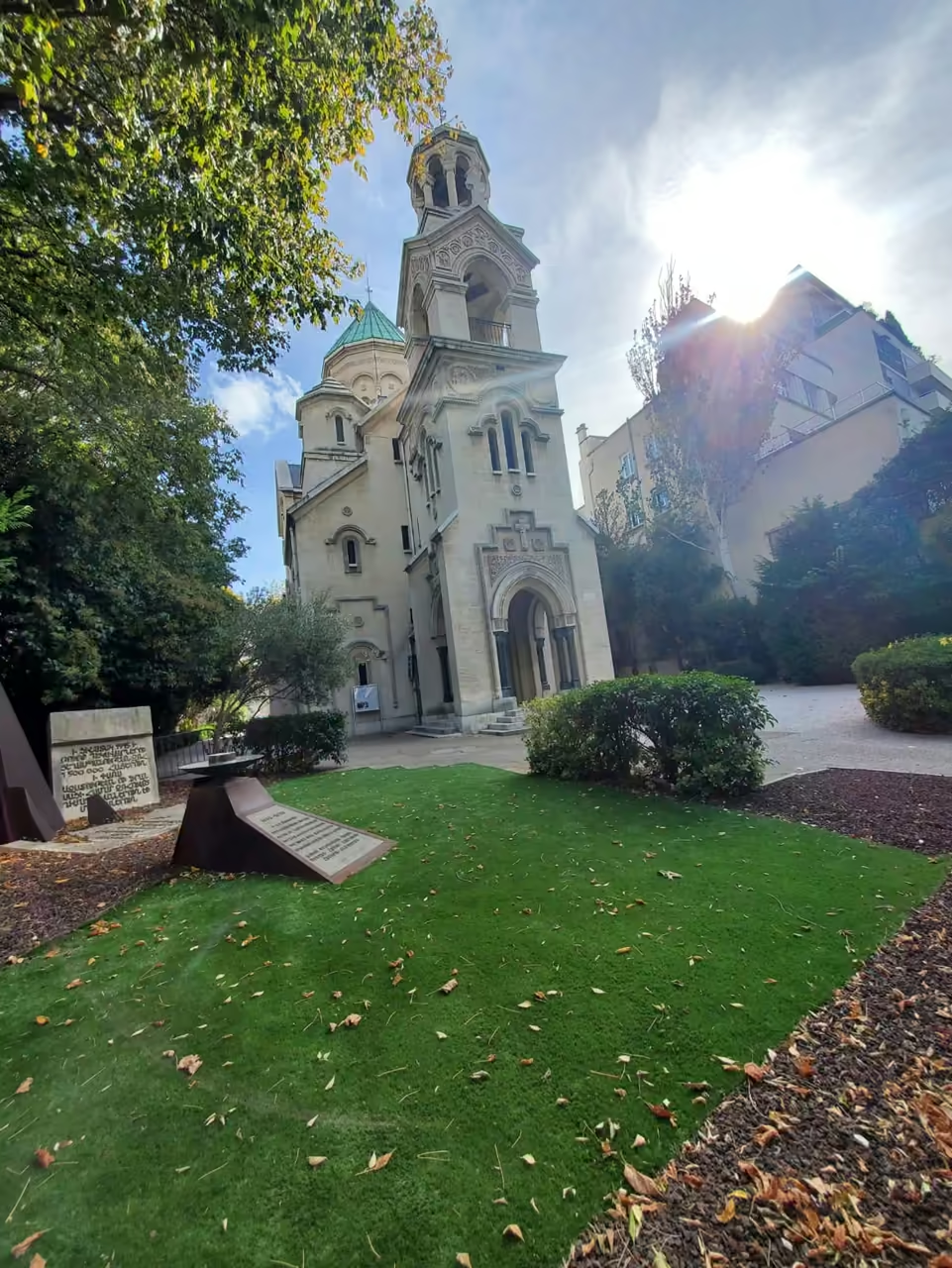
Faith & Migration Trail: Abbeys, Cathedrals, Synagogue & Temples
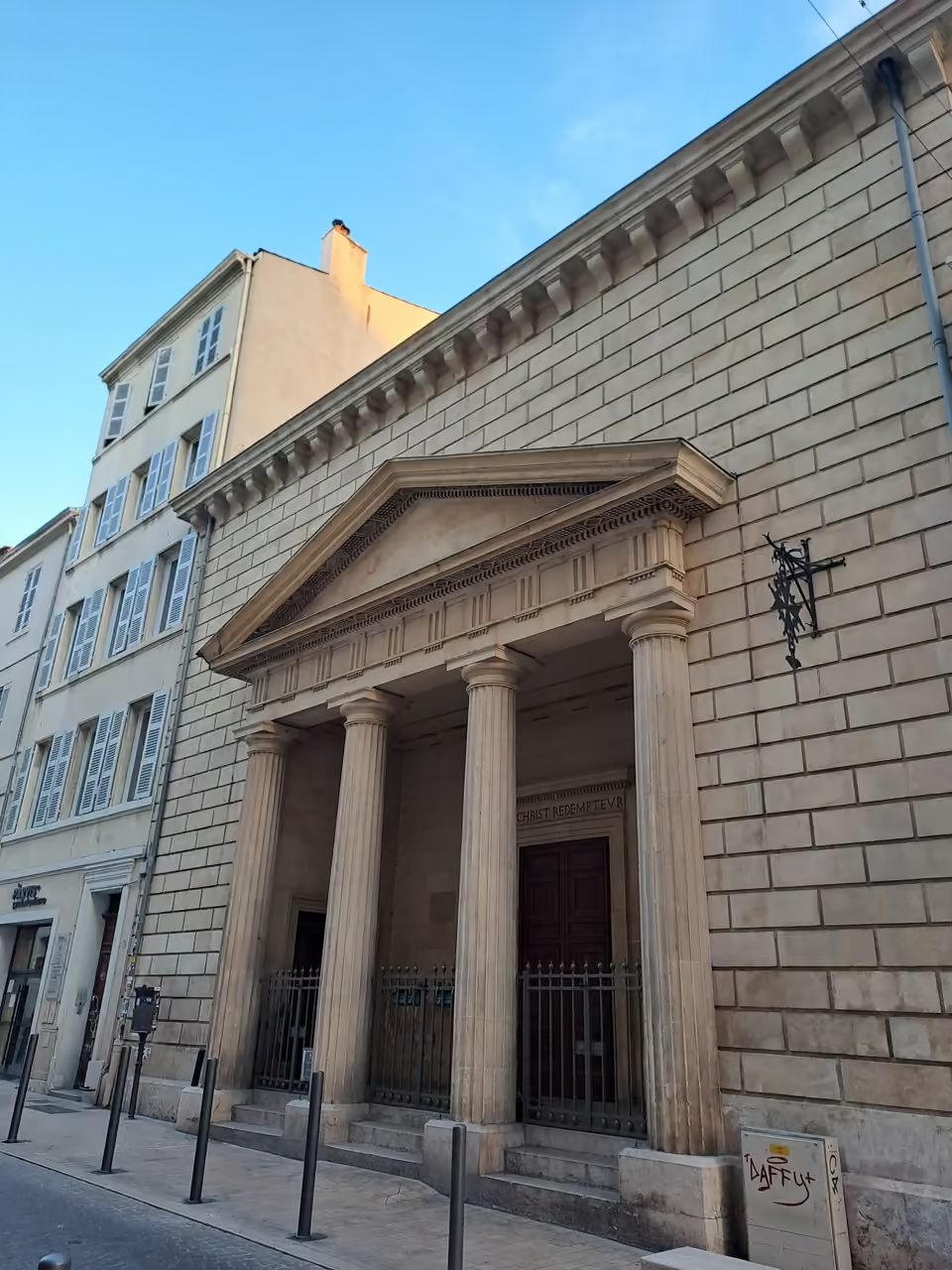
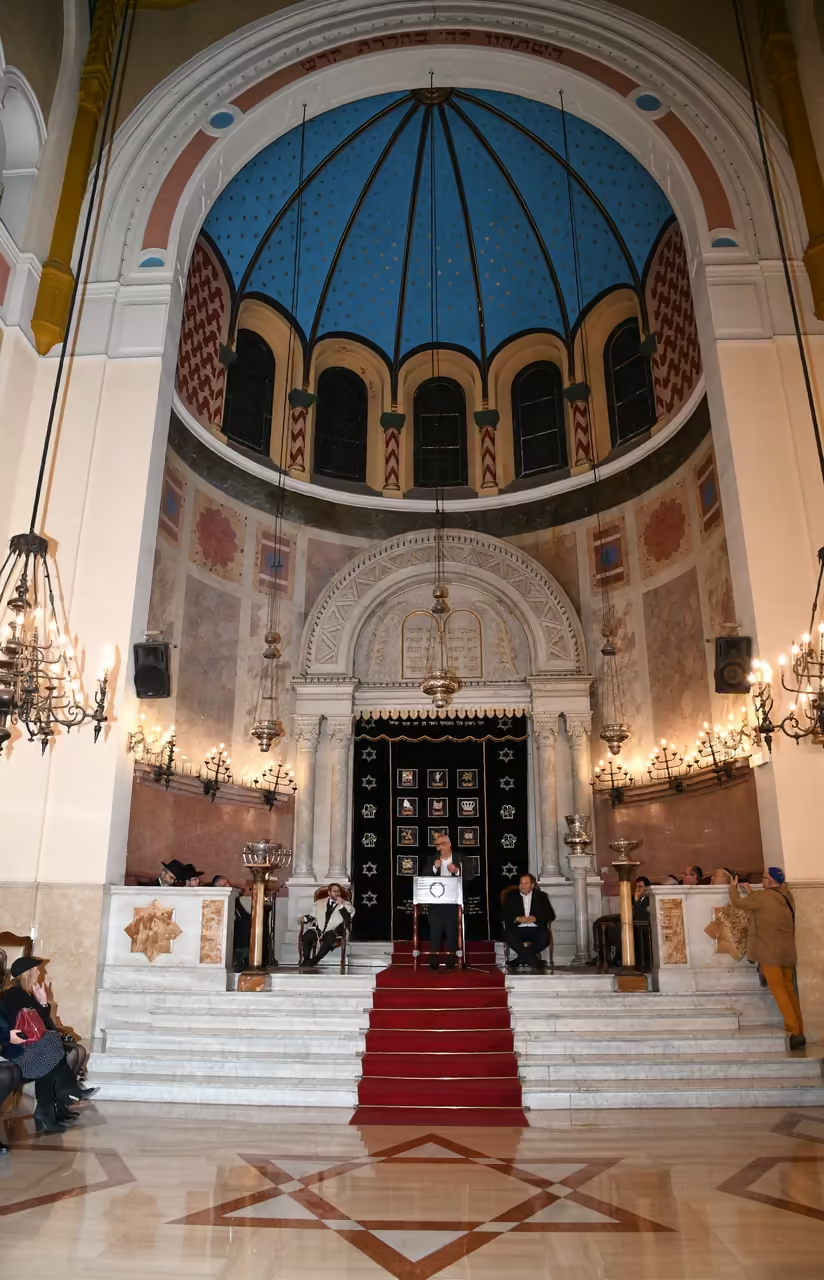
Explore how waves of arrivals by sea shaped Marseille's spiritual map, connecting fifth-century catacombs and Roman-Byzantine shrines with Jewish, Armenian, and Protestant landmarks.
view self-guided tour
See all attractions in Marseille
Including Basilica of Notre-Dame de la Garde, Château d'If, Fort Saint-Jean, and more