Château d'If
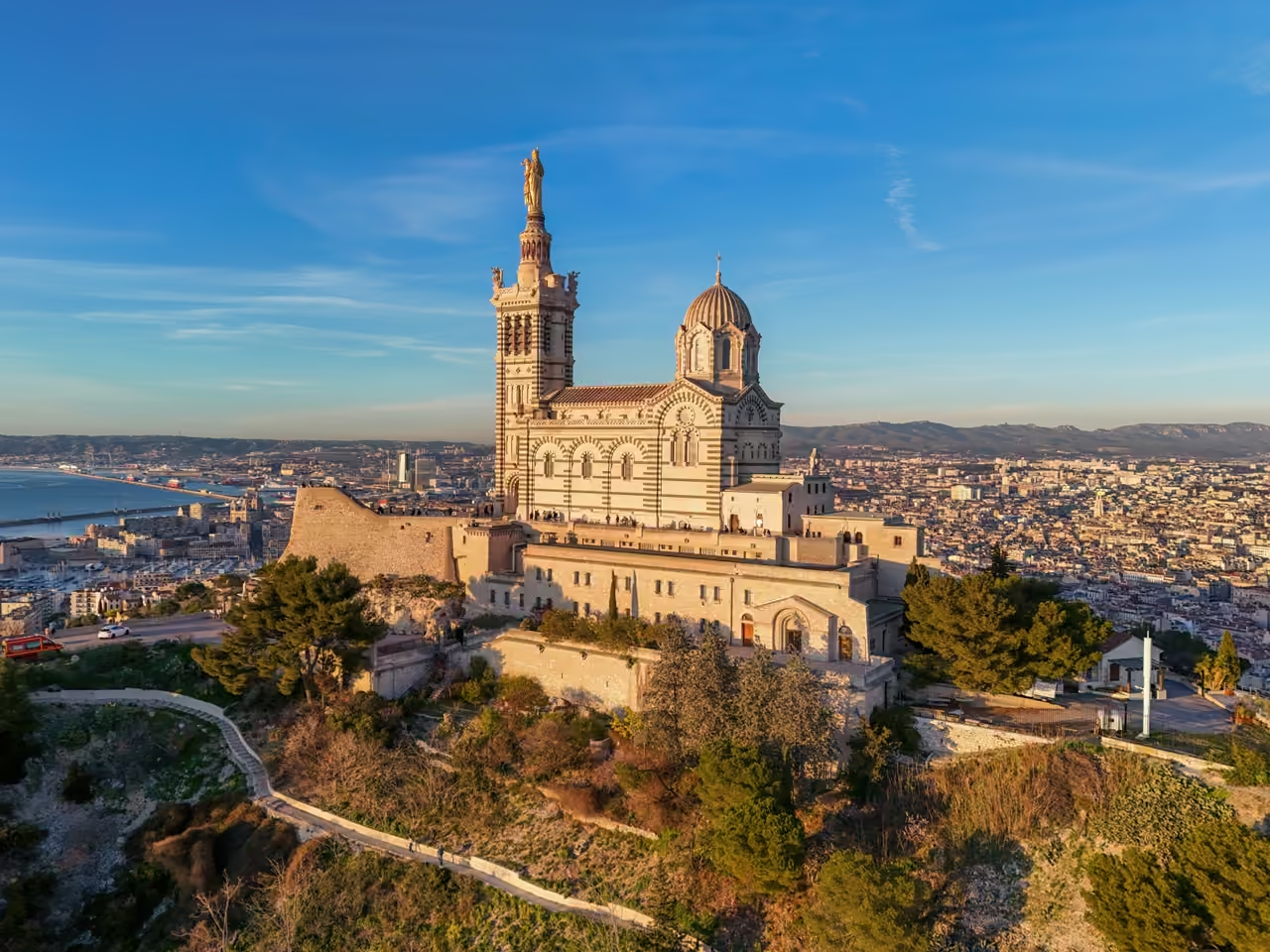
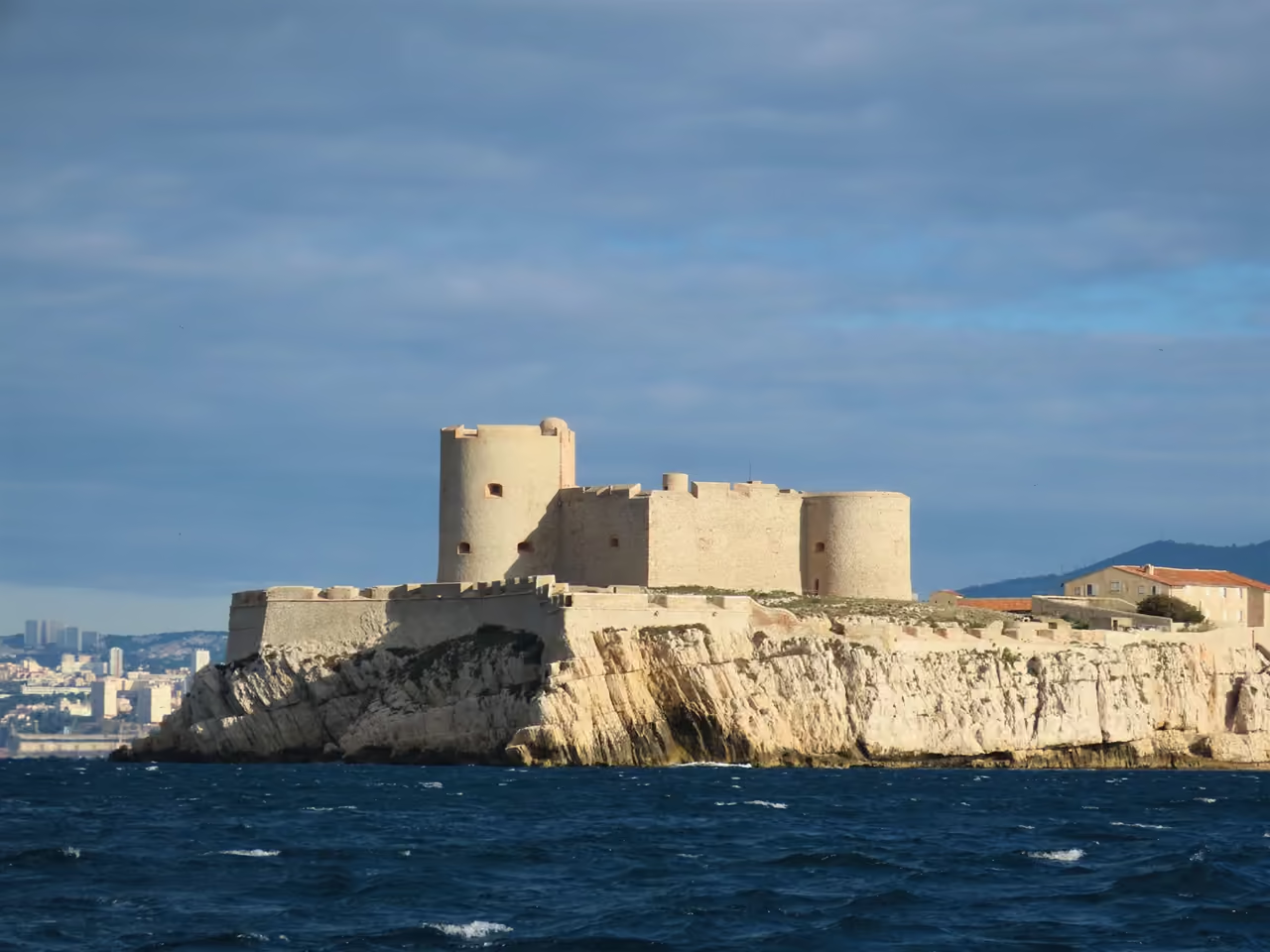
Twenty minutes by boat from Marseille's Old Port drops you onto a rock that feels stubbornly aloof from the mainland. Sitting four kilometres offshore beside Pomègues and Ratonneau, the Château d'If covers barely three hectares inside the Calanques National Park. Raised to guard the harbour in the 1500s before turning into an infamous prison, three square storeys of pale Urgonian limestone take over almost the entire islet. You pass through the Porte Florentine, step inside dim lower cells forever linked to Alexandre Dumas's novel The Count of Monte Cristo, and climb the Saint-Christophe tower for crisp views back across the bay toward Notre-Dame-de-la-Garde. Strong Mistral winds still turn the exposed landing quay too choppy for ferries at times, pausing crossings with little warning. On calmer days, yellow-legged gulls pace the upper parapets while sea spray dries white against the sunlit stone.
Videos
History of Château d'If
A humiliating Spanish siege of Marseille in September 1524 convinced King François I that his prized Mediterranean harbour stood dangerously exposed. Five years passed before spring storms relented enough in April 1529 for masons to land on an empty offshore rock and begin building. Work crews assembled the new keep from local limestone, golden stone hauled from quarries at La Couronne, and salvaged rubble taken from Marseille buildings wrecked during the 1524 attack. The first governor and garrison took post in 1531. European warfare was changing rapidly as heavy gunpowder cannons rendered tall medieval castles obsolete, turning this square fortress into a bold experiment in coastal defence. Three thick round towers, including the heavy Maugovert tower, anchored the corners with deep gun embrasures, while a fixed bridge over a dry ditch guarded the eastern doorway. Marseille residents watched the rising walls with resentment rather than gratitude. Proud of their municipal independence, citizens noticed the new guns aimed straight at their own harbour as much as toward Spanish fleets or Barbary corsairs, earning the fortress the bitter local nickname 'la Malvoisine', meaning the bad neighbour. Trouble flared in 1591 when local leader Charles de Casaulx defied the new Protestant monarch Henri IV and tried to declare Marseille an independent Catholic republic. Royalist commander Nicolas de Beausset called in Florentine soldiers, who camped across the rock until 1598 and wrapped the entire shoreline inside an outer bastioned rampart before the Peace of Vervins returned the island to France. Over a century later, in April 1701, military engineer Sébastien Le Prestre de Vauban inspected the fort and issued a blunt assessment. Finding the garrison cramped and realising high tower guns tended to shoot harmlessly over enemy masts, Vauban built proper barracks by the gate and placed low waterline batteries on neighbouring Ratonneau and Pomègues. Long before Vauban arrived, the crown had discovered an even harsher use for an isolated rock circled by treacherous currents. Two Marseille fishermen entered the cells in November 1540, and by the 1580s the fortress ranked among France's oldest state prisons. Life behind bars followed strict social lines. Impoverished inmates, known as 'pailleux', packed into unlit lower chambers where they slept on bare straw. Wealthier prisoners paid in gold coin for upstairs quarters called 'pistoles', securing windows, furniture, fireplaces, proper meals, and private visitors. After religious tolerance ended in the late seventeenth century, authorities also transferred French Protestants here from mainland port jails, aiming to prevent outspoken believers from inspiring fellow convicts chained aboard the royal galleys. Political upheavals kept refilling the stone corridors throughout the nineteenth century. Authorities locked up 120 republicans following the June 1848 uprising, then squeezed 304 more detainees onto the rock after the December 1851 coup while awaiting deportation ships bound for Algeria and French Guiana. Additional prisoners followed the fall of the Second Empire in 1870, before the final civilian internees from Alsace and Lorraine walked free in September 1914. Yet a quiet visit by writer Alexandre Dumas in December 1834 had already altered the island's destiny far more than any minister or general. Touring the damp cells inspired him to trap his fictional hero Edmond Dantès here, prompting eager readers to make boat pilgrimages across the bay from 1850 onward. Protected as a historic monument in July 1926 and moved from army hands to the Ministry of Culture in 1970, the island today welcomes around 100,000 visitors each year under the Centre des monuments nationaux, where upgraded 2015 ferry quays lead straight up toward Vauban's barracks and the worn stone steps of the central courtyard.
21 events spanning 496 years
Fun Facts
14- 01
A plaque mounted in 1953 sparked a persistent legend that 3,500 French Protestants had been locked inside the Château d'If. Historian Pierre Rolland estimated roughly 1,885 Protestants and helpers were condemned to Marseille's royal galleys between 1680 and 1748, mostly detained at mainland port forts like Saint-Jean or Saint-Nicolas, while archival research by Ruth Whelan found just 27 religious prisoners specifically held at If between 1696 and 1716. Five of them arrived purely because they refused to remove their hats during compulsory Catholic Mass.
- 02
Although 'if' means yew tree in French, not a single yew grows anywhere on this parched rock. Medieval Italian port charts from 1442 called the islet 'Izet' and later French texts recorded 'It', a Provençal word meaning sea rock or reef, while nineteenth century writer Frédéric Mistral famously argued the name derived from the Greek 'Hypea', meaning lower island.
- 03
Curious readers grew so eager to inspect Edmond Dantès's fictional dungeon that a regular ferry route launched in 1890 before any proper dock existed, forcing passengers to scramble straight onto coastal ledges. Eight decades later, the island traded nineteenth century drama for gritty Hollywood action when Gene Hackman's 1971 crime thriller The French Connection shot scenes on the grounds.
- 04
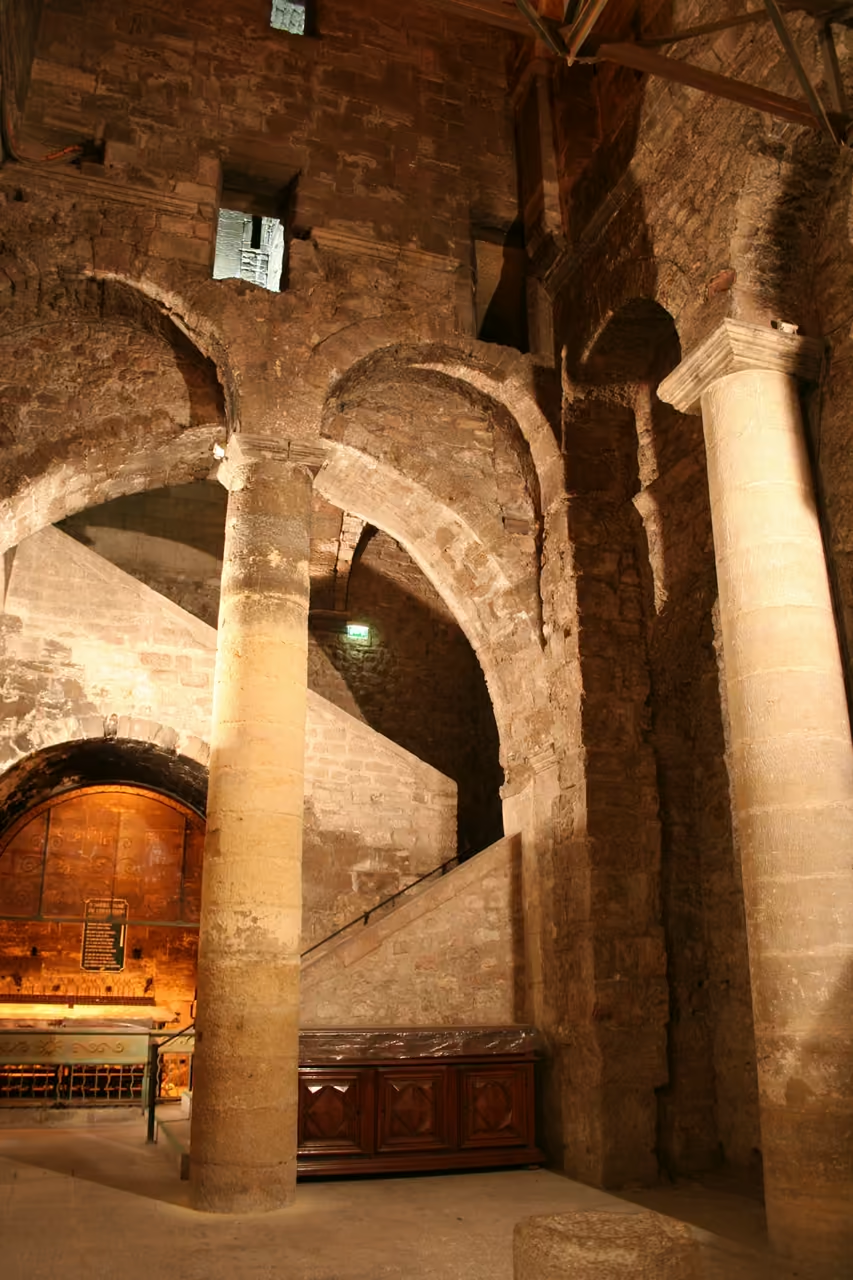
Despite sitting four kilometres off France's second largest city, the fortress operated without piped running water until July 1998. For centuries, soldiers and inmates survived on rainfall caught across sloped first floor terraces, directed through a settling filter, and stored inside a deep stone cistern beneath the courtyard.
- 05
Edmond Dantès's wise prison mentor was based on a real and eccentric teacher who had walked Marseille's streets. Abbé Faria drew heavily on José Custódio de Faria, a Portuguese priest from Goa and early pioneer of hypnotism who taught philosophy at Marseille's imperial lycée in 1811.
- 06
Following the assassination of French revolutionary general Jean-Baptiste Kléber in Cairo in June 1800, retreating troops carried his remains across the Mediterranean when evacuating Egypt. Unloaded onto the island in 1801, Kléber's embalmed body remained tucked out of public sight in near secrecy until 1814, waiting while imperial officials hesitated over staging a Paris funeral.
- 07
Known as 'L'Enfermé' (The Locked Up One) for spending decades behind bars, veteran socialist revolutionary Louis Auguste Blanqui was transferred here in 1877 after the Paris Commune. Astonishingly, in April 1879, voters in Bordeaux elected Blanqui as their member of parliament while he was still confined on the islet. Parliament invalidated the seat, though the political stir helped bring about the general amnesty that freed him two months later.
- 08
Long before a single fortress brick was laid, an Indian rhinoceros put this barren goat pasture on the royal map. On 23 January 1516, a Portuguese caravel sailing from Lisbon to Rome moored off the rock carrying the first live rhinoceros seen in Europe since 248 AD, a diplomatic gift from Sultan Muzaffar Shah II of Cambay to King Manuel I intended for Pope Leo X. Hearing the news while on pilgrimage at Saint-Maximin-la-Sainte-Baume, King François I hurried down with his court to inspect the exotic animal on 24 January and noticed how vulnerable Marseille's coast looked. When the vessel later sank in the Gulf of Genoa, the Pope received the creature stuffed.
- 09
Look closely along the warm outer masonry and you may spot Sicilian wall lizards ('Podarcis siculus') darting across sunheated stones. Naturalists suspect these reptiles descend directly from stowaways that arrived inside supply crates belonging to Florentine troops stationed on the islet in the late sixteenth century.
- 10
Not every aristocratic inmate arrived over rebellion or debt. In 1670, Princess Henriette of England successfully persuaded King Louis XIV to lock Philippe de Lorraine, the Chevalier de Lorraine, inside the fortress before exiling him to Rome, simply to sever his intense love affair with the king's own brother, Philippe d'Orléans.
- 11
One of the French Revolution's loudest future orators spent an unexpectedly short stay behind these bars between 1774 and 1775. Young Comte de Mirabeau had not been seized for political treason, but committed via a royal 'lettre de cachet' requested by his own father over spiralling debts and wild romantic habits. Within months, Mirabeau charmed the fortress canteen keeper, prompting flustered officials to ship him away to the chillier Fort de Joux.
- 12
The celebrated escape hole connecting Edmond Dantès's cell with Abbé Faria's dungeon is an ingenious nineteenth century hoax. Right after The Count of Monte Cristo became a sensation in 1844, a sharp-witted prison guard named Grosson took tools to the stone wall between two ground floor chambers to fabricate the fictional tunnel for early paying visitors. Those vaulted spaces had originally served as gunpowder and grain storerooms, and beam sockets along the masonry prove wooden decks once squeezed inmates into spaces too low to stand upright.
- 13
Unlike typical illicit jail scratches, the crisp courtyard inscriptions from June 1848 were sanctioned and outfitted by the authorities. Hoping to soothe unrest and head off a mutiny among political prisoners, the local prefect granted permission and supplied real chisels and punches. At least nine professional stonemasons among the captives sculpted a 25 metre frieze of 96 framed panels across three courtyard façades and even chiseled 'Hôtel du peuple souverain' (Hotel of the Sovereign People) in bold capitals above the main doorway.
- 14
When a devastating plague outbreak hit Marseille in May 1720, angry city leaders searched for someone to blame and seized Captain Jean-Baptiste Chataud of the merchant vessel Grand-Saint-Antoine. Locked inside the castle in September 1720 as the man accused of carrying disease into port, Chataud sat behind bars for three full years before an inquiry finally confirmed in September 1723 that his ship had properly observed quarantine, clearing the way for his release.
FULL PLACE DETAILS
Updated
FULL PLACE DETAILS
UpdatedOVERVIEW & STATS
- Established
- In 1527, making it 499 years old
ARCHITECTURE & HERITAGE
- Heritage Status
- Classified Historical MonumentMonument Historique Inscrit
- Architectural Styles
- Medieval
WEB & AMENITIES
Château d'If Map & Neighborhood Explorer
This interactive map is centered on Château d'If. Zoom in and move the map around to automatically discover Wikipedia photos and summaries of other nearby sights, monuments, and historical points of interest and stories in real-time!
Château d'If FAQ
Passenger ferries depart from Marseille's Old Port, taking about 20 minutes to cover the four kilometres across the bay. Because the islet has an exposed rocky landing quay, strong Mistral winds can make mooring unsafe, so crossings occasionally pause or continue straight to the neighbouring Frioul islands.
Yes. The islet sits just east of Pomègues and Ratonneau inside the Frioul archipelago, and many ferry tickets allow you to visit both the fortress and Ratonneau on the same outing. On the larger islands you can follow coastal trails, browse Port Frioul's harbour cafés, or swim in limestone coves.
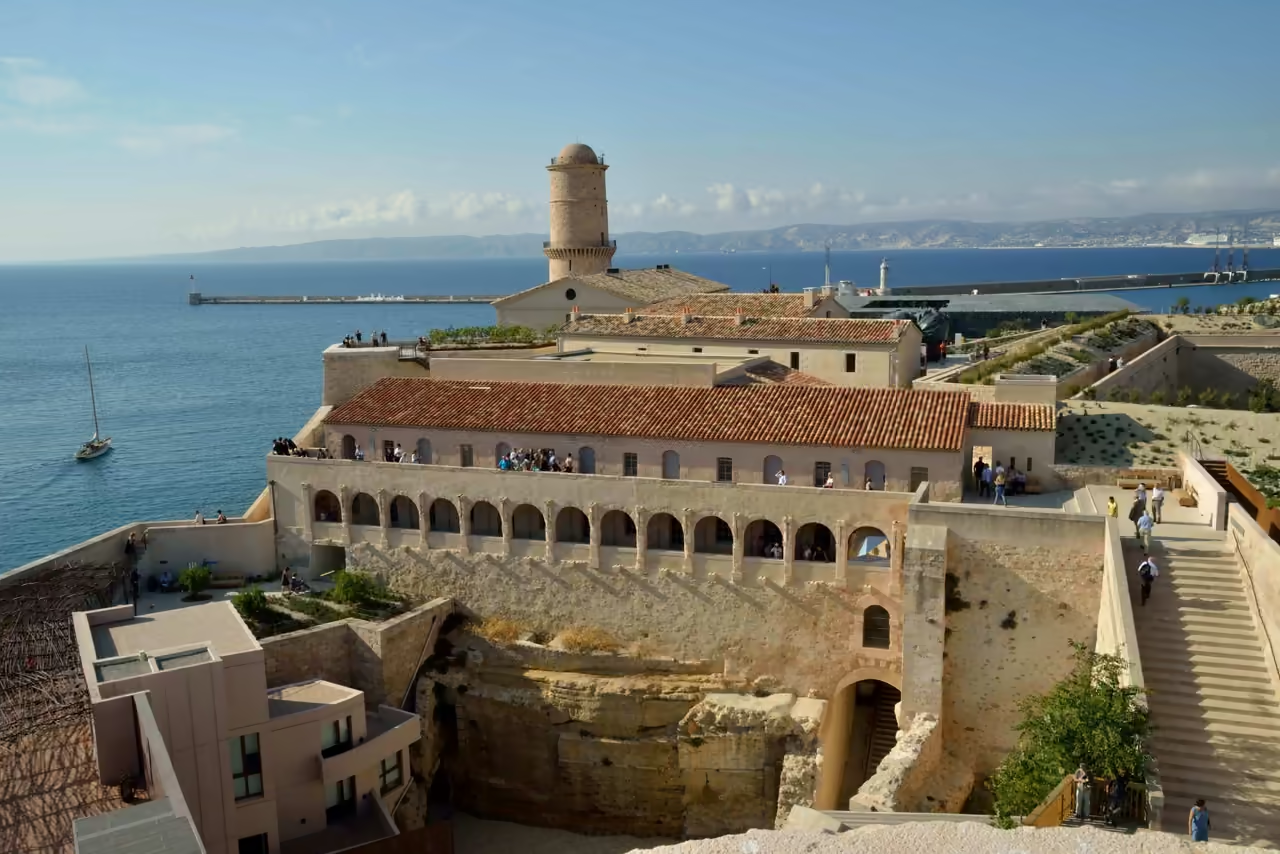
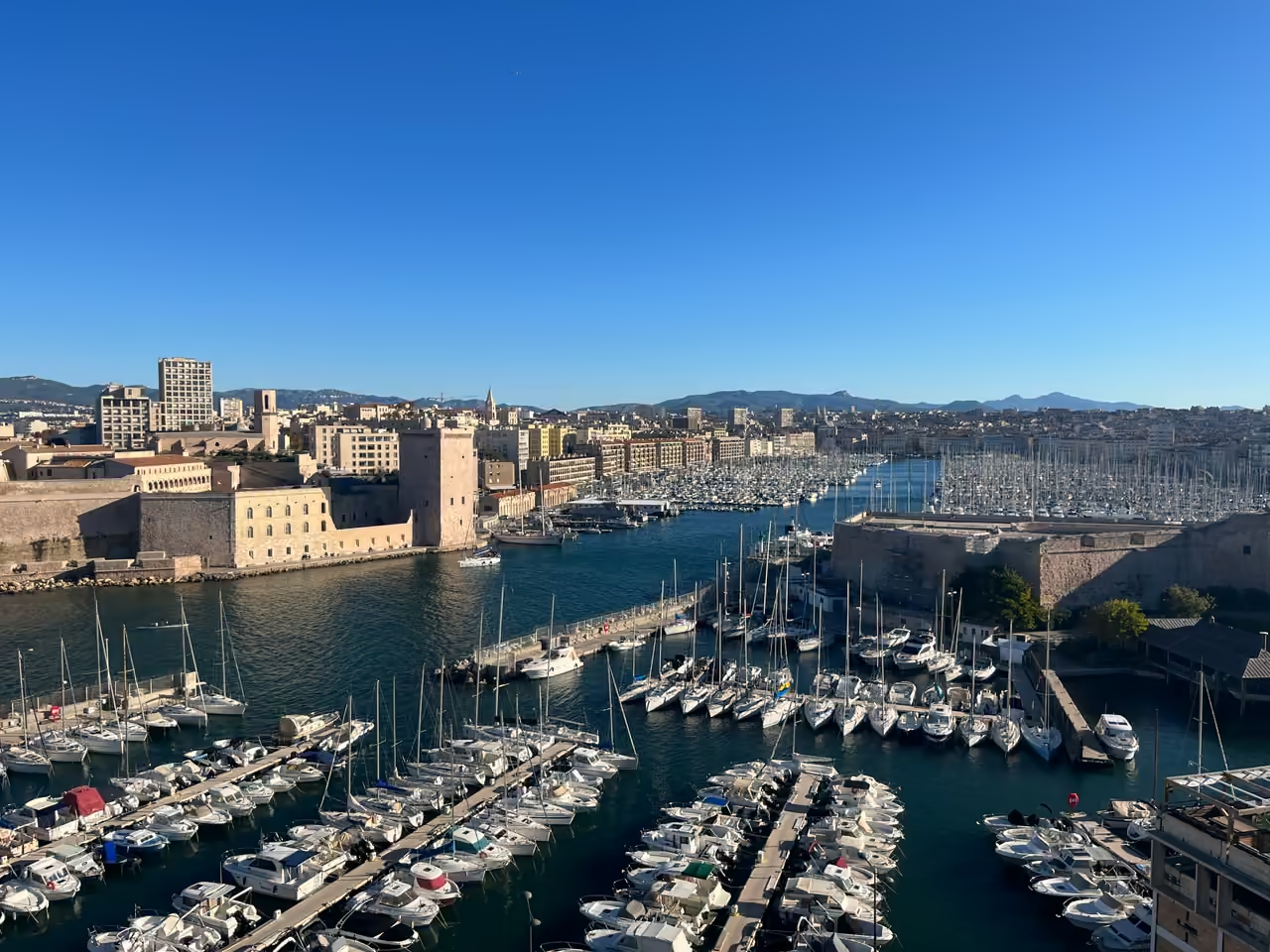
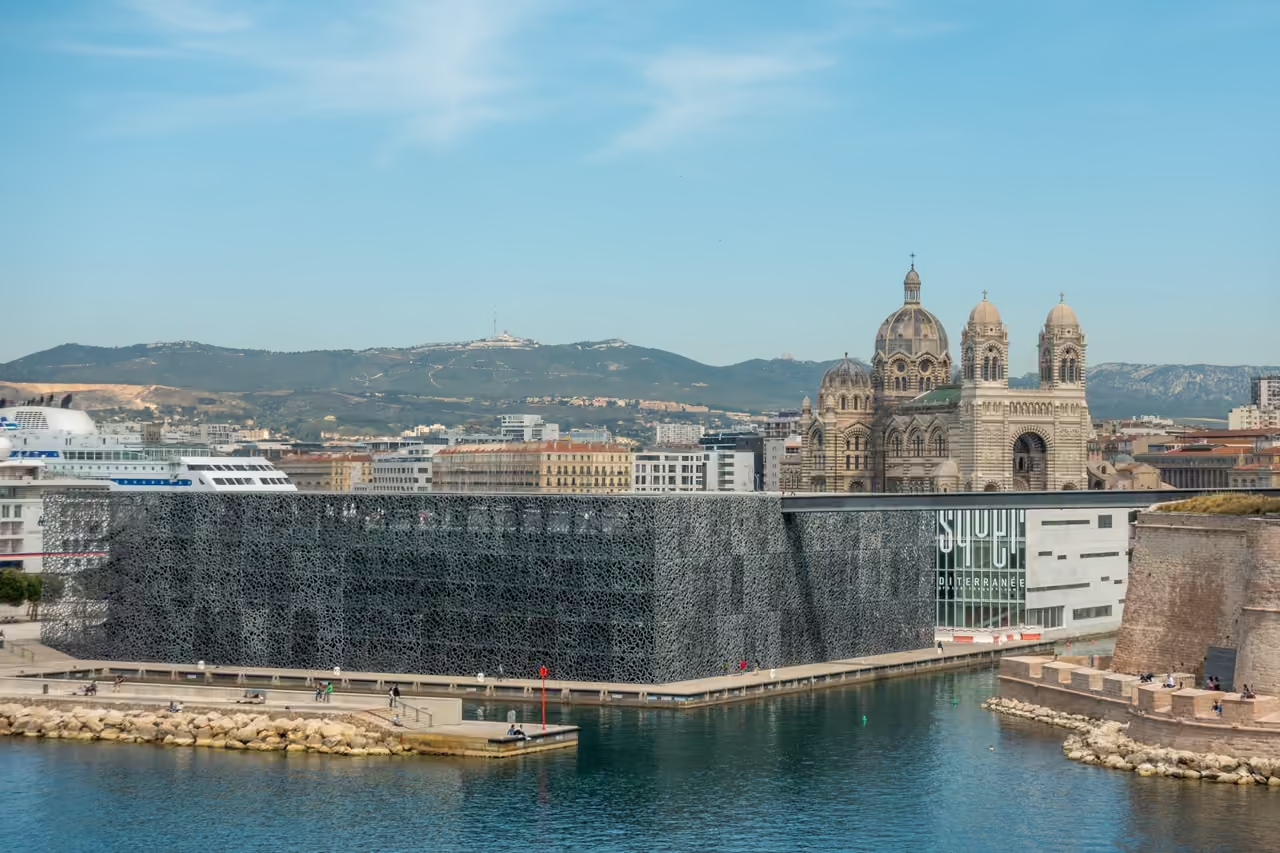
Alongside the rooms linked to Alexandre Dumas's novel, visitors can inspect historical prisoner carvings around the central courtyard, step inside the Vauban guardhouse, and climb onto the upper artillery platforms with their wide cannon embrasures. From the high battlements, panoramic views look straight across the sea toward Fort Saint-Jean and the basilica of Notre-Dame-de-la-Garde.
Because the sixteenth century fortress sits atop steep coastal limestone, level access is very limited. Entering requires climbing an inclined stone ramp, crossing a fixed bridge, and navigating uneven flagstones and tight spiral staircases inside the towers, making wheelchairs and pushchairs difficult to use.
Part of the Calanques National Park since 2012, the tiny rock sustains nearly 400 hardy plant species, including wild fig trees, mastic shrubs, halophyte coastal plants, and wind-bent Aleppo pines. Yellow-legged gulls, pallid swifts, and Bonelli's eagles have been recorded around the archipelago, while nocturnal European leaf-toed geckos shelter inside crevices in the stone walls.
The exposed limestone receives considerably less rainfall than mainland Marseille and has little tree cover, so natural shade is scarce outside the vaulted indoor chambers. Bringing water, sunscreen, and a hat is sensible, though a small café and terrace operate inside the old military buildings during busy visitor periods.
A typical visit takes about 2 hours. We recommend planning your schedule accordingly to make the most of your time there.
The closest place to visit near Château d'If is Frioul Islands, around 1.6 km away. Other things to do near Château d'If include Swim off Sun-Warmed Rocks at Anse de Malmousque (1.9 km), Monument aux Morts de l'Armée d'Orient (2.1 km) and Vallon des Auffes (2.2 km). All of these are within roughly 2.2 km of Château d'If.
Château d'If holds the following heritage designations: Classified Historical Monument and Monument Historique Inscrit.
It dates back to 1527, making it 499 years old.
Château d'If was built in the medieval style.
While we strive to keep this information accurate and up to date, we recommend verifying any details independently before making decisions based on them.
Places near Château d'If
Make the most of your trip. Check out these top-rated spots located nearby.
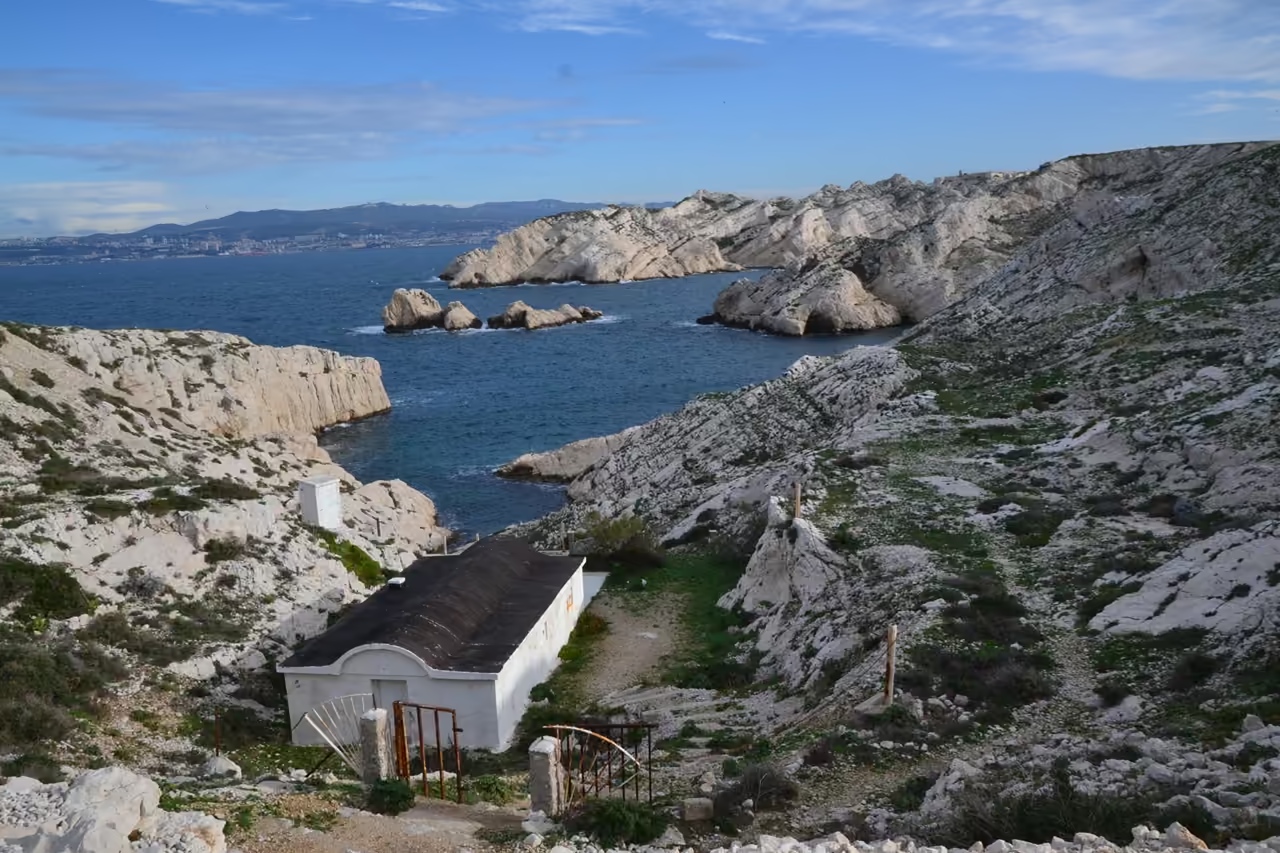 1629m
Frioul Islands
Twenty minutes out from Quai de la Fraternité, Marseille's traffic hum drops away and white limestone takes over. Port-Frioul looks like a sunbaked maritime village, with 1970s waterfront flats rising behind more than 600 moored yachts and zero private cars on the roads. Cross the stone causeway between Ratonneau and Pomègues and paved streets soon vanish into rosemary scrub, ruined ramparts, and turquoise coves like Plage de Saint-Estève and Calanque de Morgiret. Morning ferry queues back in town can crawl on summer weekends, and the dry trails demand a full water bottle when the Mistral whips across Hôpital Caroline's exposed ridge. Take the hike out toward Fort de Pomègues anyway. Back at the quay late in the afternoon, loud gabian gulls patrol the breakwater while Château d'If catches the low sun offshore and the ferry noses back toward Notre-Dame de la Garde.
attraction view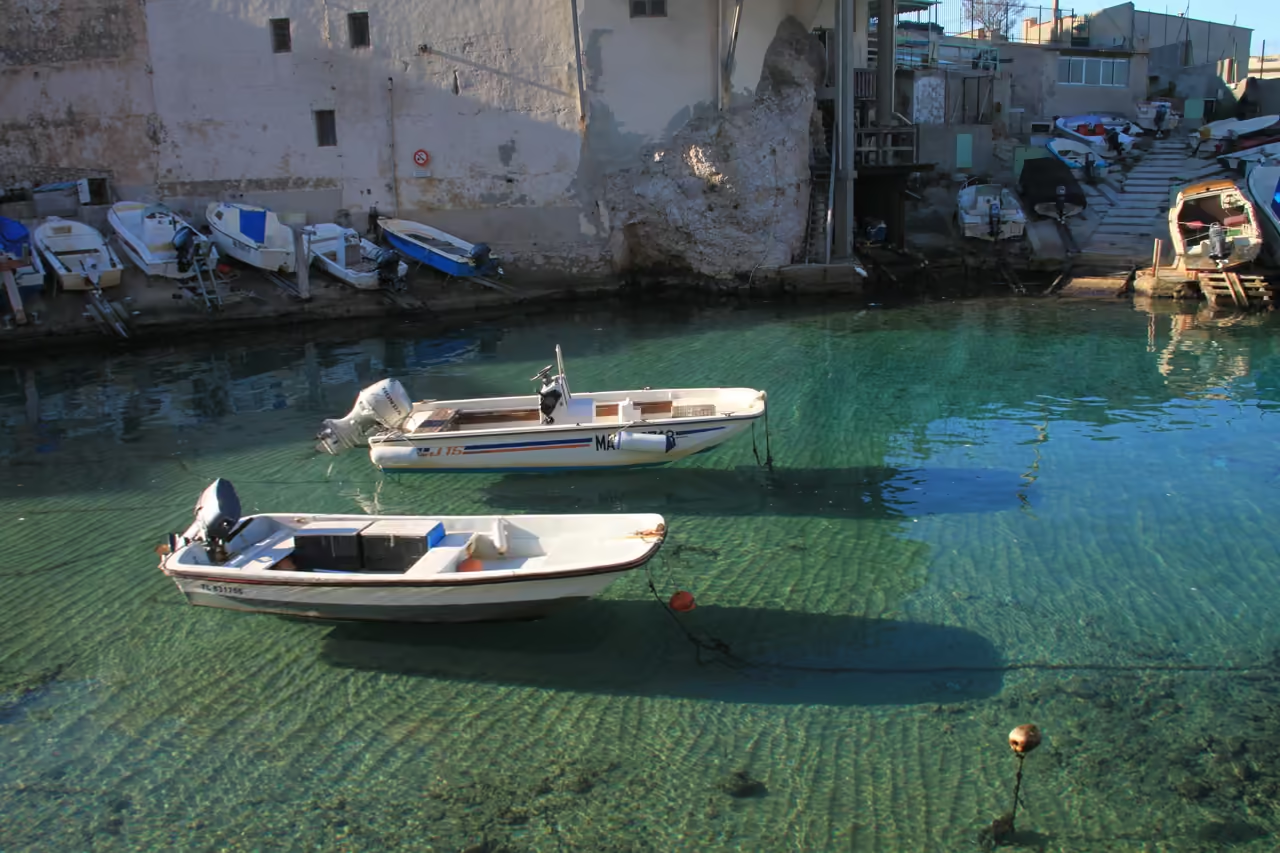 1857m
Swim off Sun-Warmed Rocks at Anse de Malmousque
Skip crowded sandy beach clubs and duck down pedestrian alleys off the Corniche onto flat coastal limestone ledges facing the Frioul islands. Locals spread towels on warm rocks, plunge straight into deep clear cove water, and watch sails drift past at dusk.
free thing to do view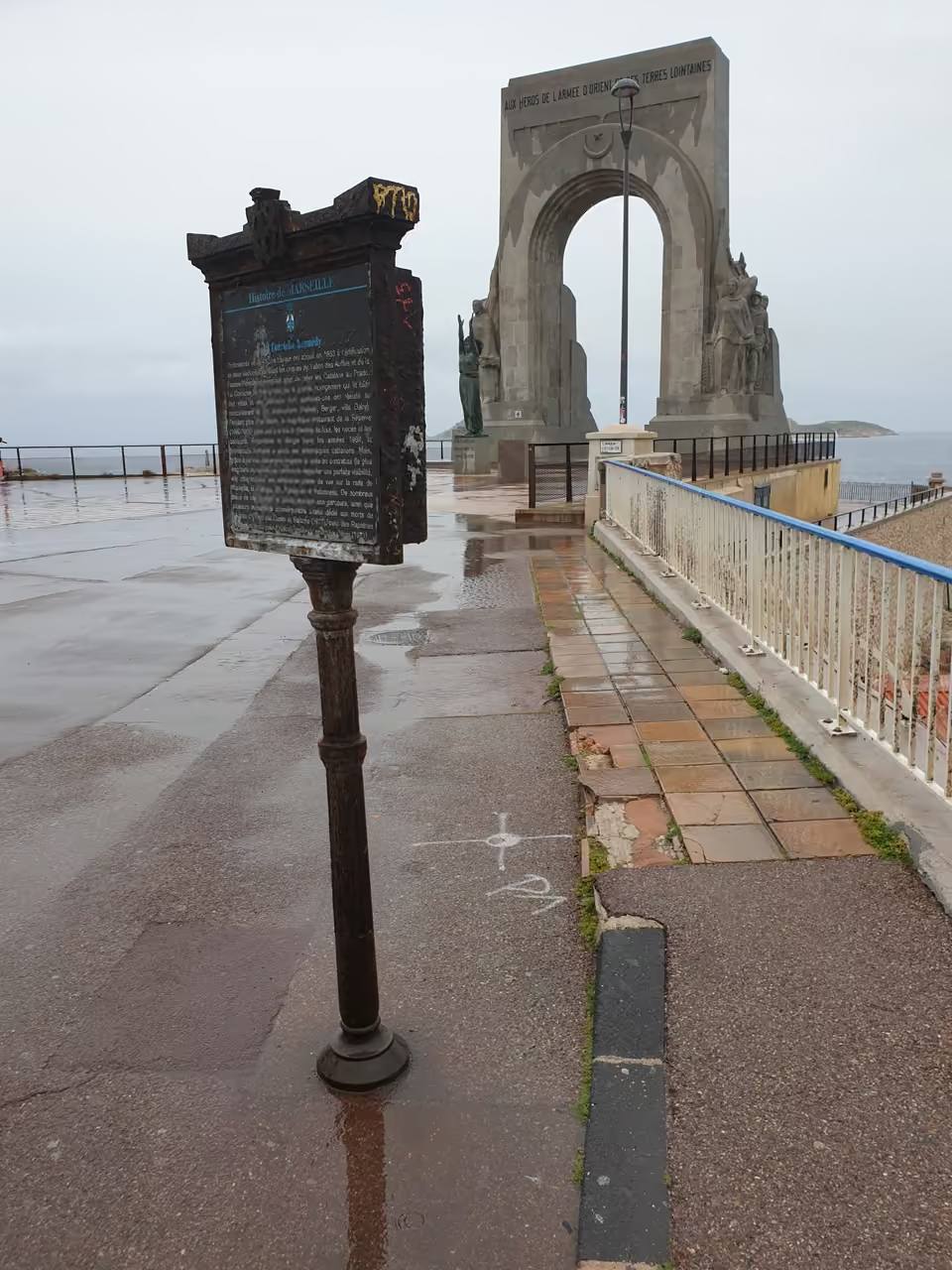 2149m
Monument aux Morts de l'Armée d'Orient
Standing directly on the Corniche cliff edge, this monumental white limestone arch frames open Mediterranean blue directly toward Château d'If. Arrive just before sunset when silhouettes step through the glowing bronze gateway and the sea turns deep cobalt.
photo spot view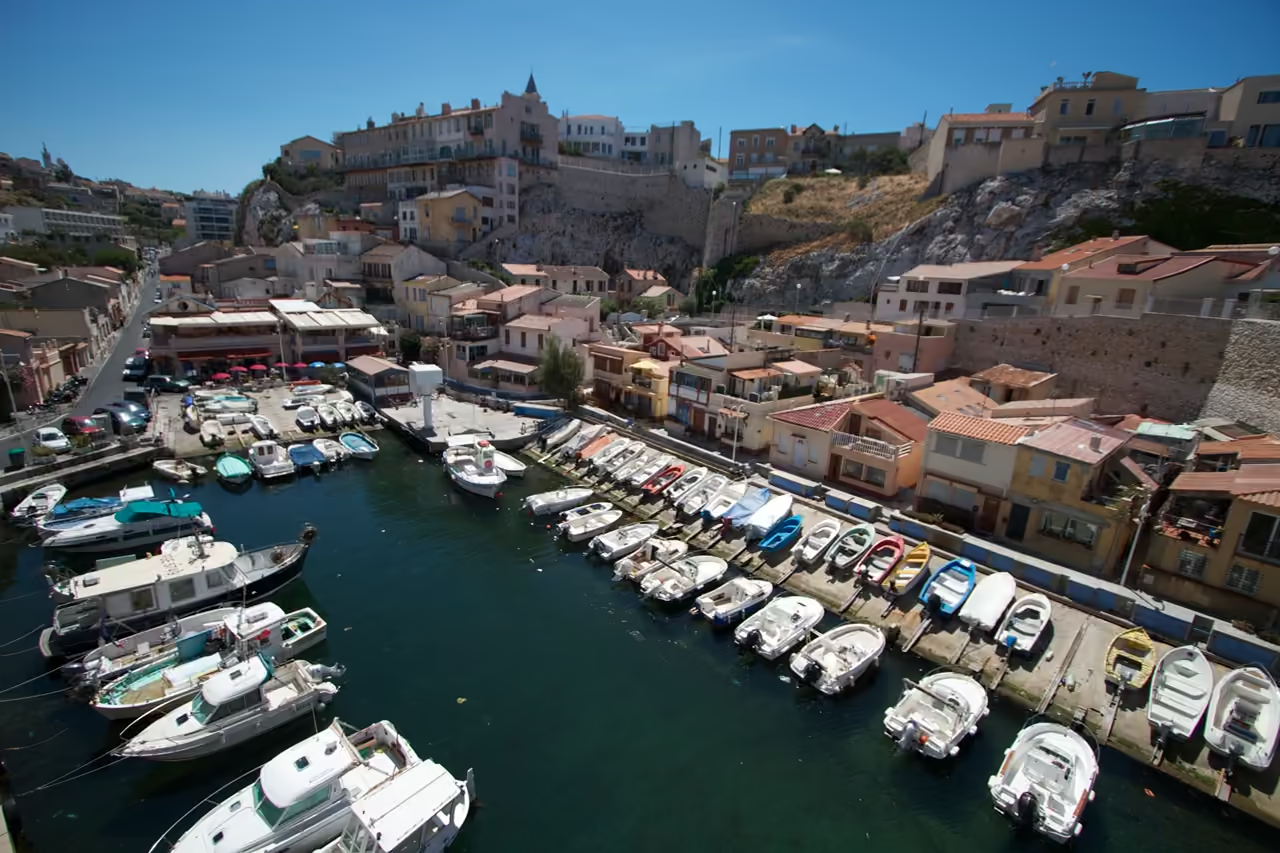 2196m
Vallon des Auffes
Tucked inside a narrow rocky inlet just off the Corniche, this picturesque fishing port looks almost untouched since Provençal mariners moored their wooden pointu skiffs here generations ago. Three tall viaduct arches frame colourful cabins, bobbing hulls, deep rock-pool swims, and famous seafood dining rooms such as Chez Fonfon and L'Épuisette. Come late afternoon when golden light drops into the cove.
highlight view
Explore Similar Places in This Collection

Featured on This Itinerary
See all attractions in Marseille
Including Basilica of Notre-Dame de la Garde, Fort Saint-Jean, Frioul Islands, and more