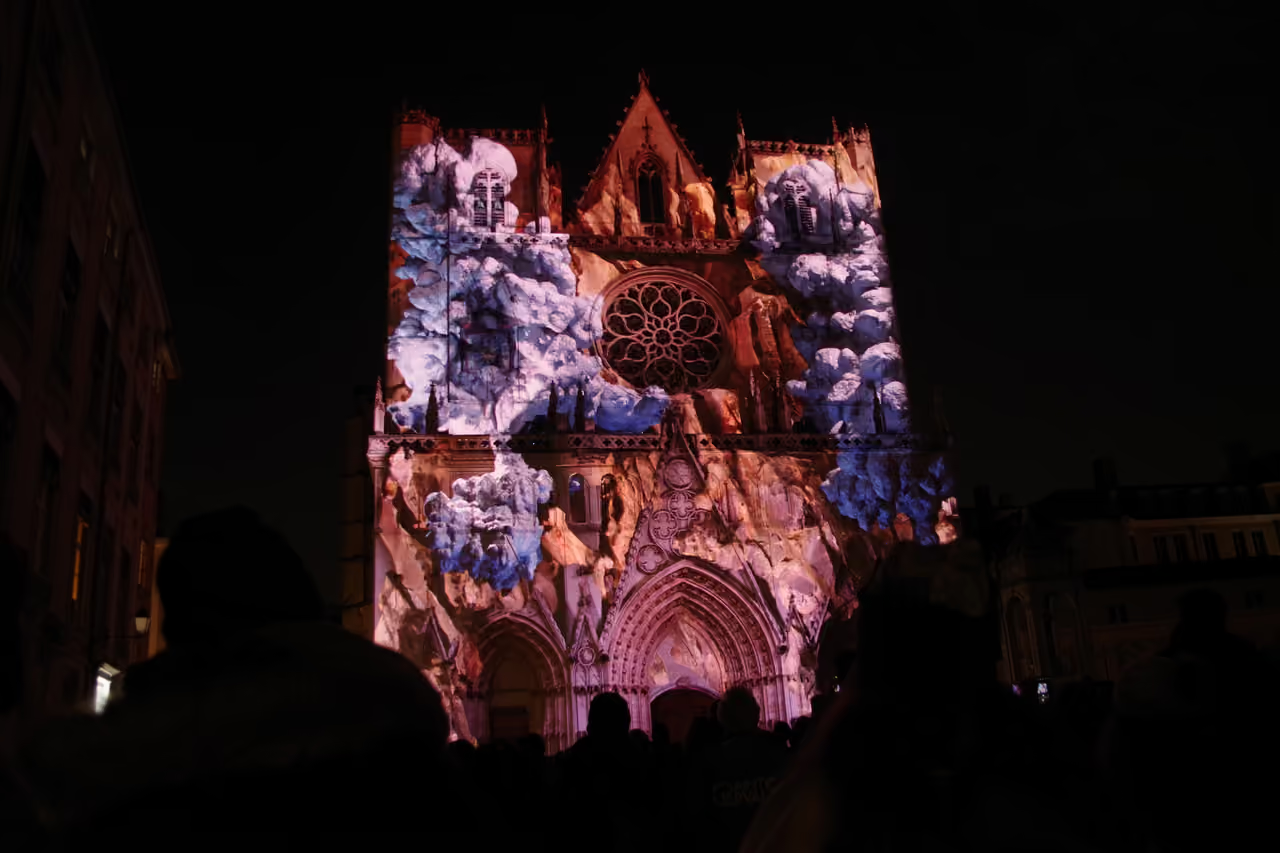
St John's Cathedral
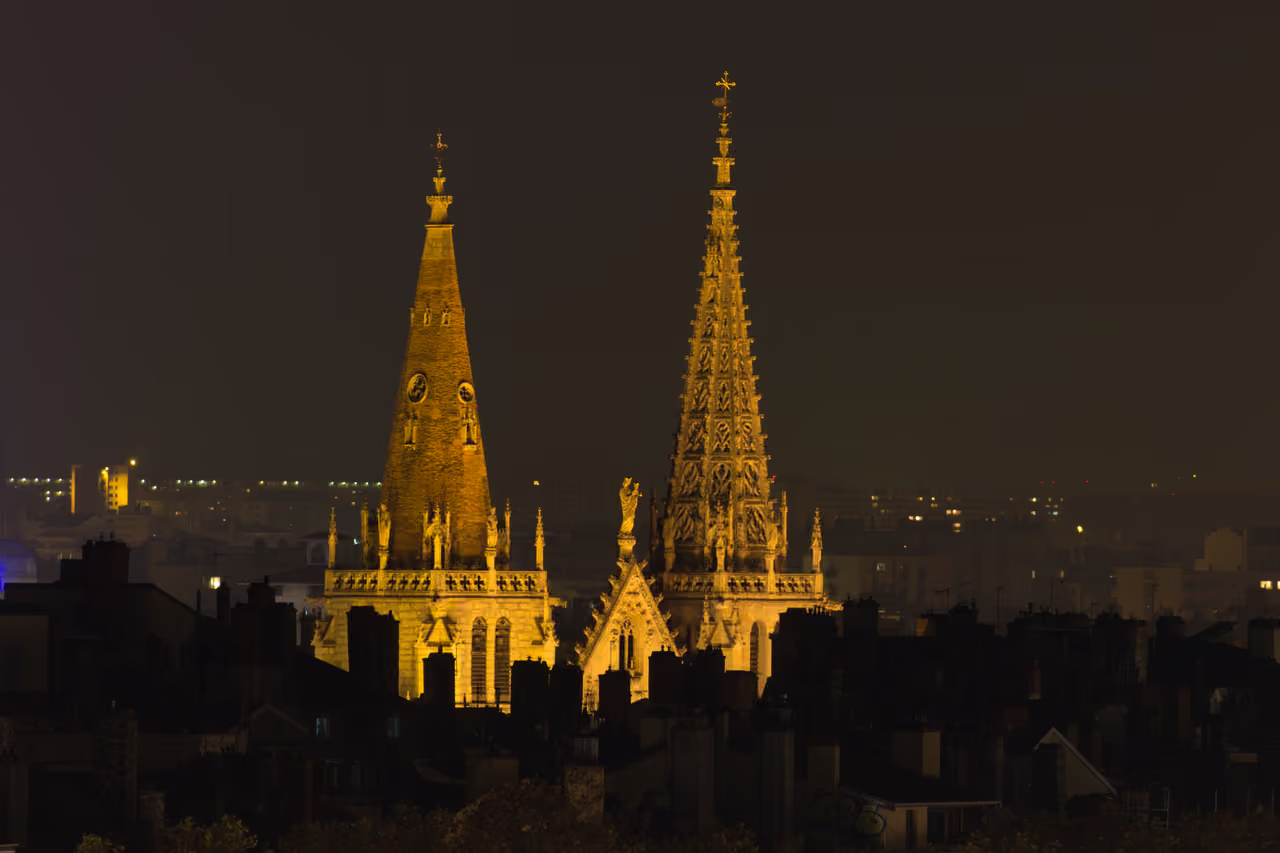
Stand in Place Saint-Jean and you will immediately notice the sheer timeline etched into the stones of this massive structure. The apse at the back clings to heavy, round Romanesque arches, while the front erupts into spiky Flamboyant Gothic peaks. It documents three centuries of changing architectural tastes in one single building. Inside, past the minor bottleneck of groups pausing to photograph the stained glass, sits a wildly complex fourteenth-century astronomical clock. Time your arrival for the afternoon chimes to watch a mechanical rooster flap its wings and crow above the astrolabe. The sunlight hitting the rose windows scatters coloured patterns across the choir tiles, illuminating the very spot where a French king married a Medici.
Videos
History of St John's Cathedral
Construction kicked off at the foot of Fourvière hill in 1180 under the orders of Archbishop Guichard of Pontigny. He wanted a seat of power that matched the city's growing religious influence. Because the building took a full three hundred years to finish, the masons essentially changed their minds halfway through. They started with a sturdy Romanesque rear, but as decades bled into centuries, the newer, sharper Gothic style arrived from the north. The builders adapted on the fly. The result is a structure that physically morphs as you walk from the altar to the front doors. The cathedral has hosted some serious political theatre. Pope Innocent IV held the First Council of Lyon here in 1245, using the partially finished nave to dramatically excommunicate the Holy Roman Emperor Frederick II. Centuries later, in 1600, King Henri IV arrived to marry Marie de' Medici. The Pope had only just annulled the king's previous marriage. The grand ceremony was as much a diplomatic victory to secure a Catholic heir as it was a wedding, with huge tapestries covering the cold stone walls and the combined French and Italian courts echoing through the aisles. It has not all been royal pageantry. During the Wars of Religion in 1562, Calvinist troops led by the Baron des Adrets smashed through the heavy wooden front doors. They hacked at the statues on the facade, decapitating saints and destroying the intricate exterior stonework. Look closely at the empty niches flanking the main portals to see the permanent scars of that violent purge. In modern times, the cathedral gained a completely different kind of fame as the spiritual epicentre of the Fête des Lumières. What began in 1852 with locals placing small candles in their windows has evolved into a massive citywide event, and the cathedral's facade is routinely used as a blank canvas for complex laser projections. The mechanical rooster on the astronomical clock still flaps its wings every afternoon, completely oblivious to the modern lights flashing against the stonework outside.
events spanning 672 years
Fun Facts
- • A unique local tradition known as the Lyonese rite was maintained here for centuries, involving distinct chants and ceremonies that resisted Roman standardisation until the twentieth century.
- • Because the medieval clock was designed based on the geocentric model, the mechanical sun on its astrolabe revolves around a stationary Earth.
- • During the French Revolution, the building narrowly escaped total destruction and was temporarily repurposed as a secular Temple of Reason.
- • Look closely at the base of the pillars in the nave to spot Roman ruins incorporated into the foundation, cannibalised from much older structures on Fourvière hill.
- • The astronomical clock inside is one of the oldest in Europe, originally built in 1383, and tracks the date, the moon's phases, and the position of the sun.
- • The cathedral holds the title of Primatiale, meaning its archbishop is the Primate of the Gauls, a title that technically outranks the Archbishop of Paris in the church hierarchy.
- • The front facade features over three hundred intricately carved square medallions detailing biblical scenes alongside the mundane monthly agricultural chores of medieval peasants.
- • The massive Bourbon Chapel, added in the fifteenth century, was funded by Cardinal Charles II of Bourbon and showcases late-Gothic vaulting carved to look like delicate stone lacework.
St John's Cathedral FAQ
While we strive to keep this information accurate and up to date, we recommend verifying any details independently before making decisions based on them.
St John's Cathedral Map & Neighborhood Explorer
This interactive map is centered on St John's Cathedral. Zoom in and move the map around to automatically discover Wikipedia photos and summaries of other nearby sights, monuments, and historical points of interest and stories in real-time!
Places near St John's Cathedral
Make the most of your trip. Check out these top-rated spots located nearby.
 87m
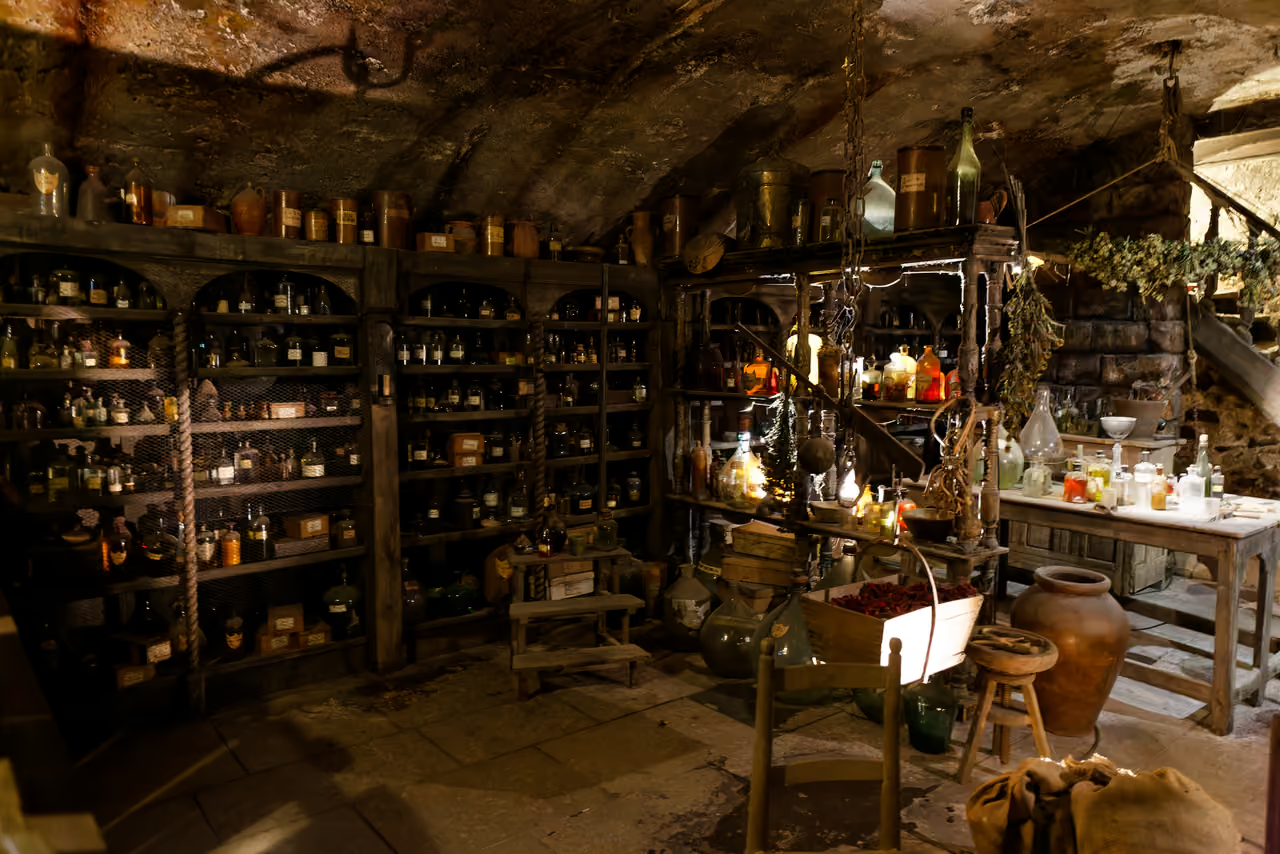
87mMiniature and Cinema Museum
Step into a universe where the ordinary transforms into the extraordinary at Lyon's Miniature and Cinema Museum. This unique attraction captivates with its double-feature charm, presenting both the meticulous artistry of miniature worlds and the fascinating secrets behind cinematic special effects. Housed within the magnificent 16th-century Maison des Avocats, the museum itself is a work of art, providing a grand backdrop to its intricate exhibits. Discover incredibly detailed miniature scenes, each a universe in itself, alongside original props, masks, and animatronics from blockbuster films. It's an intimate journey into the illusion and precision that create both tiny wonders and big-screen magic, making every visit a surprising and inspiring experience.
attraction view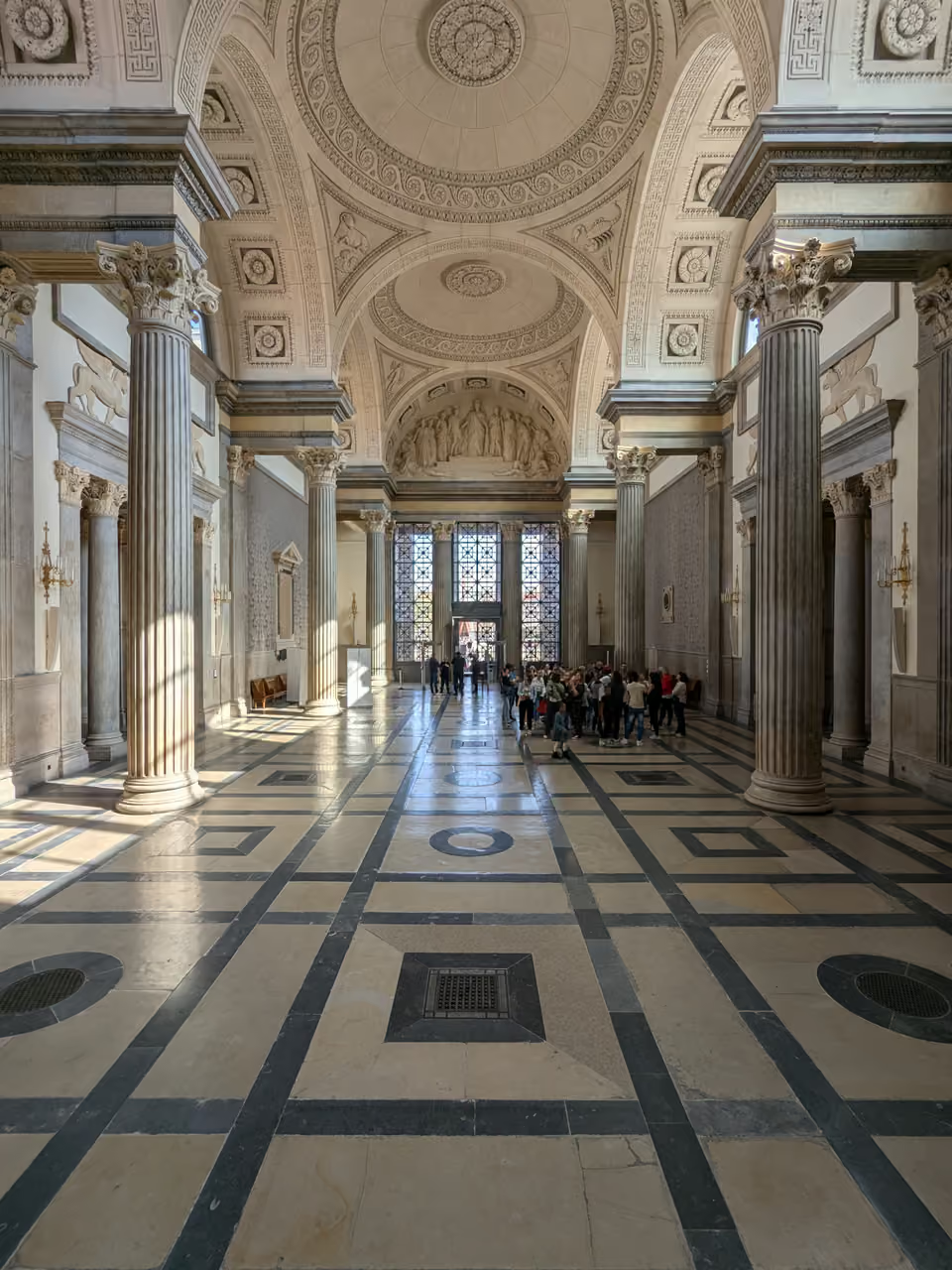 149m
149mPalace of the 24 Columns
A row of twenty-four Corinthian columns stands along the Saône quay like a Greek temple dropped into Vieux Lyon. Louis-Pierre Baltard designed the building in the 1830s, and the façade gives the court its nickname. The courtroom hosted the trial of Klaus Barbie in 1987, a landmark in French legal history.
architecture view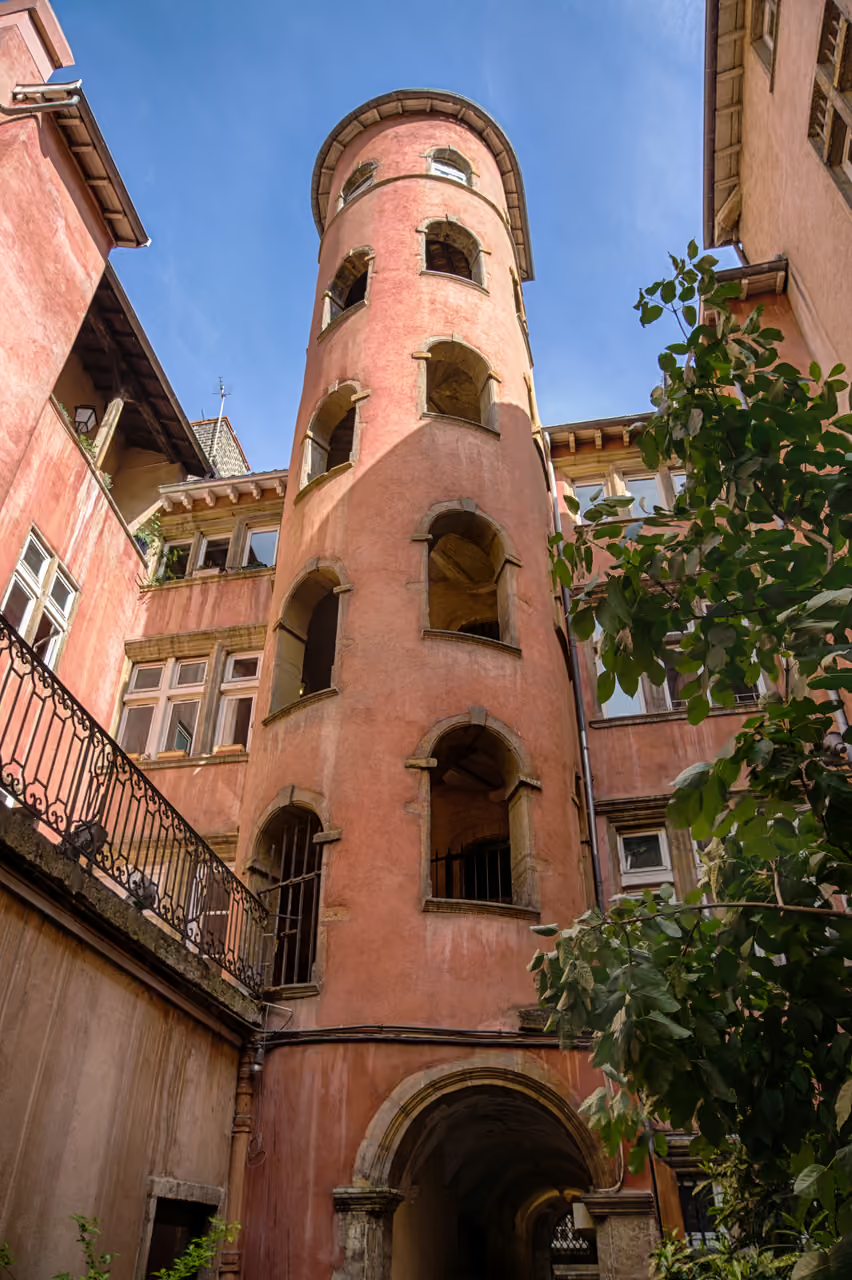 176m
176mPink Tower
You push open a heavy wooden door on a busy, tourist-filled street and step into a sudden, quiet Renaissance courtyard. A stunning, cylindrical terracotta-coloured tower dominates the space, featuring a spiralling external staircase and intricate arched windows. It looks as though a piece of Florence was dropped directly into the French city. The structure vividly demonstrates the immense wealth of the Italian tax collectors who built it in the sixteenth century. It is the most photogenic and architecturally significant hidden courtyard in the old town.
hidden gem view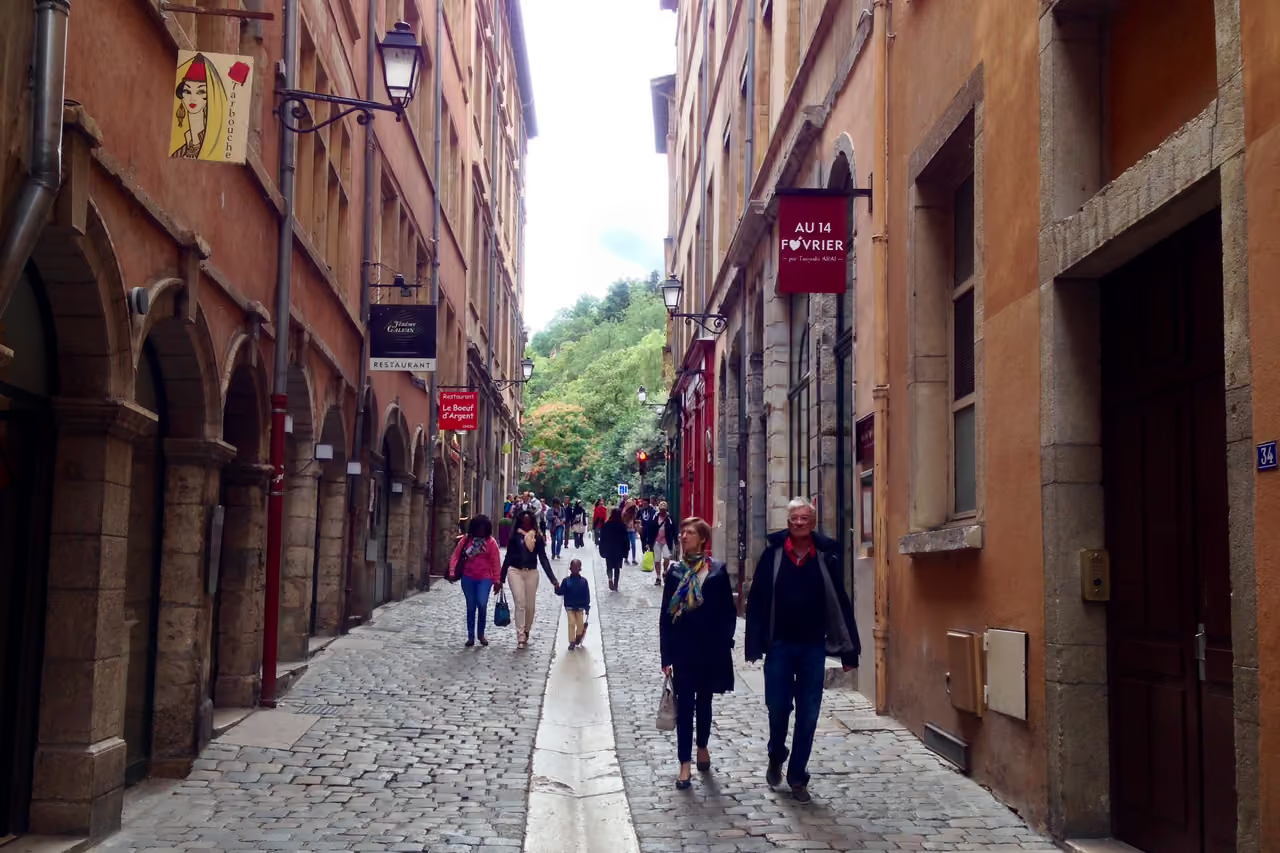 203m
203mBeef Street
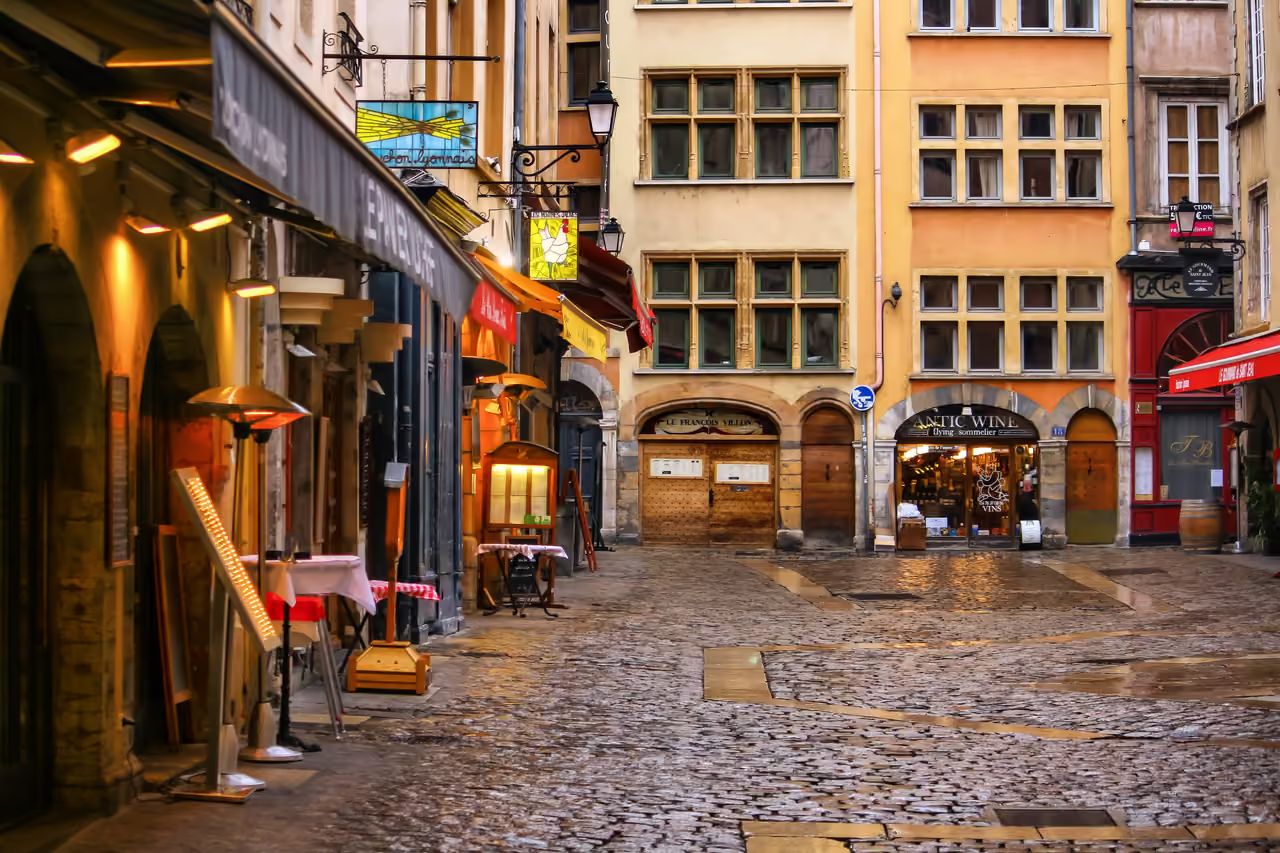
The gentle curve of this narrow, cobblestone street creates a classic, compressed perspective of the Renaissance old town. Tall, pastel-coloured facades lean in slightly, blocking the harsh midday sun and creating soft, even lighting. Traditional wrought-iron signs hang above heavy wooden doors, adding historic texture to the composition. It lacks the overwhelming tourist crowds of the parallel main street, allowing for clean, uncluttered shots. Photographers often wait near the Michelin-starred restaurants for chefs to step outside in their white jackets.
photo spot view
Explore Similar Places in This Collection
Featured on These Itineraries and Routes
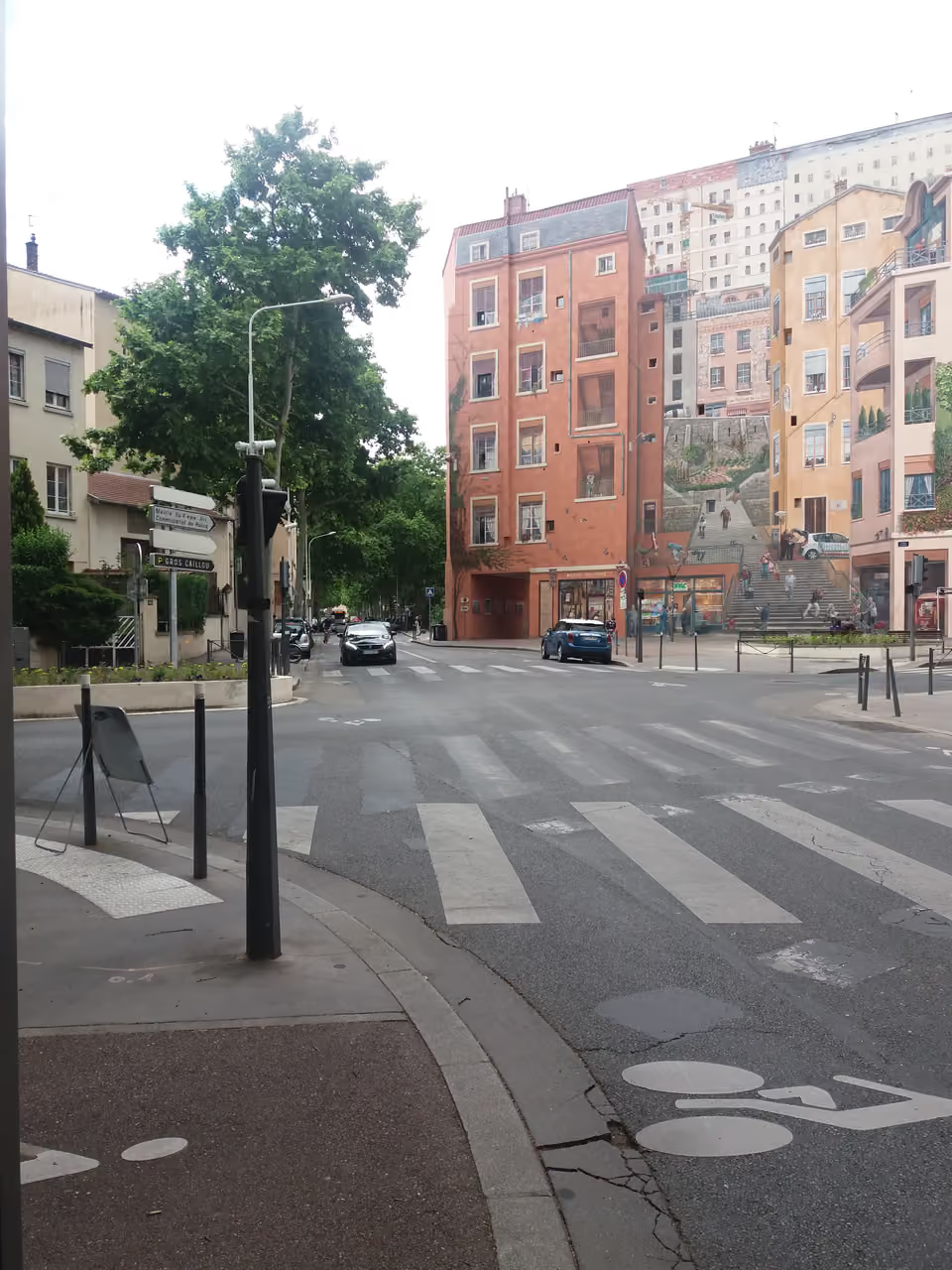
3 Days in Lyon: Heritage & Gastronomy
Three days allows you to split the city into distinct geographic zones, dedicating proper time to the silk-weaving history of the northern hill and the high-end culinary markets of the east. You can linger over three-hour lunches without ruining the day's schedule. This pacing permits a deep dive into the traboules and the massive Fine Arts museum, while leaving evenings free to explore the riverboat bars. It strikes the perfect balance between aggressive sightseeing and the relaxed, food-focused lifestyle the locals demand.
view itinerary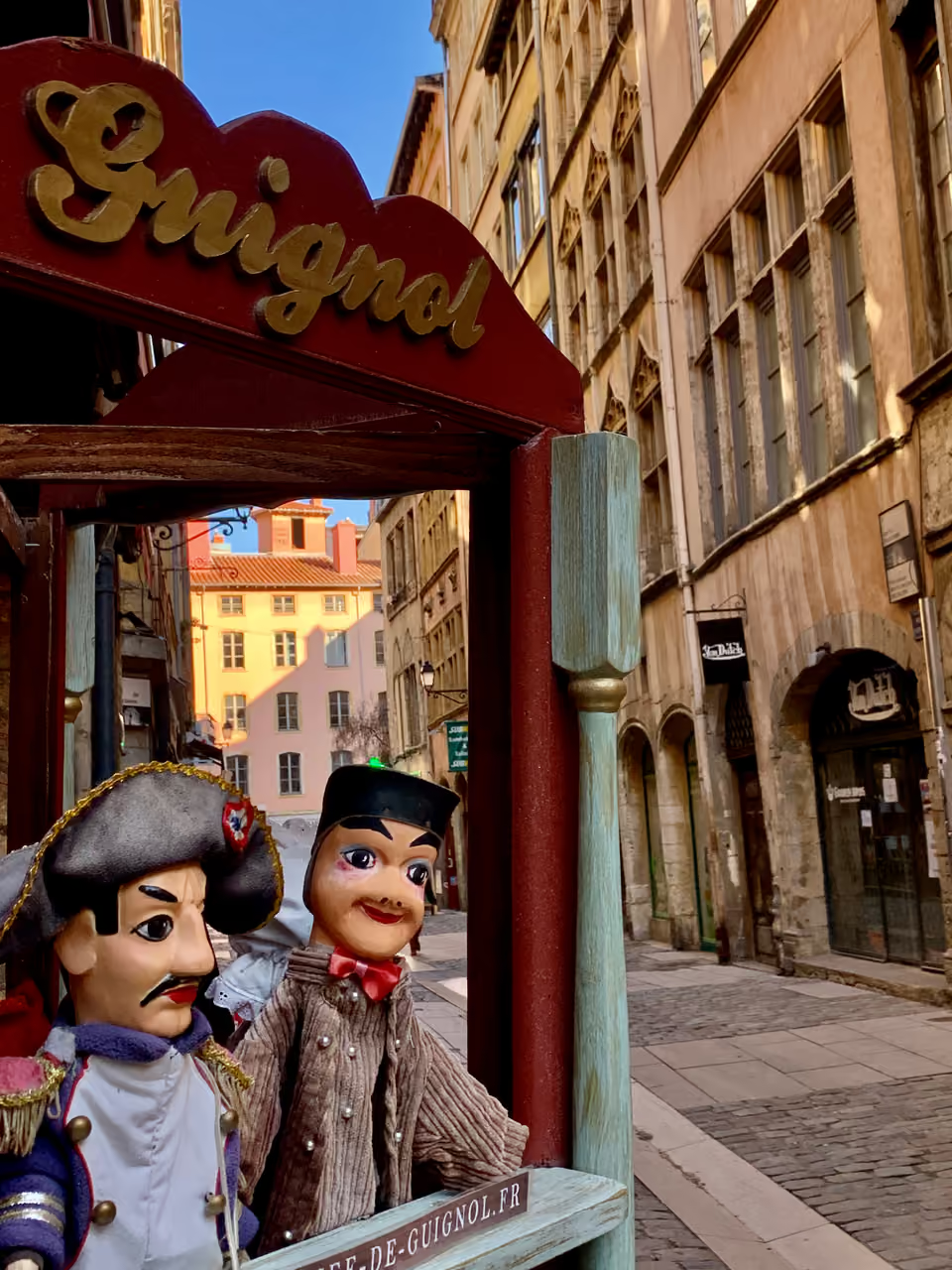
Renaissance Vieux Lyon Walk
Tall, pastel-coloured facades lean slightly over narrow cobblestone streets, blocking out the modern world. You press heavy iron buttons to unlock wooden doors, revealing hidden courtyards with spiralling stone staircases. The smell of frying onions and roasted pork wafts out from the tiny kitchens of traditional bistros. Tourist crowds gather around the most famous monuments, but taking a sudden turn down a dark passageway instantly restores the quiet. You emerge back onto the street several blocks away, having passed entirely beneath the residential blocks.
view walking route
See all attractions in Lyon
Including Basilica of Notre-Dame de Fourvière, Confluences Museum, Gadagne Museums, and more