Museum of Fine Arts of Lyon
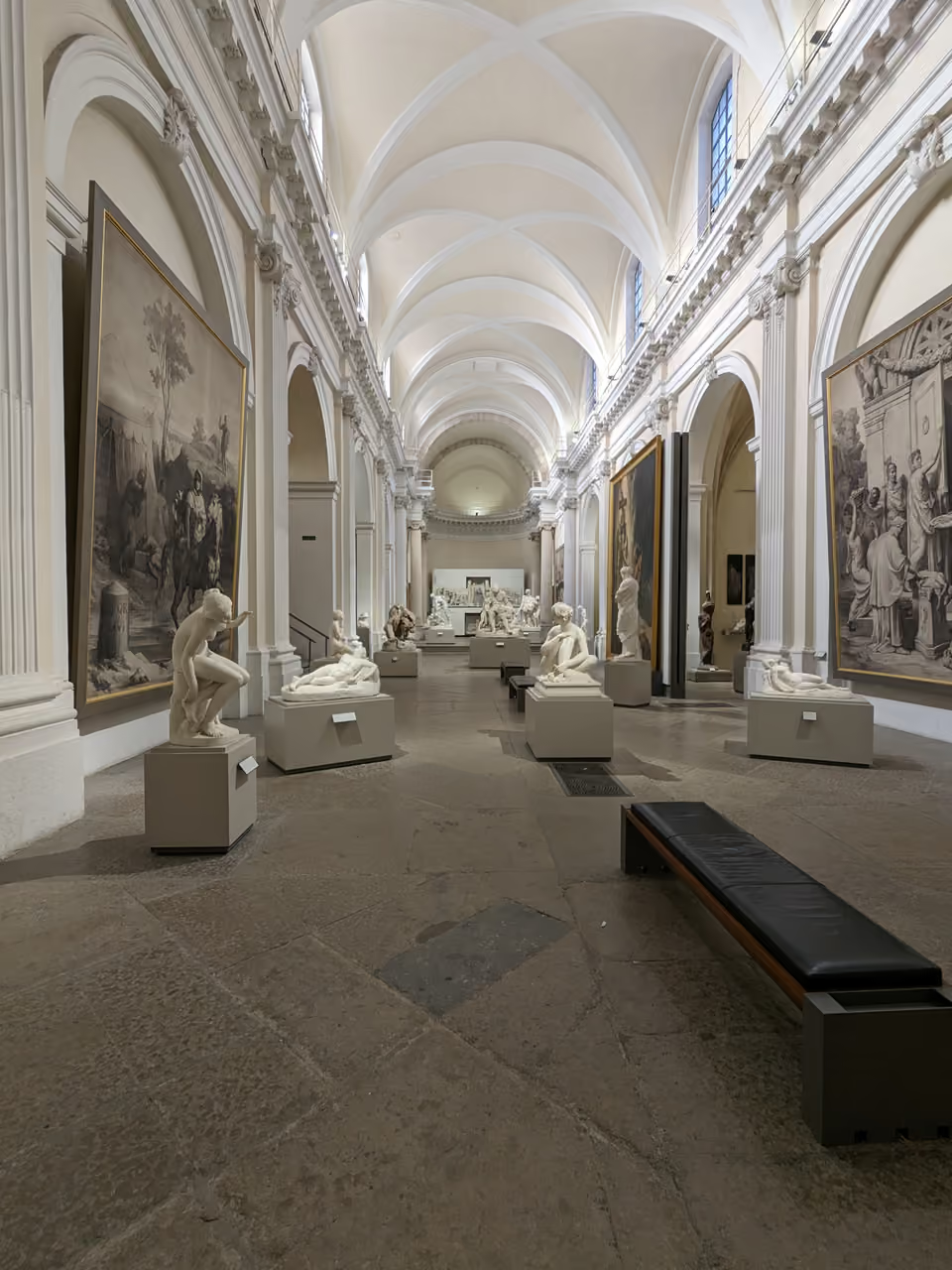
Step into the grand Palais Saint-Pierre, a former 17th-century abbey that now houses the magnificent Museum of Fine Arts of Lyon. This encyclopedic museum offers an extraordinary journey through art and history, from ancient Egyptian artifacts and classical Greek sculptures to Renaissance masterpieces and pioneering Impressionist works. Wander through its serene cloister garden, a peaceful oasis adorned with sculptures, before losing yourself in galleries showcasing paintings by Rembrandt, Monet, Rodin, and Picasso. It is a place where every corner reveals a new discovery, inviting you to connect with centuries of human creativity and Lyon's profound cultural heritage. A visit here is not just about seeing art; it is about experiencing the soul of a city that has always championed beauty and innovation.
Videos
History of Museum of Fine Arts of Lyon
The story of Lyon's Museum of Fine Arts begins not in an artist's studio, but in the turmoil of the French Revolution. As the ancien régime crumbled, revolutionary ideals sought to democratise art, seizing works from churches and noble estates to be displayed for public education. In Lyon, this initiative gained a unique impetus: beyond mere public enlightenment, there was a pragmatic goal to revitalise the city's famed silk industry. Designers, they believed, needed access to masterpieces to hone their craft, ensuring the city's reputation for exquisite textiles endured. This vision culminated in the 1801 Chaptal Decree, which officially established the museum in the magnificent Palais Saint-Pierre, a former 17th-century Benedictine abbey, granting it the largest state endowment of art among all new provincial museums. Early curators like François Artaud steered the museum beyond its industrial origins, transforming it into a true cultural institution. He founded its antiquity collection, gathering Roman relics from ancient Lugdunum, the Roman capital of Gaul, and notably acquired the iconic 'Coré de Lyon', an Athenian sculpture. The 19th century saw significant growth, with major acquisitions and architectural enhancements, including the grand staircase graced by Pierre Puvis de Chavannes' mural, 'Le Bois sacré cher aux Arts et aux Muses'. The museum's 'golden age' under figures like Édouard Aynard saw an ambitious acquisition policy, unusually favouring purchases over donations, which allowed it to strategically fill gaps in its encyclopedic collections. This bold approach made Lyon an early champion of modern art, acquiring Renoir's 'Guitariste' in 1901, a groundbreaking move as the first Impressionist painting bought by a French museum outside Paris, followed by Gauguin's 'Nave Nave Mahana' in 1913. The 20th century brought its own challenges and transformations. Post-World War II, under René Jullian, the museum worked to integrate avant-garde art, making history by acquiring Jean Dubuffet's 'Paysage blond', the first of his works to enter a French museum. A significant restructuring in 1969 saw the Gallo-Roman collections move to Fourvière, while the Egyptian antiquities were dramatically expanded. The late 20th century witnessed a monumental renovation from 1989 to 1998, reclaiming spaces and modernising its infrastructure. This renaissance was crowned by the extraordinary bequest of actress Jacqueline Delubac, adding an unparalleled collection of Impressionist and modern masters, including Manet, Degas, Picasso, and Francis Bacon, further cementing its international standing. Today, the museum continues its legacy of innovation, evidenced by its pioneering public subscription campaigns for art acquisition, securing masterpieces like Ingres' 'L'Arétin et l'envoyé de Charles Quint'. This continued commitment to its collections and public engagement ensures the Museum of Fine Arts remains a dynamic and essential cultural beacon in Lyon.
15 events spanning 225 years
Fun Facts
- • A unique aspect of the museum's collection development is its historical emphasis on acquiring art through purchases rather than relying primarily on donations, which is a departure from how many other major French museums were formed.
- • In 2012, the museum pioneered France's first public subscription campaign for art acquisition, successfully raising funds to secure Jean-Auguste-Dominique Ingres' 'L'Arétin et l'envoyé de Charles Quint'.
- • Its collection includes 'The Stoning of Saint Stephen' (1625), believed to be the earliest known painting by Rembrandt, which the museum acquired in 1844, showcasing the artist's prodigious talent from a young age.
- • The Musée des Beaux-Arts occupies the historic Palais Saint-Pierre, originally a 17th-century Benedictine abbey, whose grand Baroque refectory surprisingly survived the French Revolution's widespread interior demolitions despite its religious themes.
- • The Musée des Beaux-Arts of Lyon was a trailblazer in France, becoming the first museum outside of Paris to acquire Impressionist works, notably purchasing Renoir's 'Guitariste' in 1901.
- • The actress Jacqueline Delubac, wife of playwright Sacha Guitry, made an immense bequest to the museum in 1997, enriching its modern art collection with significant works by Manet, Degas, Picasso, and Francis Bacon.
- • The impressive 'Porte à l'oiseleur' (Birdcatcher's Door), an intricate wrought-iron masterpiece by Lyonnais artisan Charles Piguet from 1919, once served as an entrance to the museum's modern decorative arts section, embodying the Art Deco movement's elegance.
- • The museum holds one of France's most important collections of Far Eastern ceramics, largely thanks to the acquisition of painter Raphaël Collin's exquisite collection in 1917, which captivated audiences with its Japanese stoneware.
- • The museum houses the renowned 'Coré de Lyon', a 6th-century BC marble statue from the Acropolis of Athens, making it a star piece in its extensive antiquity collection.
- • The museum's coin cabinet, known as the Médaillier, is the second largest in France after the Bibliothèque Nationale in Paris, boasting nearly 50,000 numismatic objects, including rare ancient coins and medals.
- • The museum's creation in the early 19th century was partly spurred by Lyon's silk industry, as the city wanted to provide local designers with 'chefs-d'œuvre de l'art' (masterpieces of art) to study and draw inspiration from for new silk patterns.
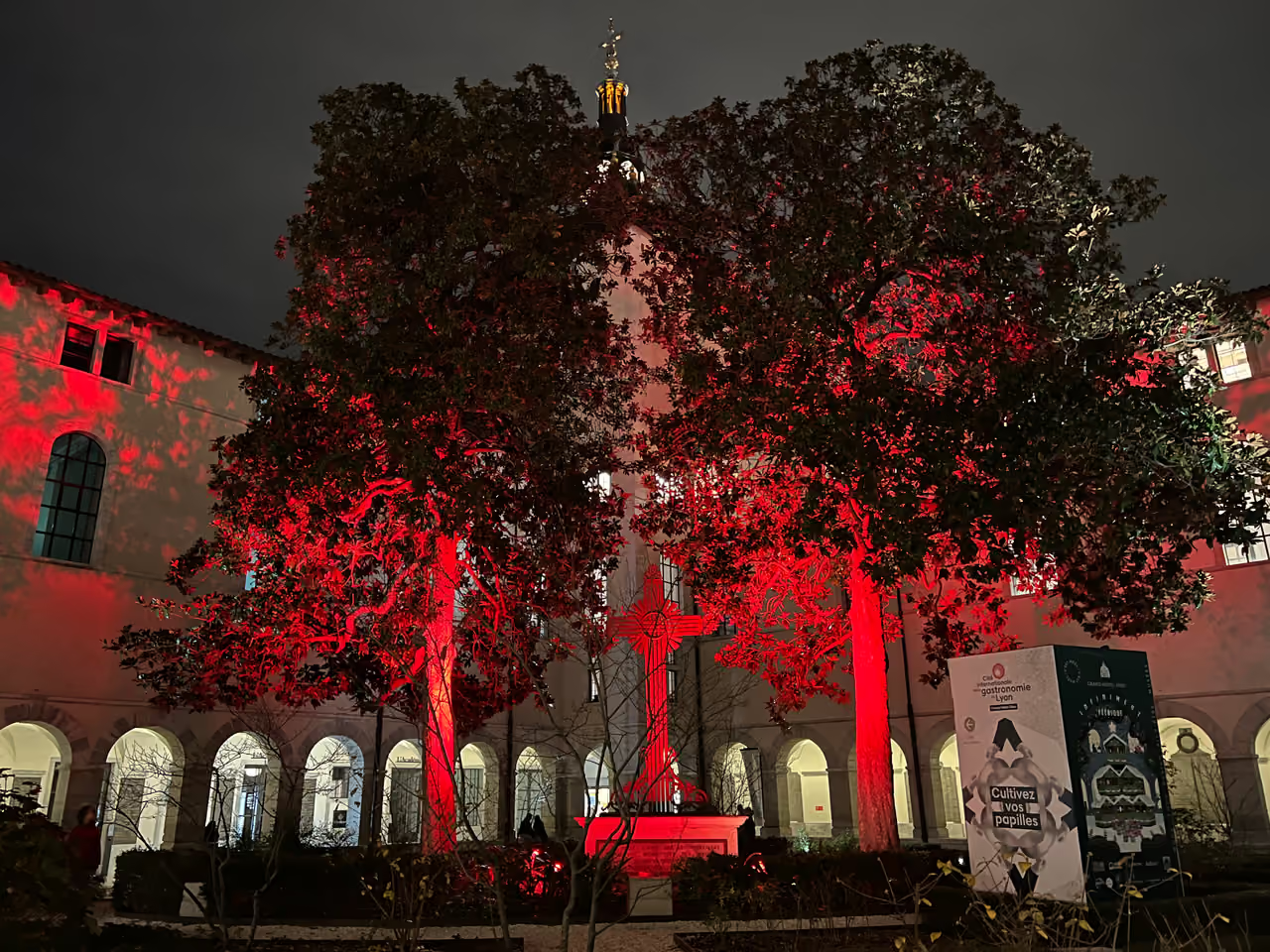
- • The tranquil cloister garden, situated in the heart of the city, serves as an open-air gallery, featuring sculptures by artists like Auguste Rodin and providing a serene escape from urban life.
- • When established by the Chaptal Decree in 1801, the Lyon museum received the most substantial state endowment of artworks among all newly created provincial museums in France.
Museum of Fine Arts of Lyon FAQ
While we strive to keep this information accurate and up to date, we recommend verifying any details independently before making decisions based on them.
Museum of Fine Arts of Lyon Map & Neighborhood Explorer
This interactive map is centered on Museum of Fine Arts of Lyon. Zoom in and move the map around to automatically discover Wikipedia photos and summaries of other nearby sights, monuments, and historical points of interest and stories in real-time!
Places near Museum of Fine Arts of Lyon
Make the most of your trip. Check out these top-rated spots located nearby.
 59m
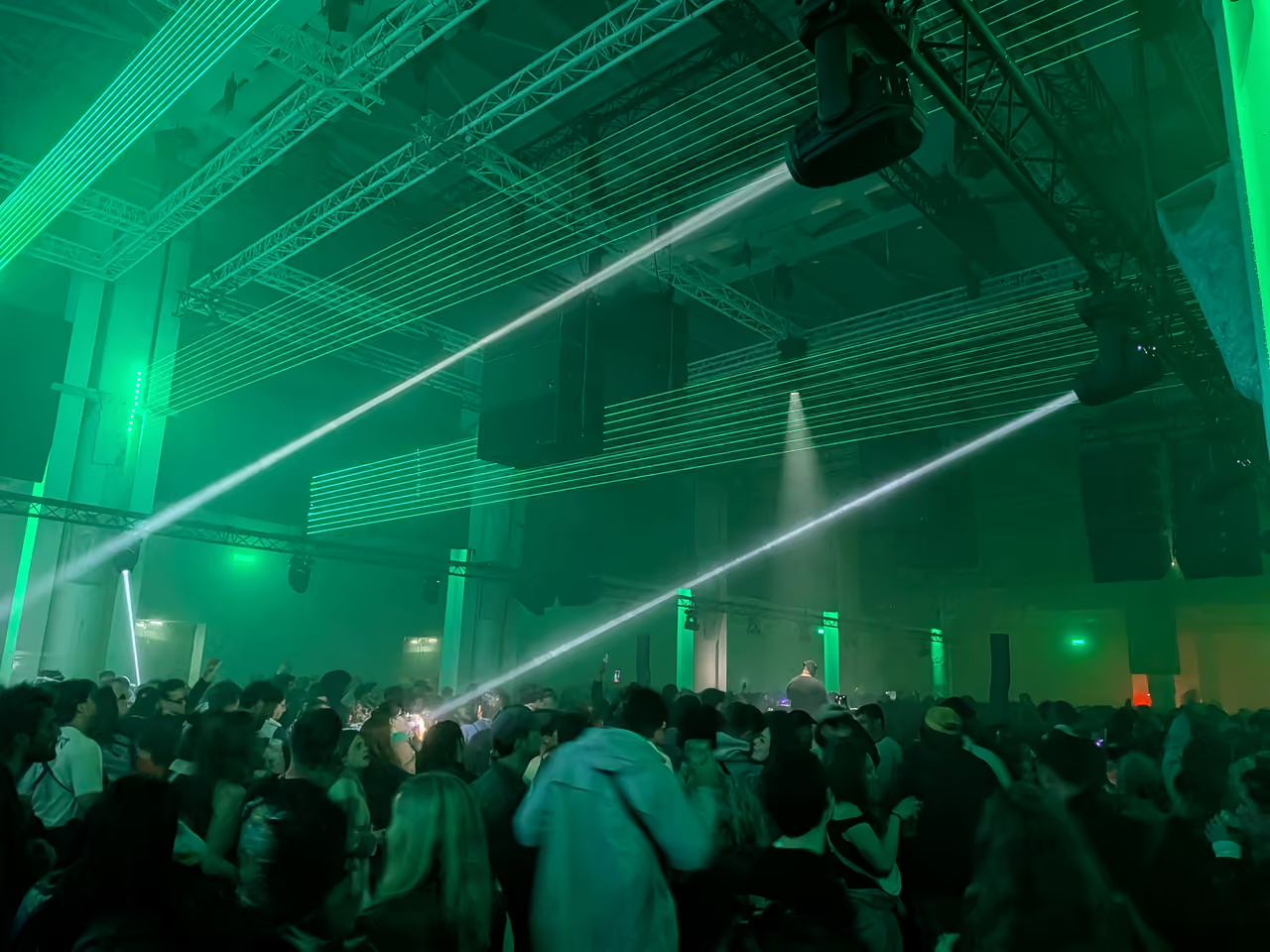
59mSound Nights Festival
Electronic music pulses through abandoned industrial sites, former factories, and modern museums across the urban sprawl. This multi-day event focuses heavily on independent and cutting-edge electronic acts rather than mainstream DJs. Daytime events feature debates, food pop-ups, and workshops, while the nighttime programme shifts into heavy, immersive raves. The programming deliberately uses unconventional architectural spaces to create sharp contrasts between the music and the environment. It pulls a dedicated crowd of music enthusiasts from across the continent.
festival view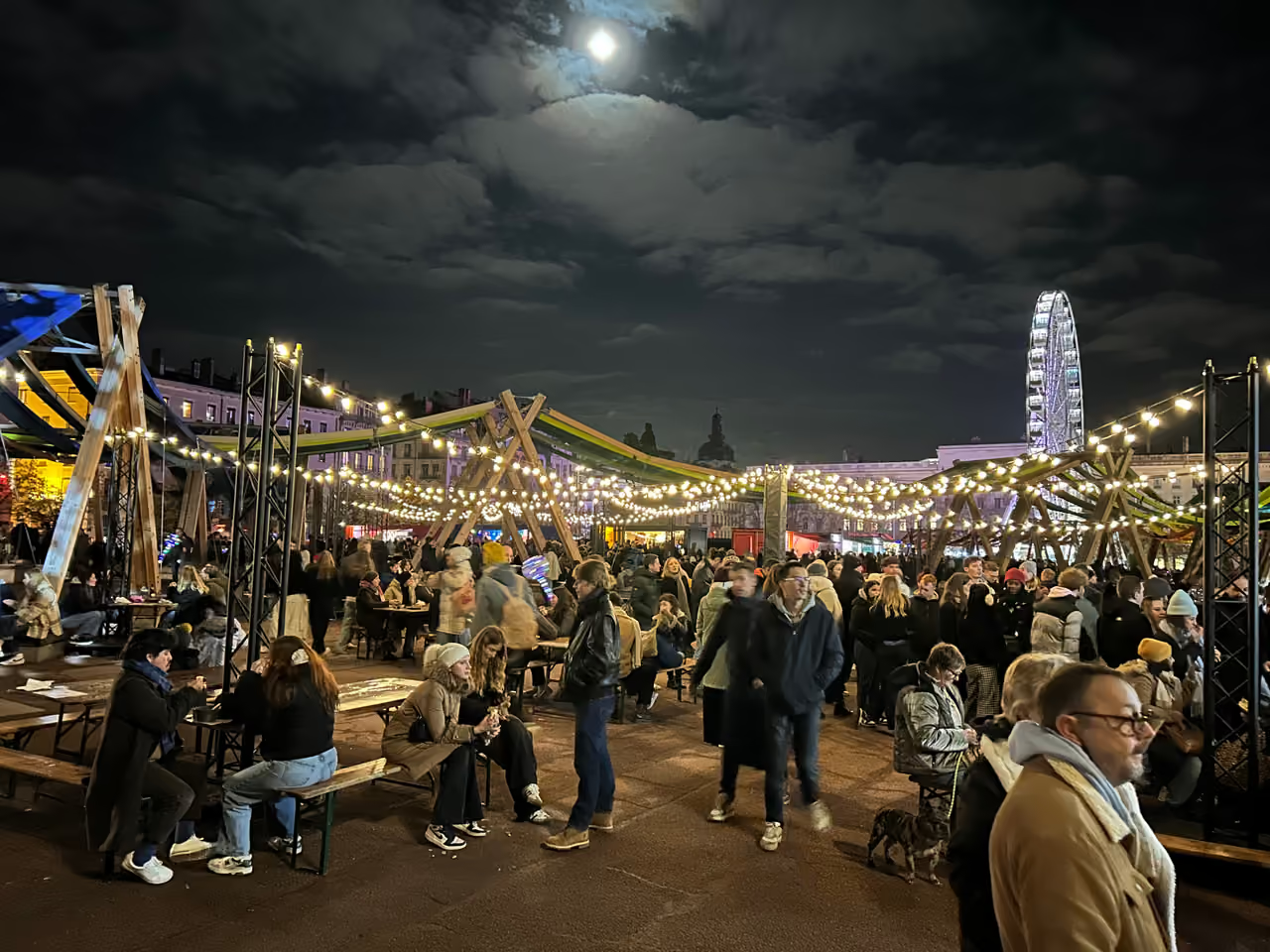 73m
73mFestival of Lights
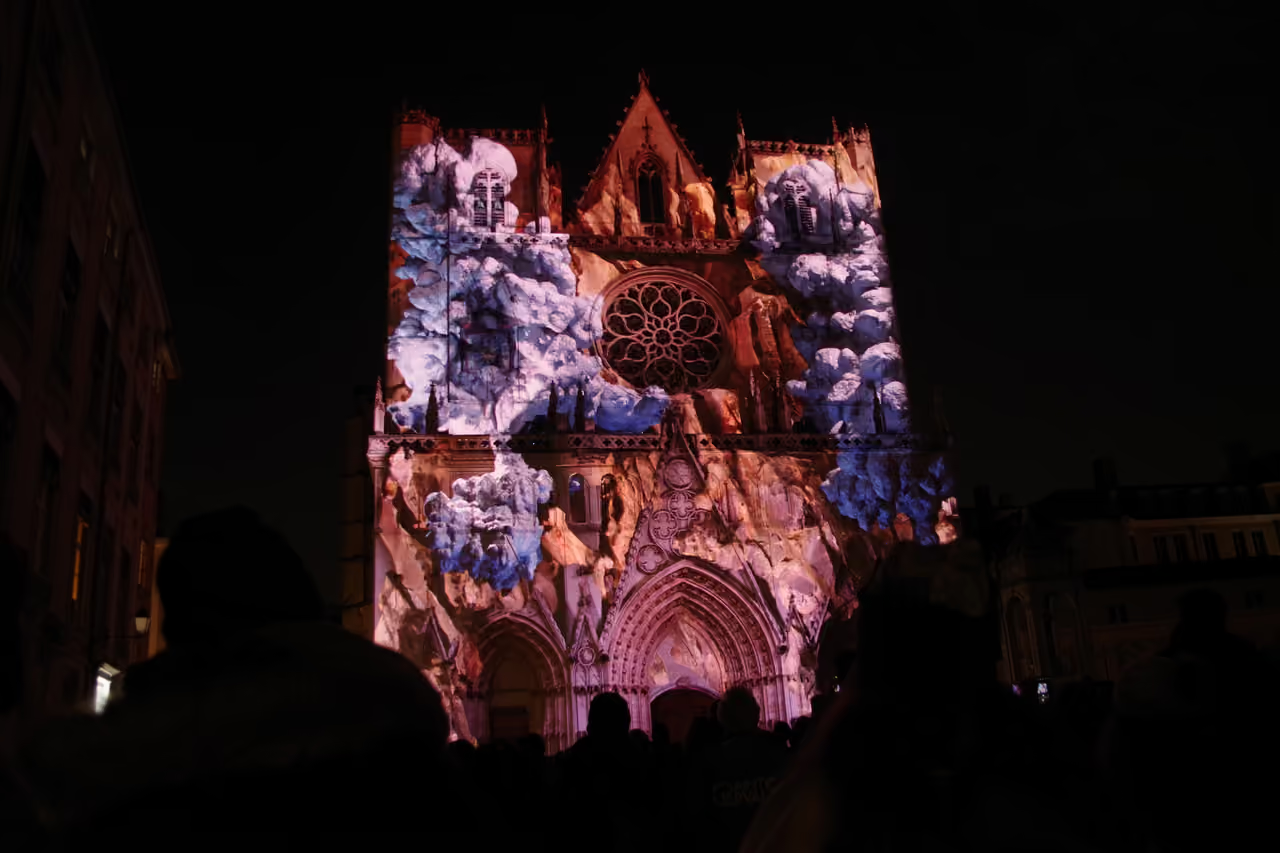
Millions of people descend upon the streets over four nights to view massive, professionally designed light installations projected onto historic buildings. What started as a local religious tradition involving candles in windows has evolved into an international spectacle of laser mapping and sound design. Crowds pack the central peninsula tightly, making movement slow but atmospheric. The air smells of mulled wine and roasted chestnuts sold from makeshift street stalls. The entire urban landscape transforms completely once the sun drops.
festival view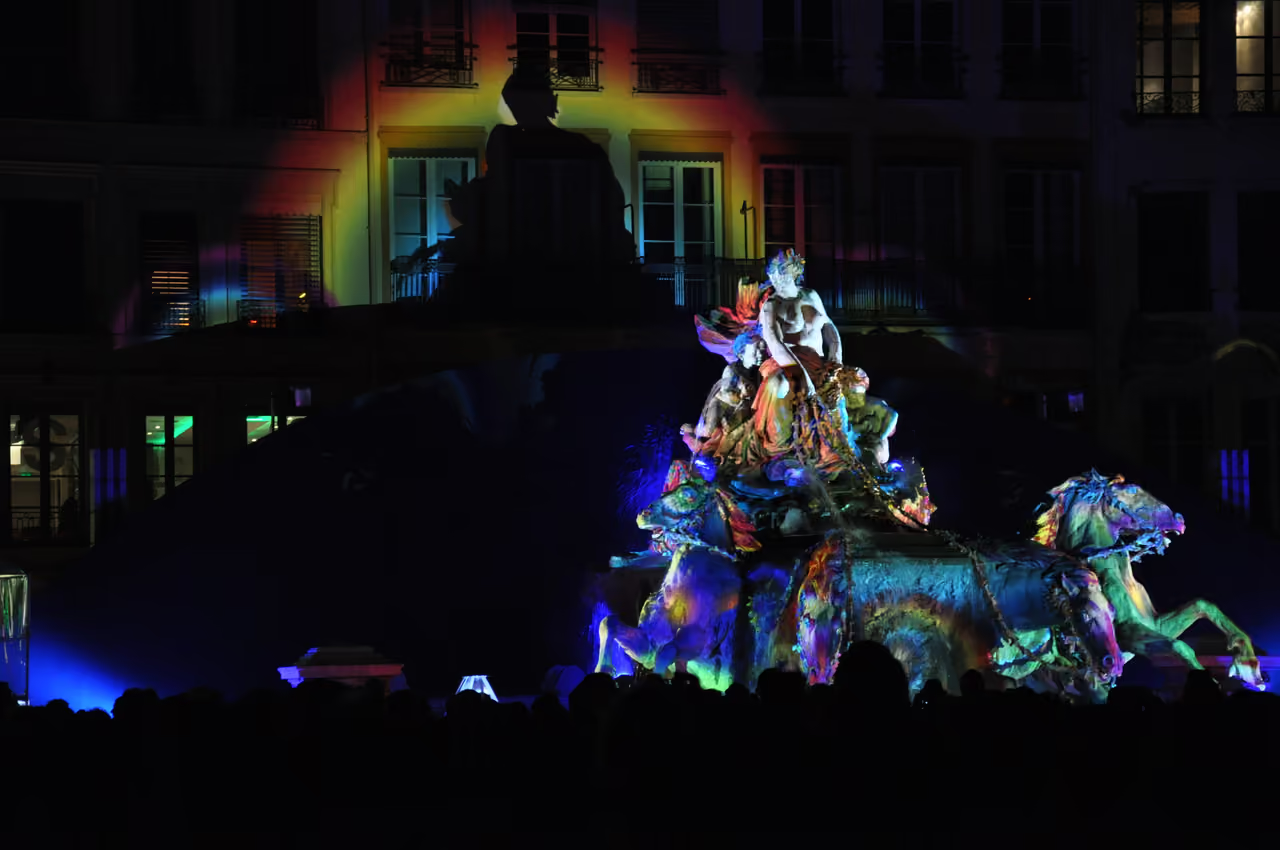 99m
99mBartholdi Fountain
Four wild, rearing horses plunge forward out of a massive lead basin, pulling a chariot driven by a fierce female figure representing France. Sculpted by Frédéric Auguste Bartholdi—the exact same artist who created the Statue of Liberty—this monumental 21-ton masterpiece was originally intended for Bordeaux before Lyon purchased it. Water blasts aggressively from the horses' flared nostrils, creating a misty, dynamic atmosphere that fills the centre of Place des Terreaux. It is a stunning feat of nineteenth-century engineering and lead sculpting. The fountain becomes especially dramatic at night when under-lighting casts deep, theatrical shadows across the horses' muscular frames.
highlight view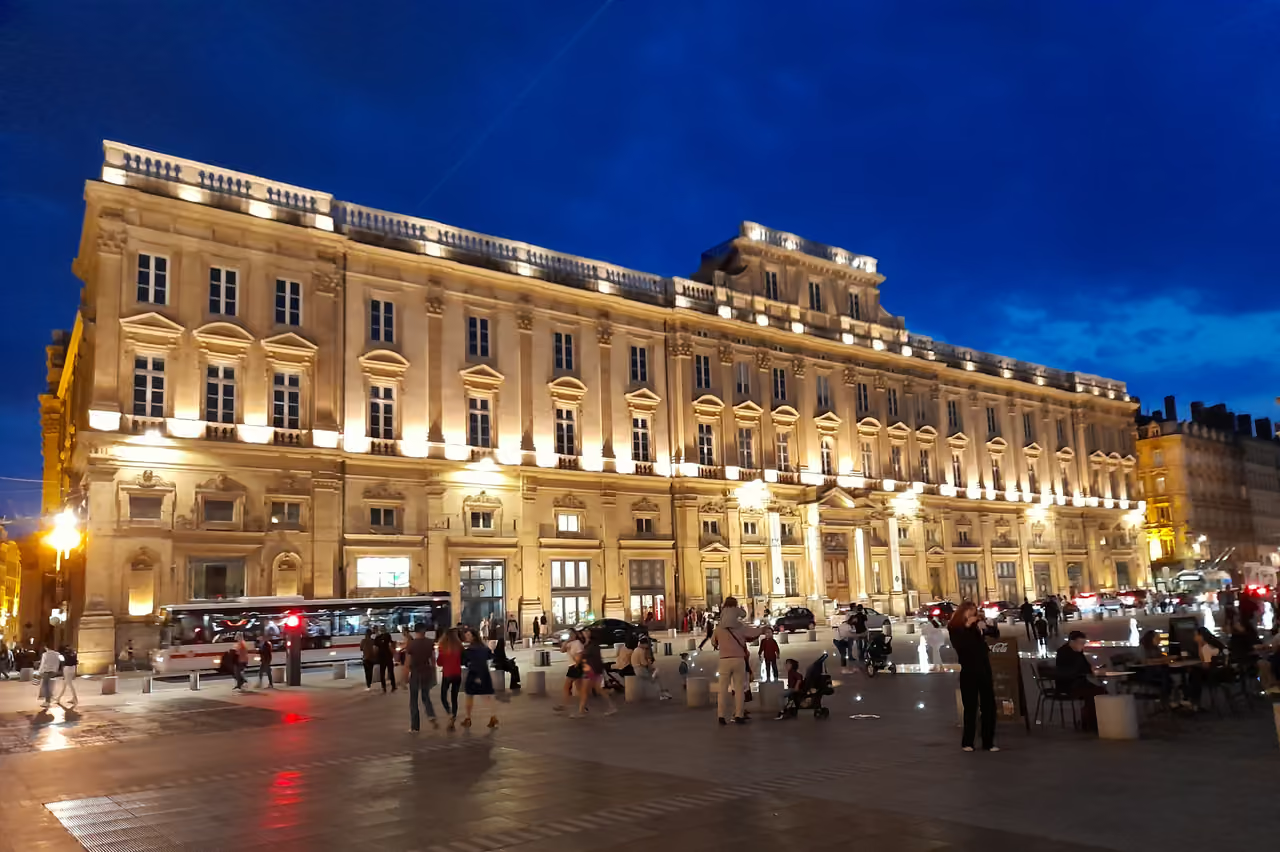 105m
105mTerreaux Square
A vast pedestrian square sits completely enclosed by monumental architecture, including the ornate City Hall and the Fine Arts Museum. The centrepiece is a lead fountain sculpted by Bartholdi, featuring a woman driving a chariot pulled by wild, rearing horses. Water sprays violently from the horses' nostrils, creating a misty atmosphere on windy days. Small, grid-like fountains embedded in the ground periodically shoot water into the air, creating a dynamic surface. It serves as the grand, formal gathering point for the northern end of the central peninsula.
highlight view
Explore Similar Places in This Collection
Featured on This Itinerary
See all attractions in Lyon
Including Basilica of Notre-Dame de Fourvière, Confluences Museum, Gadagne Museums, and more