Mohamed Mahmoud Khalil Museum
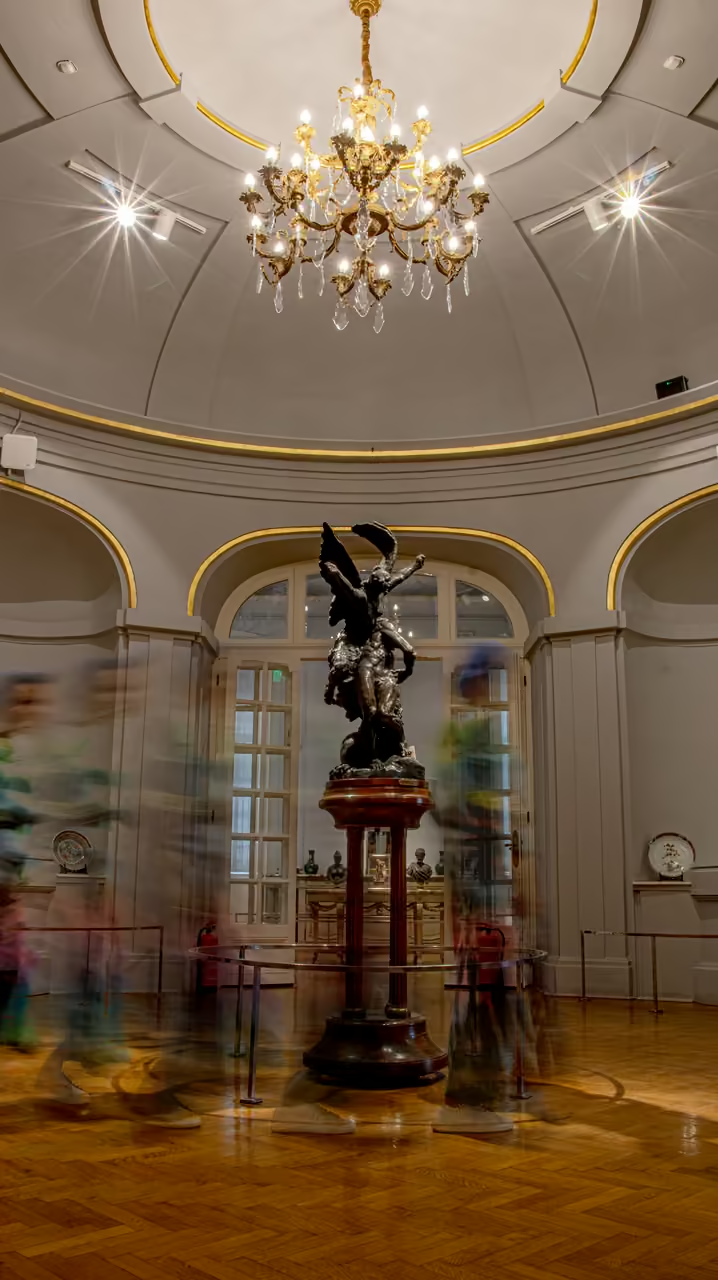
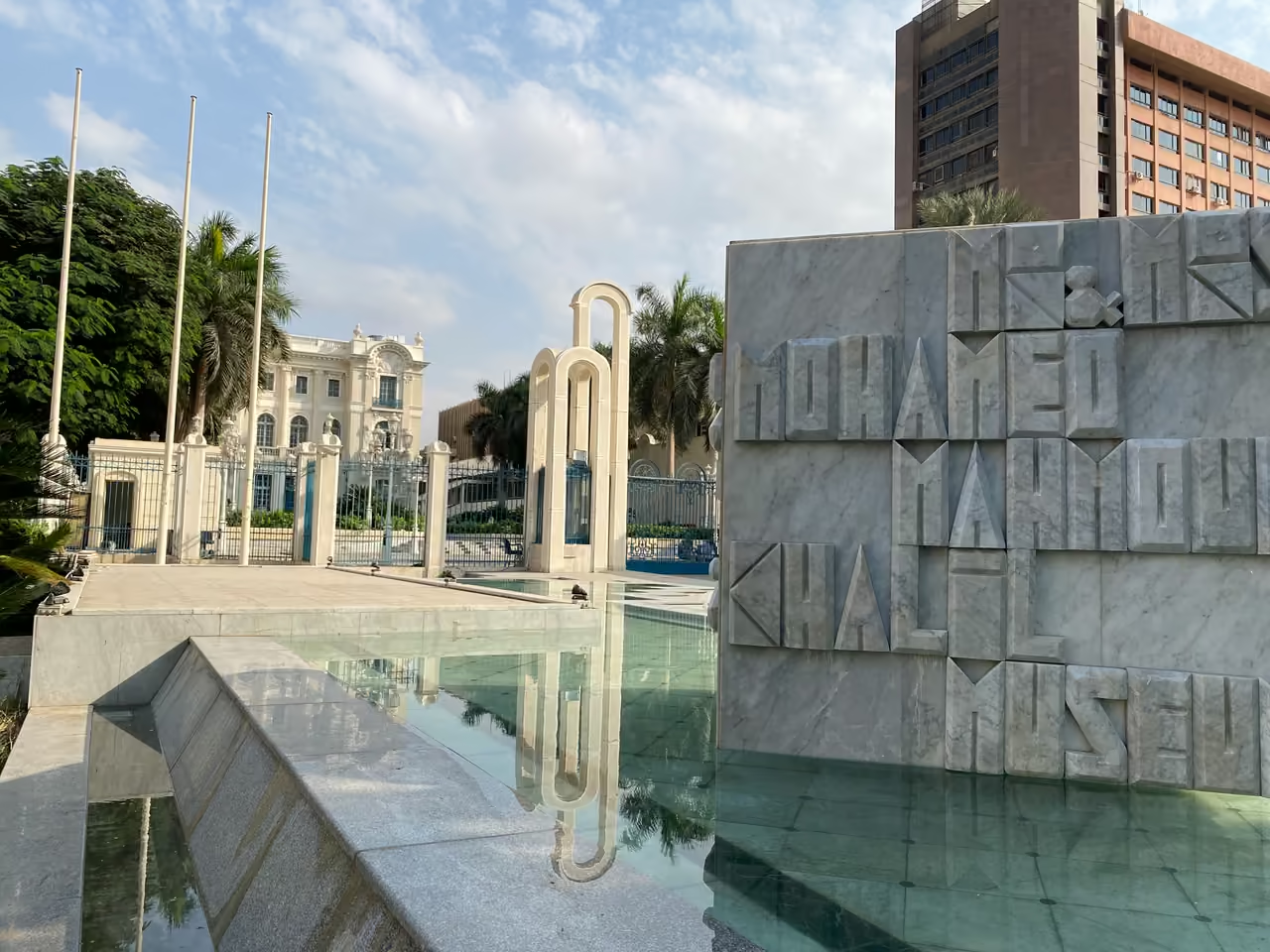
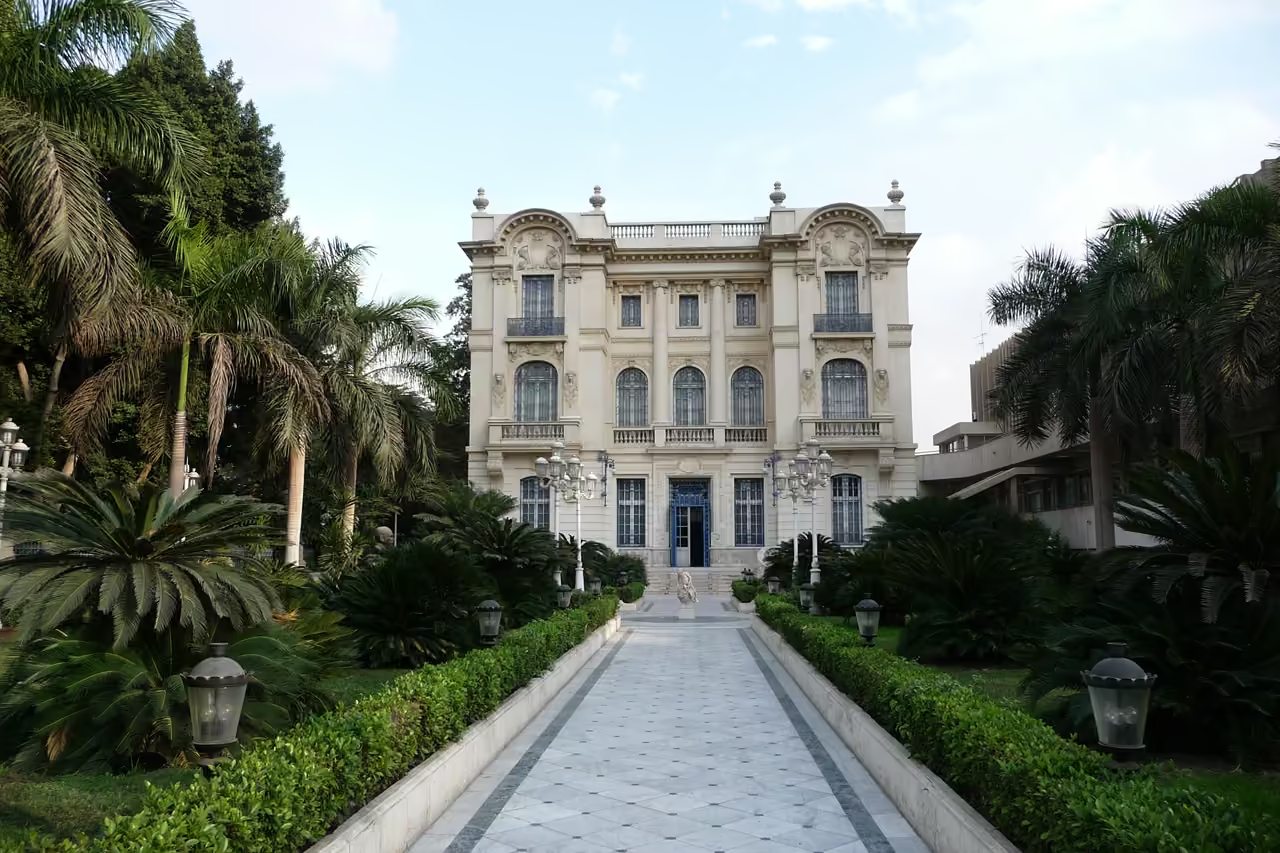
Step off Kafour Street beside Galaa Bridge, and the roar of Giza traffic fades behind an iron gate. Inside lies an ornate early 1900s palace packed with French Impressionist masterpieces, gathered over decades by an Egyptian senator and his Parisian wife. It feels nothing like a dusty state gallery. Art Nouveau stained glass softens Cairo's bright glare across marble staircases and polished parquet floors, illuminating parlours where Auguste Rodin bronzes sit beside canvases by Claude Monet, Auguste Renoir, Paul Gauguin, and Alfred Sisley. Expect thorough security screening at the entrance desk, where staff hold bags and cameras before letting you wander three storeys of calm, uncrowded salons. Before heading back out to the riverside traffic, pause beneath the garden palms beside the entrance steps where the Nile rolls past Gezira Island.
Videos
History of Mohamed Mahmoud Khalil Museum
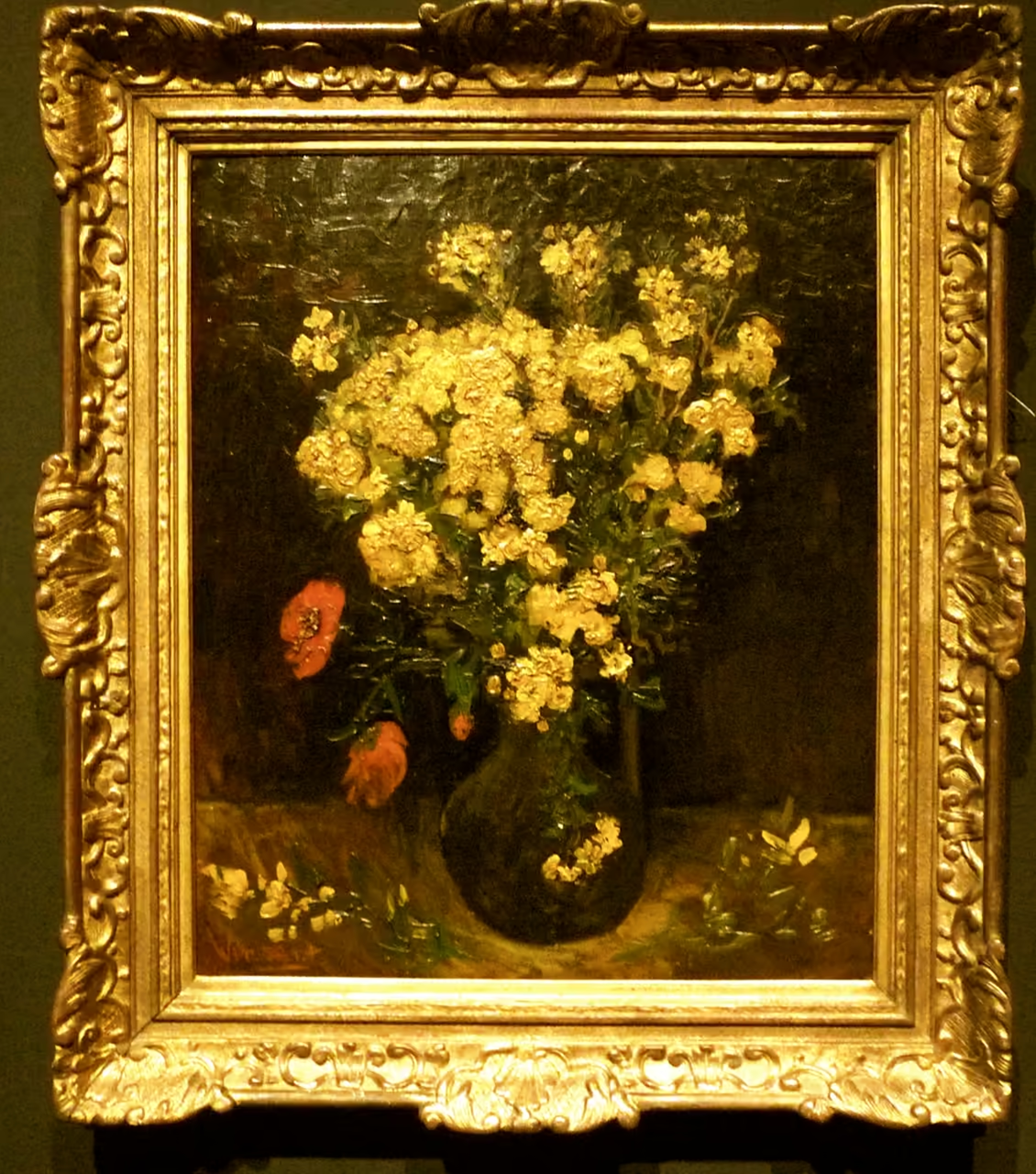
Early in the twentieth century, a young Egyptian law student at the Sorbonne in Paris fell under the spell of two passions that reshaped Cairo's cultural life. Mohamed Mahmoud Khalil married French theatre actress Émilienne Luce, and together they scoured Parisian galleries for modern paintings. Returning to Cairo, Khalil rose through political office as Minister of Agriculture and President of the Senate, buying a riverside palace in Giza during 1918 to house their growing array of Romantic, Barbizon, and Impressionist art. Khalil refused to hoard those paintings behind closed residential doors. In 1924, he helped establish the Cairo Society of Friends of Fine Arts, organising public exhibitions that connected local painters with international patrons. Thirteen years later, he served as commissioner for the Egyptian pavilion at the 1937 International Exposition in Paris, placing Egypt's emerging visual artists directly before European critics. When Khalil died in Paris on the final day of 1953, his will bequeathed the Giza mansion and every artwork inside it to the Egyptian nation upon his wife's death. Émilienne passed away in 1960, and on 23 July 1962 the residence officially opened to the public as a national museum. Peace in the galleries lasted less than nine years. In 1971, President Anwar Sadat requisitioned the palace for executive presidential offices, forcing curators to pack the entire collection across the river to Prince Amr Ibrahim's palace in Zamalek. That temporary exile proved disastrous in 1978, when burglars slipped into the Zamalek rooms and stole Vincent van Gogh's 1887 still life Poppy Flowers. Ten years passed before Egyptian investigators finally tracked the missing oil down in Kuwait and brought it home. Back in Giza, the original residence stayed closed to art lovers until 1993, when the government returned the building to cultural authorities and launched repairs ahead of a full reopening in 1995. Even returning home did not guarantee safety. In August 2010, an intruder sliced Poppy Flowers straight out of its frame during daytime hours, triggering international headlines, criminal trials, and the painting's second disappearance, which remains unsolved today. Shaken by the breach, the Ministry of Culture shut the palace indefinitely to confront decades of structural wear and glaring security flaws. For more than ten years, engineers and conservators overhauled climate controls, reinforced doors, and restored faded interiors room by room. When the museum finally unlocked its gates again in April 2021, the restored Giza parlours reopened behind upgraded security grids and climate controls, housing over three hundred surviving works while the search for Van Gogh's flower canvas stayed open.
13 events spanning 103 years
Fun Facts
10- 01
Alongside European collecting, Khalil launched Cairo's annual Salon du Caire and championed early modern Egyptian pioneers including sculptor Mahmoud Mokhtar and painter Mahmoud Said, whose creative legacies sit directly within the museum's heritage.
- 02
During investigations into the August 2010 theft, prosecutors revealed that only seven of the museum's 43 security cameras functioned and painting alarms failed to sound, leading to criminal prosecution against Deputy Culture Minister Mohsen Shaalan and several Ministry of Culture officials.
- 03
France's prestigious Académie des Beaux-Arts elected Khalil as a corresponding member in 1948, granting a rare Parisian artistic honour to a statesman better known at home for overseeing Egyptian agriculture and Senate debates.
- 04
In addition to European canvases, the couple filled their drawing rooms with delicate French Sèvres porcelain, antique Chinese and Japanese vases, and bronze animal sculptures by Antoine-Louis Barye, turning the estate into a wide ranging decorative showcase.
- 05
Khalil acquired nearly the entire core of his French holdings before 1928, securing canvases by masters such as Eugène Delacroix, Gustave Courbet, and Edgar Degas decades before global auction markets placed such works out of reach for private collectors.
- 06
Mere hours after Poppy Flowers vanished in 2010, Egyptian Culture Minister Farouk Hosny told international journalists that police had arrested two Italian suspects attempting to board a flight at Cairo International Airport with the canvas, forcing an awkward government retraction later that evening once officials admitted the painting remained at large.
- 07
Museum plaques and Egyptian state records often honour Khalil's French wife under the name Emiline Lock, an unusual spelling quirk born when Arabic transcriptions of her original surname, Luce, were converted back into Latin letters.
- 08
One year before Van Gogh's canvas disappeared, thieves stole nine portraits of nineteenth century Egyptian military leader Ibrahim Pasha from the galleries, though all nine paintings turned up dumped outside ten days later in an unexplained abandonment.
- 09
Vincent van Gogh painted Poppy Flowers in 1887 on a canvas measuring just 65 by 54 centimetres, making it compact enough for an intruder to slice from its frame and slip past staff, prompting billionaire businessman Naguib Sawiris to post a one million Egyptian pound reward for tips leading to its return.
- 10
While the Giza palace underwent repairs in 1994, Paris's Musée d'Orsay borrowed treasures from the estate for a major exhibition called Les Oubliés du Caire, astonishing European curators with the depth of Impressionist holdings preserved in Egypt.
FULL PLACE DETAILS
Updated
FULL PLACE DETAILS
UpdatedOVERVIEW & STATS
- Established
- In 1962, making it 64 years old
Mohamed Mahmoud Khalil Museum Map & Neighborhood Explorer
This interactive map is centered on Mohamed Mahmoud Khalil Museum. Zoom in and move the map around to automatically discover Wikipedia photos and summaries of other nearby sights, monuments, and historical points of interest and stories in real-time!
Mohamed Mahmoud Khalil Museum FAQ
Yes. After remaining closed for over a decade following the 2010 art theft, the museum reopened in April 2021 with upgraded security and restored galleries. Like other state fine arts venues under Egypt's Ministry of Culture, it generally welcomes visitors Tuesday through Sunday and closes on Mondays and public holidays, so checking local opening hours just before setting out is worthwhile.
The palace sits at 1 Kafour Street in Giza's Dokki district, along the western bank of the Nile just south of Galaa Bridge and directly across the water from Gezira Island. Most travellers arrive by taxi or rideshare from central Cairo, though you can also walk from either Dokki or Opera Metro stations.
No, the painting remains missing. Cut from its frame in August 2010, Poppy Flowers had actually disappeared once before in 1978 from a temporary museum venue in Zamalek before surfacing in Kuwait ten years later, though its current whereabouts remain unknown.
Despite losing its Van Gogh, the palace houses more than three hundred European and Egyptian artworks across three storeys. Expect paintings by Claude Monet, Auguste Renoir, Paul Gauguin, Alfred Sisley, Edgar Degas, Gustave Courbet, and Eugène Delacroix, alongside Auguste Rodin bronzes, Asian ceramics, and works by modern Egyptian pioneers.
Strict entrance protocols remain in place following past burglaries. Visitors undergo thorough screening at the gate, where backpacks and camera gear must usually be deposited before entering the exhibition rooms, and photography inside the salons is tightly restricted.
Most sightseeing around Giza centres on Pharaonic antiquities, making this quiet Belle Époque mansion an unexpected breather from desert crowds. Stepping inside lets visitors view major nineteenth century European oils in original family parlours rather than cavernous modern halls, all within sight of the Nile.
A typical visit takes about 2 hours. We recommend planning your schedule accordingly to make the most of your time there.
The closest place to visit near Mohamed Mahmoud Khalil Museum is Coptic Christmas in Dokki and Imbaba, around 772 m away. Other things to do near Mohamed Mahmoud Khalil Museum include University Bridge Nile Overlook (799 m), Dokki Café Quarter (865 m) and Nahdet Misr Monument on Cairo University Square (880 m). All of these are within roughly 880 m of Mohamed Mahmoud Khalil Museum, close enough to walk.
It dates back to 1962, making it 64 years old.
While we strive to keep this information accurate and up to date, we recommend verifying any details independently before making decisions based on them.
Places near Mohamed Mahmoud Khalil Museum
Make the most of your trip. Check out these top-rated spots located nearby.
- 772m
Coptic Christmas in Dokki and Imbaba
Giza's Coptic parishes across Dokki, Agouza, and Imbaba ring with midnight hymns and frankincense on January 6 before Coptic Christmas morning. Following forty-three days of vegan fasting, households sit down late at night to steaming trays of fatteh layered with toasted flatbread, garlic vinegar broth, and roast beef. Local bakeries pile golden butter cookies onto display counters for neighbours celebrating across faiths.
festival view - 799m
University Bridge Nile Overlook
Crossing the wide river channel linking Giza Zoo with Roda Island, the raised pedestrian walkway on Al-Gamaa (University) Bridge frames white felucca sails gliding past lush riverbank figs. Look south toward agricultural Nile islands or turn east to spot Cairo's distant Citadel minarets rising through afternoon haze. Free, breezy, and accessible all day, it makes an effortless stop while moving through Dokki.
viewpoint view 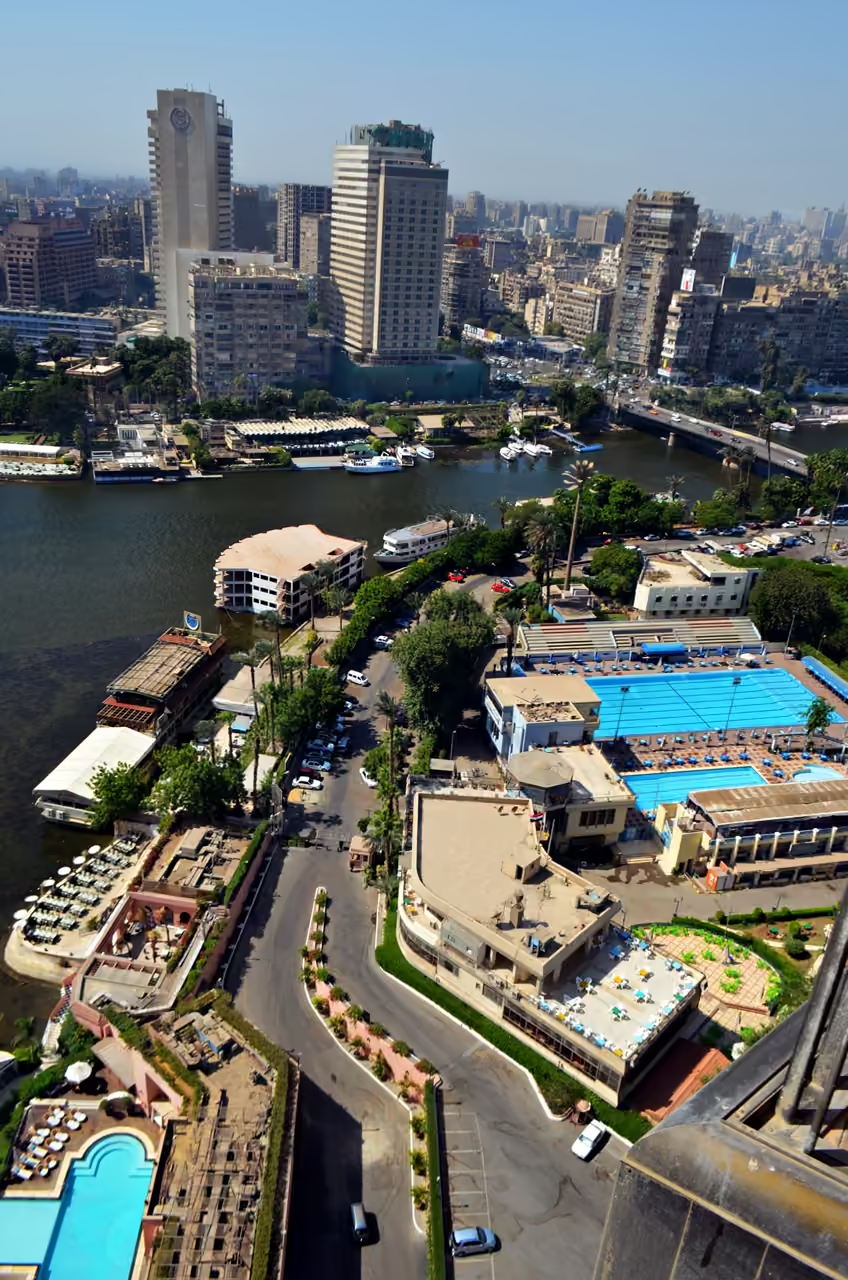 865m
Dokki Café Quarter
Tucked beneath spreading ficus trees around Mesaha Square and El-Tahrir Street behind Cairo University, Dokki exchanges Mohandiseen's neon flash for relaxed neighbourhood nightspots. Traditional sidewalk ahwa coffeehouses sit next to specialty espresso roasters, chess tables, and popular liver-and-sausage sandwich counters. Graduate students, writers, and local residents fill wooden and plastic chairs well after midnight.
nightlife view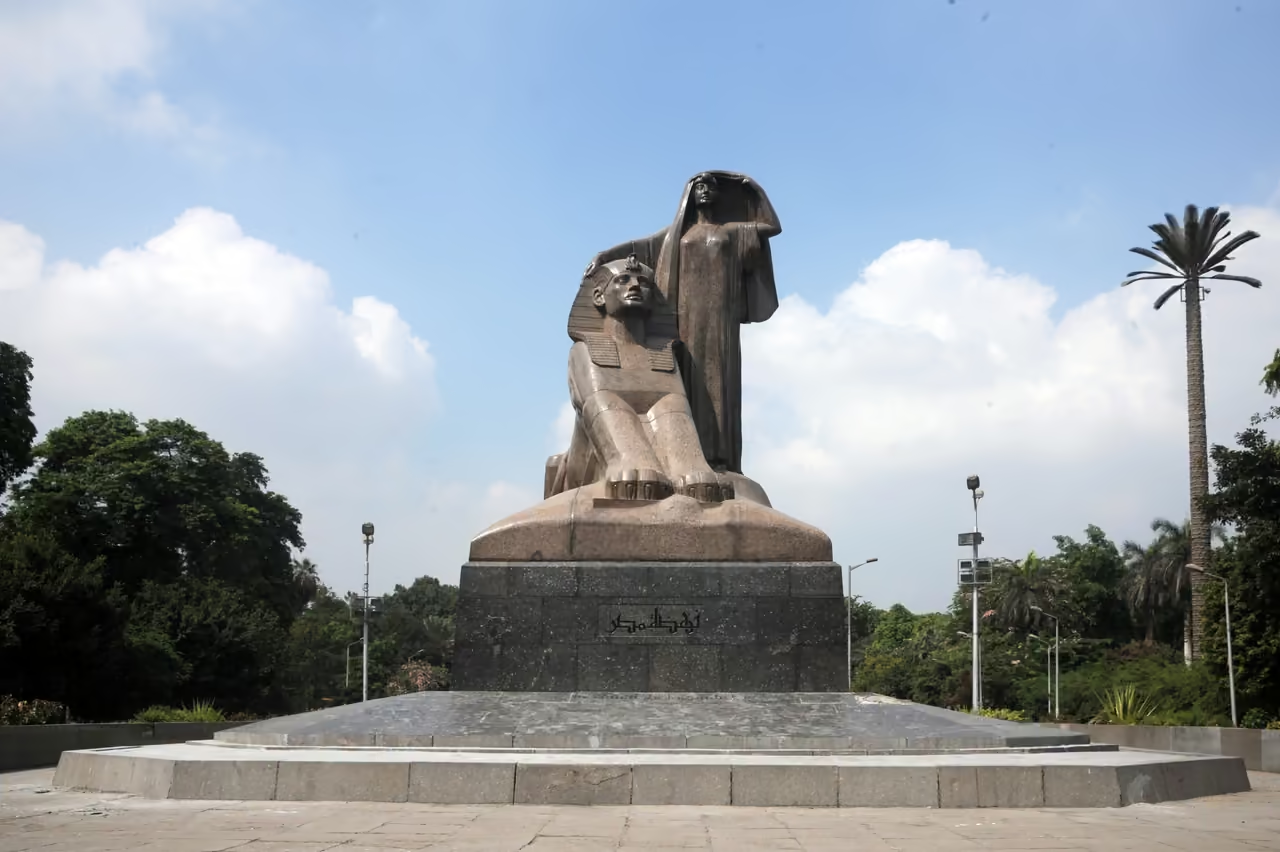 880m
Nahdet Misr Monument on Cairo University Square
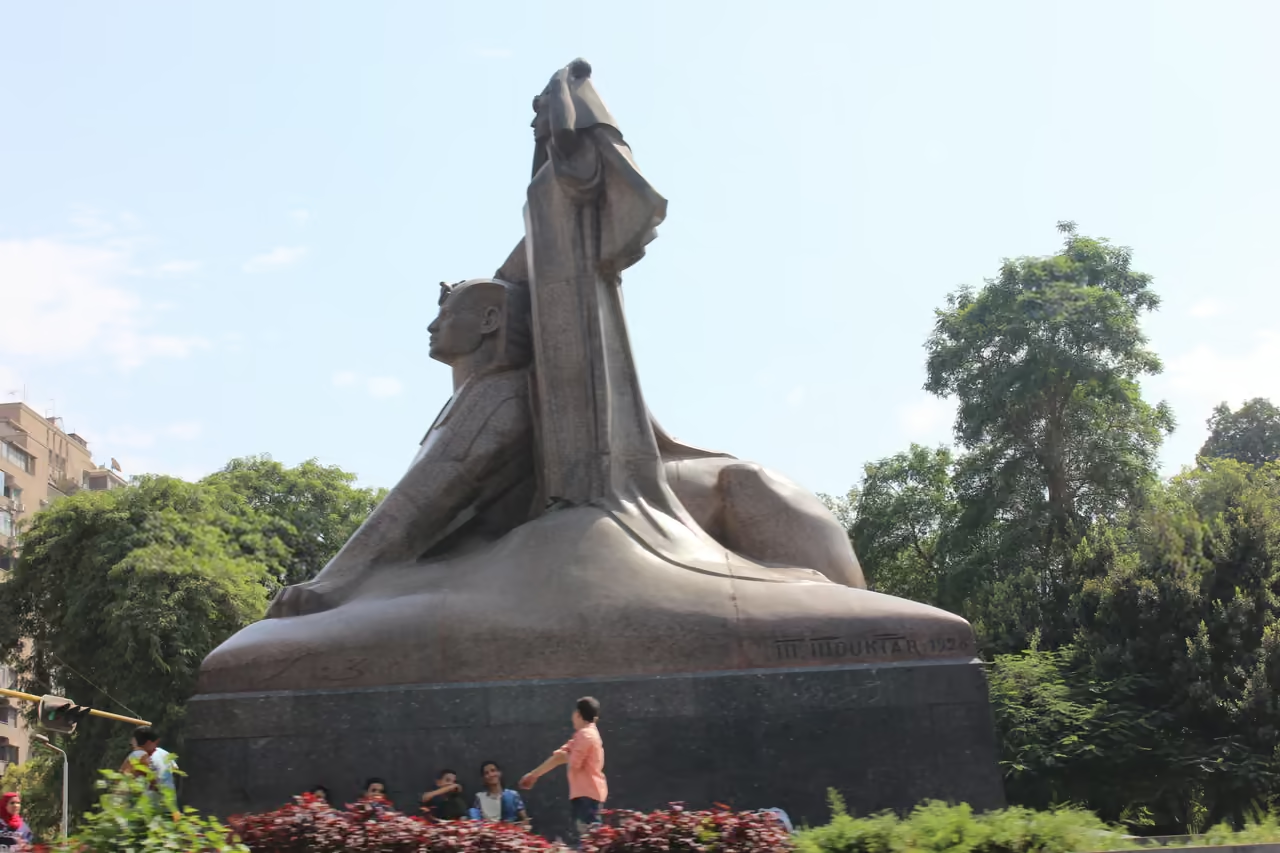
Carved from rosy Aswan granite by Egyptian sculptor Mahmoud Mokhtar in 1928, Egypt's Renaissance statue pairs a peasant woman lifting her veil beside a rising sphinx on the grassy approach to Cairo University Bridge. Shoot from the southwestern footpath just after sunrise so warm light illuminates the pink stone faces against towering royal palms.
photo spot view
Explore Similar Places in This Collection
Featured on These Itineraries and Routes
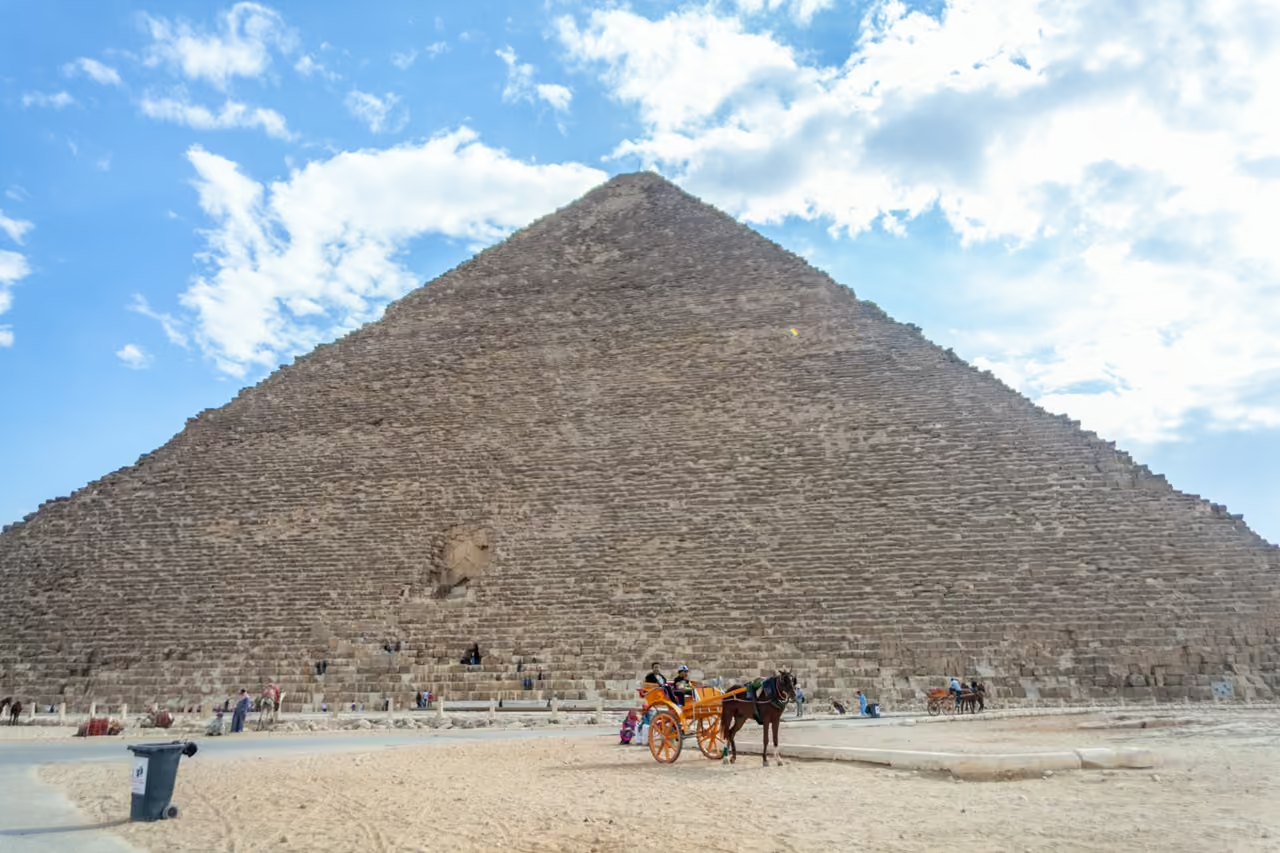
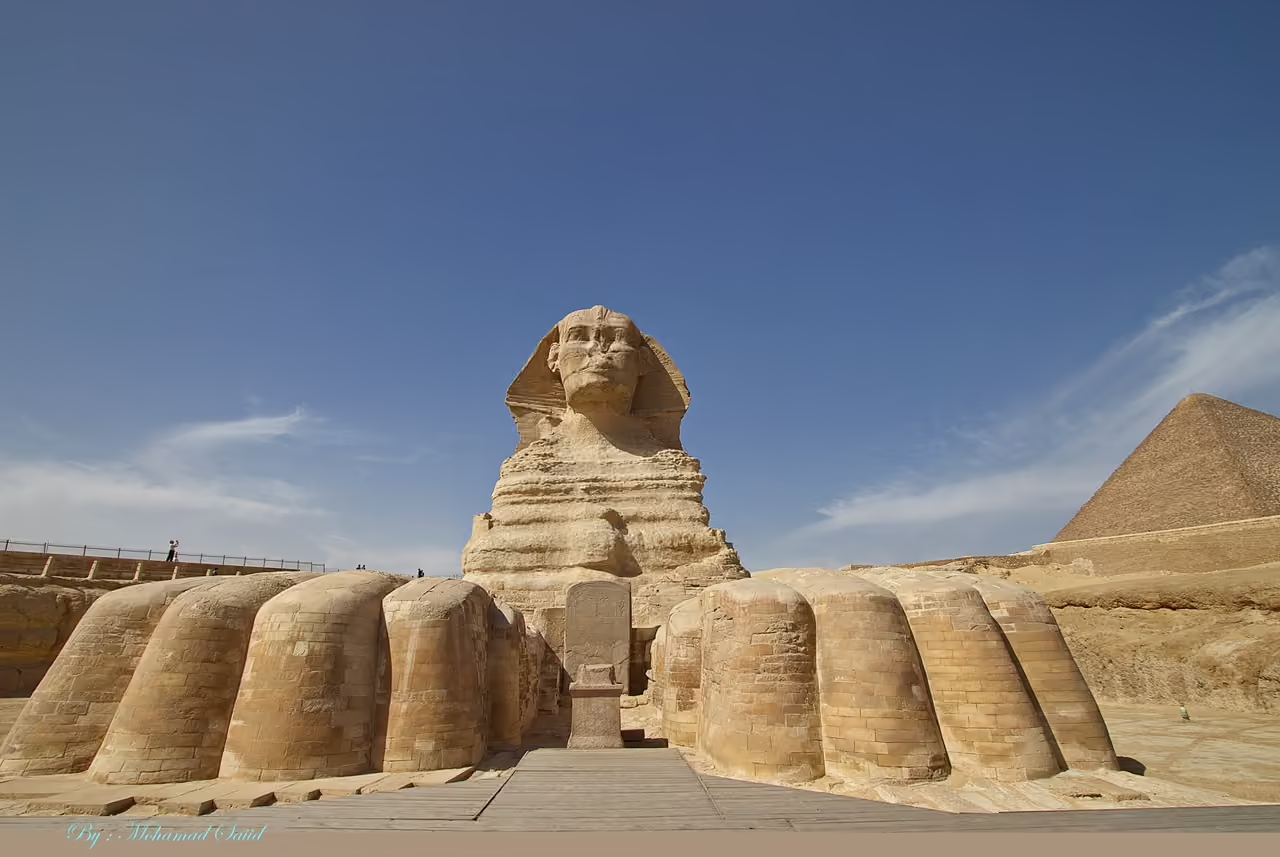
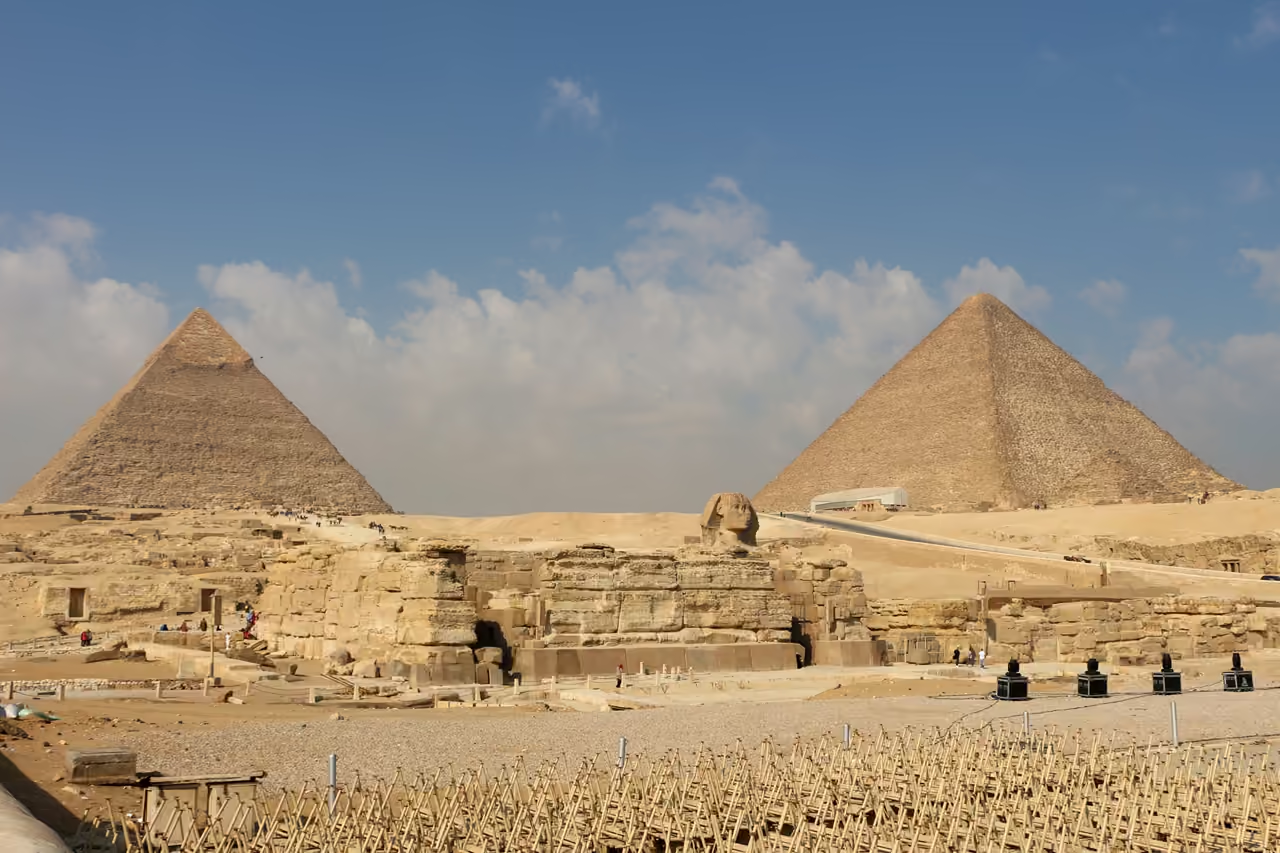
3 Days in Giza: Royal Stone, Artisans, and Nile Nights
Three balanced days let you uncover Giza well past its headline postcard. Dedicate your first morning to deep pyramid exploration and sunset frames, devote day two to the Grand Egyptian Museum, Sahara horseback trails, and Harrania tapestry studios, and spend day three savouring Dokki gardens, Impressionist art palaces, car-free Dahab Island farms, and Agouza riverfront nights.
view itinerary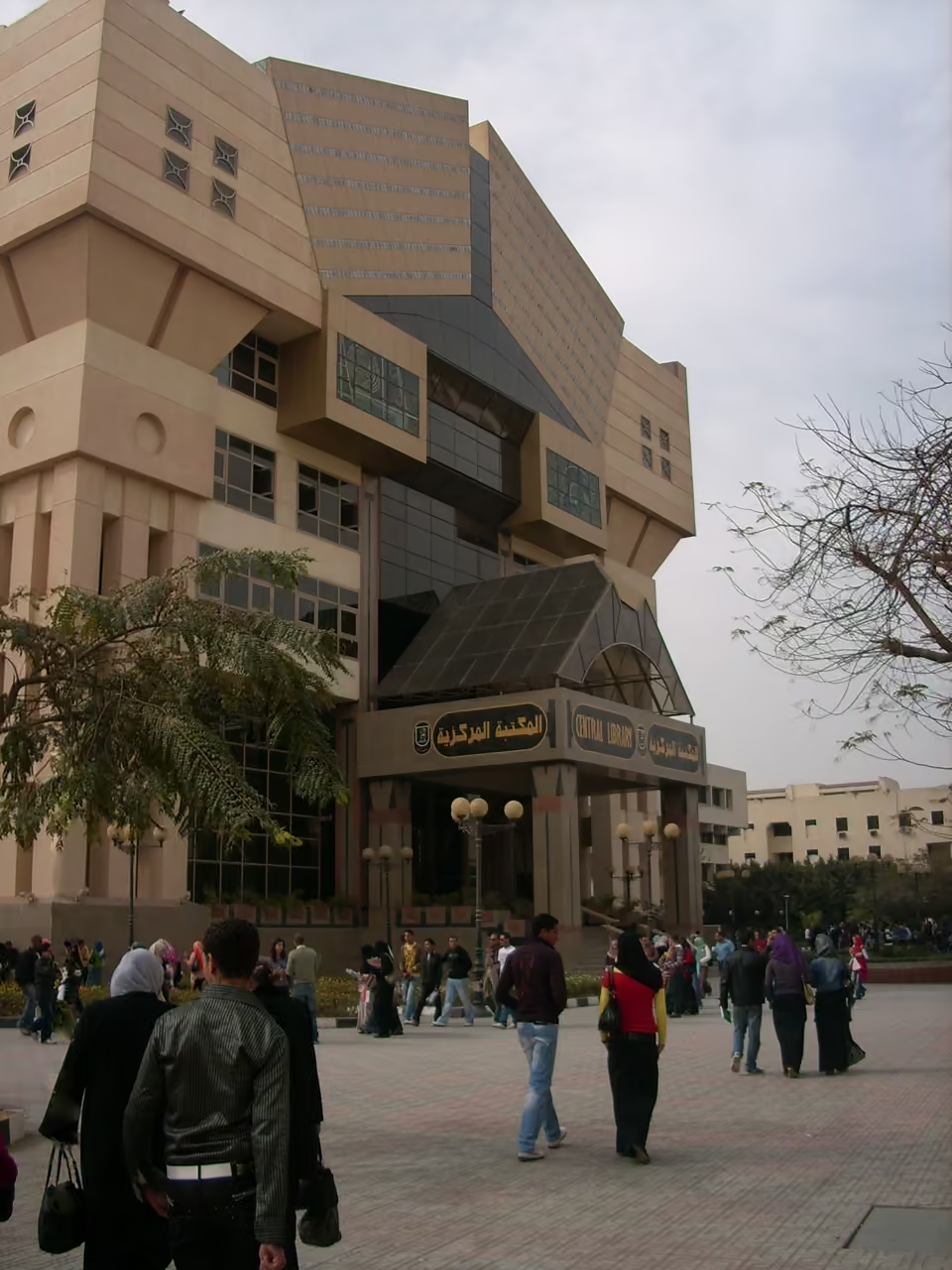
Agouza Nile Corniche to Cairo University Riverside Ride
Flat riverfront asphalt and broad tree-lined campus boulevards create an effortless morning pedal along Giza's historic cultural spine. Smooth tarmac hugs the Nile past moored riverboats, grand villa gates, and pink-granite civic sculpture before turning into Dokki's shaded green belt. Early Friday mornings clear commuter traffic away, leaving joggers and bakery delivery riders sharing the cool river wind.
view cycling route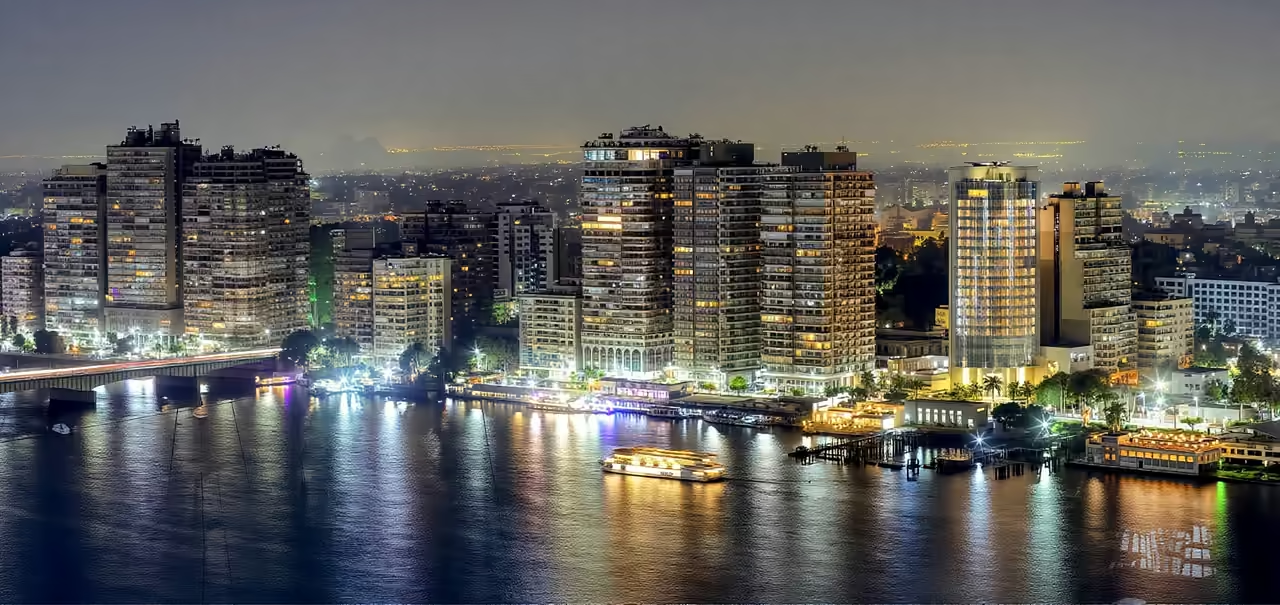
Sunset Stroll Along Giza's Agouza Nile Corniche
Stone embankments along Giza's northern riverfront glow warm peach before sundown as feluccas glide past moored dinner boats and street vendors light glowing coal pans for roasted sweet potatoes. Watching Zamalek's lit apartment facades reflect across the Nile lends real twilight calm without leaving the west bank. Families lean on the balustrade cracking salted lupini beans while river breezes sweep away afternoon heat.
view walking route
Modern Egyptian Art and Literary Heritage Trail
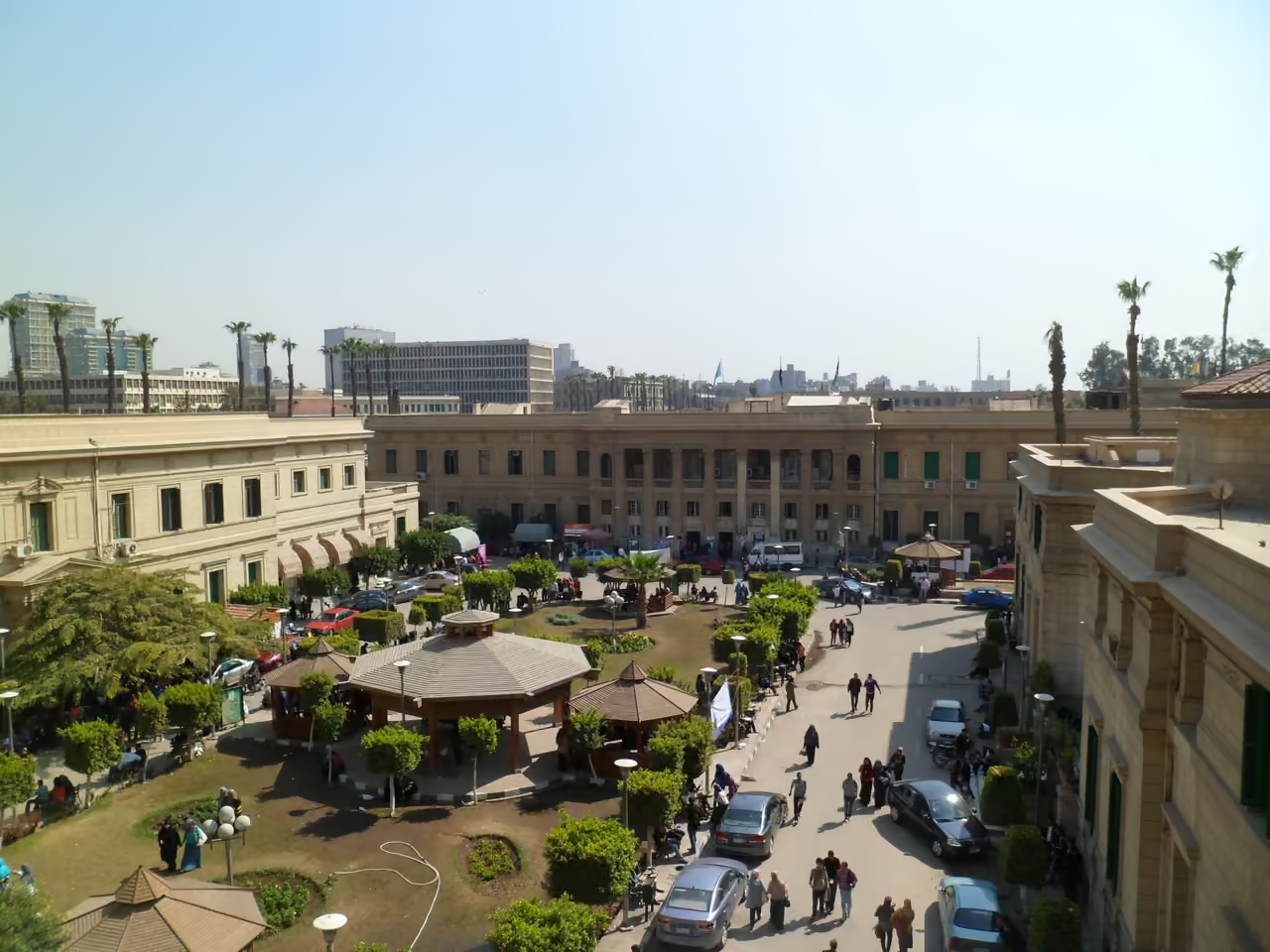
Discover Egypt's twentieth-century intellectual and artistic awakening across four distinguished villas and landmarks in Dokki and Al-Haram. Pairing Impressionist paintings along the Nile with Taha Hussein's book-lined study and painter Mohamed Nagy's studio near the plateau highlights how modern Egyptian identity flowered in Giza. Calm garden courtyards offer quiet reflection miles apart in spirit from tourist crowds.
view self-guided tour
See all attractions in Giza
Including Grand Egyptian Museum, Great Pyramid of Giza, Great Sphinx of Giza, and more