St. Patrick's Island
Floating off the coast of Skerries, this windswept islet is a silent witness to centuries of Irish history and untouched natural beauty. Once a significant centre of ecclesiastical life, today it remains completely uninhabited and serves as a vital sanctuary for colonies of cormorants and shags. Visitors looking across the water from the mainland can easily imagine the monks who once sought solitude on these shores. The island offers a serene escape, where the only sounds are the rhythmic crashing of the Irish Sea and the call of seabirds. It is a place that feels frozen in time, inviting contemplation and wonder. This is a must see landmark for anyone walking the Skerries coastline.
Videos
History of St. Patrick's Island
The island began as a secluded haven for faith, an ideal location for monks seeking isolation from the outside world. Its geography made it a spiritual outpost, yet its very visibility rendered it vulnerable. The Vikings, masters of the sea, recognised the island for its strategic positioning, turning it into one of the earliest victims of their coastal incursions in 798 AD, a moment that shattered the peace of the early monastic community. By the 12th century, the island had evolved into a significant centre of ecclesiastical power. The 1148 synod stands as a landmark moment for the Irish church, serving as a venue where high ranking clergy gathered to navigate complex reforms. This gathering of fifteen bishops and over two hundred priests marked a transition in Irish religious life, cementing the island as a site of national consequence rather than a mere local parish. The eventual move of the monastery to the mainland at Holmpatrick in 1220 marked the end of human habitation, allowing nature to reclaim the space. Today, the island serves as a quiet monument to those medieval times. It sits as a bridge between the historical memory of the coast and the wild, untamed nature of the Irish Sea, offering a glimpse into a past that is now preserved by the wings of seabirds rather than the prayers of monks.
Events spanning 422 years
Fun Facts
- • Archaeological interest in the site continues to grow, as historians seek to understand the scale of the monastic buildings that once stood there.
- • Despite its proximity to the coast, the island has remained uninhabited for eight centuries, allowing nature to reclaim the land completely.
- • Historical records of the synod are preserved in several ancient manuscripts, including the Annals of the Four Masters and the Annals of Inisfallen.
- • St. Patrick's Island is the outermost of the three islands forming the Skerries archipelago, positioned roughly 1.5 kilometres from the mainland.
- • The 1148 synod held on the island remains one of the most significant ecclesiastical gatherings in medieval Irish history, aiming to align local practices with Roman church standards.
- • The island is a designated sanctuary for breeding seabirds, with prominent populations of cormorants, shags, and herring gulls.
- • The island provides a rare glimpse into the early monastic movement in Ireland, where monks sought extreme isolation to deepen their faith.
- • The island served as a critical point of maritime navigation and spiritual reflection for centuries due to its strategic location in the Irish Sea.
- • The island was once home to two distinct monastic foundations, the first being an early Christian site and the second an Augustinian monastery established in 1120.
- • The landscape is composed of low cliffs and resilient coastal flora, primarily featuring grasses and hogweed that thrive in the salty sea air.
- • The name of the nearby Skerries location, Holmpatrick, derives from the monastic community that migrated there from the island in the 13th century.
- • Tradition asserts that Saint Patrick visited the island during his ministry, which is how the islet earned its enduring name.
RESOURCES
Official WebsiteSt. Patrick's Island FAQ
While we strive to keep this information accurate and up to date, we recommend verifying any details independently before making decisions based on them.
St. Patrick's Island Map & Neighborhood Explorer
This interactive map is centered on St. Patrick's Island. Zoom in and move the map around to automatically discover Wikipedia photos and summaries of other nearby sights, monuments, and historical points of interest and stories in real-time!
Places near St. Patrick's Island
Make the most of your trip. Check out these top-rated spots located nearby.
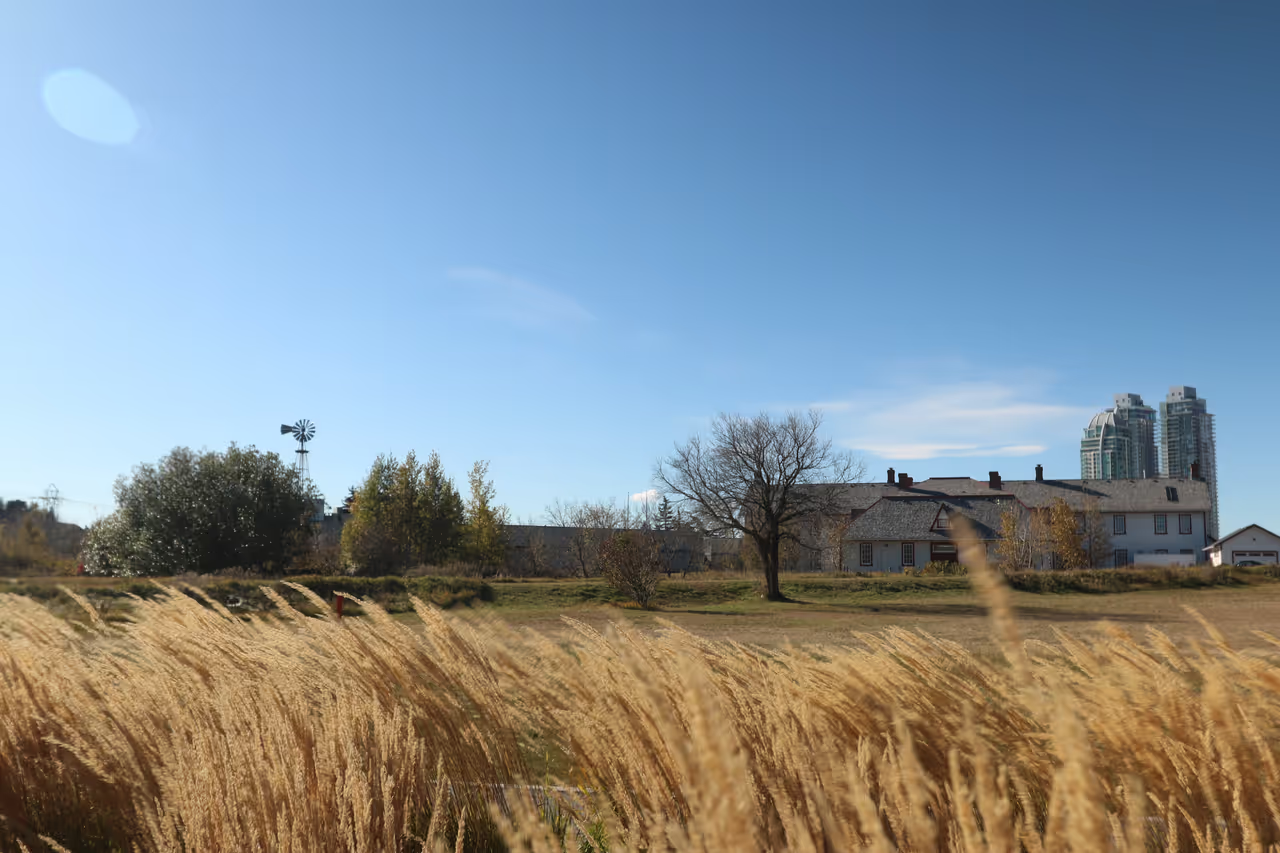 351m
351mFort Calgary
Located at the exact confluence of two major rivers, this historic site marks the very birthplace of the modern city. It features an interpretive centre that details the 1875 arrival of the North-West Mounted Police and their role in shaping the western frontier. Visitors can explore reconstructed wooden barracks, historical exhibits, and extensive riverside parklands. The museum provides vital context regarding the region's Indigenous history and the complex realities of early European settlement. It is a quiet, reflective space deeply tied to the city's origins.
highlight view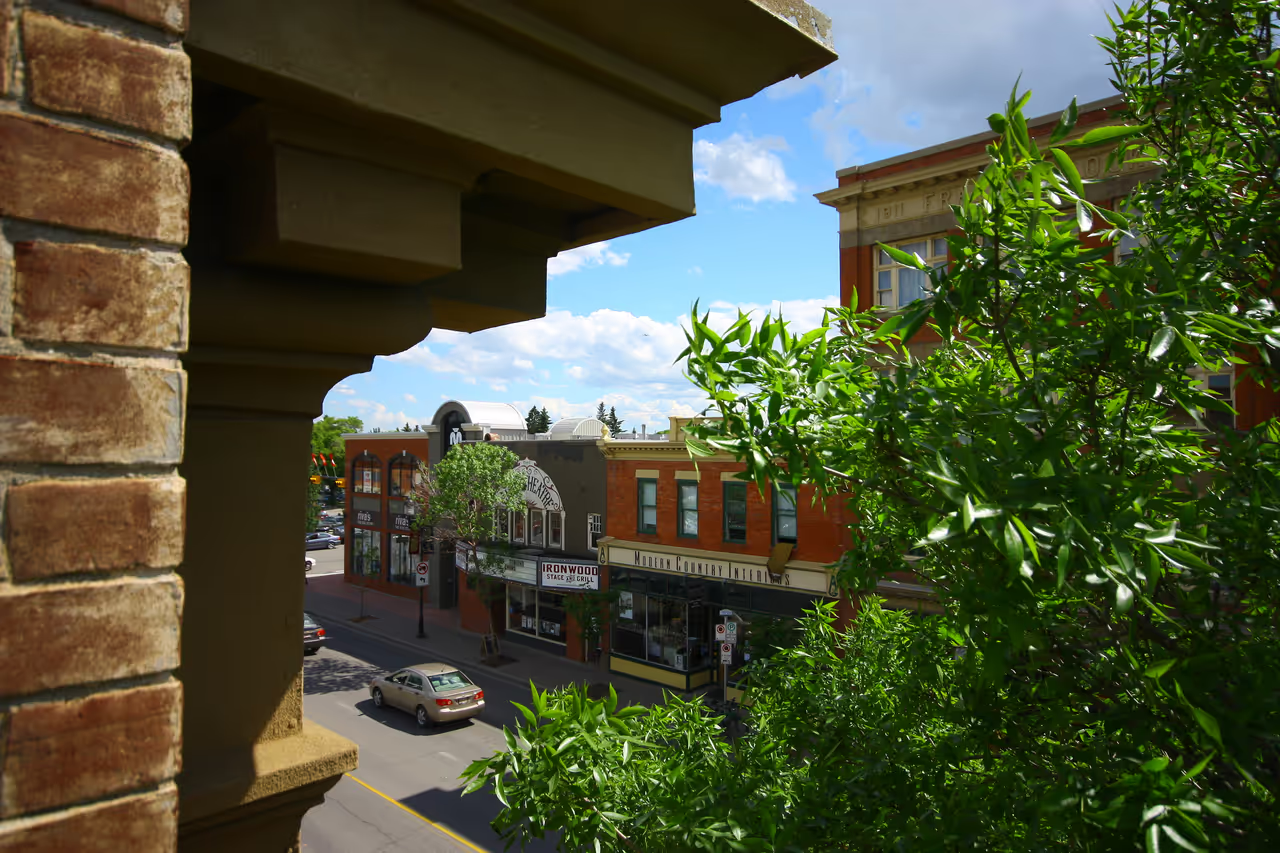 529m
529mInglewood District
The city's oldest neighbourhood has evolved into a hub for live music, craft breweries, and edgy cultural venues. The nightlife here is anchored by famous smokehouses, alternative music clubs, and independent taprooms that celebrate local talent. It avoids mainstream club trends in favour of authentic, raw entertainment and excellent local beer. It is the go-to destination for indie music fans and craft beverage aficionados.
nightlife view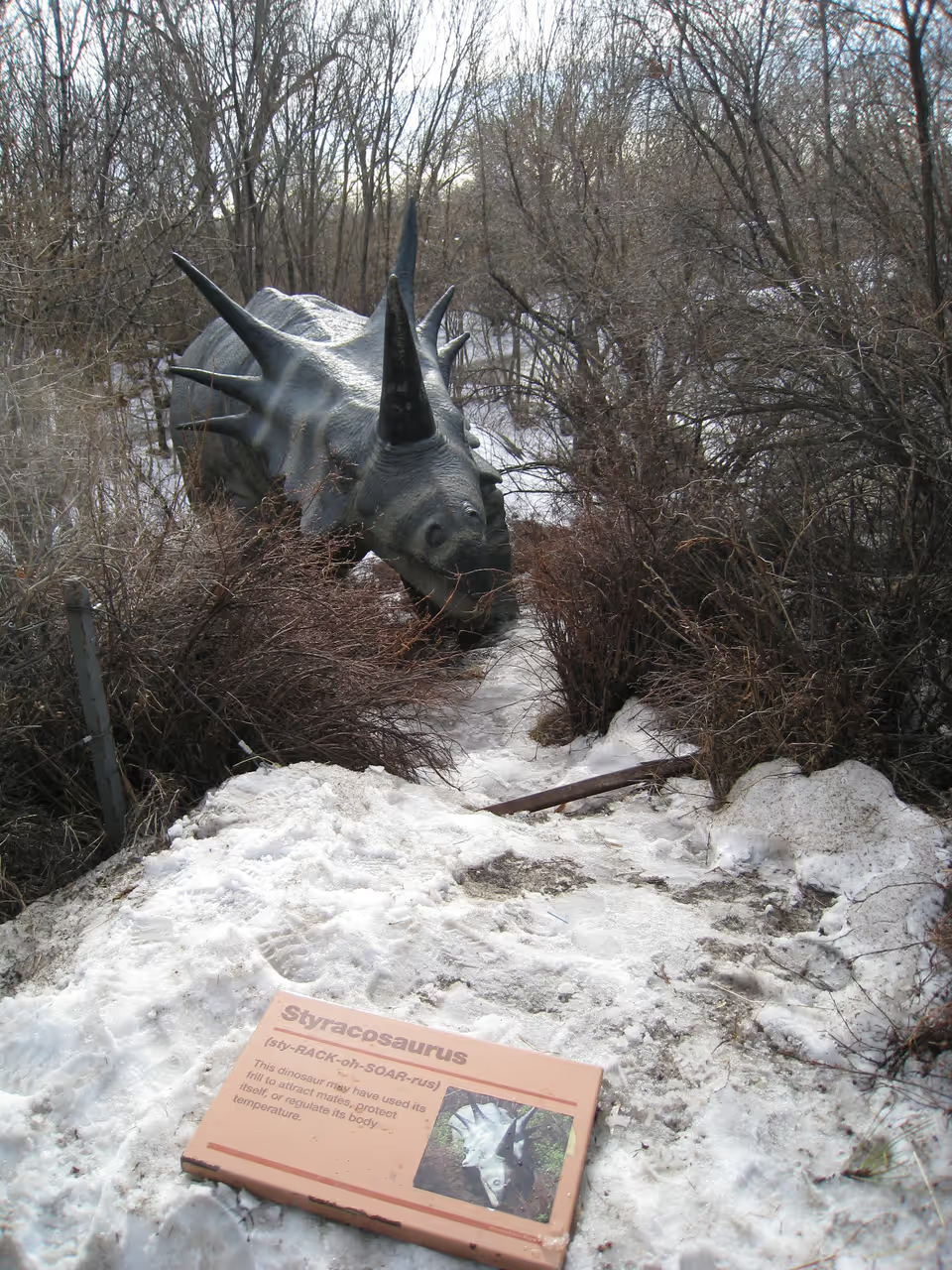 635m
635mCalgary Zoo
Discover Canada's most visited zoo, an oasis of biodiversity set against the backdrop of the Bow River. From the icy charm of the Penguin Plunge to the awe inspiring Prehistoric Park, the Wilder Institute/Calgary Zoo offers an immersive journey through the natural world. More than a tourist attraction, it is a world class conservation powerhouse dedicated to reintroducing species to the wild. Stroll through botanical gardens, learn about unique creatures from across the globe, and engage with a legacy of research that spans continents. Whether you are seeking a family adventure or a deep dive into wildlife biology, this destination promises an unforgettable experience in the heart of Alberta.
attraction view 837m
837mNational Music Centre (Studio Bell)
An architectural marvel in the heart of Calgarys East Village, the National Music Centre serves as a sanctuary for sound that celebrates the profound impact of music on our lives. Visitors can wander through five floors of interactive exhibitions, witnessing the evolution of music technology from ancient instruments to the cutting edge synthesizers of today. The space serves as home to the Canadian Music Hall of Fame and the Canadian Country Music Hall of Fame, offering a deep dive into the countrys sonic identity. With its striking terracotta facade and integrated historic King Edward Hotel, the centre acts as both a museum and a living venue where music is created, recorded, and performed daily. For both musicians eager to touch history and curious travellers looking for a unique cultural experience, this vibrant hub provides a profound connection to the art form that defines us.
attraction view
Explore Similar Places in This Collection
Featured on This Route

See all nature & parks in Calgary
Nose Hill Park, Prince's Island Park, Bowness Park, Confederation Park, Fish Creek Provincial Park, Inglewood Bird Sanctuary...