Türkenschanz Park
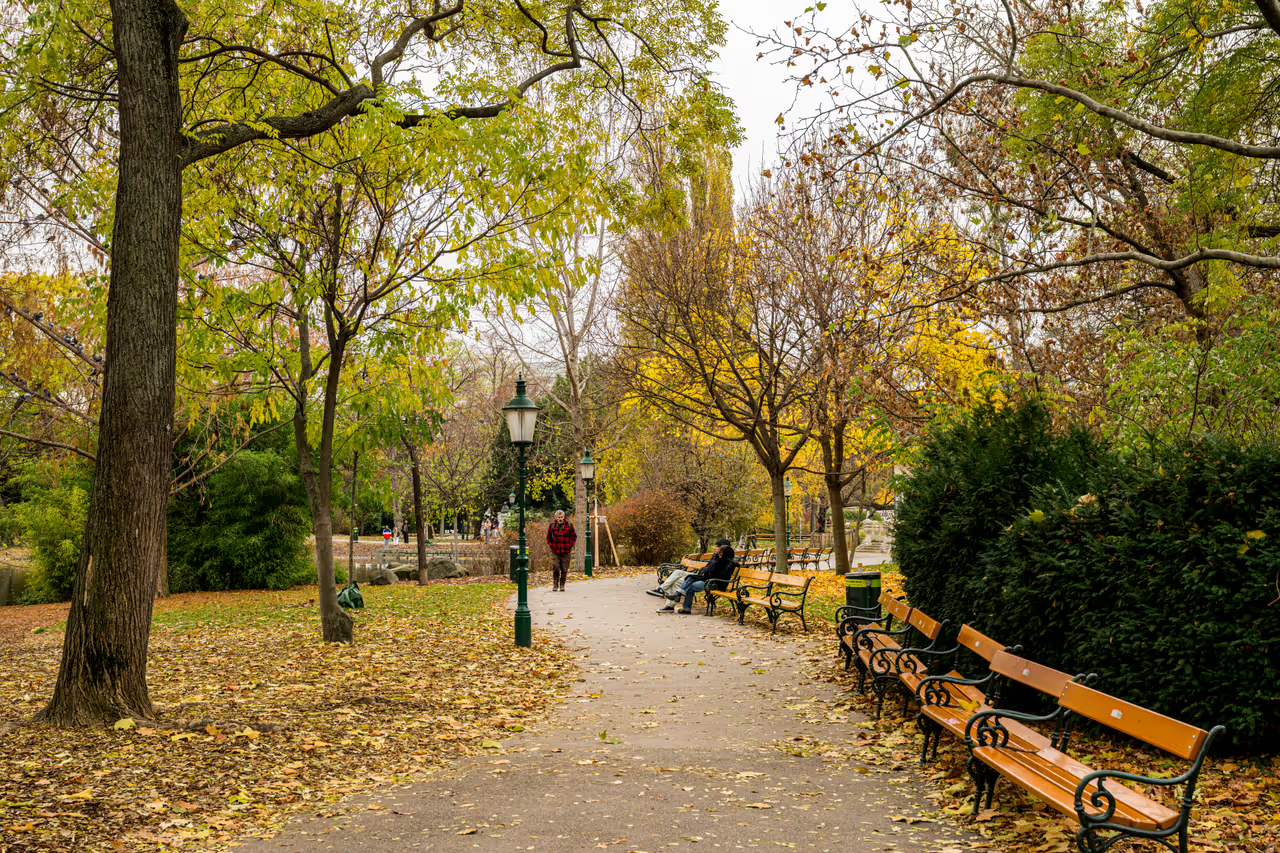
Nestled in the heart of Vienna's 18th district, this expansive park is a true escape from the city. Once home to strategic military fortifications, it has been transformed into a lush English landscape garden that offers a peaceful retreat for locals and visitors alike. You can climb the Paulinenwarte tower for stunning views, explore the diverse botanical collection, or relax by the Yunus Emre fountain. It is a favourite spot for students from the nearby university and families who enjoy the open green spaces. The atmosphere is vibrant yet serene, making it the perfect place to enjoy a sunny afternoon in a historic setting.
Videos
History of Türkenschanz Park
The history of this land is far more dramatic than its current peaceful appearance suggests. Known as the Türkenschanze, the site once served as a strategic military outpost during the Second Siege of Vienna in 1683. For centuries, the area remained largely undeveloped, serving mainly as a source of gravel and sand for the construction of the growing city. As Vienna expanded in the 19th century, the site was almost destined to become a military or industrial zone, but a group of forward thinking citizens and architects fought to preserve the land as a public garden. Emperor Franz Joseph I officially inaugurated the park in 1888, marking a pivotal moment in the unification of Vienna's suburbs. The Emperor famously hinted at the necessity of bringing these outlying areas into the city fold, a political move that soon reshaped Vienna's geography. Today, the park serves as a testament to that era, balancing its royal history with a modern spirit of international cooperation. The addition of the Yunus Emre fountain in 1991 stands as a beautiful symbol of lasting friendship between Austria and Turkey, bridging the gap between the area's warlike past and its harmonious present. With its unique botanical collection maintained in partnership with the neighbouring university and its carefully preserved landscape design, the park remains a living monument to both nature and civic achievement.
Events spanning 327 years
Fun Facts
- • Before becoming a park, the area was an industrial site used as a source of gravel and sand for the rapidly growing city of Vienna.
- • City garden director Gustav Sennholz designed the grounds in an English landscape style, carefully shaping the terrain to include artificial hills and valleys.
- • Emperor Franz Joseph I used the park's opening ceremony as a calculated political gesture to push for the incorporation of surrounding suburbs into Vienna.
- • Thanks to the proximity of the University of Natural Resources and Life Sciences, the park features a unique collection of trees and plants from across the globe.
- • The Yunus Emre fountain is built in a traditional oriental style and represents the diplomatic bond between Austria and Turkey.
- • The name Türkenschanze likely predates the 1683 siege, possibly originating from the first siege, though no contemporary records explicitly confirm this.
- • The park contains the Paulinenwarte tower, named after Princess Pauline von Metternich, who was a key supporter of the park project.
- • The park is home to a bust of Arthur Schnitzler, the famous Austrian writer and physician who lived in the nearby Cottageviertel.
- • The surrounding area known as the Cottageviertel developed concurrently with the park, creating one of the most desirable residential districts in the city.
Türkenschanz Park FAQ
While we strive to keep this information accurate and up to date, we recommend verifying any details independently before making decisions based on them.
Türkenschanz Park Map & Neighborhood Explorer
This interactive map is centered on Türkenschanz Park. Zoom in and move the map around to automatically discover Wikipedia photos and summaries of other nearby sights, monuments, and historical points of interest and stories in real-time!
Places near Türkenschanz Park
Make the most of your trip. Check out these top-rated spots located nearby.
 2238m
2238mStrudlhof Steps
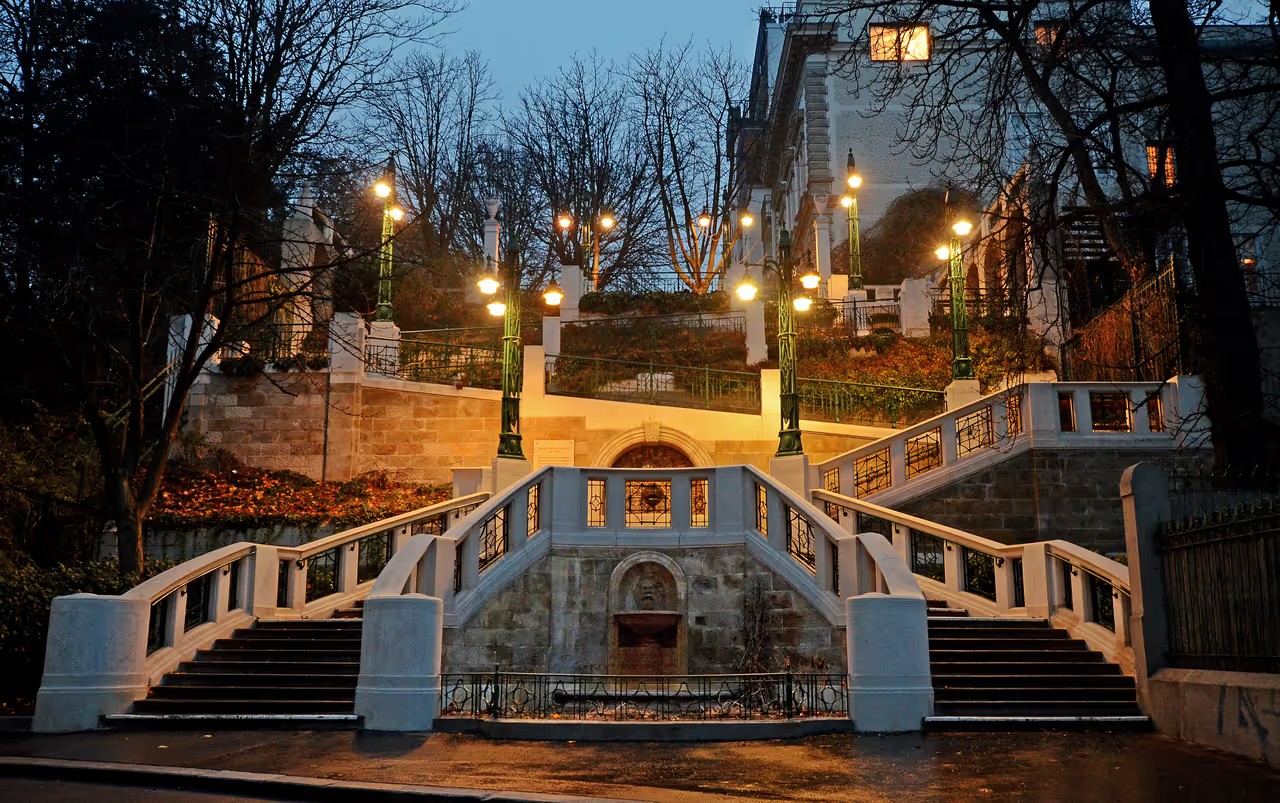
This elegant outdoor staircase in the ninth district is a hidden masterpiece of Art Nouveau urban design. It gracefully bridges the steep elevation gap between two streets with a symmetrical arrangement of curved stone steps, wrought iron railings, and charming fountain basins. It serves as a quiet, atmospheric spot that feels completely removed from the rush of the modern city. The staircase gained literary fame as the central setting for a highly acclaimed Austrian novel.
hidden gem view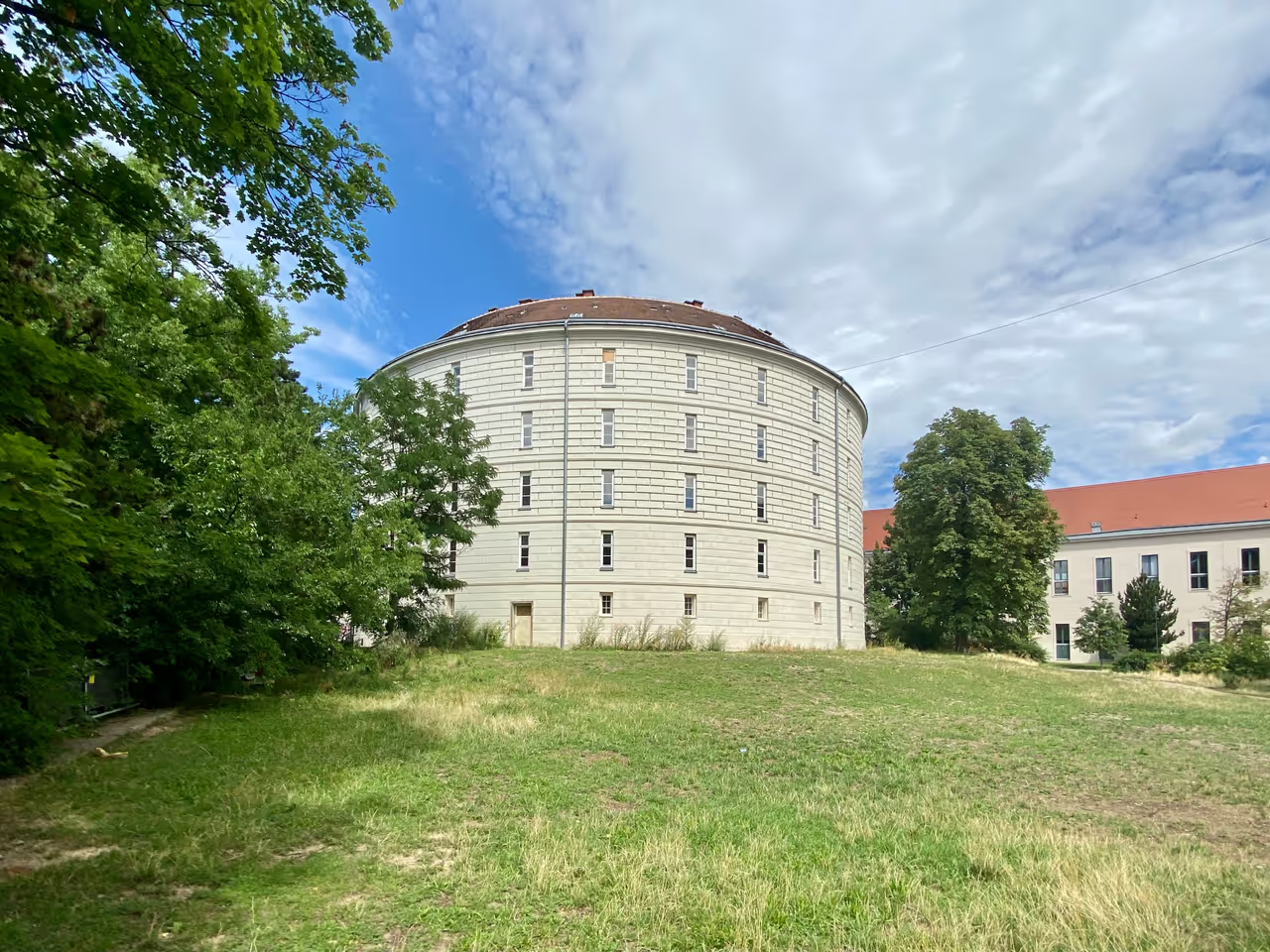 2277m
2277mFool's Tower
This massive, circular fortress was constructed in the eighteenth century as the first psychiatric hospital in continental Europe. Today, it houses the Federal Pathological-Anatomical Museum, an immense collection of preserved medical anomalies, anatomical wax models, and historical surgical instruments. It is a deeply fascinating, though somewhat macabre, look at the evolution of medicine and the treatment of disease. The stark, windowless corridors retain an eerie, historical chill.
hidden gem view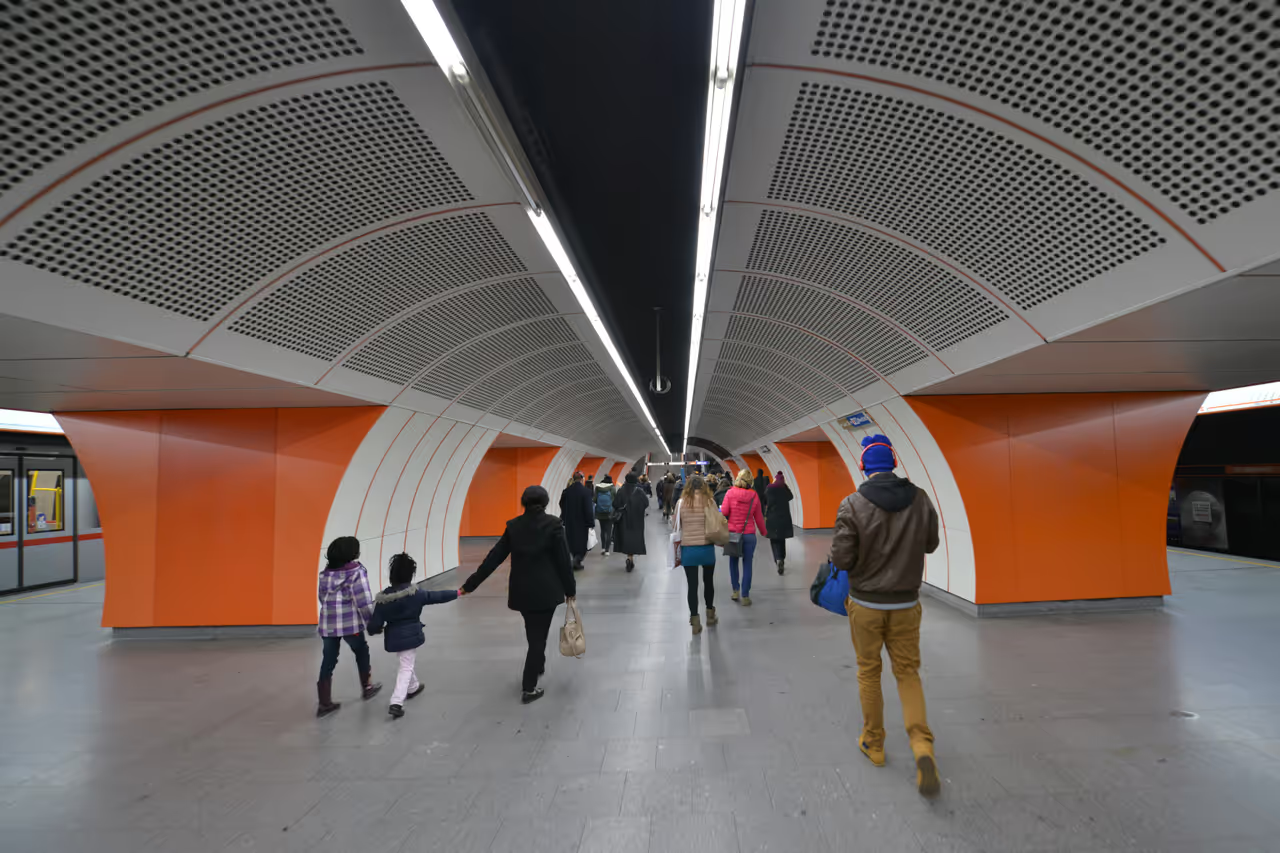 2333m
2333mListen to U-Bahn Stars
You do not need to buy an expensive concert ticket to hear excellent live music in the city. The local transit authority sponsors a program where carefully vetted musicians perform daily at major subway stations like Karlsplatz, Westbahnhof, and Praterstern. The genres range from classical string quartets to upbeat acoustic pop. It turns mundane transit hubs into lively, free entertainment venues.
free thing to do view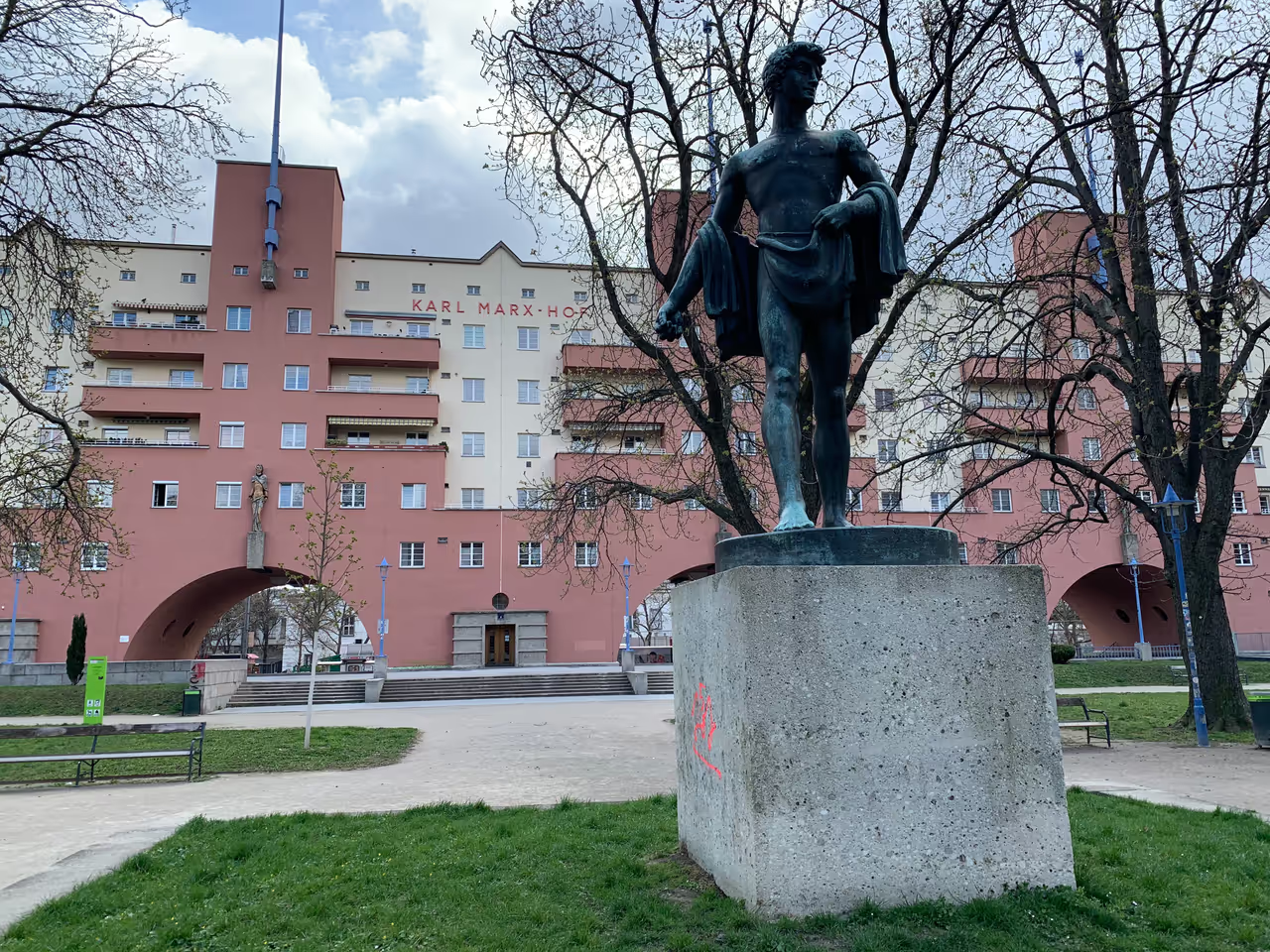 2737m
2737mKarl-Marx-Hof
Stretching for over a kilometre, this is the most famous example of the monumental public housing built during the socialist 'Red Vienna' period. It was designed to look like a fortress for the working class, complete with massive arches, towers, and striking terracotta and peach facades. It successfully integrated essential community services like laundries, kindergartens, and lush green courtyards into a single complex. It stands as a powerful symbol of early twentieth century social reform.
architecture view
See all nature & parks in Vienna
Stadtpark, Volksgarten, Augarten, Burggarten, Donaupark, Lainzer Tiergarten...