Hidden Gems & Local Secrets in Tokyo

Step off the tourist trail and experience the authentic side of the city. We've bypassed the crowded landmarks to uncover the best-kept local secrets—from quiet neighborhood courtyards to underground art scenes. Dive into the forgotten histories and unique stories that make these spots truly special.

  • Omoide Yokocho

    思い出横丁
    1 H

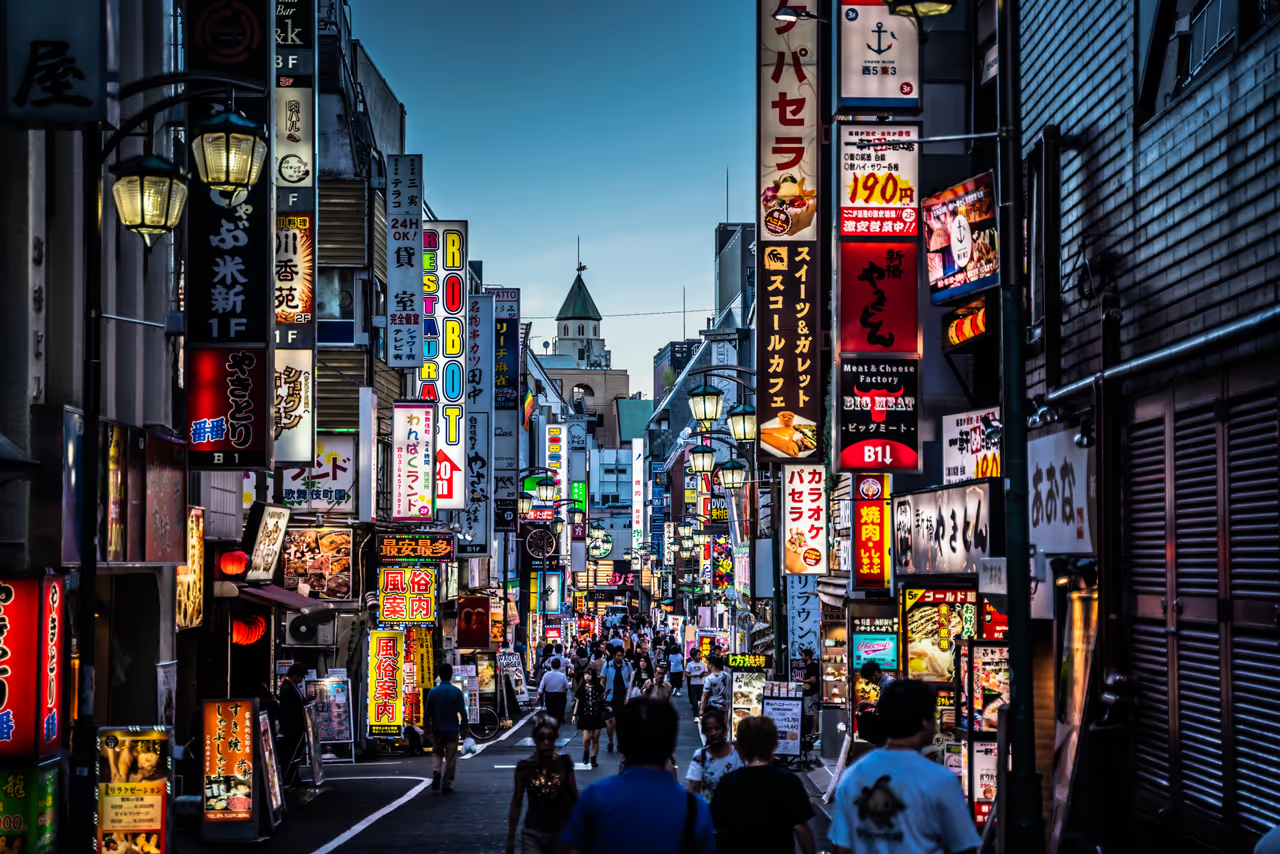
    A tightly packed network of incredibly narrow alleyways tucked right against the massive transit hub of Shinjuku. Affectionately known as Memory Lane the area consists of dozens of tiny dilapidated eateries often seating no more than six people at a time. The air is thick with the rich smoke of grilling yakitori and the lively chatter of local office workers unwinding. Navigating the crowded smoky path feels like stepping into a cinematic portrayal of post war urban life. It offers an incredibly intimate and visceral dining experience.

    HISTORY & HIGHLIGHTS

    Following the devastation of the Second World War this area emerged as an illegal black market serving the desperate needs of the local population. Vendors erected crude stalls to sell basic necessities and cheap food in an unregulated environment. As the country recovered the market slowly transitioned into a legitimate collection of tiny pubs and yakitori stands. Despite a major fire in the late twentieth century the alleyway was rebuilt exactly as it was retaining its cramped chaotic charm. Developers have repeatedly attempted to buy the valuable land but the tight knit community of stall owners has consistently refused to sell. It remains a fascinating remnant of the gritty survivalist energy of the post war period.
    Events spanning 53 years

    YEAR 1946

    Black Market Origins

    The alleyways formed as a sprawling black market providing essential goods to citizens in the immediate post war chaos.

    YEAR 1950

    Transition to Pubs

    As the economy stabilised the illegal vendors transitioned into legitimate small scale eateries serving the working class.

    YEAR 1999

    Alleyway Fire

    A severe fire damaged a significant portion of the stalls which were then rapidly rebuilt to preserve the historic aesthetic.

    LOCATION

    Loading map...

    FULL PLACE DETAILS

  • Kagurazaka

    神楽坂
    2 H

    A highly elegant sloping street that beautifully merges classic Japanese geisha heritage with a distinct modern French influence. The main avenue features a lively mix of boutique bakeries and sophisticated restaurants playing soft European music. Venturing into the side alleys reveals pristine cobblestone paths lined with exclusive traditional dining establishments hidden behind sleek wooden facades. The area retains a quiet refined atmosphere heavily favoured by diplomats and discerning gourmands. It is an extraordinary neighbourhood to wander without a specific destination in mind.

    HISTORY & HIGHLIGHTS

    During the Edo period Kagurazaka flourished due to its proximity to the outer moat of the Imperial Castle serving as a prominent entertainment district. It evolved into one of the most prestigious hanamachi or geisha districts in the capital catering to high ranking officials and wealthy merchants. The narrow cobblestone alleyways were designed specifically to allow important patrons to arrive discreetly at the exclusive teahouses. In the late twentieth century the establishment of nearby French cultural institutions attracted a large expatriate community. This influx introduced authentic bistros and bakeries which blended seamlessly with the refined traditional Japanese aesthetic. The result is a uniquely sophisticated hybrid culture maintaining the discretion and elegance of its geisha history while embracing international culinary arts.

    Events spanning 302 years

    YEAR 1650

    Castle Proximity

    The area developed rapidly as a prominent commercial zone due to its location near the outer gates of Edo Castle.

    YEAR 1900

    Geisha District Peak

    The neighbourhood reached its peak as a prestigious entertainment district hosting numerous elite traditional teahouses.

    YEAR 1952

    French Influence

    The establishment of a French language institute nearby catalysed the transformation into an elegant multicultural hub.

    LOCATION

    Loading map...
  • Nezu Shrine

    根津神社
    45 M

    One of the oldest and most beautifully preserved Shinto complexes in the city hiding quietly in a residential area. The stunning main structures feature elaborate colourful woodwork that managed to survive the extensive wartime bombings intact. A magnificent hillside path is lined with dozens of bright vermilion torii gates creating a visual effect similar to Kyoto's famous Fushimi Inari. During the spring the grounds erupt in vibrant colour as thousands of carefully sculpted azalea bushes burst into bloom. It provides a deeply peaceful and visually spectacular spiritual retreat.

    HISTORY & HIGHLIGHTS

    Legend dictates that the shrine was originally established nearly two millennia ago making it an incredibly ancient spiritual site. The current magnificent structures were commissioned in the early eighteenth century by the fifth Tokugawa shogun to celebrate his succession. This immense royal patronage resulted in a complex of extraordinary architectural beauty demonstrating the highest levels of Edo period craftsmanship. Remarkably the entire complex survived the relentless firebombing of the Second World War that destroyed nearly all other historical buildings in the vicinity. Today the intricate wooden carvings and brilliant lacquered facades stand exactly as they did centuries ago. It is a rare and precious architectural survivor offering a genuine window into the religious aesthetics of the shogun era.

    Events spanning 1845 years

    YEAR 100

    Mythological Founding

    According to legend the shrine was founded by the mythological hero Yamato Takeru in the first century.

    YEAR 1705

    Shogun Patronage

    The fifth Tokugawa shogun relocated and entirely rebuilt the shrine into its current magnificent architectural form.

    YEAR 1945

    Wartime Survival

    The complex miraculously survived the intense air raids leaving its priceless Edo architecture completely intact.

    LOCATION

    Loading map...

    FULL PLACE DETAILS

    OVERVIEW & STATS

    Established
    In 1705, making it 321 years old

    ARCHITECTURE & HERITAGE

    Heritage Status
    Important Cultural Property Of Japan
    Architectural Styles
    Ishi-no-ma-zukuri
    Founders
    Yamato Takeru
  • Yanaka Ginza

    谷中銀座
    1 H 30 M

    A wonderfully nostalgic market street that perfectly preserves the working class atmosphere of mid twentieth century Tokyo. The narrow pedestrian lane is bordered by independent butchers, traditional sweet shops, and tiny stores selling handmade crafts. The scent of frying croquettes and roasting tea leaves fills the air creating an incredibly welcoming environment. Feral cats are known to lounge on the awnings adding to the relaxed suburban charm. It provides a highly authentic escape from the intense commercialism of the central districts.

    HISTORY & HIGHLIGHTS

    Yanaka Ginza miraculously survived the devastating air raids of the Second World War making it a rare pocket of historical preservation within the metropolis. The local community fiercely protected their heritage resisting the aggressive modernisation and skyscraper development that swept through the rest of the capital during the economic boom. Today this resilience is visible in the architecture and the multigenerational family businesses that continue to line the street. The community actively promotes its retro aesthetic creating a living museum of the Showa era. It stands as a proud testament to the endurance of local culture offering an authentic glimpse into the daily life of a bygone period.

    Events spanning 45 years

    YEAR 1945

    Survival of the Air Raids

    The neighbourhood largely escaped the intense firebombing of the Second World War preserving its historic structures.

    YEAR 1950

    Formation of the Commercial Association

    Local shop owners officially formed a commercial union to protect and promote their traditional market street.

    YEAR 1990

    Rise of Nostalgia Tourism

    The area gained nationwide recognition as a site of cultural nostalgia drawing visitors seeking authentic mid century charm.

    LOCATION

    Loading map...

    FULL PLACE DETAILS

    OVERVIEW & STATS

    Established
    In 1945, making it 81 years old

    WEB & AMENITIES

  • Todoroki Valley

    等々力渓谷
    1 H

    The only natural gorge existing within the dense urban boundaries of the metropolis offering an astonishing natural escape. A quiet walking path traces a shallow river shaded heavily by a dense canopy of ancient trees and bamboo. The temperature drops noticeably as you descend the stairs leaving the noisy suburban streets entirely behind. Hidden along the damp mossy path are small shrines, a waterfall used for ascetic practices, and an ancient burial mound. It feels like an enchanting magical forest entirely disconnected from the surrounding concrete.

    HISTORY & HIGHLIGHTS

    Formed over millennia by the slow persistent carving of the Yazawa River this deep ravine has served as a spiritual and natural refuge for centuries. Ancient inhabitants recognised the unique geography using the surrounding high ground to construct significant burial mounds indicating early reverence for the site. During the Edo period monks established a secluded temple near the small waterfall utilising the frigid water for intense ascetic purification rituals. As the metropolis expanded rapidly in the twentieth century swallowing up surrounding forests the steep walls of the gorge protected it from development. The local government eventually designated it as a protected park ensuring its survival amid the endless suburban sprawl. It remains a miraculous geographical anomaly providing an essential connection to the wild nature that once dominated the region.

    Events spanning 1499 years

    YEAR 500

    Ancient Burial Site

    Early inhabitants constructed a significant burial mound near the gorge indicating ancient settlement in the area.

    YEAR 1100

    Temple Establishment

    Buddhist monks established Todoroki Fudoson temple using the secluded natural environment for spiritual training.

    YEAR 1999

    Protected Designation

    The gorge was officially designated as a place of scenic beauty protecting it permanently from urban development.

    LOCATION

    Loading map...
KEEP EXPLORING

More to see in Tokyo