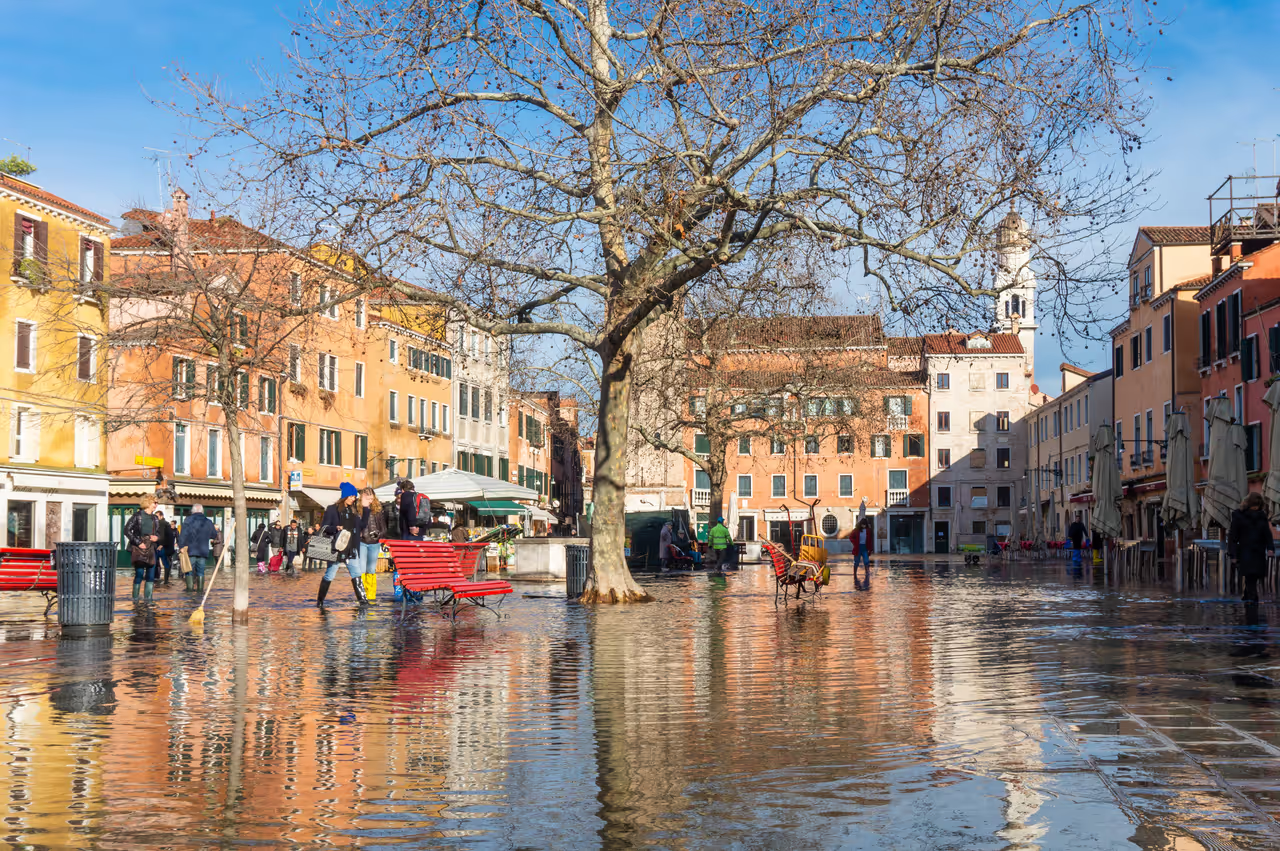
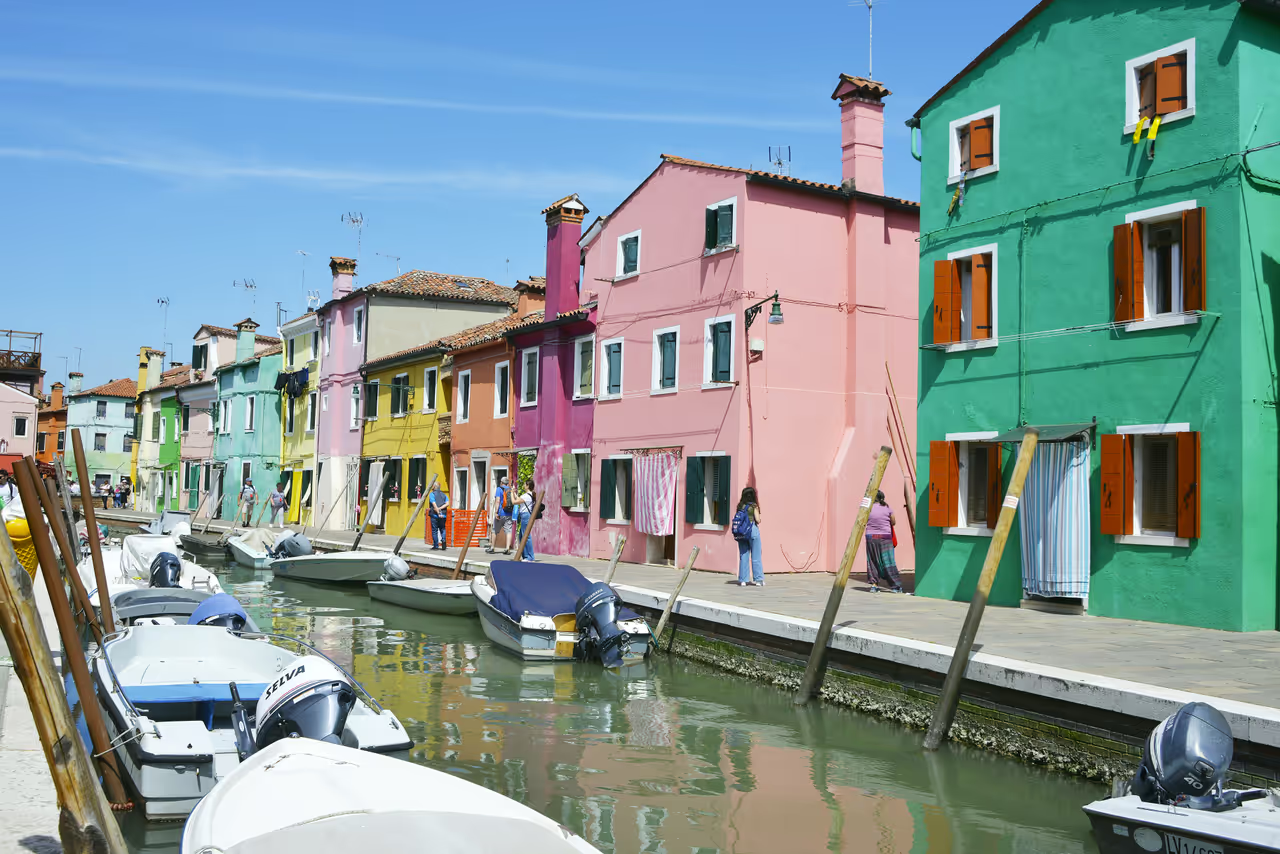
Hidden Gems & Local Secrets in Venice

Step off the tourist trail and experience the authentic side of the city. We've bypassed the crowded landmarks to uncover the best-kept local secrets—from quiet neighborhood courtyards to underground art scenes. Dive into the forgotten histories and unique stories that make these spots truly special.

  • San Trovaso Boatyard

    SQUERO DI SAN TROVASO
    30 M

    Tucked away in the Dorsoduro district, this historic boatyard looks remarkably like a wooden alpine cabin completely out of place in a city of stone palaces. It is one of the very few surviving workshops where artisans still build and repair the iconic black gondolas entirely by hand. You cannot walk inside the yard, but viewing it from the opposite side of the narrow canal offers a fascinating, unobstructed look at the craftsmen at work. The smell of hot pitch and shaved wood drifts across the water. Grabbing an ice cream and watching the meticulous woodwork is a deeply authentic local experience.

    HISTORY & HIGHLIGHTS

    The unusual appearance of this historic boatyard is a direct link to the mountainous origins of the city's earliest craftsmen. During the early days of the republic, the skilled carpenters recruited to build the massive naval and civilian fleets descended from the heavily forested Dolomite mountains. They brought their native architectural styles with them, constructing wooden workshops that resembled the alpine cabins of their homeland, complete with sloping roofs and wooden balconies. For centuries, these small boatyards, known as squeri, dotted the city's canals, essential for maintaining the thousands of wooden boats that kept the city moving. The San Trovaso yard is one of a tiny handful that survived the industrialisation of boat building and the introduction of fiberglass. The craftsmen here still rely on ancient, highly guarded techniques, bending the wood with fire and water without the use of modern blueprints. Today, it remains a vital working piece of the city's maritime heritage. A new gondola takes several months to construct here, crafted from eight different types of wood and composed of nearly three hundred individual pieces. It is a living, breathing connection to the masterful carpentry that once built an empire.

    Events spanning 415 years

    YEAR 1600

    Establishment of the Boatyard

    The squero was established by skilled carpenters arriving from the Dolomite mountains, bringing their unique wooden architecture with them.

    YEAR 1920

    Preservation of Tradition

    As motorised boats began replacing traditional rowing vessels, the yard dedicated itself almost exclusively to the preservation and construction of classic gondolas.

    YEAR 2015

    A Modern Masterpiece

    The yard completed the construction of a brand new, fully traditional gondola, proving that the ancient manual techniques are still alive and well.

    LOCATION

    Loading map...
  • Bovolo Staircase

    SCALA CONTARINI DEL BOVOLO
    45 M

    Hidden deep within a convoluted maze of narrow alleys near the centre lies one of the city's most breathtaking architectural secrets. This stunning, multi story spiral staircase is attached to the exterior of a late Gothic palace, wrapped elegantly in ascending brick and white stone arches. The word bovolo translates to snail shell in the local dialect, perfectly describing its swirling, delicate shape. Climbing to the top rewards you with an incredibly intimate, rooftop view over the terracotta tiles and domes of the city. It feels like uncovering a hidden piece of aristocratic history.

    HISTORY & HIGHLIGHTS

    The creation of this striking architectural oddity was driven by a desire for aristocratic prestige and practicality. In the late fifteenth century, the wealthy Contarini family wanted to enhance their grand palace, but the building was tucked away in a cramped, hidden courtyard. To make a bold statement of their wealth and secure their legacy, they commissioned a master architect to design a spectacular addition to the exterior. The resulting spiral staircase was a brilliant fusion of two distinct styles, merging the soaring, delicate arches of the local Gothic tradition with the geometric precision of the incoming Renaissance style. It provided a grand, theatrical entrance to the upper floors of the palace while allowing the family to showcase their sophisticated tastes to anyone who stumbled into the courtyard. Over the centuries, the staircase became legendary among architecture enthusiasts, earning the affectionate nickname bovolo, meaning snail shell. Despite its beauty, it remains remarkably hidden from the casual passerby, requiring a deliberate journey through dark alleys to find it. Today, carefully restored, it stands as a testament to the flamboyant elegance of the old republic.

    Events spanning 517 years

    YEAR 1499

    Commissioning the Snail Shell

    The powerful Contarini family commissioned the breathtaking spiral staircase to add prestige to their hidden palace courtyard.

    YEAR 1859

    Astronomical Observations

    The famous German astronomer Wilhelm Tempel reportedly used the high, open arches of the staircase to conduct his celestial observations.

    YEAR 2016

    Restoration and Public Access

    Following extensive structural restorations, the delicate staircase was safely reopened, allowing visitors to climb to the panoramic belvedere.

    LOCATION

    Loading map...

    FULL PLACE DETAILS

    OVERVIEW & STATS

    Annual Visitors
    106,402 (2022)

    ARCHITECTURE & HERITAGE

    Architectural Styles
    Gothic Art
  • Garden of the Redeemer

    HORTUS REDEMPTORIS
    1 H

    Hidden behind the magnificent Palladian church on the island of Giudecca lies an extraordinary, recently restored monastic garden. For centuries, this lush green expanse was entirely closed off to the public, cultivated quietly by the resident Capuchin friars. Today, you can wander through olive groves, fragrant medicinal herb beds, and serene water features that look straight out of a Renaissance painting. It offers a profound sense of peace and a unique view of the lagoon from its southern edge. Discovering this beautifully manicured, spiritual oasis feels like uncovering one of the city's most fiercely guarded secrets.

    HISTORY & HIGHLIGHTS

    For over four hundred years, the land extending south from the iconic Church of the Redeemer was a strictly private domain. Following the devastating plague of 1576, the Capuchin friars who oversaw the new thanksgiving church established a massive garden. Here, they cultivated vegetables, vineyards, and medicinal herbs to sustain the monastery and care for the local sick, creating a self sufficient, spiritual sanctuary completely isolated from the bustling merchant city across the water. Throughout the centuries, as empires rose and fell, the friars maintained their quiet agricultural routine. However, the ravages of time and the catastrophic flood of 1966 severely damaged the historic layout, destroying ancient trees and salting the fertile soil. The garden slowly fell into an overgrown, melancholic state of disrepair, remaining entirely hidden behind high brick walls while tourists flocked to the church's facade just a few metres away. In recent years, a massive philanthropic restoration project meticulously brought the historic Hortus Redemptoris back to life. Landscape architects recreated the ancient geometric plots, replanting olive trees, cypresses, and heritage roses. In 2024, the heavy wooden doors were finally opened to the public for the first time in history, allowing visitors to experience the profound, meditative peace that the friars have guarded for centuries.

    Events spanning 447 years

    YEAR 1577

    The Friars' Sanctuary

    The Capuchin monks established the expansive garden behind their newly built plague thanksgiving church to cultivate food and medicinal plants.

    YEAR 1966

    Devastation by the Sea

    The catastrophic Acqua Granda flood breached the ancient garden walls, severely damaging the historic vegetation with saltwater.

    YEAR 2024

    Opening the Gates

    Following a meticulous, multi year restoration, the historic monastic gardens were finally opened for public visitation for the very first time.

    LOCATION

    Loading map...

    FULL PLACE DETAILS

    OVERVIEW & STATS

    Established
    In 1577, making it 449 years old

    ARCHITECTURE & HERITAGE

    Architectural Styles
    Renaissance
    Architects
    Andrea Palladio
  • High Water Bookshop

    LIBRERIA ACQUA ALTA
    45 M

    This incredibly eccentric, chaotic bookshop is a testament to the local spirit of adapting to the environment. Because the shop frequently floods during the high tides, the owner ingeniously stores thousands of books inside bathtubs, waterproof bins, and even a full sized gondola. The narrow aisles are crammed floor to ceiling with new, used, and antique books in multiple languages. Out the back door, a staircase constructed entirely from ruined, waterlogged encyclopedias offers a whimsical view over the adjacent canal. It is a wonderfully surreal, bohemian treasure that feels entirely unique to this watery landscape.

    HISTORY & HIGHLIGHTS

    The history of this shop is a perfect reflection of modern life in the lagoon. The phenomenon of acqua alta, or high water, has plagued ground floor businesses for centuries. Rather than fighting a losing battle against the rising tides, the quirky proprietor Luigi Frizzo decided to embrace the chaos. He transformed the very threat of destruction into an enchanting architectural feature. By moving his entire inventory into floating or waterproof vessels, including a massive gondola dominating the main room, he ensured his business could survive the winter floods. When the water rises, the books simply float safely above the floor. The ruined books that did not survive past floods were not thrown away; they were repurposed into a striking staircase overlooking the canal, becoming a symbol of resilience. Today, the shop is a beloved institution, guarded by a clan of resident stray cats who sleep among the stacks. It stands as a charming, slightly chaotic monument to the stubborn, creative survival of local businesses against the relentless forces of nature.

    Events spanning 15 years

    YEAR 2004

    A Creative Response to Nature

    The eccentric bookstore officially opened, adopting its unique storage methods to combat the inevitable winter floods.

    YEAR 2010

    The Book Staircase

    Ruined encyclopedias from a severe flood were transformed into a functional staircase in the back courtyard, becoming an iconic photo spot.

    YEAR 2019

    Surviving the Great Flood

    Despite a devastating high tide that damaged much of the city, the shop's ingenious floating bathtubs and gondola successfully saved the majority of its inventory.

    LOCATION

    Loading map...

    FULL PLACE DETAILS

    WEB & AMENITIES

  • Saint Lazarus of the Armenians

    SAN LAZZARO DEGLI ARMENI
    2 H

    This tiny, deeply serene island in the southern lagoon is entirely occupied by a walled Armenian Catholic monastery. Escaping the crowds, visitors can take a guided tour led by the resident monks through incredibly lush gardens and profound historic collections. The monastery boasts a phenomenal library containing ancient illuminated manuscripts, a ceiling painted by Tiepolo, and even a wonderfully preserved Egyptian mummy. The great poet Lord Byron frequently rowed out here to study the Armenian language. It is a tranquil, culturally rich oasis that beautifully highlights the city's historic openness to diverse eastern cultures.

    HISTORY & HIGHLIGHTS

    The story of this fascinating island sanctuary is one of refuge, scholarship, and enduring cultural exchange. Originally used in the Middle Ages as a leper colony, hence its dedication to Saint Lazarus, the island was abandoned and falling into ruin by the early eighteenth century. In 1717, the ruling council granted the deserted island to a fleeing Armenian Catholic monk named Mekhitar and his small group of followers. Mekhitar transformed the desolate island into a powerhouse of culture and learning. The monks established a printing press that became instrumental in preserving the Armenian language and literature, distributing scholarly texts across the globe. The monastery rapidly acquired a reputation for intellectual excellence, gathering an astonishing collection of global antiquities, rare manuscripts, and priceless artworks donated by wealthy benefactors. Its peaceful atmosphere and rich library attracted prominent intellectuals, most famously the romantic poet Lord Byron, who spent months here studying. Today, the island remains one of the world's most important centres of Armenian culture. The monks still reside here, cultivating beautiful rose gardens from which they make a famous fragrant jam, continuing a quiet legacy of preservation and scholarship.

    Events spanning 634 years

    YEAR 1182

    A Leper Colony

    The isolated island was established as a quarantine station for those suffering from leprosy, keeping the disease away from the main population.

    YEAR 1717

    The Arrival of Mekhitar

    The Venetian Senate granted the ruined island to the fleeing Armenian monk Mekhitar, who began building the monastery and cultural centre.

    YEAR 1789

    The Printing Press

    The monks established a multi lingual printing press, transforming the island into a globally significant hub for literature and translation.

    YEAR 1816

    Lord Byron's Studies

    The famous English poet Lord Byron regularly visited the island to study the Armenian language, leaving behind his desk and notes which are still displayed.

    LOCATION

    Loading map...
  • Church of San Barnaba

    CHIESA DI SAN BARNABA
    1 H

    Located on a charming, lively square in Dorsoduro, this classical church hides a fascinating secret inside. Film buffs will immediately recognise its facade as the fictional library from the movie Indiana Jones and the Last Crusade. Inside, the church no longer holds regular religious services but instead hosts a fantastic permanent exhibition of interactive machines based directly on the codices of Leonardo da Vinci. You can physically manipulate the wooden gears and levers of his ingenious flying machines and engineering marvels. It is a fantastic, quiet stop that perfectly blends cinematic pop culture with profound Renaissance genius.

    HISTORY & HIGHLIGHTS

    The Church of San Barnaba has lived multiple, vastly different lives throughout its long history. Founded originally in the ninth century, the structure was completely rebuilt in the eighteenth century with a clean, classical facade that looks perfectly proportioned against its adjoining square. For centuries, it served as a standard, quiet parish church for the surrounding neighborhood of Dorsoduro. Its leap into global pop culture occurred in the late twentieth century when Hollywood location scouts selected its elegant facade to portray a fictional library for a major blockbuster film. The iconic scene where the protagonist discovers a hidden catacomb beneath the floorboards cemented the building's place in cinematic history, drawing curious film fans to the quiet square ever since. In recent years, the deconsecrated interior was brilliantly repurposed to celebrate the genius of the Italian Renaissance. It now houses a hands on exhibition featuring meticulously crafted wooden models of Leonardo da Vinci's most famous inventions. The juxtaposition of classical religious architecture, Hollywood mythology, and interactive Renaissance engineering makes it a uniquely captivating space.

    Events spanning 261 years

    YEAR 1749

    Classical Reconstruction

    The ancient medieval church was completely rebuilt in a bright, classical style by architect Lorenzo Boschetti.

    YEAR 1989

    Cinematic Fame

    The exterior of the church was famously featured as an ancient library in the blockbuster film Indiana Jones and the Last Crusade.

    YEAR 2010

    The Da Vinci Exhibition

    The deconsecrated interior was transformed into an interactive museum showcasing working wooden models of Leonardo da Vinci's visionary inventions.

    LOCATION

    Loading map...

    FULL PLACE DETAILS

    OVERVIEW & STATS

    Established
    In 1749, making it 277 years old

    ARCHITECTURE & HERITAGE

    Architectural Styles
    Neoclassical
KEEP EXPLORING

More to see in Venice