Hidden Gems & Local Secrets in Rome

Step off the tourist trail and experience the authentic side of the city. We've bypassed the crowded landmarks to uncover the best-kept local secrets—from quiet neighborhood courtyards to underground art scenes. Dive into the forgotten histories and unique stories that make these spots truly special.

  • Basilica of San Clemente

    BASILICA DI SAN CLEMENTE AL LATERANO
    1 H 30 M

    This unassuming church located near the Colosseum is arguably the most spectacular and literal example of the city's layered history. Visitors enter a beautiful twelfth century basilica, but can then descend a staircase into a remarkably preserved fourth century church hidden directly beneath it. Descending even deeper, you enter a damp, dark first century Roman street featuring an ancient pagan temple dedicated to the god Mithras. The sound of an underground spring rushing through an ancient aqueduct adds a haunting, incredibly evocative soundtrack to the lowest level. Exploring this site is a literal, thrilling journey descending through two thousand years of urban development.

    HISTORY & HIGHLIGHTS

    The fascinating, layered history of this site began in the first century, shortly after the devastating Great Fire of Rome. Large, multi story brick apartment buildings were constructed in the valley near the newly built Colosseum. In the courtyard of one of these buildings, a secretive, deeply mystical cult established a small, dark temple dedicated to the Persian god Mithras, an incredibly popular religion among Roman soldiers of the era. As Christianity gained dominance and pagan cults were suppressed, the Mithraic temple was filled in, and a grand, spacious Christian basilica was constructed directly on top of the older Roman buildings in the fourth century. This church stood for centuries, witnessing the turbulent early Middle Ages, until it was severely damaged and rendered unsafe following a brutal sack of the city by Norman forces. Rather than repair it, the decision was made to simply fill the ruined church with rubble and use it as the foundation for a brand new structure. In the twelfth century, the beautiful, mosaiced basilica that currently stands at street level was built, effectively burying the previous thousand years of history completely out of sight. It wasn't until the mid nineteenth century that curious Irish Dominican friars, who managed the church, began digging beneath their own floorboards. They astonishingly uncovered the forgotten fourth century church and the ancient Roman street below it, revealing one of the most perfectly preserved architectural timelines in existence.

    Events spanning 1657 years

    YEAR 200

    The Mithraic Sanctuary

    A secretive, dark temple dedicated to the bull slaying god Mithras was established in the courtyard of a dense Roman apartment complex.

    YEAR 350

    The First Basilica

    A large, early Christian basilica was constructed directly above the ancient Roman buildings, burying the pagan temple in its foundations.

    YEAR 1108

    A New Church Rises

    Following devastating damage from an invasion, the old basilica was filled with rubble to support the construction of the current, magnificent twelfth century church.

    YEAR 1857

    The Underground Discovery

    An adventurous Irish prior began excavations beneath the floorboards, astonishingly uncovering the perfectly preserved layers of ancient and early medieval history.

    LOCATION

    Loading map...

    FULL PLACE DETAILS

    OVERVIEW & STATS

    Established
    In 1084, making it 942 years old

    ARCHITECTURE & HERITAGE

    Heritage Status
    Italian National Heritage
    Architectural Styles
    Romanesque
    Architects
    Carlo Fontana

    WEB & AMENITIES

  • Altemps Palace

    PALAZZO ALTEMPS
    1 H 30 M

    This breathtaking, beautifully restored aristocratic Renaissance palace houses a spectacular but frequently overlooked collection of ancient classical sculptures. The opulent, frescoed rooms and the stunning, multi tiered courtyard provide a perfectly elegant, highly atmospheric setting for the magnificent artworks. Unlike the crowded major museums, the atmosphere here is incredibly serene, allowing visitors to intimately appreciate the delicate details of the marble statues. It features famous masterpieces from legendary private collections, showcasing the exquisite taste of sixteenth century nobility. It is an absolute must visit for anyone seeking classical beauty away from the exhausting tourist masses.

    HISTORY & HIGHLIGHTS

    The magnificent palace was originally constructed in the late fifteenth century, but its golden age began when it was acquired by the powerful Cardinal Mark Sittich von Hohenems Altemps. The incredibly wealthy Cardinal transformed the building into a lavish aristocratic residence, commissioning brilliant architects to design its elegant, multi tiered courtyard and beautifully proportioned, frescoed reception rooms. He envisioned the palace not just as a home, but as a grand showcase for his growing collection of ancient art. Throughout the Renaissance, wealthy noble families fiercely competed to amass the finest collections of classical antiquities, treating ancient statues as ultimate symbols of cultural refinement and political status. The palace walls and courtyards were carefully curated to display these magnificent marble gods and heroes, creating a highly sophisticated intellectual atmosphere. Over the centuries, however, the family's fortunes waned, and the precious collection was eventually dispersed or sold to other European aristocrats. In the late twentieth century, the Italian state purchased the dilapidated palace, undertaking a massive, meticulous restoration project to return it to its former Renaissance glory. It was brilliantly established as a branch of the National Roman Museum, specifically dedicated to exhibiting historic collections of classical sculpture. Today, the pristine, elegant rooms once again house breathtaking antiquities, offering a serene and intimate glimpse into the sophisticated world of aristocratic art collectors.

    Events spanning 429 years

    YEAR 1568

    An Aristocratic Purchase

    Cardinal Altemps acquired the elegant property, initiating decades of lavish expansion and the amassing of a significant classical art collection.

    YEAR 1982

    State Acquisition

    The Italian government purchased the historic, aging building to save it from ruin and repurpose it as a major cultural institution.

    YEAR 1997

    A New Museum Opens

    Following extensive and meticulous restorations, the gorgeous palace opened to the public as a dedicated museum for historic classical sculpture collections.

    LOCATION

    Loading map...

    FULL PLACE DETAILS

    OVERVIEW & STATS

    Annual Visitors
    49,635 (2022)
    Exhibition Items
    2,700
    Wi-Fi
    No

    ARCHITECTURE & HERITAGE

    Heritage Status
    Italian National Heritage
    Architects
    Melozzo Da Forlì

    WEB & AMENITIES

    Facilities
    Archive BuildingBookstoreCloakroomLibraryRestoration Laboratory
    Accessibility
    Wheelchair Accessible
  • Centrale Montemartini

    1 H 30 M

    This extraordinary and entirely unique museum places exquisite, ancient classical sculptures directly inside a beautifully preserved, early twentieth century power plant. The startling juxtaposition of delicate, brilliantly white marble gods against massive, dark industrial diesel engines creates a breathtaking visual contrast. Originally intended as a temporary exhibition, the concept was so wildly successful that it was made a permanent fixture in the gritty Ostiense district. It is wonderfully quiet and completely off the massive tourist radar, allowing for an intimate, highly atmospheric viewing experience. Exploring this space feels like stepping into a brilliant, surreal art installation.

    HISTORY & HIGHLIGHTS

    The creation of this highly unusual museum was initially born out of pure logistical necessity. During a massive restructuring of the main Capitoline Museums in the late nineteen nineties, hundreds of priceless classical sculptures needed to be temporarily relocated to clear space. The city ingeniously decided to house these displaced treasures in the decommissioned Montemartini thermoelectric power plant, the first public electricity facility in the capital, which had stood dormant for decades. The resulting exhibition, titled The Gods and the Machines, was meant to be a fleeting experiment. However, the striking aesthetic contrast between the refined, ancient marble and the heavy, black industrial machinery captivated both critics and the public. The delicate classical statues seemed to gain new life when framed by massive boilers and towering turbines, creating a profound dialogue between the engineering marvels of antiquity and the industrial revolution. Due to overwhelming popular demand, the temporary setup was permanently formalized, saving the historic industrial building from demolition. Today, it stands as a brilliant example of creative urban regeneration in the working class Ostiense neighbourhood. It successfully preserves two entirely different eras of history under one roof, offering an incredibly powerful and unexpected cultural experience.

    Events spanning 85 years

    YEAR 1912

    Powering the Capital

    The Montemartini thermoelectric plant was inaugurated, becoming the very first public facility to supply electricity to the growing city.

    YEAR 1963

    Industrial Decommissioning

    After decades of service, the outdated power plant ceased operations and was largely abandoned, facing an uncertain future.

    YEAR 1997

    An Unexpected Exhibition

    To accommodate renovations elsewhere, classical sculptures were moved into the industrial space, creating a revolutionary and highly acclaimed exhibition.

    LOCATION

    Loading map...

    FULL PLACE DETAILS

    OVERVIEW & STATS

    Possible Cost
    €7
    Established
    In 1997, making it 29 years old
    Annual Visitors
    75,020 (2022)
    Exhibition Items
    397
    Wi-Fi
    Free

    ARCHITECTURE & HERITAGE

    Heritage Status
    Italian National Heritage

    WEB & AMENITIES

    Facilities
    Archive BuildingBookstoreCloakroomPhoto ArchiveRestoration Laboratory
    Accessibility
    Accessible For People With Visual ImpairmentWheelchair Accessible
  • Crypta Balbi

    2 H

    Hidden discreetly within a modern city block, this incredible archaeological site offers a unique, uninterrupted slice of urban history spanning two millennia. Visitors descend below street level to explore the fascinating, layered ruins of an ancient theatre courtyard that evolved into a medieval workshop and then a Renaissance palace. The accompanying museum brilliantly illustrates the daily life, economy, and gradual transformation of the city through an extensive collection of everyday artifacts found exactly on this site. It provides an incredibly detailed, tangible understanding of how the ancient capital transitioned into the medieval world. It is an absolute treasure for serious history lovers seeking depth beyond the grand monuments.

    HISTORY & HIGHLIGHTS

    The site originally housed a grand, colonnaded courtyard attached to the Theatre of Balbus, constructed by a wealthy general in the first century BC. During the height of the empire, this luxurious public space was used for leisurely strolls and shelter during rainstorms by theatregoers. However, as the empire collapsed and the grand public buildings fell into ruin, the function of this specific site underwent a dramatic and fascinating transformation. During the dark ages, the abandoned ruins were entirely repurposed by the remaining citizens. The once grand courtyard became a busy, gritty medieval dumping ground, a lime kiln for recycling ancient marble, and a complex of small workshops for artisans. Century after century, new structures were built directly upon the debris of the old, raising the ground level and creating a dense, intricate urban lasagna of medieval houses, Renaissance palaces, and modern streets. In the late twentieth century, extensive archaeological excavations began, carefully peeling back these historical layers one by one. The incredible wealth of everyday objects discovered, from ancient coins to medieval pottery, prompted the creation of a dedicated museum. Today, it stands as a unique, highly educational window into the continuous, resilient, and messy evolution of urban life in the capital.

    Events spanning 2013 years

    YEAR -13

    Construction of the Theatre

    The wealthy general Lucius Cornelius Balbus financed the construction of a magnificent theatre and its adjoining grand courtyard.

    YEAR 800

    Medieval Transformation

    The ruined site was overtaken by artisans and workshops, serving as a lime kiln to break down ancient marble for new mortar.

    YEAR 2000

    Opening of the Museum

    Following decades of meticulous excavation, the site was opened to the public as a cutting edge museum dedicated to urban archaeology.

    LOCATION

    Loading map...

    FULL PLACE DETAILS

    OVERVIEW & STATS

    Annual Visitors
    10,673 (2022)
    Exhibition Items
    4,000
    Wi-Fi
    No

    ARCHITECTURE & HERITAGE

    Heritage Status
    Italian National Heritage

    WEB & AMENITIES

    Facilities
    Archive BuildingBookstoreCloakroomPhoto Archive
    Accessibility
    Wheelchair Accessible
  • Keats-Shelley House

    1 H

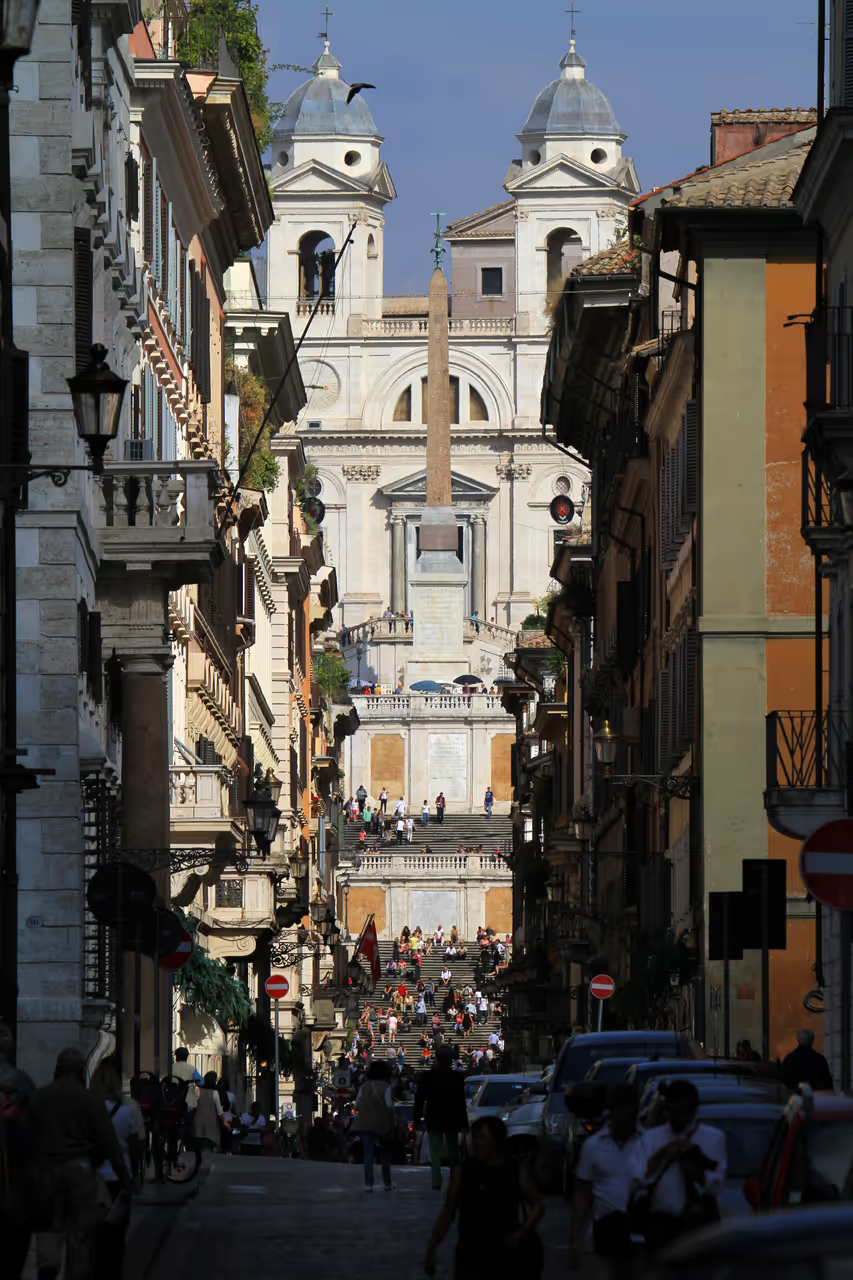
    Located quietly right on the remarkably busy Spanish Steps, this small, incredibly moving museum was the final residence of the brilliant English Romantic poet John Keats. The beautifully preserved apartment is filled with thousands of rare books, original manuscripts, and deeply personal relics of Keats, Percy Bysshe Shelley, and Lord Byron. The atmosphere is intensely melancholic and romantic, capturing the tragic, passionate spirit of the British expatriate artists who flocked to the city in the nineteenth century. Looking out from his bedroom window onto the magnificent square below is a profoundly evocative experience. It is a quiet, literary sanctuary hidden in plain sight.

    HISTORY & HIGHLIGHTS

    In the early nineteenth century, the capital became a powerful magnet for British writers, artists, and aristocrats undertaking the Grand Tour. Among them was the young, brilliant, and tragically ill poet John Keats, who arrived in the hope that the mild Mediterranean climate would cure his advanced tuberculosis. He rented a modest, beautifully located apartment directly beside the famous Spanish Steps with his devoted friend, the artist Joseph Severn. Despite the vibrant surroundings and the desperate care of his companion, Keats's health rapidly deteriorated in the small bedroom overlooking the square. He spent his final months confined to these rooms, listening to the soothing sounds of the fountain below, before passing away at the tragically young age of twenty five. Following his death, the strict health laws of the time required that all his furniture and belongings in the room be gathered and burned to prevent infection. Decades later, the apartment was acquired and lovingly restored by an international association dedicated to the legacy of the Romantic poets. It was transformed into a museum and an extensive research library, housing incredibly rare manuscripts and personal items of Keats, Shelley, and Byron. Today, it serves as a deeply moving shrine to literary genius, preserving a quiet, melancholic atmosphere amidst the frantic modern crowds outside.

    Events spanning 89 years

    YEAR 1820

    Arrival of a Poet

    The young, gravely ill poet John Keats arrived in the city seeking a cure and rented rooms directly on the Spanish Steps.

    YEAR 1821

    A Tragic End

    John Keats passed away from tuberculosis in his small bedroom, surrounded by the artistic vibrancy of the city he barely got to explore.

    YEAR 1909

    Dedication of the Museum

    The historic apartment was officially purchased, restored, and opened as a dedicated museum and library honouring the British Romantic poets.

    LOCATION

    Loading map...

    FULL PLACE DETAILS

    OVERVIEW & STATS

    Established
    In 1909, making it 117 years old
    Annual Visitors
    20,000 (2022)
    Exhibition Items
    200
    Wi-Fi
    No

    ARCHITECTURE & HERITAGE

    Heritage Status
    Italian National Heritage

    WEB & AMENITIES

    Facilities
    BookstoreCloakroom
KEEP EXPLORING

More to see in Rome