Hidden Gems & Local Secrets in Ravenna

Step off the tourist trail and experience the authentic side of the city. We've bypassed the crowded landmarks to uncover the best-kept local secrets—from quiet neighborhood courtyards to underground art scenes. Dive into the forgotten histories and unique stories that make these spots truly special.

  • Church of Saint John the Evangelist

    CHIESA DI SAN GIOVANNI EVANGELISTA
    45 M

    This is the oldest place of worship in the city, an imposing and starkly beautiful basilica founded in 424 AD by Empress Galla Placidia. Unlike the glittering monuments nearby, it possesses a raw, unadorned charm, having lost its original mosaics over the centuries. A massive Gothic portal marks the entrance, leading into a vast, silent nave that survived heavy bombing during World War II. Intriguingly, fragments of bizarre medieval floor mosaics depicting mythical beasts and crusades are mounted on the walls.

    HISTORY & HIGHLIGHTS

    The creation of this grand basilica is tied to a dramatic tale of survival. Empress Galla Placidia, one of the most powerful women in the history of the late Roman Empire, was caught in a terrifying sea storm while travelling from Constantinople to Ravenna. Facing certain death, she made a desperate vow to Saint John the Evangelist, promising to build a magnificent church in his honour if she and her family survived. The waves subsided, and true to her word, she ordered the construction of this monumental edifice upon her safe arrival. Over the ensuing centuries, the church witnessed profound changes and suffered significant losses. It was heavily modified, its glorious original mosaics lost to time and architectural whims. A remarkable discovery was made much later when bizarre, highly unusual floor mosaics from the thirteenth century were uncovered, illustrating fantastic creatures, unicorns, and scenes from the Fourth Crusade. These charmingly crude mosaics offer a stark, fascinating contrast to the refined Byzantine art found elsewhere in the city. The basilica faced its darkest hour in the summer of 1944 when it was struck by devastating Allied bombings, reducing much of the ancient structure to rubble. The post war restoration was a massive undertaking, painstakingly rebuilding the nave and stripping away later Baroque additions to return the church to its original, austere Romanesque appearance. Today, the mounted fragments of the medieval floor mosaics stand as a testament to the building's incredible resilience.

    Events spanning 1520 years

    YEAR 424

    A Vow at Sea

    Empress Galla Placidia survives a horrific storm at sea and founds the basilica to fulfil a vow made to Saint John the Evangelist.

    YEAR 1213

    Medieval Floor Mosaics

    A series of fascinating floor mosaics depicting scenes from the Crusades and mythical beasts are added to the church.

    YEAR 1944

    A Devastating Bombing

    Allied bombs strike the church during World War II, severely damaging the ancient structure and prompting massive post war restoration efforts.

    LOCATION

    Loading map...

    FULL PLACE DETAILS

    ARCHITECTURE & HERITAGE

    Heritage Status
    Italian National Heritage
    Architectural Styles
    Early Christian
  • Rasponi Crypt and Hanging Gardens

    CRIPTA RASPONI E GIARDINI PENSILI
    30 M

    Hidden in plain sight beside the bustling Piazza San Francesco lies a deeply romantic and secretive corner of the city. This site features a small, highly decorated crypt intended for the powerful Rasponi family, though it was surprisingly never used for burials. A beautiful staircase leads you up from the ancient crypt to a spectacular, elevated hanging garden offering a lush, quiet sanctuary. The view from the garden overlooking the square and the surrounding rooftops is unexpectedly delightful.

    HISTORY & HIGHLIGHTS

    The origins of this hidden sanctuary are rooted in the immense wealth and ambition of the Rasponi family, who dominated local politics for centuries. In the late eighteenth century, they commissioned a grand palazzo to display their power, including a private family crypt. Intriguingly, despite the beautiful mosaic floor installed in the crypt, no member of the family was ever actually laid to rest here. It remained an elegant, empty shell beneath the grand halls of their estate. The real magic of the site was revealed later when the elevated areas above the crypt were transformed into a spectacular hanging garden. This lush oasis, suspended above the bustling streets, provided a secretive, heavily romantic retreat for the nobility. It features an ornate neo-gothic fountain, lush climbing vines, and perfectly framed views of the adjacent Basilica of San Francesco. While the main palazzo underwent various changes and eventually became the seat of the provincial government, this small, magical corner was preserved. Today, it remains one of the city's most delightful surprises. Visitors stepping off the busy piazza are instantly transported into a serene, elevated world that feels miles away from the modern city.

    Events spanning 223 years

    YEAR 1790

    The Unused Crypt

    The powerful Rasponi family constructs a highly decorated crypt beneath their palazzo, though it is strangely never used for burials.

    YEAR 1880

    The Gardens Take Shape

    The elevated spaces above the crypt are transformed into lush hanging gardens, complete with a beautiful neo-gothic fountain.

    YEAR 2013

    A Public Oasis

    The provincial government restores the site and opens the crypt and hanging gardens to the public, creating a hidden gem in the city centre.

    LOCATION

    Loading map...

    FULL PLACE DETAILS

    OVERVIEW & STATS

    Established
    In 1950, making it 76 years old

    ARCHITECTURE & HERITAGE

    Heritage Status
    Italian National Heritage

    WEB & AMENITIES

  • Ancient City Walls

    MURA DI RAVENNA
    1 H

    While the dazzling mosaics command all the attention, the massive, weathered brick walls encircling the historic centre hold a quiet, immense power. Tracing these ancient fortifications reveals monumental gates built across vastly different eras, from Roman arches to Venetian strongholds. Walking alongside the less manicured stretches, you can physically touch the layers of empires that rose and fell here. It offers a gritty, deeply authentic perspective on the city's military past away from the polished tourist trails.

    HISTORY & HIGHLIGHTS

    The need for formidable defences was paramount in a city that repeatedly found itself at the centre of falling empires. The earliest significant fortifications were erected in the late Roman period, expanding the city's perimeter to encompass the growing population and protect against the increasingly bold barbarian incursions. When Emperor Honorius moved the capital here, these walls were the final, crucial line of defence holding back the collapse of the Western world. Centuries later, when the Venetian Republic seized control, they recognised the strategic importance of the city and completely overhauled the defensive network. They integrated the massive Rocca Brancaleone into the wall system and heavily reinforced the ancient gates. The Venetians understood that to hold the region, the city had to be an impenetrable fortress, leading to a massive military building campaign that forever altered the urban landscape. Despite surviving countless sieges and the ravages of time, the walls faced their greatest threat in the modern era. In the nineteenth century, significant sections were demolished to make way for the new railway station, sacrificing ancient history for industrial progress. Today, the surviving stretches, though fragmented, remain a powerful, silent testament to the city's turbulent and highly contested history.

    Events spanning 1461 years

    YEAR 402

    The Roman Defences

    Massive defensive walls are constructed to protect the growing city, securing its future as the capital of the Western Roman Empire.

    YEAR 1457

    The Venetian Fortifications

    The Venetian Republic heavily reinforces the walls and integrates new fortresses to solidify their military control.

    YEAR 1863

    Sacrificed for Steam

    Over 500 metres of the ancient walls are demolished to make way for the construction of the new central railway station.

    LOCATION

    Loading map...

    FULL PLACE DETAILS

    OVERVIEW & STATS

    Established
    In -299, making it 2325 years old
  • Church of Saint Euphemia

    CHIESA DI SANT'EUFEMIA
    20 M

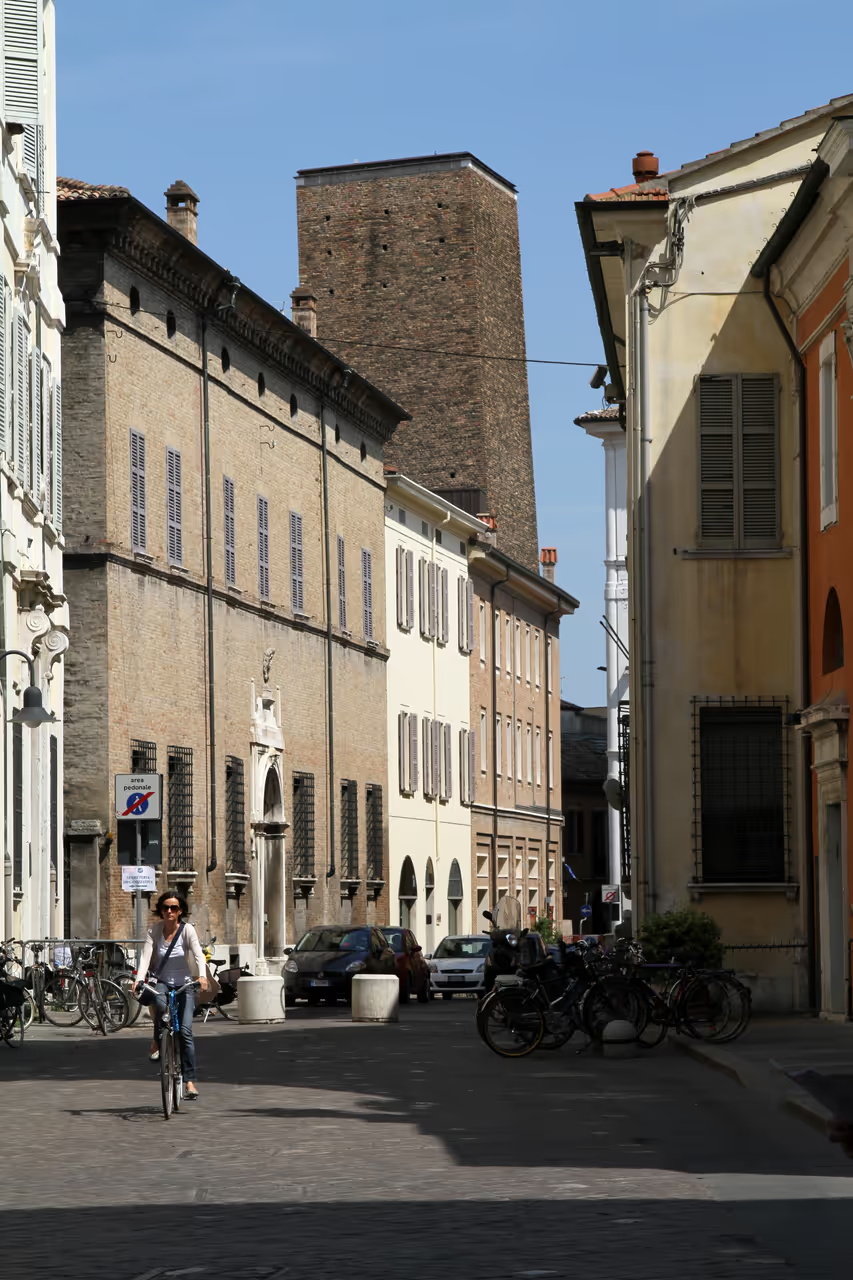
    From the outside, this highly unassuming eighteenth century church easily blends into the surrounding streets, completely masking the treasures it holds. Step inside, and you find a delightfully harmonious, circular Baroque interior that is rarely crowded. However, its true secret lies beneath the floorboards; it serves as the spectacular entrance down into the subterranean Domus of the Stone Carpets. It is a stunning example of how the city's history is physically layered on top of itself.

    HISTORY & HIGHLIGHTS

    The site on which the church stands has a history stretching back to the earliest days of Christianity in the region. Long before the current Baroque structure was erected, a much older, paleochristian temple existed here, dedicated to Saint Euphemia. This ancient church stood over the remains of an even older, sprawling Byzantine palace, though knowledge of those buried ruins was completely lost to the passage of time. In the eighteenth century, the decaying ancient church was entirely demolished to make way for a modern, fashionable replacement. An elegant, circular floor plan was chosen, creating a small but perfectly proportioned architectural jewel. For centuries, parishioners worshipped here, entirely unaware that just three metres beneath their feet lay some of the most spectacular, undiscovered floor mosaics in the world. The church's destiny changed forever in 1993 during routine construction work in an adjacent courtyard. Diggers broke through the earth to reveal the astonishing 'Domus of the Stone Carpets'. The church was subsequently transformed, not just as a place of worship, but as the grand gateway to the subterranean archaeological marvel, physically linking the city's eighteenth century present with its sixth century past.

    Events spanning 1493 years

    YEAR 500

    The Ancient Temple

    A paleochristian church is established on the site, built unknowingly over the ruins of a massive Byzantine palace.

    YEAR 1742

    A Baroque Rebirth

    The decaying ancient church is demolished and replaced with the elegant, circular Baroque structure seen today.

    YEAR 1993

    A Subterranean Discovery

    Stunning Byzantine mosaics are discovered underground right next door, transforming the church into the entrance for the new archaeological site.

    LOCATION

    Loading map...

    FULL PLACE DETAILS

    OVERVIEW & STATS

    Established
    In 1742, making it 284 years old

    ARCHITECTURE & HERITAGE

    Heritage Status
    Italian National Heritage
    Architects
    Giovanni Francesco Buonamici
KEEP EXPLORING

More to see in Ravenna