Hidden Gems & Local Secrets in Assisi

Step off the tourist trail and experience the authentic side of the city. We've bypassed the crowded landmarks to uncover the best-kept local secrets—from quiet neighborhood courtyards to underground art scenes. Dive into the forgotten histories and unique stories that make these spots truly special.

  • Church of Santa Maria Maggiore

    CHIESA DI SANTA MARIA MAGGIORE
    45 M

    Tucked away in the quiet Piazza del Vescovado, this beautiful, incredibly ancient church served as the city's original cathedral before San Rufino was built. Its simple, unassuming exterior hides an interior rich with faded, evocative frescoes and fascinating architectural remnants of previous Roman structures. It was in the square directly outside this very church that a dramatic, life altering event occurred: a young St. Francis publicly stripped off his fine clothes and renounced his wealthy father. Today, it also houses the tomb of Blessed Carlo Acutis, drawing a new, modern generation of pilgrims to its quiet nave. The atmosphere here is profoundly peaceful and layered with centuries of significant historical weight. It is an absolute must visit for those looking to understand the very beginnings of the Franciscan story.

    HISTORY & HIGHLIGHTS

    Santa Maria Maggiore holds the distinct honour of being Assisi's earliest cathedral, rooted in the very beginnings of Christianity in the region. Founded in the early Christian era, it was built directly over a wealthy Roman domus, whose ancient mosaic floors and foundation walls can still be glimpsed through the church's crypt. For centuries, it was the absolute epicentre of religious authority in the city, housing the bishop's throne and serving as the primary site for civic and spiritual gatherings. However, its most defining historical moment occurred outside its doors in 1206. In the adjacent piazza, before the local bishop and a shocked crowd, a young Giovanni di Bernardone stripped himself naked, handing his clothes back to his furious, wealthy merchant father. This profound act of renunciation marked the definitive birth of Francis the saint. Even after the cathedral seat was moved to San Rufino, Santa Maria Maggiore retained an aura of profound foundational importance. In recent years, the church has experienced a remarkable modern resurgence. It is now the Sanctuary of Renunciation and houses the glass tomb of Carlo Acutis, a modern teenager beatified by the Catholic Church. This addition has beautifully bridged the gap between ancient medieval renunciation and contemporary faith, making it a highly unique, evolving spiritual destination.

    Events spanning 1620 years

    YEAR 400

    Ancient Foundations

    The original church is built directly over the ruins of a wealthy, sprawling Roman domus, establishing the site as an early Christian hub.

    YEAR 1206

    The Great Renunciation

    In a dramatic public display outside the church, St. Francis strips off his clothes and entirely renounces his family's wealth to embrace poverty.

    YEAR 2020

    A Modern Pilgrim Destination

    The church becomes the final resting place of Blessed Carlo Acutis, instantly drawing thousands of contemporary, young pilgrims to its ancient nave.

    LOCATION

    Loading map...

    FULL PLACE DETAILS

    OVERVIEW & STATS

    Established
    In 1101, making it 925 years old

    ARCHITECTURE & HERITAGE

    Heritage Status
    Italian National Heritage
    Architectural Styles
    Romanesque

    WEB & AMENITIES

  • Church of Santo Stefano

    CHIESA DI SANTO STEFANO
    30 M

    This unassuming church represents the profound simplicity that defined the earliest days of Assisi's religious devotion. Built in the 12th century, its rough hewn stone walls and tiny windows perfectly encapsulate the rustic medieval aesthetic that existed before the grand basilicas were constructed. It is widely believed that St. Francis himself frequently prayed within these very walls, seeking solace in its quiet, unadorned interior. Unlike the lavishly frescoed monuments nearby, Santo Stefano has remained virtually unchanged for over eight centuries, offering a rare, authentic glimpse into the ascetic lifestyle championed by the Franciscan order. Local lore suggests the church bells miraculously rang on their own at the exact moment of St. Francis's death in 1226. Today, it stands as a silent sentinel of the town's humble origins, cherished by locals who seek a peaceful retreat from the busy main streets.

    HISTORY & HIGHLIGHTS

    Santo Stefano's story is one of enduring simplicity in a city that became defined by monumental grandeur. While the rest of Assisi transformed under the weight of massive papal building projects following the canonization of its saints, this small 12th century parish church quietly resisted change. It served the everyday, working class citizens of the medieval commune, offering a modest space for prayer away from the intense political and religious maneuvering that consumed the upper echelons of the city. Its significance is deeply intertwined with local folklore, most notably the legend that its bells tolled spontaneously when St. Francis died at the Porziuncola in the valley below. This miraculous association cemented its quiet importance among the devoted locals. Throughout centuries of brutal sieges, devastating earthquakes, and changing architectural fashions, Santo Stefano's thick, unadorned walls stood firm, preserving a vital link to the harsh, ascetic reality of the medieval world that birthed the Franciscan movement.

    Events spanning 350 years

    YEAR 1150

    A Humble Foundation

    The rustic, unadorned stone church is constructed in the mid 12th century to serve the everyday spiritual needs of the local medieval populace.

    YEAR 1226

    A Miraculous Tolling

    According to deeply held local legend, the bells of Santo Stefano ring entirely on their own at the exact moment of St. Francis's death.

    YEAR 1500

    Enduring the Centuries

    While grand basilicas are erected across the city, the church remains intentionally untouched, preserving its highly authentic, austere medieval character to this day.

    LOCATION

    Loading map...

    FULL PLACE DETAILS

    ARCHITECTURE & HERITAGE

    Heritage Status
    Italian National Heritage
    Architectural Styles
    Romanesque
  • Monastery of St. Quirico

    MONASTERO DI SAN QUIRICO
    30 M

    Hidden within the steep residential alleys just below the main historic centre, this heavily secluded monastery offers a rare, profound glimpse into active cloistered life. The Poor Clare nuns who reside here live a life of intense prayer and absolute separation from the outside world. While you cannot tour the living quarters, visitors can enter the very small, unassuming public chapel. If you time your visit correctly, usually early morning or around 6 PM, you can hear the incredibly beautiful, ethereal chanting of the sisters from behind the iron grates. The atmosphere is intensely reverent, silent, and deeply moving. It provides an incredibly authentic, powerful connection to the living spiritual traditions that still heavily define Assisi today.

    HISTORY & HIGHLIGHTS

    The Monastery of St. Quirico is a living, breathing continuation of the radical spiritual path forged by St. Clare in the 13th century. While the massive, ornate basilicas of Assisi celebrate the history of the Franciscan movement, this hidden compound embodies its ongoing, daily reality. The order of the Poor Clares was founded on principles of absolute poverty and strict enclosure, completely withdrawing from secular society to focus entirely on prayer and contemplation. For centuries, the nuns of St. Quirico have maintained this rigorous, secluded lifestyle behind high stone walls, acting as the silent, spiritual engine of the city. They have survived wars, plagues, and the heavy suppression of religious orders during the turbulent 19th century unification of Italy. Today, their ethereal chanting drifting into the small public chapel remains one of the most profoundly moving, authentic experiences a visitor can have, offering a highly rare window into a way of life that has remained virtually unchanged for 800 years.

    Events spanning 812 years

    YEAR 1212

    The Rule of St. Clare

    St. Clare establishes her incredibly strict order of cloistered nuns, focusing entirely on radical poverty, deep contemplation, and separation from society.

    YEAR 1860

    Surviving Suppression

    The monastery manages to quietly endure the intense suppression of religious orders orchestrated during the political unification of the Italian state.

    YEAR 2024

    A Living Tradition

    To this day, the cloistered sisters continue their ancient daily rituals, offering visitors a highly rare auditory glimpse of their ethereal evening chants.

    LOCATION

    Loading map...
  • Church of Santa Margherita

    CHIESA DI SANTA MARGHERITA
    15 M

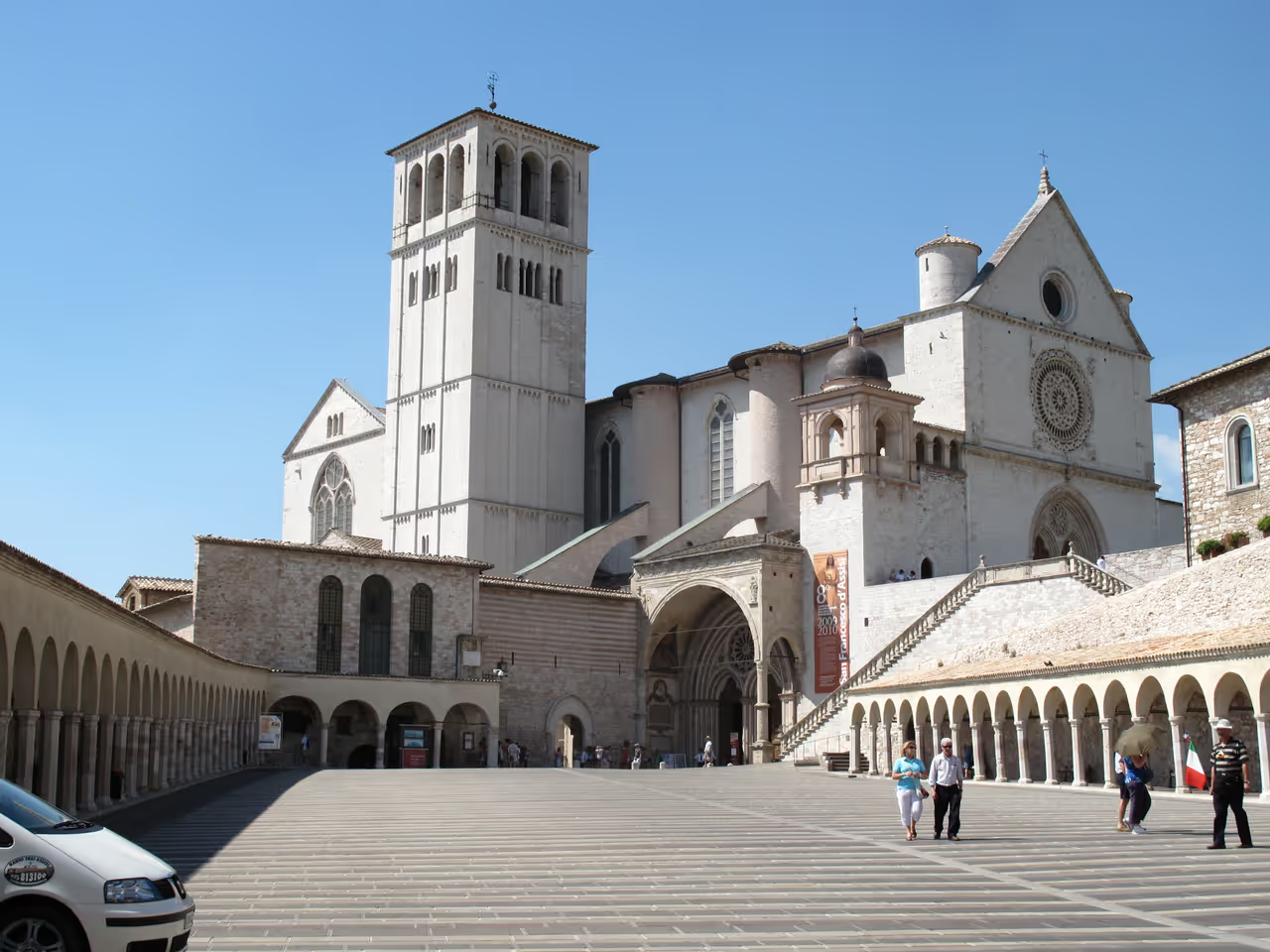
    Tucked tightly into a small, incredibly picturesque corner directly opposite the massive Basilica of San Francesco, this tiny church is a true hidden gem. Most tourists rush right past it in their eagerness to reach the main sanctuary, completely missing its quiet charm. The small piazza directly in front of the church offers an incredibly beautiful, highly unusual perspective of the famous basilica's imposing side walls and flying buttresses. The interior of Santa Margherita is modest and deeply peaceful, offering a serene escape from the massive crowds just a few metres away. It is an absolutely fantastic spot to take stunning, uniquely framed photographs of the basilica without having to fight for space. Stopping here provides a highly rewarding, quiet moment of reflection.

    HISTORY & HIGHLIGHTS

    The small Church of Santa Margherita perfectly illustrates the incredibly dense, deeply layered urban fabric of medieval Assisi. Constructed in the shadows of the monumental Basilica of San Francesco, it was built to serve a very specific, localized community living directly on the threshold of the great pilgrimage site. While the basilica drew massive crowds of foreign travelers and high ranking dignitaries, Santa Margherita remained a fiercely local, intimate space for everyday devotion. Its history is largely unrecorded in the grand annals of the city, lacking the dramatic miracles or papal interventions of its massive neighbor. However, its enduring presence speaks to the profound depth of faith woven into every single street corner of Assisi. Today, it acts as a quiet, unassuming observation deck, completely overlooked by the masses, yet offering one of the most stunning, highly privileged architectural views of the great Franciscan masterpiece.

    Events spanning 700 years

    YEAR 1300

    A Modest Foundation

    The small church is built in the tight medieval alleyways directly facing the massive construction site of the new Franciscan basilica.

    YEAR 1600

    A Quiet Neighbor

    While millions of pilgrims flock to the grand basilica opposite, Santa Margherita serves as a quiet, heavily localized space for everyday neighborhood worship.

    YEAR 2000

    A Secret Viewpoint

    In the modern era, its tiny front piazza becomes highly prized by astute photographers for offering a perfectly framed, entirely uncrowded view of the basilica.

    LOCATION

    Loading map...
  • Church of Santa Maria delle Rose

    CHIESA DI SANTA MARIA DELLE ROSE
    20 M

    Located in an incredibly charming, highly secretive corner behind the bustling Piazza del Comune, this unconsecrated church is a true hidden delight. Stripped of its religious furnishings, the bare, remarkably atmospheric stone interior is frequently used for fascinating contemporary art exhibitions and quiet cultural events. Finding the building requires navigating a maze of incredibly picturesque, flower lined medieval alleyways that feel entirely untouched by the tourism industry. The contrast between the ancient, crumbling stone architecture and the modern art occasionally displayed inside is visually striking. Because it is so well hidden, you will often find yourself entirely alone in the space, able to appreciate its raw, architectural beauty in total silence. It is a fantastic, highly rewarding discovery for curious urban explorers.

    HISTORY & HIGHLIGHTS

    Santa Maria delle Rose is a testament to the shifting fortunes and layered history of Assisi's urban fabric. Built in the 13th century in a tightly packed, affluent residential neighborhood just behind the main civic square, it served as an intimate neighborhood parish. For centuries, it quietly anchored the spiritual life of the families who lived in the surrounding stone mansions, deeply woven into the everyday, mundane reality of the medieval commune. However, as the centuries passed and the city's population fluctuated, the church eventually fell out of regular religious use. It was deconsecrated, its precious liturgical items removed, and the building was left as an empty architectural shell. Instead of falling into complete ruin, this incredibly atmospheric space found a new, entirely secular purpose in the modern era. Today, its raw, unadorned stone walls provide a stark, stunningly beautiful backdrop for contemporary art installations, breathing new, creative life into the ancient structure.

    Events spanning 750 years

    YEAR 1250

    A Neighborhood Parish

    The church is constructed to serve the densely populated, affluent residential district situated directly behind the bustling main civic square.

    YEAR 1850

    Deconsecration

    After centuries of service, shifting demographics lead to the church being deconsecrated and emptied of its liturgical furnishings.

    YEAR 2000

    A New Artistic Purpose

    The beautifully austere, raw stone interior finds a second life as a highly atmospheric venue for contemporary art exhibitions and cultural events.

    LOCATION

    Loading map...
KEEP EXPLORING

More to see in Assisi