Hidden Gems & Local Secrets in Valparaíso

Step off the tourist trail and experience the authentic side of the city. We've bypassed the crowded landmarks to uncover the best-kept local secrets—from quiet neighborhood courtyards to underground art scenes. Dive into the forgotten histories and unique stories that make these spots truly special.

  • Dissidents' Cemetery

    CEMENTERIO DE LOS DISIDENTES
    45 M

    Located high on Panteón Hill, this peaceful, walled graveyard was created in the 19th century for the city's large Protestant immigrant population. Because non-Catholics were not allowed in the main cemetery, this space became a beautiful, melancholic resting place for the British, German, and American pioneers. The gravestones offer a fascinating, quiet history lesson about the foreigners who shaped the city. It provides a serene, shaded escape from the busy streets below.

    HISTORY & HIGHLIGHTS

    During the 19th-century maritime boom, the city was flooded with European and North American immigrants who brought immense wealth and new industries. However, many were Protestants, and the strict Catholic laws of the time forbade their burial in consecrated ground. Often, their bodies were unceremoniously buried on the beaches. To resolve this indignity, the community purchased land on Panteón Hill to establish the Dissidents' Cemetery. It became a dignified, deeply moving resting place that chronicles the diverse, multicultural heritage of the people who transformed a small Spanish village into a global port.

    Events spanning 185 years

    YEAR 1820

    Burials on the Beach

    Strict Catholic laws force non-Catholic immigrants to bury their dead on the beaches at night.

    YEAR 1825

    A Dignified Resting Place

    The British community successfully purchases land on Panteón Hill to establish a formal Protestant cemetery.

    YEAR 2005

    A Monument to Diversity

    The cemetery is officially recognized as a National Monument, preserving the legacy of the city's immigrants.

    LOCATION

    Loading map...

    FULL PLACE DETAILS

    OVERVIEW & STATS

    Established
    In 1825, making it 201 years old

    ARCHITECTURE & HERITAGE

    Heritage Status
    Historical Monument Of Chile
  • Holy Spirit Funicular

    ASCENSOR ESPÍRITU SANTO
    15 M

    Tucked away in an unassuming alley behind the Natural History Museum, this funicular is often missed by visitors sticking to the main sights. It is a particularly steep, enclosed carriage that transports you quickly into the heart of Cerro Bellavista. Because it is less touristy, you get a genuine feel for how locals commute daily. The ride delivers you near the spectacular Open Air Museum murals.

    HISTORY & HIGHLIGHTS

    Built to connect the bustling flatlands with the increasingly populated Cerro Bellavista, the Holy Spirit Funicular was a lifeline for the working-class residents of the hill. Unlike the grand, highly visible funiculars built for the wealthy European immigrants on Cerro Alegre, this lift was tucked away, designed purely for function. It has survived earthquakes, economic downturns, and periods of severe neglect. Today, it stands as a testament to the city's resilient infrastructure, providing a charmingly gritty, authentic ride that feels untouched by modern tourism.

    Events spanning 87 years

    YEAR 1911

    Connecting the Hill

    The funicular is constructed to aid the daily commute of residents living on the steep slopes of Cerro Bellavista.

    YEAR 1985

    Surviving the Quakes

    The robust engineering allows the lift to continue operating despite numerous significant seismic events in the region.

    YEAR 1998

    A National Monument

    The Chilean government recognizes its historical value and declares it a National Historical Monument.

    LOCATION

    Loading map...

    FULL PLACE DETAILS

    OVERVIEW & STATS

    Established
    In 1911, making it 115 years old

    ARCHITECTURE & HERITAGE

    Heritage Status
    Historical Monument Of Chile
  • Slowest World Train Café

    MUSEO DEL TREN MÁS LENTO DEL MUNDO
    45 M

    Abandoned on a stretch of beach near the border with Viña del Mar, this rusted old train carriage has been charmingly repurposed into a quirky café. It is a brilliant showcase of local absurdity and artistic upcycling, filled with eccentric decorations and oddities. The coffee served inside is surprisingly good, and the prices are very fair. It provides a highly memorable, slightly surreal spot to relax right next to the ocean waves.

    HISTORY & HIGHLIGHTS

    This peculiar attraction embodies the city's knack for turning neglect into art. The battered train carriage was left stranded on the tracks for years, a victim of changing transport infrastructure. Rather than letting it succumb to the salty air and rust, creative locals claimed the space, transforming it into a quirky waterfront refuge. It stands today not as a monument to efficiency, but as a playful rebellion against the fast pace of modern life, inviting visitors to sit, sip coffee, and embrace the slow, rhythmic sound of the nearby ocean.

    Events spanning 25 years

    YEAR 1990

    A Carriage Abandoned

    Changes in local railway operations leave a single train carriage stranded on the coastal tracks.

    YEAR 2005

    Creative Reclamation

    Local eccentrics take over the rusting shell, decorating it with oddities and opening a makeshift café.

    YEAR 2015

    A Beloved Local Secret

    The café gains a cult following for its absurd charm and surprisingly excellent coffee by the sea.

    LOCATION

    Loading map...
  • Pierre Lotti Alley

    PASAJE PIERRE LOTTI
    20 M

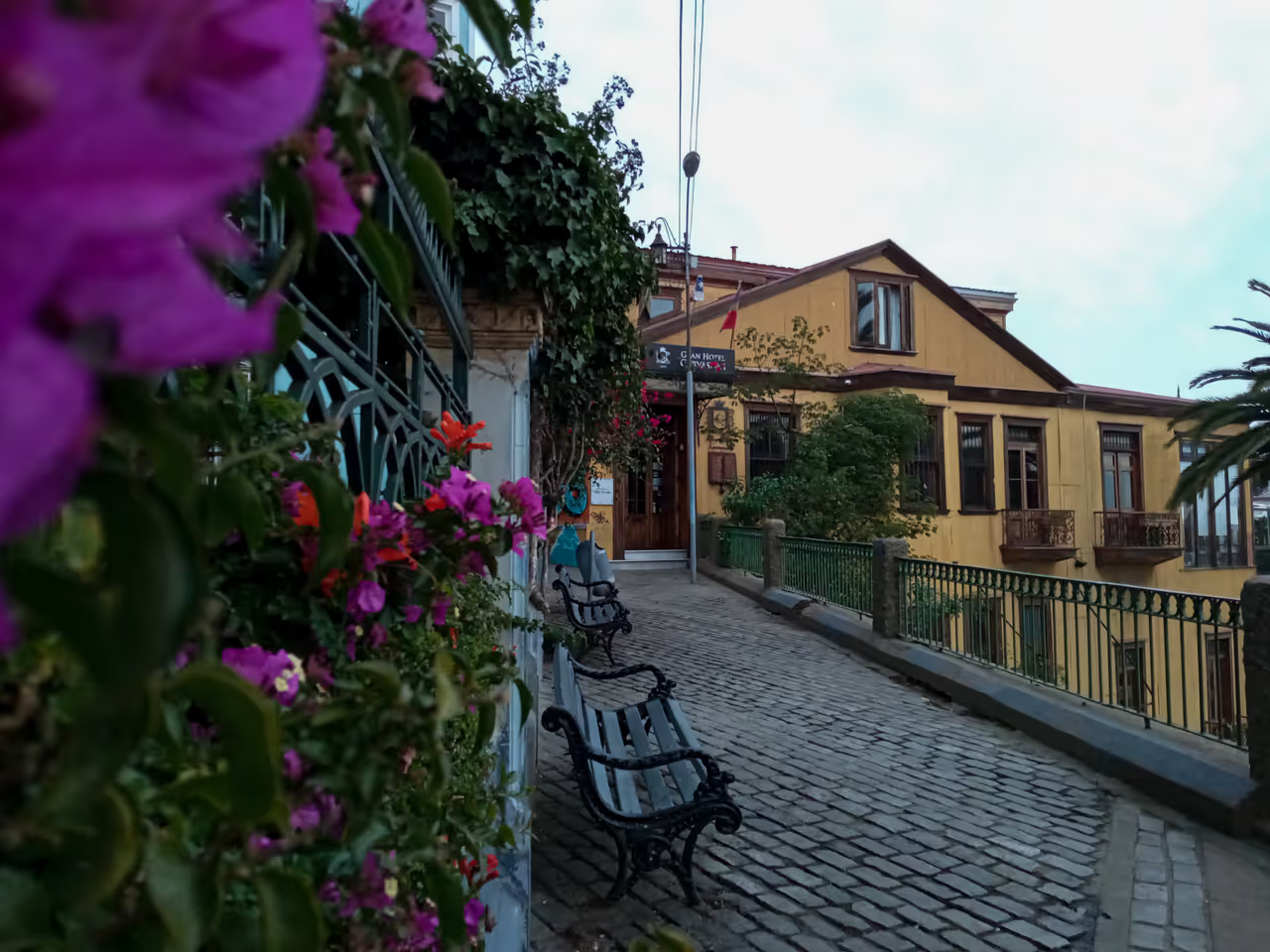
    This incredibly narrow, traffic-free alley on Cerro Concepción is a perfect example of the city's hidden charms. Lined with small gardens and colourful, creaky 19th-century homes, it feels entirely removed from the noise of the modern world. It is named after the French naval officer and writer who was captivated by the city's romance. Walking through it is like stepping directly into a tranquil, living postcard.

    HISTORY & HIGHLIGHTS

    The steep hills of the city forced architects to abandon traditional grid layouts, resulting in a chaotic, organic network of staircases and narrow passages. Pasaje Pierre Lotti is one of the most picturesque results of this forced creativity. It was built during the late 19th century to accommodate the booming population of European merchants seeking beautiful views away from the noisy port. Named after the famous French exoticist writer Julien Viaud (known by his pen name Pierre Lotti) who visited the city, the alley perfectly captures the romantic, slightly melancholic beauty that inspired poets and artists for generations.

    Events spanning 70 years

    YEAR 1880

    Organizing the Chaos

    Architects design narrow, pedestrian-only alleys to navigate the steep terrain of Cerro Concepción.

    YEAR 1885

    The Writer's Visit

    French naval officer and writer Pierre Lotti visits the city, famously falling in love with its dramatic landscape.

    YEAR 1950

    A Quiet Preservation

    The alley remains untouched by modern traffic, preserving its 19th-century charm and quiet atmosphere.

    LOCATION

    Loading map...
  • Pirate's Cave

    CUEVA DEL PIRATA
    1 H

    A rugged coastal spot steeped in local myth, said to be where the notorious Francis Drake hid his plundered treasure in 1578. The area consists of jagged rocks and hidden inlets carved by the relentless ocean waves. While you likely will not find gold, the dramatic scenery and crashing surf make it a thrilling place to explore. It brings the city's chaotic, swashbuckling early history vividly to life.

    HISTORY & HIGHLIGHTS

    In the late 16th century, the Pacific coast of South America was a largely unguarded Spanish treasure route. Enter Francis Drake, the audacious English privateer who sailed the Golden Hind into the bay in 1578. The small, unprepared settlement was easily sacked, and Drake's men plundered the local chapel and ships. According to enduring local lore, Drake hid a portion of his spoils in a sea cave along the rugged cliffs. Whether the treasure exists or not, the 'Cueva del Pirata' remains a powerful symbol of the city's vulnerability and its romanticised, violent colonial past.

    Events spanning 22 years

    YEAR 1578

    The Golden Hind Arrives

    Francis Drake sails his ship into the bay, catching the small Spanish settlement completely off guard.

    YEAR 1578

    Plundering the Chapel

    Drake's men sack the town, looting gold, silver, and the chalice from the local church.

    YEAR 1600

    The Legend is Born

    Stories begin to circulate among locals that Drake hid part of his treasure in a coastal sea cave.

    LOCATION

    Loading map...
KEEP EXPLORING

More to see in Valparaíso