Hidden Gems & Local Secrets in Bari

Step off the tourist trail and experience the authentic side of the city. We've bypassed the crowded landmarks to uncover the best-kept local secrets—from quiet neighborhood courtyards to underground art scenes. Dive into the forgotten histories and unique stories that make these spots truly special.

  • Apricot Square

    LARGO ALBICOCCA
    30 M

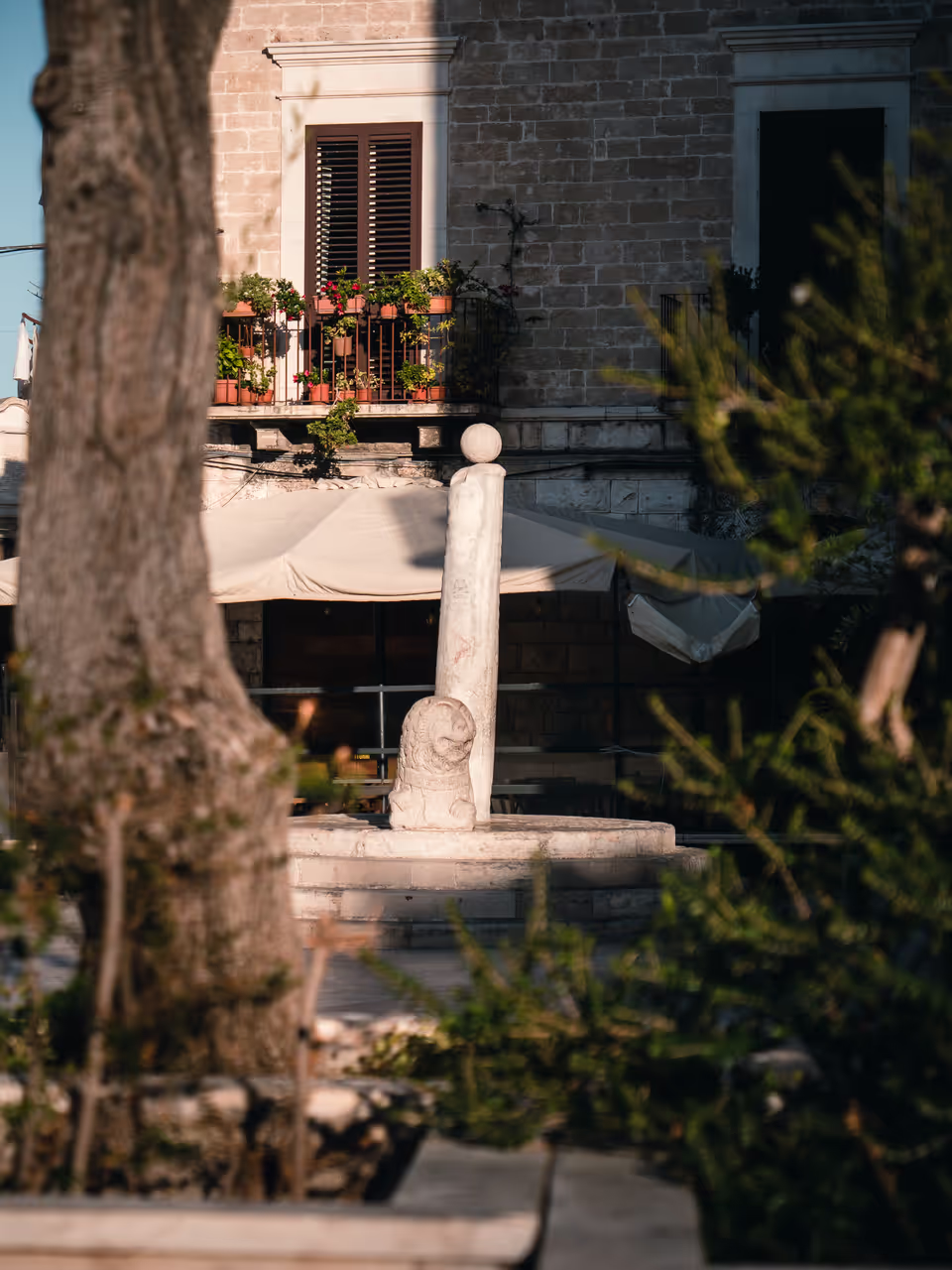
    Once a completely neglected and overgrown courtyard hidden deep within the medieval labyrinth, this small square has undergone a truly magical transformation. The local residents banded together to completely reclaim the space, turning it into a vibrant and highly welcoming community hub. They planted beautiful olive trees, added rustic seating, and strung up incredibly charming fairy lights that illuminate the area at night. It now serves as a lively outdoor living room where neighbours gather to share incredible homemade food and loud conversations. Finding it requires happily getting lost in the narrow alleys. It stands as a brilliant and deeply heartwarming example of grassroots urban renewal.

    HISTORY & HIGHLIGHTS

    For decades, this small enclosed space was largely ignored by the wider city, serving mostly as a dark and overlooked storage area deep within the confusing medieval maze. The surrounding neighbourhood was historically viewed as rough and unwelcoming, leading many locals and visitors alike to avoid the winding alleys entirely. However, as the old town began to slowly shed its dangerous reputation, the incredibly proud residents of the courtyard decided it was time to radically change their immediate environment. Driven by a profound desire for community renewal, the neighbours launched a passionate grassroots initiative to clean up and beautify the forgotten space. They worked tirelessly to clear the debris, planting vibrant flowers and small olive trees to inject life into the stone courtyard. The addition of charming, warm string lights overhead completely transformed the atmosphere, turning the once intimidating alleyway into a deeply romantic and inviting enclave. Today, the courtyard stands as a shining beacon of local pride and a beloved secret among those who know where to find it. The space frequently hosts impromptu community dinners where residents bring out massive tables and share fantastic traditional dishes deep into the night. It perfectly encapsulates the incredibly resilient, warm, and communal spirit that truly defines the ancient heart of the city.
    Events spanning 2 years

    YEAR 2016

    The Grassroots Transformation

    Local residents successfully organise a community effort to clean and completely redesign the neglected courtyard.

    YEAR 2018

    A New Community Hub

    The revitalised square becomes widely celebrated as a model for urban regeneration in the historic centre.

    LOCATION

    Loading map...
  • Military Memorial of the Fallen

    SACRARIO MILITARE DEI CADUTI D'OLTREMARE
    1 H 30 M

    Located quietly on the southern outskirts, this immense and deeply solemn memorial is rarely visited by casual tourists. The massive white marble complex serves as the final resting place for over seventy thousand Italian soldiers who perished overseas during the World Wars. The sheer scale of the incredibly long, perfectly silent corridors lined with names is profoundly moving. An adjacent museum preserves poignant personal letters, uniforms, and haunting battlefield relics. The incredibly manicured gardens provide a deeply peaceful space for quiet reflection. It offers a powerful and heartbreaking perspective on the immense human cost of global conflict.

    HISTORY & HIGHLIGHTS

    Following the devastation of the Second World War, the national government recognised a profound need to honour the immense number of soldiers who had fallen on foreign soil and whose remains were scattered across distant battlefields. They commissioned this monumental sanctuary to serve as a unified, dignified resting place, carefully bringing home tens of thousands of bodies from North Africa, the Balkans, and the Mediterranean islands. The incredibly austere and solemn architecture was designed specifically to reflect the immense weight of the national tragedy and provide a quiet space for mourning families. The complex was officially inaugurated in 1967, instantly becoming one of the most important and sacred military memorials in the entire country. The vast, echoing corridors contain thousands upon thousands of identical marble plaques, creating a deeply humbling visual representation of the staggering human cost of war. An associated museum was later established on the grounds to preserve the heartbreaking personal artifacts and desperately poignant final letters written by the young men who never returned. Despite its massive historical and emotional significance, the sanctuary remains largely unknown to international visitors, maintaining an atmosphere of profound and uninterrupted peace. It stands as a vital site of historical memory, ensuring that the terrible sacrifices of the past are never erased by the passage of time. The impeccably maintained grounds provide a deeply moving counterpoint to the busy, joyful atmosphere of the modern coastal city.

    Events spanning 13 years

    YEAR 1967

    Conception of the Memorial

    The national government approves the massive project to repatriate and honour soldiers fallen in overseas campaigns.

    YEAR 1980

    Establishment of the Museum

    A dedicated museum space is added to the complex to preserve highly personal battlefield artifacts and documents.

    LOCATION

    Loading map...

    FULL PLACE DETAILS

    OVERVIEW & STATS

    Established
    In 1967, making it 59 years old
    Annual Visitors
    5,680 (2021)
    Wi-Fi
    No

    ARCHITECTURE & HERITAGE

    Heritage Status
    Italian National Heritage
    Architects
    Paolo Caccia Dominioni

    WEB & AMENITIES

    Facilities
    Parking Area
    Accessibility
    Wheelchair Accessible
  • Russian Orthodox Church

    CHIESA ORTODOSSA RUSSA DI SAN NICOLA
    45 M

    Tucked away in the modern Carrassi district, this stunning architectural marvel seems transported directly from a snowy eastern landscape. The vibrant green onion domes and crisp white walls create an incredibly striking contrast against the typical local architecture. It was constructed in the early twentieth century to serve the massive influx of Russian pilgrims visiting the city to venerate Saint Nicholas. Inside, the walls are covered with exquisite traditional icons and deeply aromatic incense fills the air. The atmosphere is profoundly mystical and entirely different from the grand Catholic cathedrals nearby. It serves as a beautiful, living monument to the powerful cultural bridge between the city and the East.

    HISTORY & HIGHLIGHTS

    The powerful devotion to Saint Nicholas has always transcended the deep divisions within the Christian world, drawing immense numbers of Orthodox pilgrims from Eastern Europe to the Adriatic coast. Recognising the exhausting journey undertaken by thousands of devout Russians, the Imperial Orthodox Palestine Society commissioned this beautiful sanctuary to provide both spiritual comfort and physical shelter. The brilliant architect Aleksej Ščusev designed a magnificent structure that perfectly replicated the traditional styles of Novgorod, bringing a striking piece of the Russian homeland directly to Southern Italy. The turbulent events of the twentieth century heavily impacted the fate of the building, with ownership transferring back and forth amidst the chaos of the Russian Revolution and subsequent world wars. For decades, the local municipality managed the property, maintaining its structural integrity while the flow of eastern pilgrims dwindled to a halt. However, following the fall of the Soviet Union, the spiritual connection was gloriously revived, and the keys to the church were officially returned to the Patriarchate of Moscow in a highly symbolic diplomatic ceremony. Today, the vibrant green onion domes stand proudly as a beautiful symbol of reconciliation and enduring faith. The sanctuary serves a highly active local Orthodox community while continuing to welcome the steadily returning flow of international pilgrims. Stepping inside this richly decorated space offers a deeply peaceful and totally unexpected cultural experience entirely separate from the typical medieval highlights of the city.

    Events spanning 96 years

    YEAR 1913

    Foundation of the Sanctuary

    The first stone is laid for a massive church and pilgrim hostel to serve the growing number of Russian visitors.

    YEAR 1937

    Municipal Takeover

    Following the extreme political upheaval of the Russian Revolution, the local city council takes over the management of the complex.

    YEAR 2009

    Historic Return

    In a major diplomatic ceremony, the property is officially handed back to the Russian Orthodox Church by the Italian government.

    LOCATION

    Loading map...

    FULL PLACE DETAILS

    OVERVIEW & STATS

    Established
    In 1913, making it 113 years old

    ARCHITECTURE & HERITAGE

    Architectural Styles
    Russian Revival
    Architects
    Alexey Shchusev
    Founders
    Imperial Orthodox Palestine Society

    WEB & AMENITIES

  • Church of Saint Anna

    CHIESA DI SANT'ANNA
    30 M

    This incredibly unassuming building holds a surprisingly complex and highly multicultural history within its ancient stone walls. Originally constructed in the thirteenth century, it served as the 'Scola Grande', the primary synagogue for the thriving local Jewish community. Following the brutal expulsion of the Jews under Spanish rule, the building was heavily modified and converted into a Catholic church. Traces of its original purpose are still visible to the careful observer, offering a silent testament to a lost vibrant community. It is a deeply poignant space that physically maps the harsh political shifts of the Middle Ages. The building now occasionally serves as a small, highly fascinating cultural museum.

    HISTORY & HIGHLIGHTS

    During the early Middle Ages, the coastal region was home to a highly prosperous and incredibly influential Jewish community comprised of brilliant scholars, merchants, and farmers. The city was widely recognised as a major intellectual hub, boasting highly prestigious Talmudic schools that commanded deep respect across the Mediterranean world. At the very heart of this vibrant community stood the 'Scola Grande', a magnificent synagogue constructed during the surprisingly tolerant reign of the Swabian Emperor Frederick II, who actively protected the Jewish population. However, the political climate drastically darkened as power shifted to the deeply intolerant Spanish rulers in the sixteenth century. A devastating edict was issued demanding the forced conversion or total expulsion of the Jewish population, effectively erasing a centuries old culture from the local fabric overnight. The grand synagogue was immediately confiscated and repurposed into a Catholic church dedicated to Saint Anna, its original architectural identity deliberately obscured by subsequent renovations. Today, the incredibly quiet building stands as a powerful and highly poignant reminder of the complex, multicultural roots of the coastal city. Careful recent restorations have highlighted the subtle architectural clues pointing back to its original sacred purpose. It now serves as a highly thought provoking cultural space, ensuring that the memory of the brilliant scholars and merchants who once thrived here is not entirely lost to history.

    Events spanning 763 years

    YEAR 1246

    Construction of the Synagogue

    The thriving local Jewish community builds a magnificent place of worship known as the Scola Grande.

    YEAR 1510

    The Brutal Expulsion

    Spanish rulers enact harsh decrees forcing the total expulsion of the Jewish community and confiscating their properties.

    YEAR 2009

    Conversion to a Museum

    The historic building is officially transformed into a small museum dedicated to preserving its highly complex cultural history.

    LOCATION

    Loading map...

    FULL PLACE DETAILS

    ARCHITECTURE & HERITAGE

    Heritage Status
    Italian National Heritage
    Architectural Styles
    Renaissance
  • Don Bosco Park

    PARCO DON BOSCO
    30 M

    Nestled deep within the working class Libertà district, this small but highly significant park serves as an absolute lifeline for the surrounding community. It is heavily associated with the local Salesian centre, functioning as a vibrant, safe haven for neighbourhood children and families. You will find a wonderfully chaotic atmosphere filled with improvised football matches, lively local chatter, and community gatherings. It sits completely off the radar of standard guidebooks, offering an unfiltered look at the gritty but incredibly warm heart of the city. The space is a testament to the power of grassroots social spaces in dense urban environments. Spending time here reveals the true, unpolished, and deeply communal soul of the local residents.

    HISTORY & HIGHLIGHTS

    The Libertà district, built to accommodate the exploding working class population in the early twentieth century, was historically one of the most densely populated and socially complex neighbourhoods in the city. Concrete apartment blocks dominated the landscape, leaving virtually no safe, open spaces for children to play or communities to gather. Recognising this urgent social crisis, the local Salesian order of Don Bosco stepped in to provide a critical sanctuary, establishing a community centre and adjoining park to serve the marginalised youth. For decades, Parco Don Bosco has acted as a vital social anchor, actively working to keep children off the streets and providing a welcoming environment for families facing economic hardship. The park has witnessed countless community initiatives, from after school sports leagues to local festivals, entirely driven by the unwavering dedication of the Salesian volunteers and the resilient neighbourhood residents. It is a space where the incredibly strong, protective bonds of the local working class community are forged and maintained. Today, it continues to pulse with an energetic and raw vitality that is entirely absent from the polished tourist centre. While it may lack monumental architecture or grand vistas, its immense social value makes it one of the most important plots of land in the district. Visitors who respectfully observe the life within this park will gain a profound and deeply moving understanding of the authentic, everyday struggles and joys of the city's inhabitants.

    Events spanning 50 years

    YEAR 1930

    Salesian Intervention

    The Salesians establish a vital community presence in the dense Libertà district to support vulnerable local youth.

    YEAR 1955

    Creation of the Park

    A dedicated green space and recreational area is carved out amidst the dense concrete housing blocks.

    YEAR 1980

    A Community Anchor

    The park solidifies its role as the absolute social and recreational heart of the working class neighbourhood.

    LOCATION

    Loading map...
  • Saint Francis Pine Forest

    PINETA DI SAN FRANCESCO
    45 M

    Located away from the typical tourist routes in the coastal Marconi district, this dense coastal pine forest is a beloved local sanctuary. The air here is beautifully scented with the distinct, refreshing aroma of Mediterranean pine needles and salty sea breezes. It provides a massive, shady canopy that offers crucial relief during the sweltering summer months. Families and joggers utilise the winding dirt trails that snake through the tall, slender trees, completely isolated from the urban noise. It borders directly on the coast, allowing you to transition seamlessly from a woodland walk to a beachside stroll. It is an incredibly peaceful and entirely authentic natural retreat.

    HISTORY & HIGHLIGHTS

    Before the rapid urban expansion of the twentieth century, the coastline north of the historic centre was characterised by wild, unbroken stretches of Mediterranean pine forests and marshlands. As the city grew outward, laying down concrete and asphalt for new residential blocks, the vast majority of this natural landscape was permanently erased. The Pineta di San Francesco represents a crucial and deliberate effort to preserve a surviving pocket of that original coastal ecosystem for the well-being of the expanding population. The park was formally established to serve as a vital green lung for the newly built, densely populated working class neighbourhoods nearby. Generations of local residents have grown up playing beneath these specific trees, building a fierce community attachment to the space. It has successfully resisted further urban encroachment, standing as a proud, leafy testament to the importance of accessible nature in modern city planning. Today, it remains fiercely guarded and deeply loved by the locals who use it daily for exercise, dog walking, and summer picnics. The tall pines create a beautiful, natural acoustic barrier against the nearby traffic, preserving a deeply tranquil environment. It offers visitors a rare, unfiltered look at the quiet, everyday recreational habits of the authentic suburban communities.

    Events spanning 50 years

    YEAR 1960

    Preservation of the Pines

    Local authorities officially designate the remaining coastal pine forest as a protected public park to prevent further urban development.

    YEAR 1975

    Community Gathering Space

    The forest becomes the primary recreational hub for the rapidly expanding northern coastal neighbourhoods.

    YEAR 2010

    Modern Upgrades

    The park receives updated pathways and recreational facilities, cementing its status as a vital urban green space.

    LOCATION

    Loading map...
  • Santa Scolastica Archaeological Museum

    MUSEO ARCHEOLOGICO DI SANTA SCOLASTICA
    1 H 30 M

    Housed within an incredibly beautiful former monastery near the waterfront, this museum holds an astonishing collection of ancient regional history. Unlike the highly crowded major attractions, this quiet institution allows you to peacefully admire incredibly rare Peucetian pottery and delicate Greek bronzes. The building itself is an architectural wonder, featuring exposed archaeological excavations visible directly beneath the glass floors. It provides a massive amount of context regarding the sophisticated indigenous tribes that inhabited the region long before the Romans arrived. The highly curated exhibits are beautifully displayed in the restored monastic cells. It is an absolute treasure trove for anyone interested in deep antiquity.

    HISTORY & HIGHLIGHTS

    The massive stone complex originally served as a highly prominent Benedictine monastery, constructed near the very edge of the ancient defensive walls. For centuries, the religious institution played a vital role in the spiritual and economic life of the medieval city, acting as a powerful centre of learning and administration. However, changing political tides eventually led to the suppression of the monastic order, and the beautiful buildings were repurposed for various civic and military uses, causing much of the original splendour to fade. Recognising the immense historical value of both the structure and the vast collections of regional antiquities scattered across the province, local authorities launched a highly ambitious restoration project. The incredible architectural work not only saved the failing monastic walls but also revealed astonishing layers of earlier Roman and Byzantine ruins buried directly beneath the floors. These excavations were brilliantly incorporated into the modern museum layout, allowing visitors to literally walk over centuries of hidden history. Today, the incredibly peaceful museum houses one of the most comprehensive and important collections of pre Roman Apulian artefacts in the world. The beautifully restored monastic cells now provide the perfect quiet environment to admire delicate ancient ceramics and powerful bronze weaponry. It stands as a magnificent testament to the deeply layered and incredibly sophisticated ancient civilisations that first recognised the value of this coastal haven.

    Events spanning 918 years

    YEAR 1100

    Foundation of the Monastery

    The Benedictine order establishes a highly prominent religious complex near the protective city walls.

    YEAR 1807

    Suppression and Repurposing

    The monastery is officially suppressed and the massive buildings are adapted for various governmental uses.

    YEAR 2018

    Rebirth as a Museum

    Following extensive and highly complex architectural restorations, the building triumphantly reopens as a modern archaeological museum.

    LOCATION

    Loading map...

    FULL PLACE DETAILS

    OVERVIEW & STATS

    Established
    In 1875, making it 151 years old
    Annual Visitors
    10,000 (2022)
    Exhibition Items
    372
    Wi-Fi
    No

    ARCHITECTURE & HERITAGE

    Heritage Status
    Italian National Heritage

    WEB & AMENITIES

    Accessibility
    Wheelchair Accessible
KEEP EXPLORING

More to see in Bari